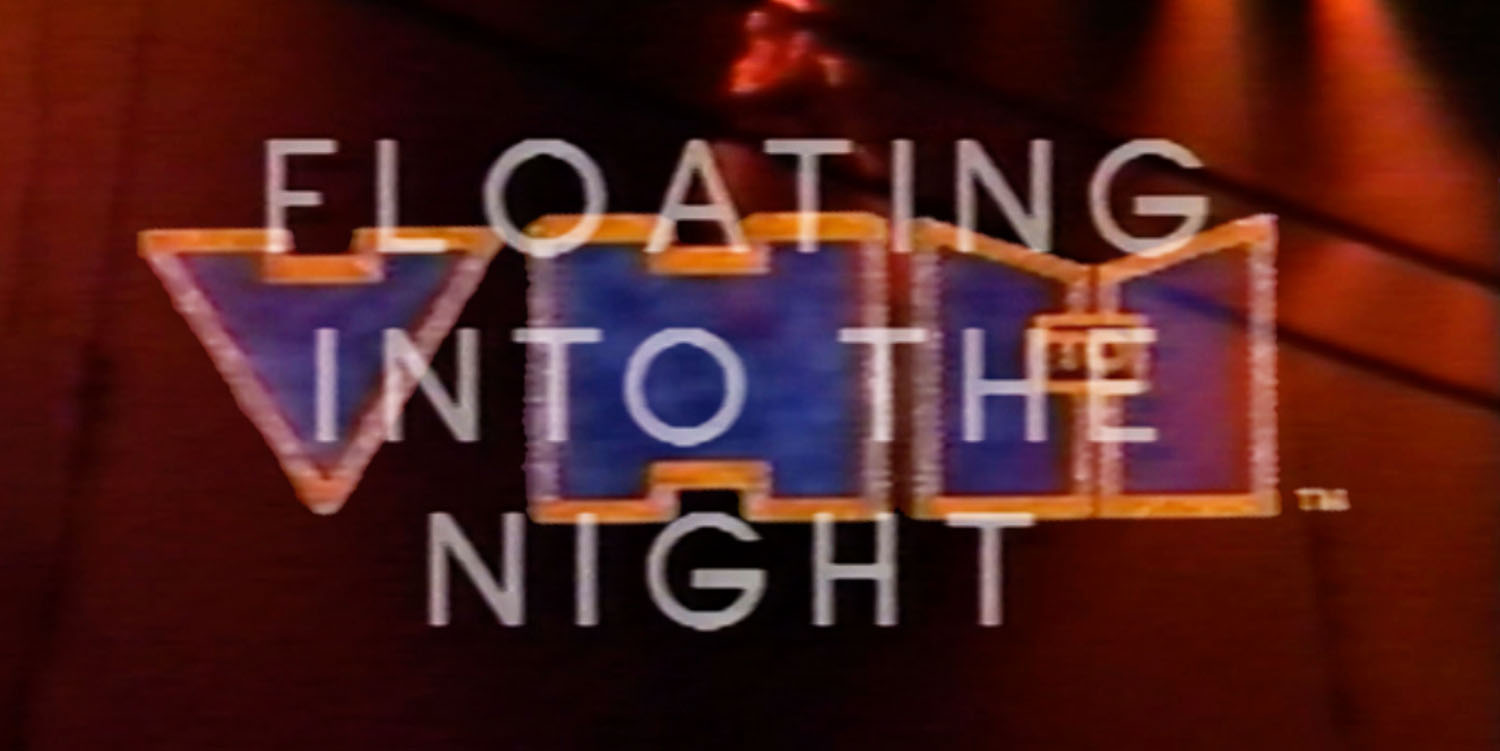
The music of Julee Cruise and Twin Peaks was on the minds of many in summer 1990. Her single “Falling” was released on June 12, months ahead of an official soundtrack release. The only way to hear music from the show was Julee’s 1989 album “Floating Into The Night.” In July, VH-1 produced a 24-minute special about Julee’s music with interviews from David Lynch, Angelo Badalamenti and her. It was not seen until the end of September around the start of the show’s second season. Thanks to the Internet Archive, I have transcribed this episode as part of the Julee in June takeover of Twin Peaks Blog.
‘VH-1 TO ONE’ – FLOATING INTO THE NIGHT
Launched at 3:00 p.m. on Jan. 1, 1985, Video Hits One, or VH-1, was part of the MTV Entertainment Group from Paramount Global’s networks division. The channel will offer “softer” sounds “directed at adult contemporary – basically 25-to 55-year olds who would rather hear Lionel Richie than Rick James.” (“New Video Channel, but who’s watching?” by Jerry Krupnik, The Fresno Bee, Jan. 1, 1985)
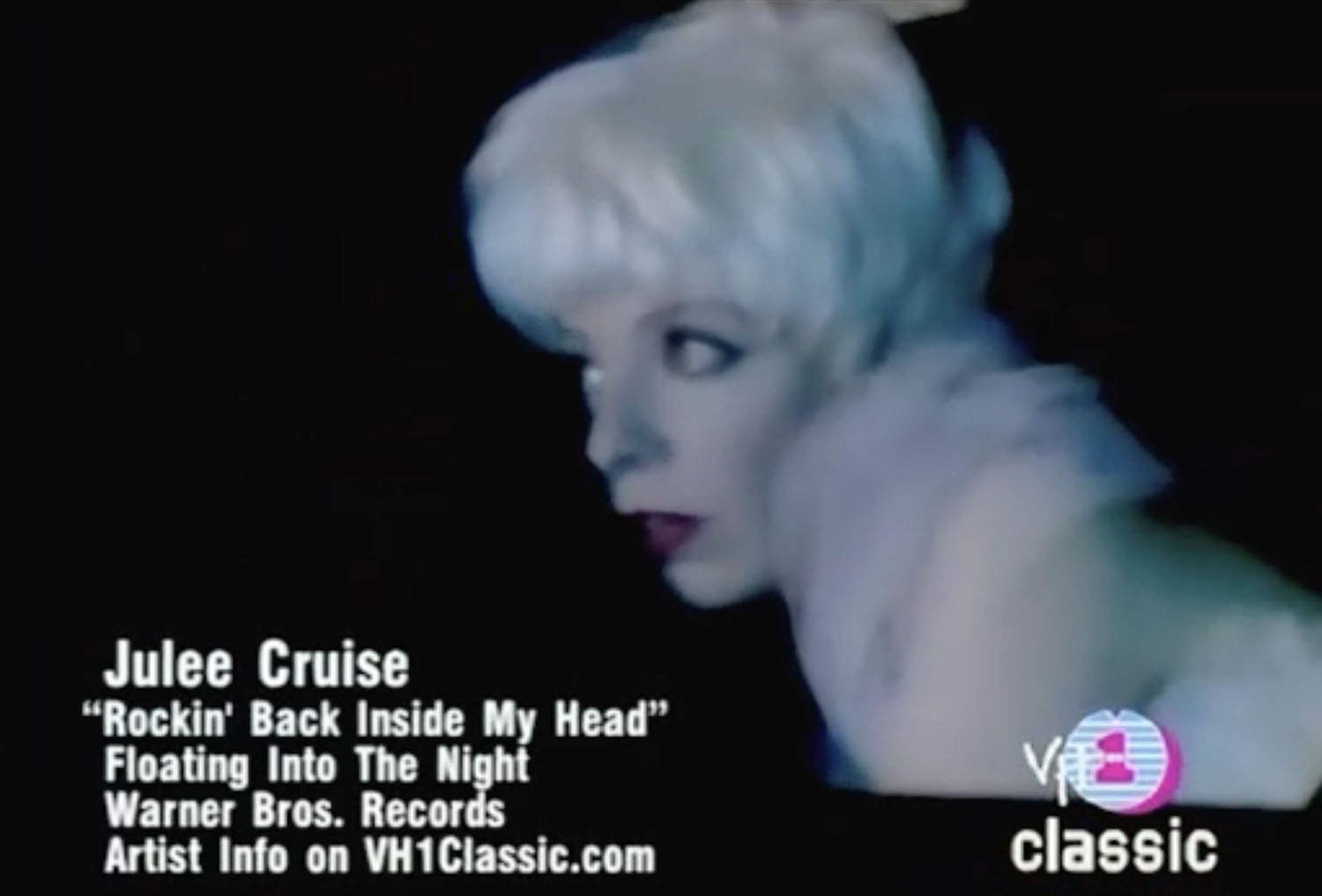
Julee Cruise was no stranger to VH-1. Nearly five years after launching, Julee Cruise’s first single, “Rockin’ Back Inside My Heart” from her 1989 album would play on VH-1 beginning around Dec. 22, 1989. The video contained footage from two live performances of Industrial Symphony No. 1 recorded on Nov. 10, 1989 in New York.
Between early 1990 through 1996, VH-1 produced “VH-1 To One,” a series of 30-minute documentaries with conversations from popular artists of the day. Featured musicians included Paula Abdul, Whitney Houston, Elton John, Harry Connick, Jr. and more.
Naturally, with excitement in the air about David Lynch and Mark Frost’s Twin Peaks, they created a program featuring the angelic Julee Cruise.
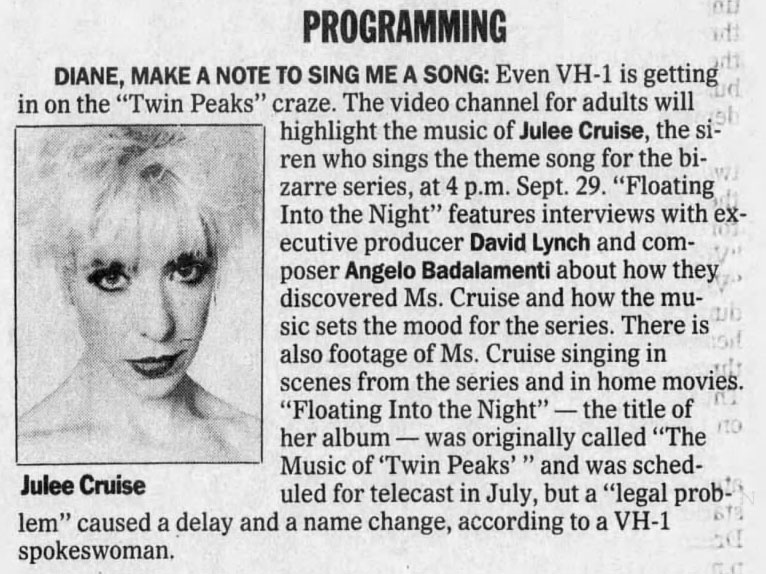
The show was originally titled “The Music of Twin Peaks” and was supposed to air in July. A VH-1 spokesperson said a “legal problem” prompted a delay and a name change. The show was then retitled “Floating Into The Night,” which was the title of Cruise’s 1989 album. It aired on Saturday, Sept. 29 at 3:00 p.m., a day before the season two premiere of Twin Peaks. It was then rebroadcast on Monday, Oct. 1 at 10:30 a.m.
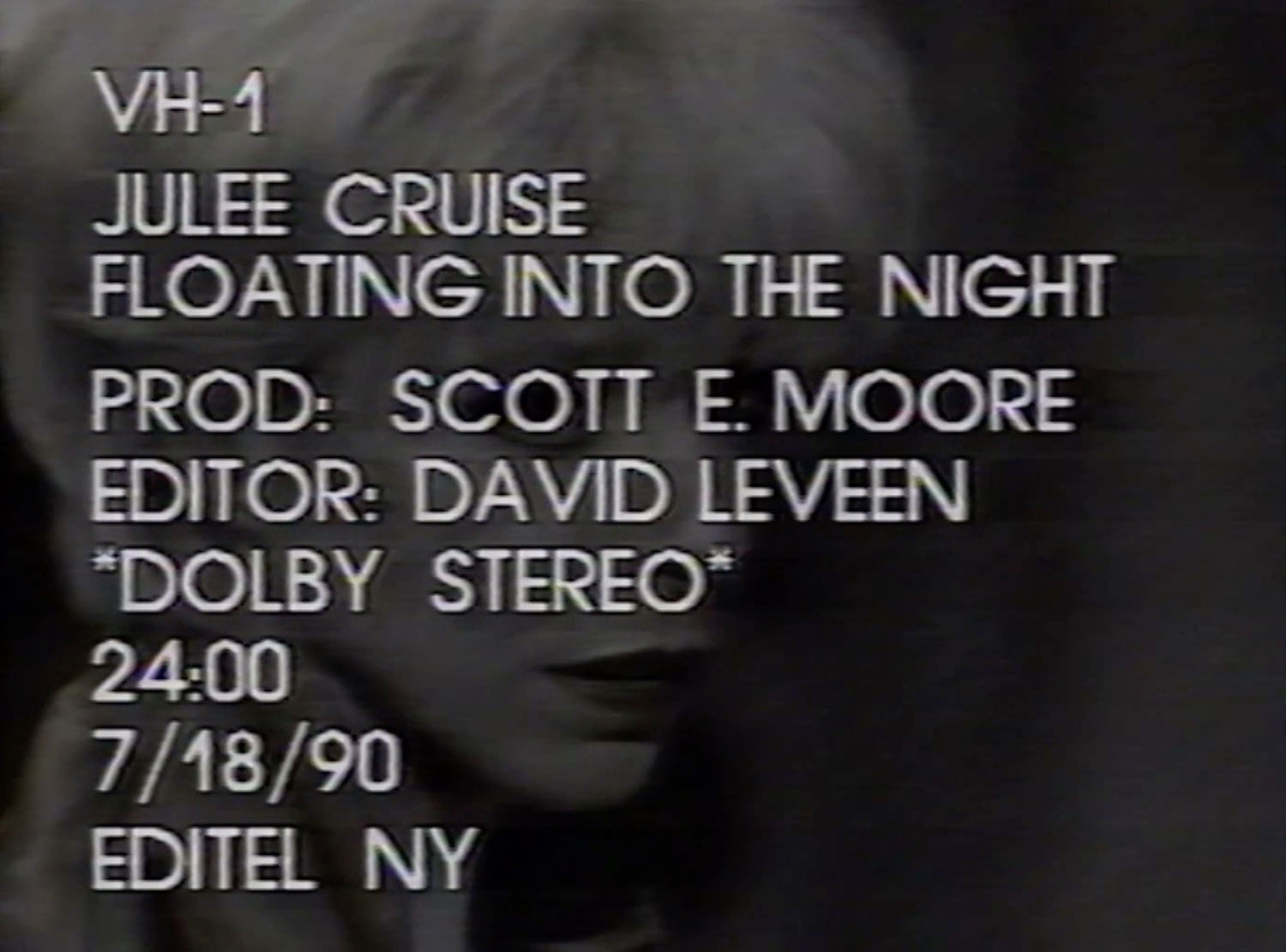
The Internet Archive video contains these production details before the show begins, which places the episode being either finished or scheduled to air on Wednesday, Jul. 18, 1990.
The production credits on this episode include the following individuals:
- Executive Producer – Sally DeSipio
- Written and Produced – Scott E. Moore
- Directors – Scott E. Moore and Jim Paul
- Associate Producer – Dave Levin
- Editor – Dave Levin
- Assistant Editors – Alan Wolfson and Mitch Manasse
- Unit Manager – David Edelstein
- Graphics – Myles Tanaka
- Camera Operators – Joe Ippolito, John Harrison, Jim Hunziker
- Technical Director – Frank D’Acunto
- Lighting Director – Marti Contente
- Audio – Rocky Magistro and Damon Lance
- Make-up – Audrey DaCosta and Cheryl Platt
- Staging – A. Terzi Staging
- Post Production Facility – Editel, NY
- Special thanks to Steven Baker, Mike Etchart, Debby Trutnik, Kevin Laffey, Melanie Ciccone, Anne Donaghue
- Executive in Charge of Production – Debbie Ross

Editel was a post-production facility that was originally part of a joint venture formed in October 1981 between Bell & Howell and Columbia Pictures. At one point, they had production facilities in Los Angeles, Chicago, Montreal and New York. Ownership changed hands several times throughout the 1980s and 1990s, from ScanLine to Unitel. But 1997, Editel’s New York facility was closed.
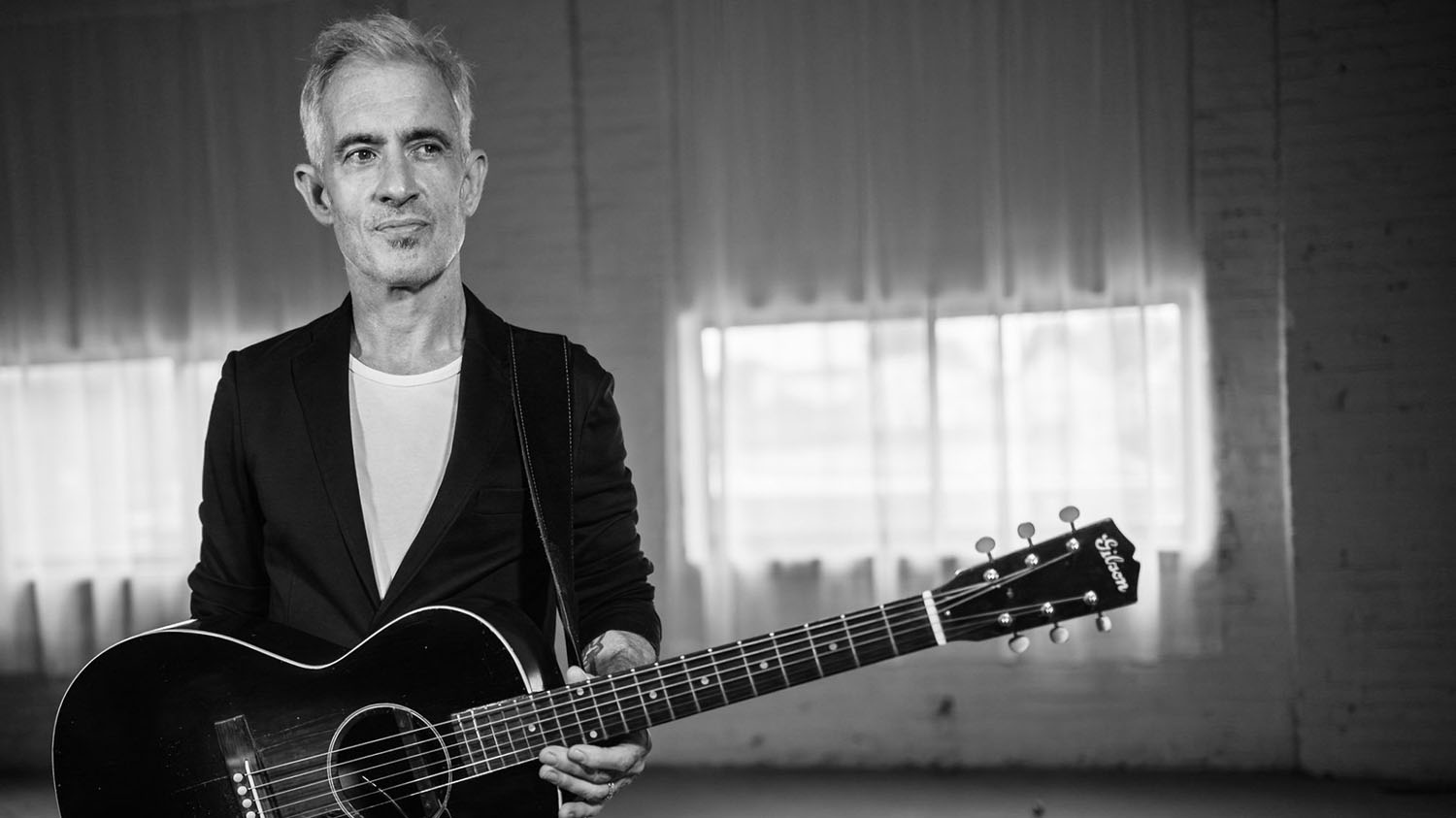
Producer, writer and director Scott E. Moore began his career with MTV as an intern. He eventually worked his way up to a writer before moving over to VH-1. According to his bio, he became a “producer-director, winning awards, traveling the world and working with some of his heroes like Daniel Lanois, Bonnie Raitt and others.” Today, he is a singer-songwriter and guitarist and an accomplished video producer-director-writer and film composer, which he does through his boutique production company WingTip Studio.
‘FLOATING INTO THE NIGHT’ | PART ONE
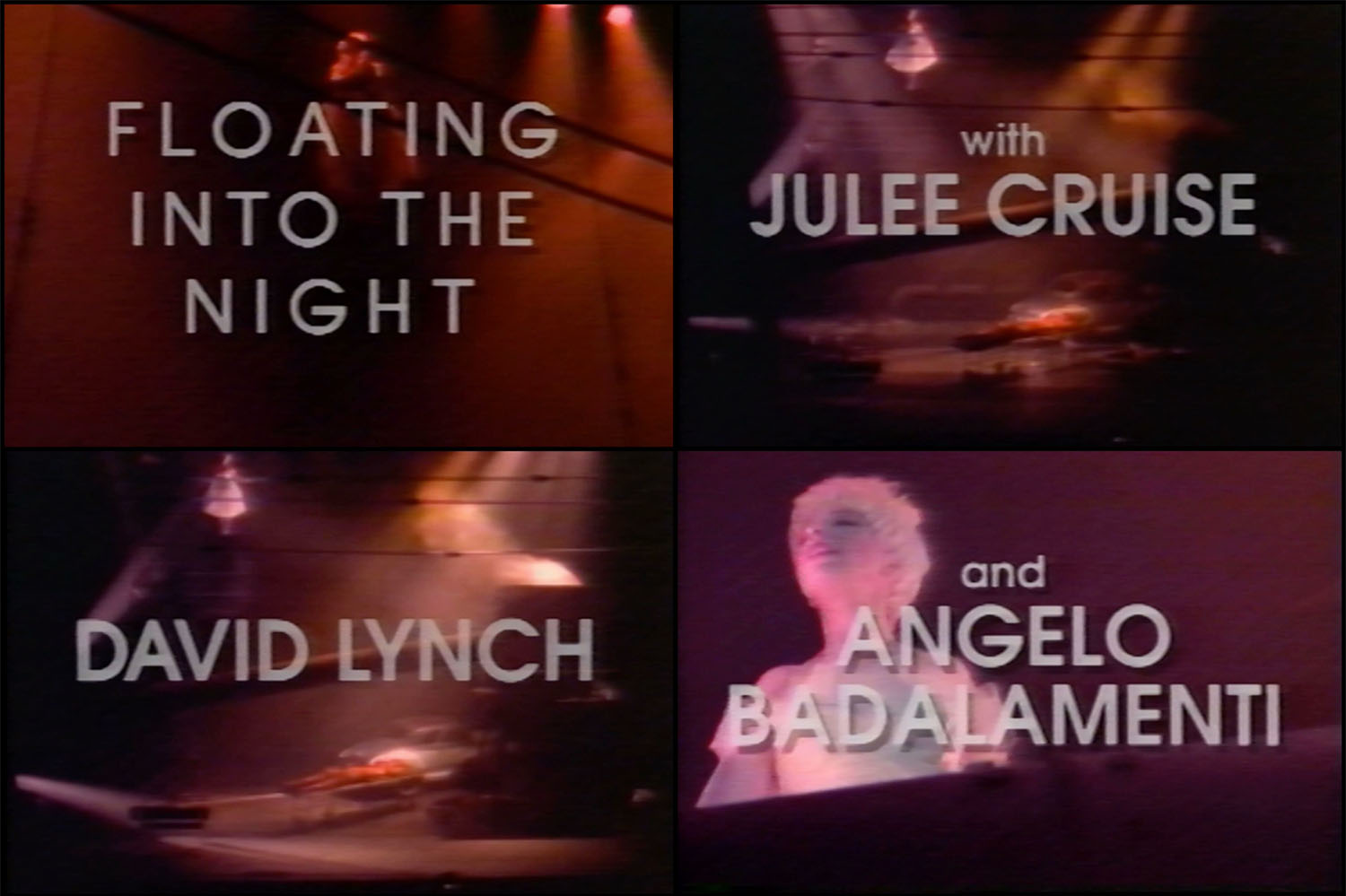
The episode opens with “Falling” playing as Julee Cruise floats 40 feet off the ground during a performance of Industrial Symphony No. 1 in Nov. 1989. The credits include the episode title “Floating Into The Night” with Julee Cruise, David Lynch and Angelo Badalamenti.
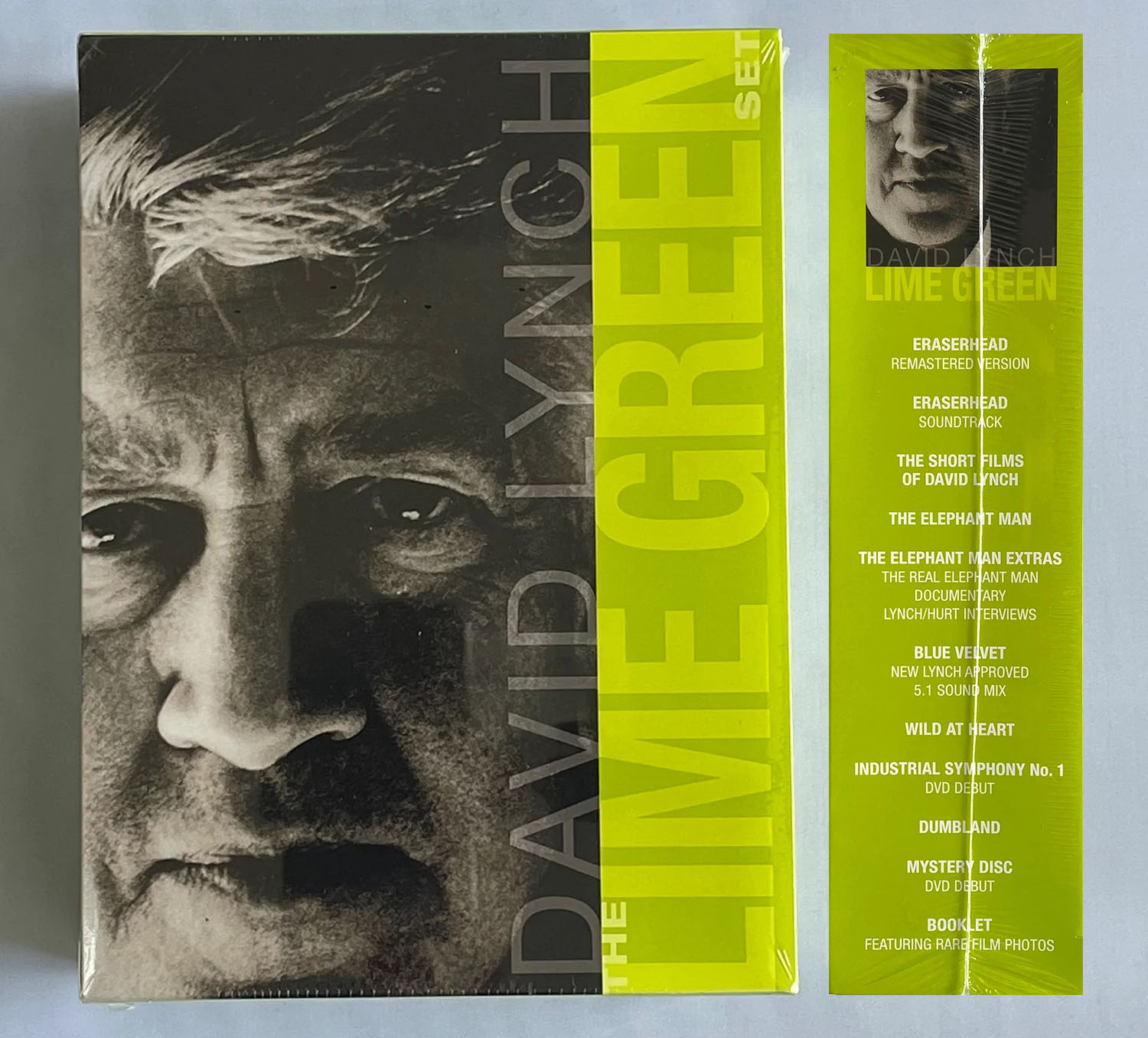
These interviews would later appear on David Lynch: The Lime Green DVD set as a bonus feature for Lynch’s Industrial Symphony No. 1 disc.
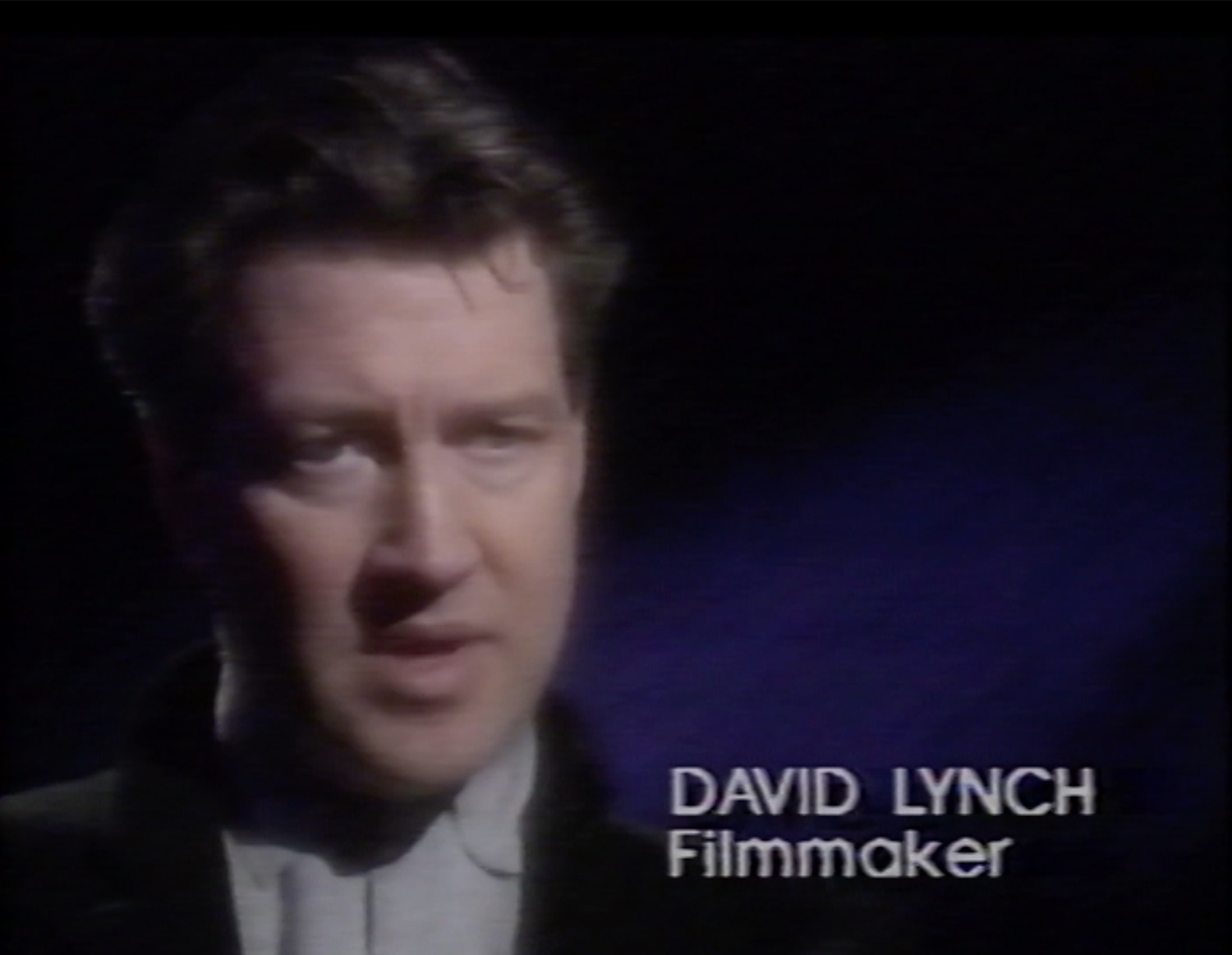
David Lynch: “Music on its own is abstract, but the way you get to something in painting or in film or anything, is also very abstract.”
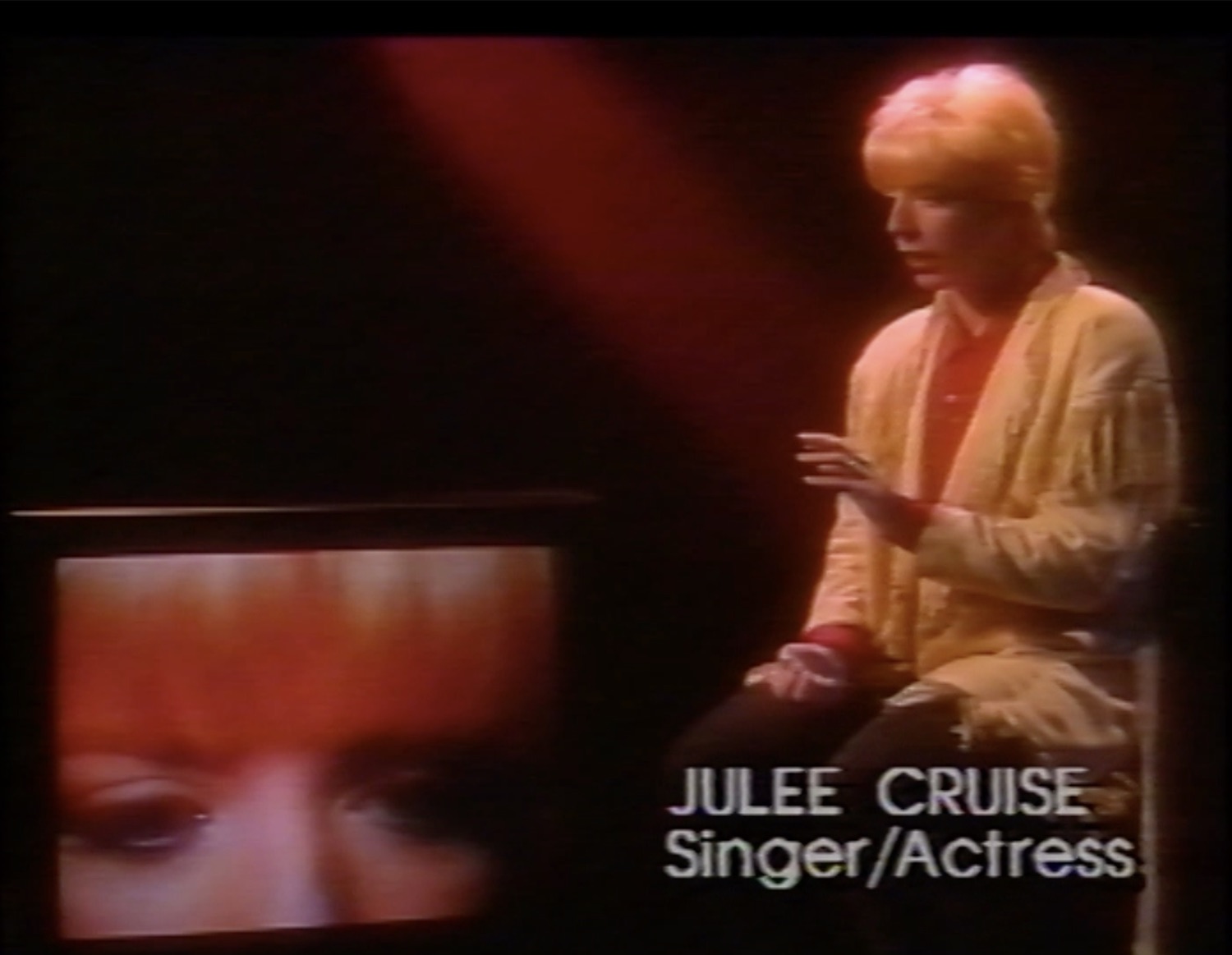
Julee Cruise: “David approaches music visually and he’ll describe visually what he wants.
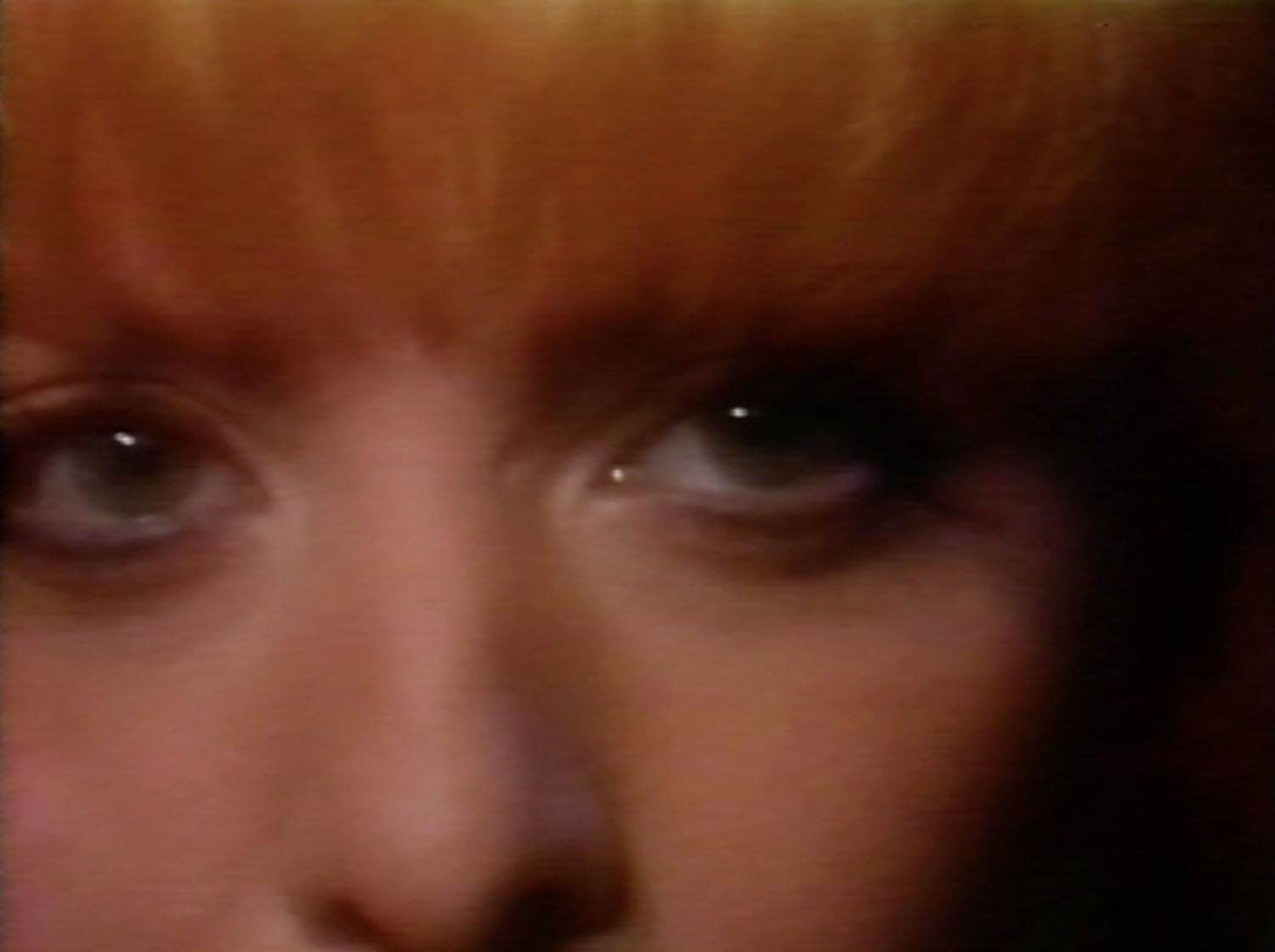
And he’ll describe through the lyrics what he wants, like as if he were directing an actress for a scene, a very tight close scene with a camera.”
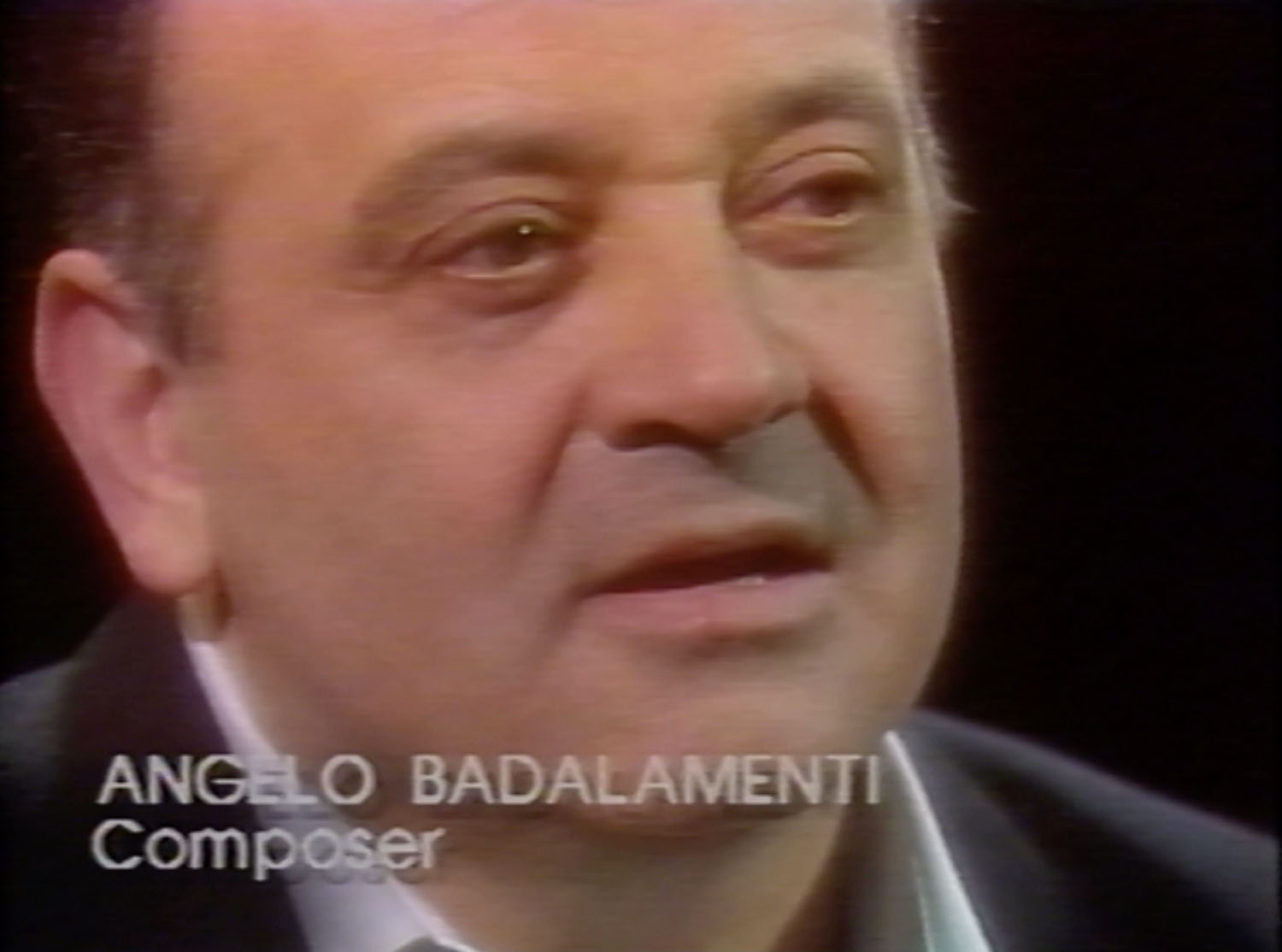
Angelo Badalamenti: “It’s mood and we seem to have this thing going where we understand each other and we get into it, and we created the new things for Julee.”

The song “Falling” continues playing as the album cover to Julee’s debut album floats across the screen in front of a scene from Industrial Symphony.
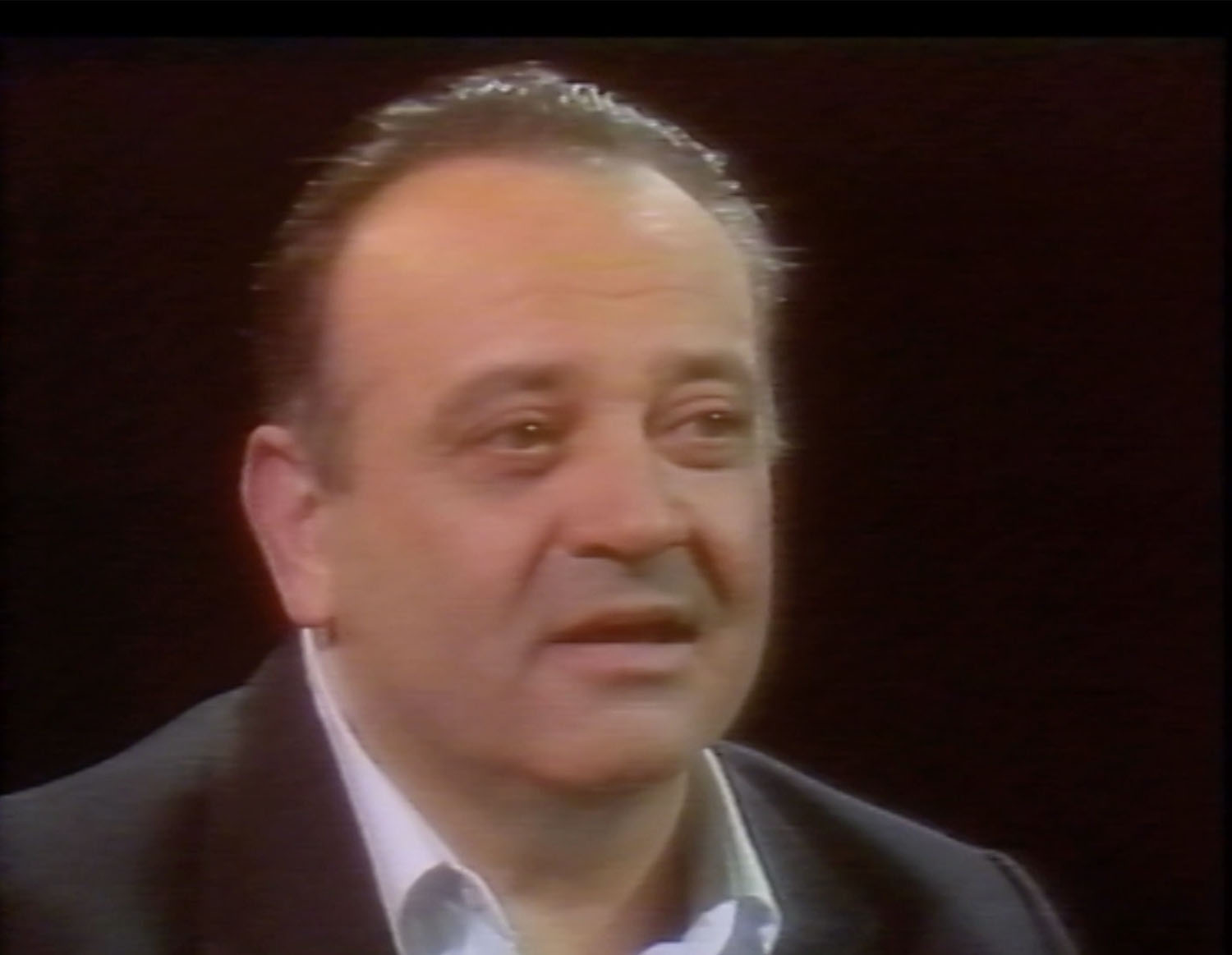
AB: “The instrumental of ‘Falling’ is the main title theme of Twin Peaks. If you know notice how Twin Peaks opens up with the credits and pictures of the Sawmill and the beautiful mountains and the waterfall, well it’s the same melody. Julee on her album, of course, has lyrics to ‘Falling.'”
Part of the opening credits from the Twin Peaks pilot episode plays before cutting to David Lynch discussing the series.
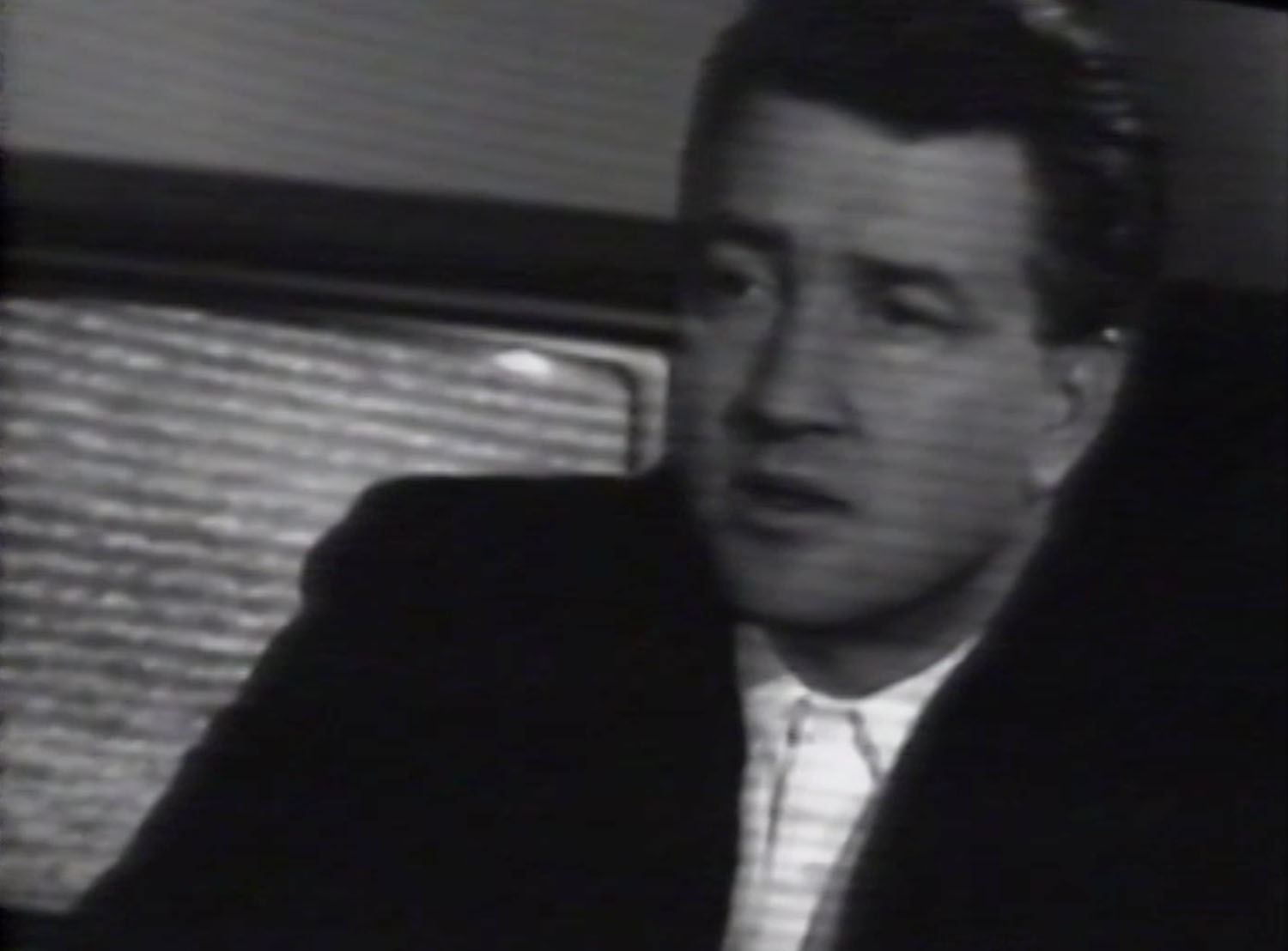
DL: “It’s a murder mystery set in a fictitious town of Twin Peaks. It’s a murder-mystery soap opera and it’s a pretty much, you know, what it is. [laughs]”
Twin Peaks pilot episode credits continue playing.
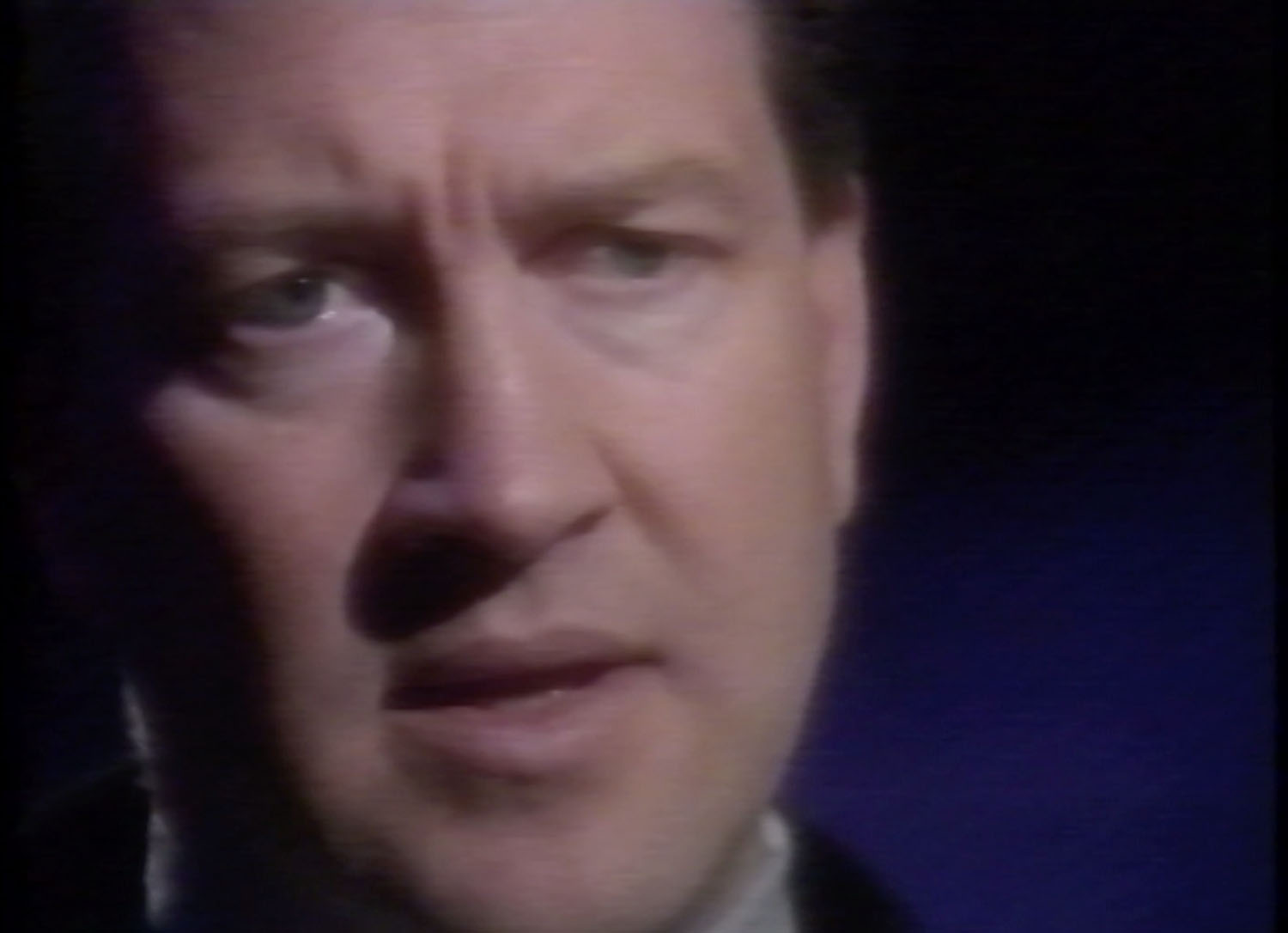
DL: “I think we are working on ‘The Nightingale,’ which is another song on Julie’s album, and it just gave me this, you know, feeling of a mood. I sort of pictured this Roadhouse and the idea of this thing being, you know, sung.
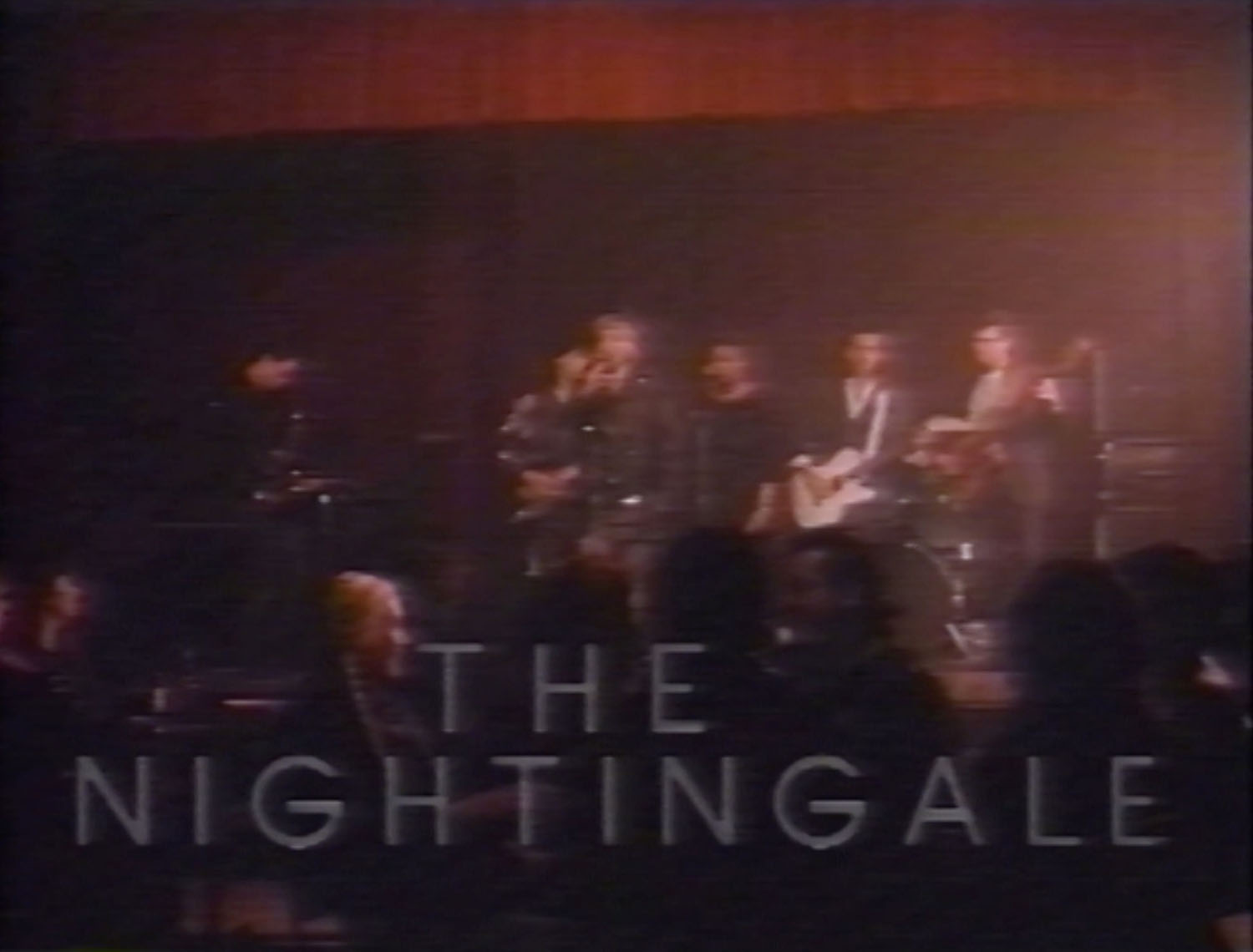
“And then when we were shooting ‘Twin Peaks,’ we had this thing in the Roadhouse and Julee came out and sang that. And then she sang ‘Falling’ too which was a tie into the to the theme which was real important.”
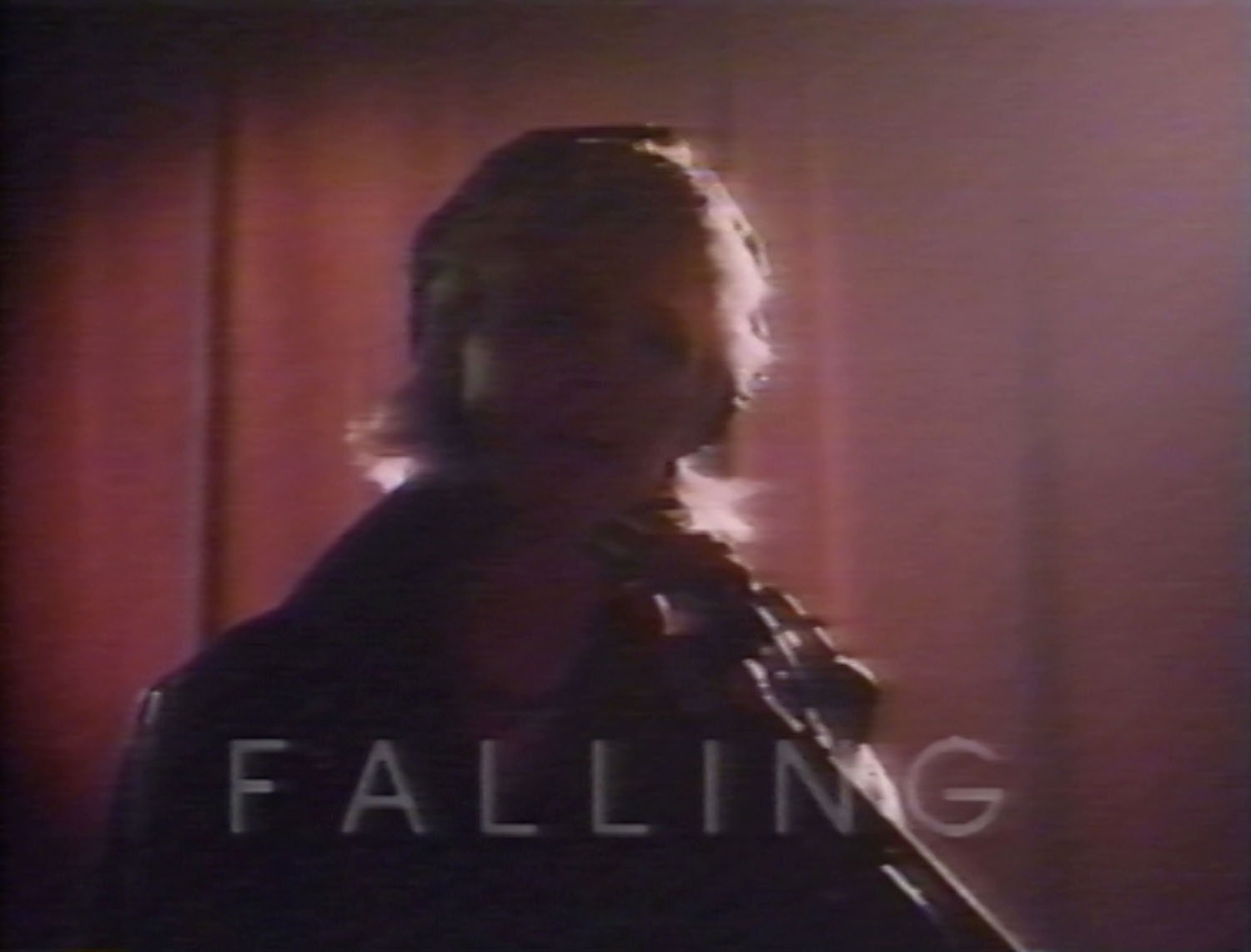
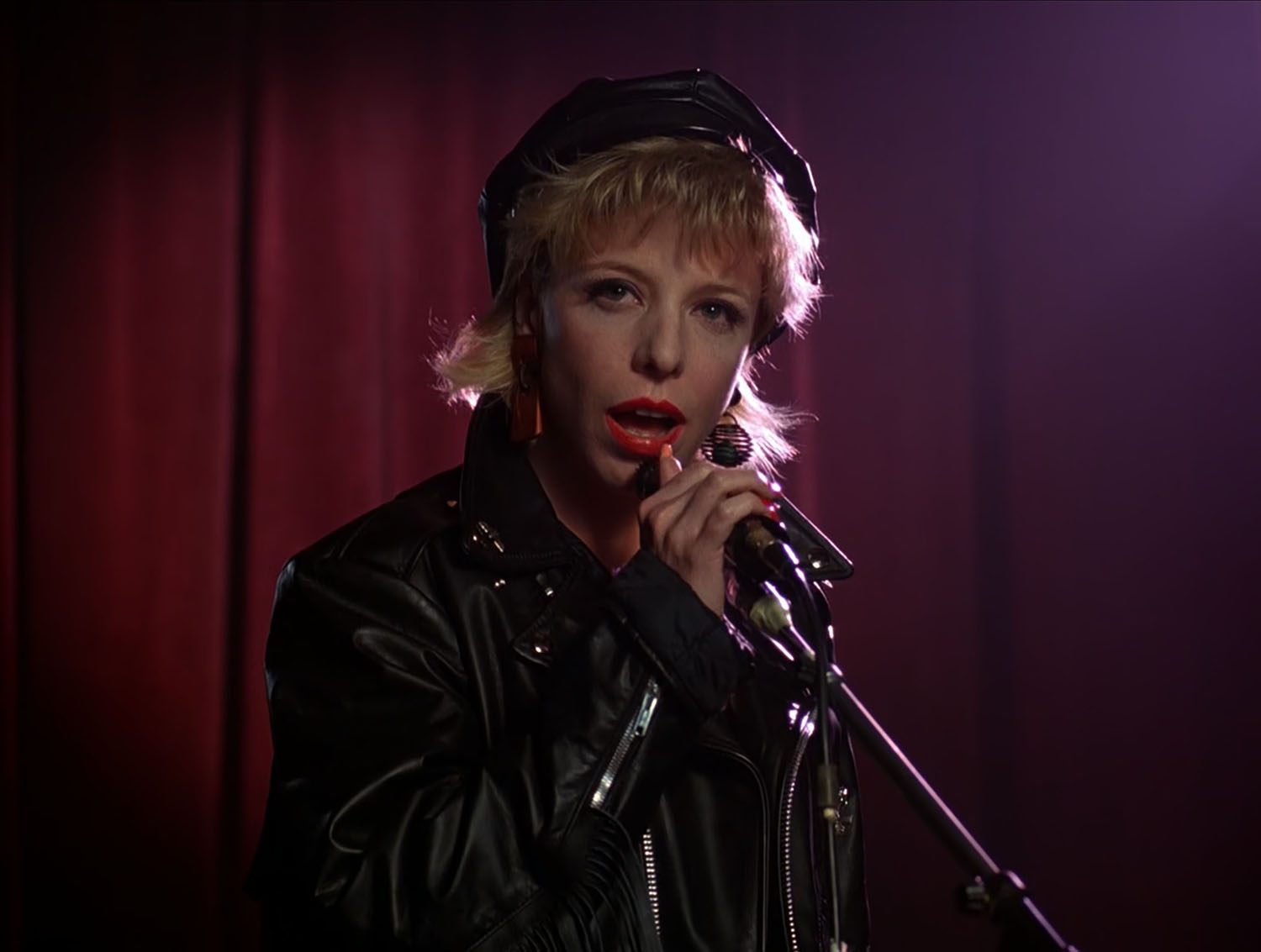
There is a brief clip of Julee performing “Falling” at The Roadhouse in the Twin Peaks pilot.
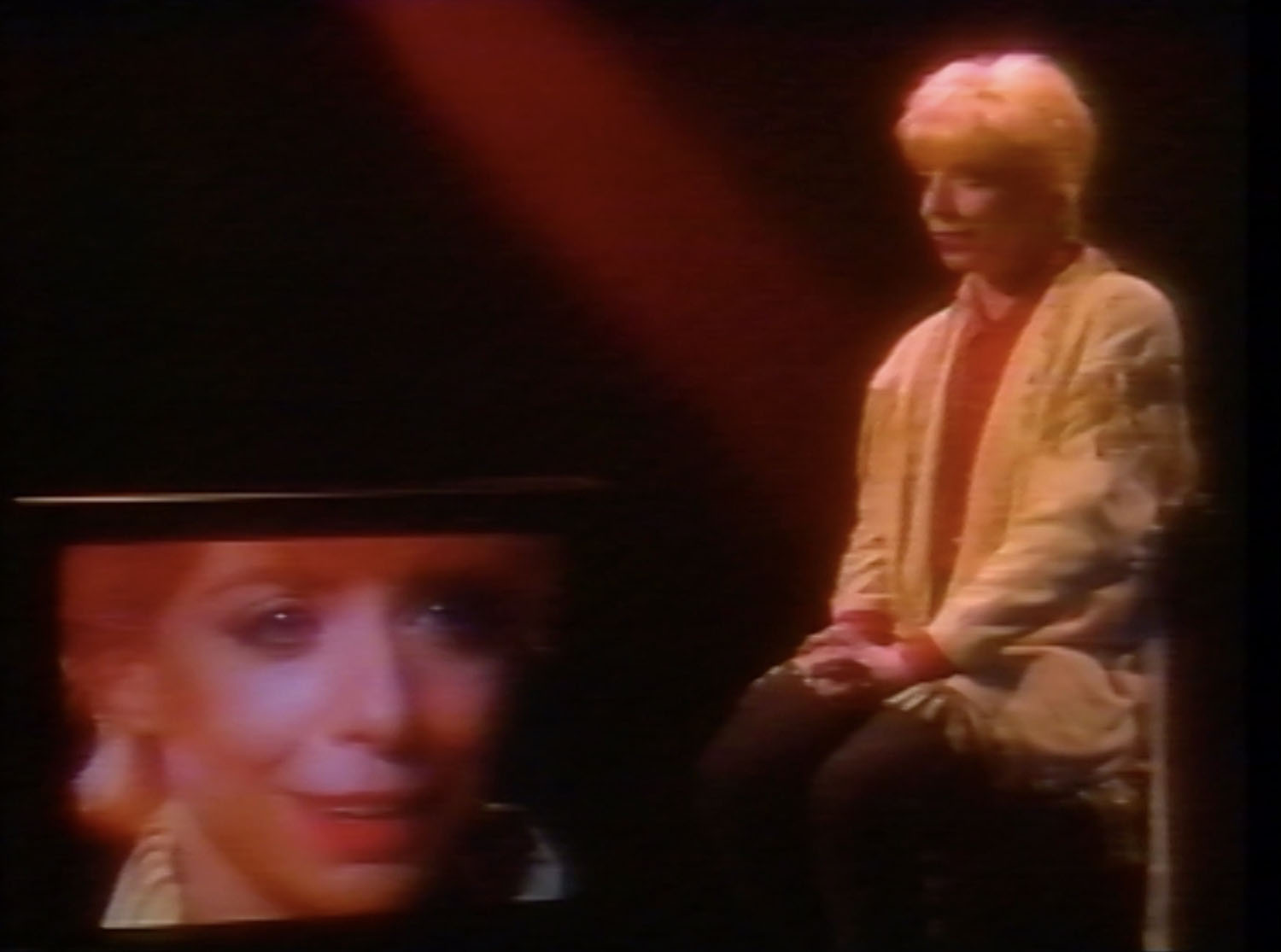
JC: “You know, it is another one of those ironic things where the bikers are sitting around listening to me intently, listening to ‘The Nightingale’ of all songs. You know, I mean, I would never be in a biker bar singing that kind of a song with bikers listening like this [gestures].”
DL: “Well maybe it would, see bikers are in my mind anyway. You know since everyone is romantic, bikers, you know, must have a super romantic side to them because they’re living, like they’re living a dream. And it’s so cool that they would like music, especially Julee Cruise.
“Twin Peaks music again had to follow certain kind of rules and I got together with Angelo and we started talking like we do and and Angelo wrote the ‘Theme for Laura Palmer.’ And I almost started crying when especially when we started putting it with certain scenes.”
There is a brief clip with “Laura Palmer’s Theme” playing when Sheriff Harry S. Truman and Doc Hayward discover Laura’s body wrapped in plastic.
AB: “You know I’ve seen all the writing and all the critics and and all the people are calling and saying, ‘Well, you know, the music is just setting up so many of these moods and it’s like, you know, the music makes you want to kind of watch’ and stuff like that. Well, I don’t know. I really don’t take the credit for that. I think it’s … it’s … it’s totally by accident.”

There is a clip of Audrey Horne dancing in the Double R Diner from episode 1.002.
AB: “And I wish I could say, ‘Yeah I did this all very intentionally.” And no I can’t say that. It just came out of once again David’s descriptions of things that I was able to translate as you said before, but I’m really amazed that it’s being picked up because at that kind of level.”
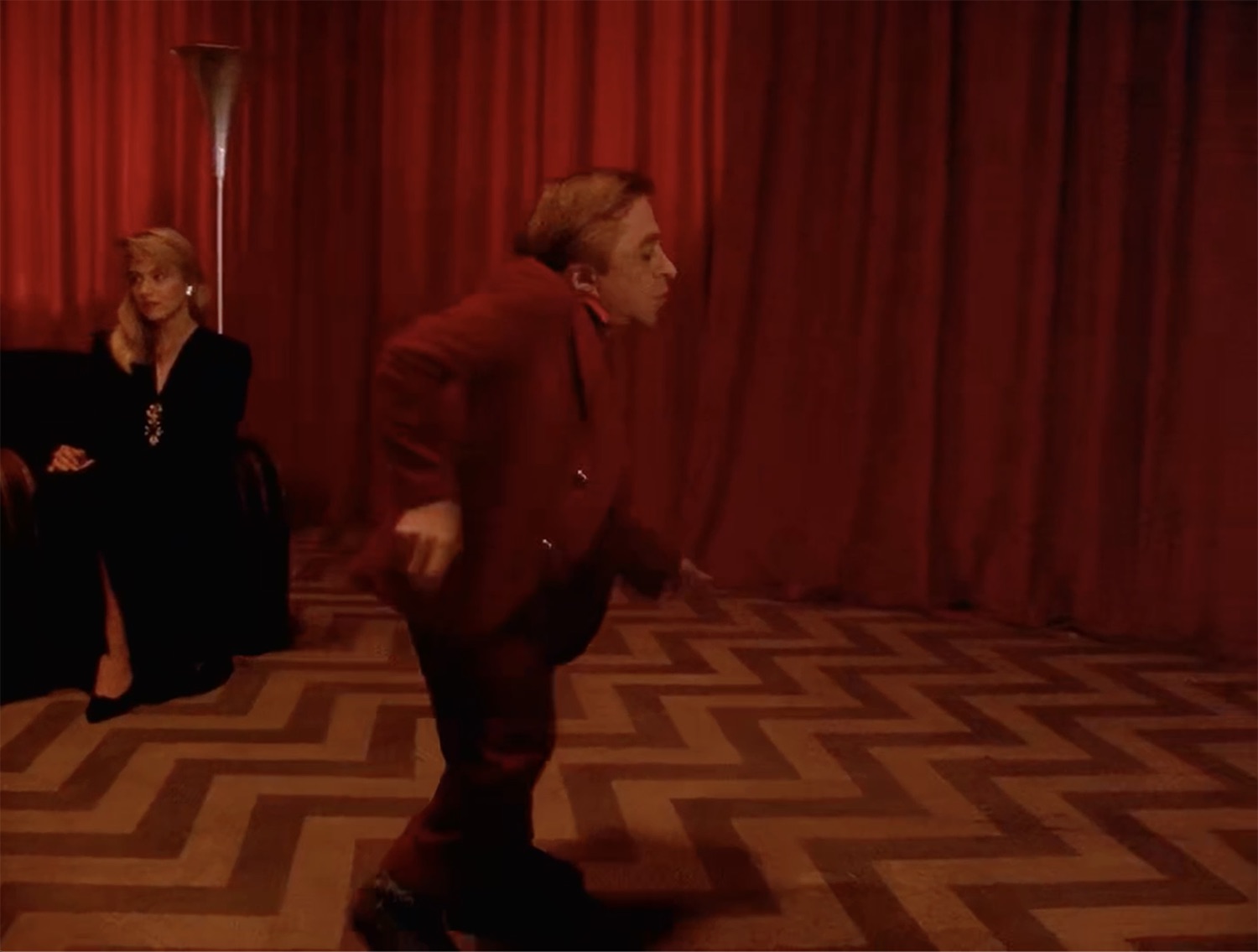
The Little Man From Another Place is then seen dancing in the Red Room while “Dance of the Dream Man” plays.
DL: “When you do something, you do it, you know, like as good as you can and then you have to leave it up to fate from that on. And sometimes things don’t work out so well and then sometimes things work out, you know, really well, like in Twin Peaks.”
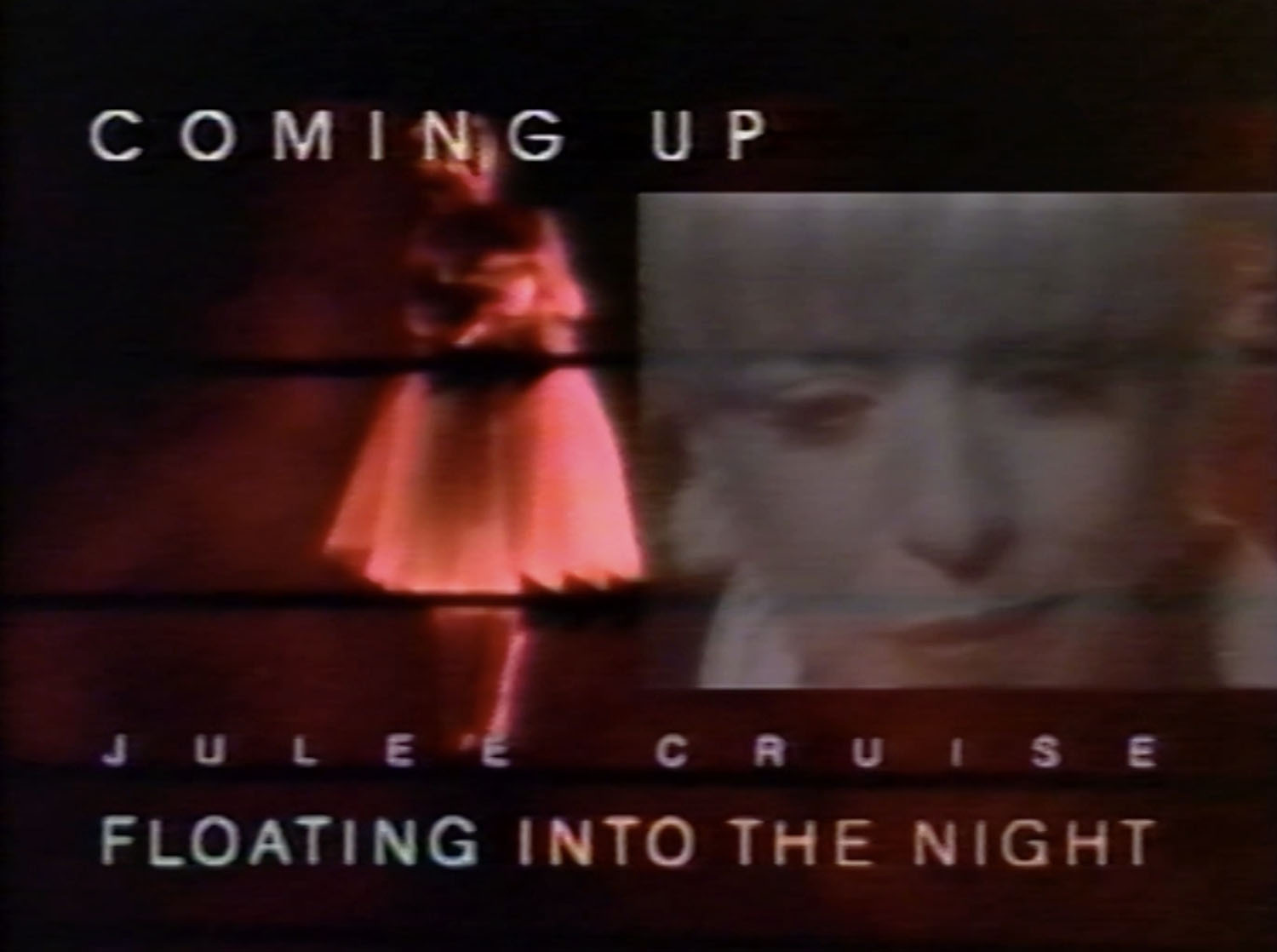
Ahead of the first commercial break, Julee Cruise gives a tease to a story she’ll share about working on Blue Velvet.
JC: “One day, he called me up out of the blue and said, ‘I’m doing this film and it’s called ‘Blue Velvet’ and I need this real angelic type of singer for it.”
‘FLOATING INTO THE NIGHT’ | PART TWO

AB: “I got involved working with David [when] he was shooting ‘Blue Velvet,’ the movie ‘Blue Velvet.’ And he was shooting the last scene of ‘Blue Velvet’.”
DL: “And Isabella [Rossellini] had to sing ‘Blue Velvet.’
AB: “And they needed someone to work with this Isabella Rossellini to coach her on vocals because she had to do a vocal for the movie.”
DL: “So this guy Angelo comes down spends two hours with Isabella by this piano in the hotel, brings the tape out to the set and plays it to me and I just about passed out. It was so beautiful. And I said, ‘We could cut this thing in the picture right now.’ And I said, ‘I don’t know who you are but you just did an unbelievable job.'”
A brief clip of Isabella singing “Blue Velvet” is shown before Angelo continues.
AB: “After we did the thing with Isabella Rossellini, David needed a song for ‘Blue Velvet’ and which he wanted for the lovers, the young lovers. He asked me if I would collaborate with him and write it, and I said, ‘Yeah.’ I said, ‘But I’m not a lyricist. I need lyrics.'”
DL: “So I wrote this thing, sent it up with Isabella when she had to record the thing with Angelo, and she gave it to him.”
AB: “And Isabella had come into New York and brought a little piece of yellow paper with six lines written on it [laughs]. And Isabella said, ‘Yeah David said these are lyrics that David wants you to write to.’ And I’m looking at this thing and that’s what is this. It’s just six lines. There were no rhymes. There’s no form. It was just like so free, it was more like a Shakespearean sonnet or something, you know. I said, ‘What am I going to do with this?’ There’s no verse, there’s no chorus, there were no hooks, you know [laughs].”
DL: “They weren’t poems and they weren’t lyrics. They were just words, you know, sort of strung together that could give some feeling.”
AB: “So I called David. I said, ‘What do you want me to do with this?’ He said, ‘Well, just make it very cosmic and a very beautiful and and something very angelic.’ I got it oh [laughs]. I said, ‘Cosmic, right?’ You know, I didn’t know what that meant. I still don’t know what it means. But anyway, the bottom line is that I wrote this thing, ‘Mysteries of Love.'”
DL: “And he played this song and it was really, really beautiful. And the only thing wrong with it was the feel of the of the singer. And so we had to talk and he went out to try to find this this voice, this kind of angel voice.”
AB: “In comes Julee Cruise, who I had worked with on a little workshop show in Manhattan.”
JC: “One day, [Angelo] called me up out of the blue and said, ‘I’m doing this film it’s called ‘Blue Velvet’ and I need this real angelic type of singer for it.”
AB: “Actually, originally I was requesting of Julee to find me a singer. I wasn’t thinking of her because she was a show singer.”
JC: “I was too loud. I was too brassy, whatever.”
DL: “So she sent in three or four or five people.”
AB: “We tried it out and David wasn’t thrilled with what these other singers were like.”
JC: “He rejected like six of my singers which really, I got really irritated with him and I was being sarcastic actually on the phone and I said, ‘Well just let me do it then.'”
DL: “Angelo says, ‘Well, Julee, you know, but holy smokes, your singing style is the opposite.’ She said, ‘Yes, I know. But you can’t find anybody and I’ve run out of people so let me, you know, just try it.'”
AB: “I said, ‘Okay, but this is, it’s got to be an angelic voice.'”
JC: “Well then you know he called my bluff and the terror set in.”
AB: “And we worked in my office and she positioned to a voice at a certain place and just we went into a studio and did it and it was just fantastic. David heard it and flipped out.”
DL: “I mean she’s got a great voice and when she sings soft and pure. It’s just what the doctor ordered.”
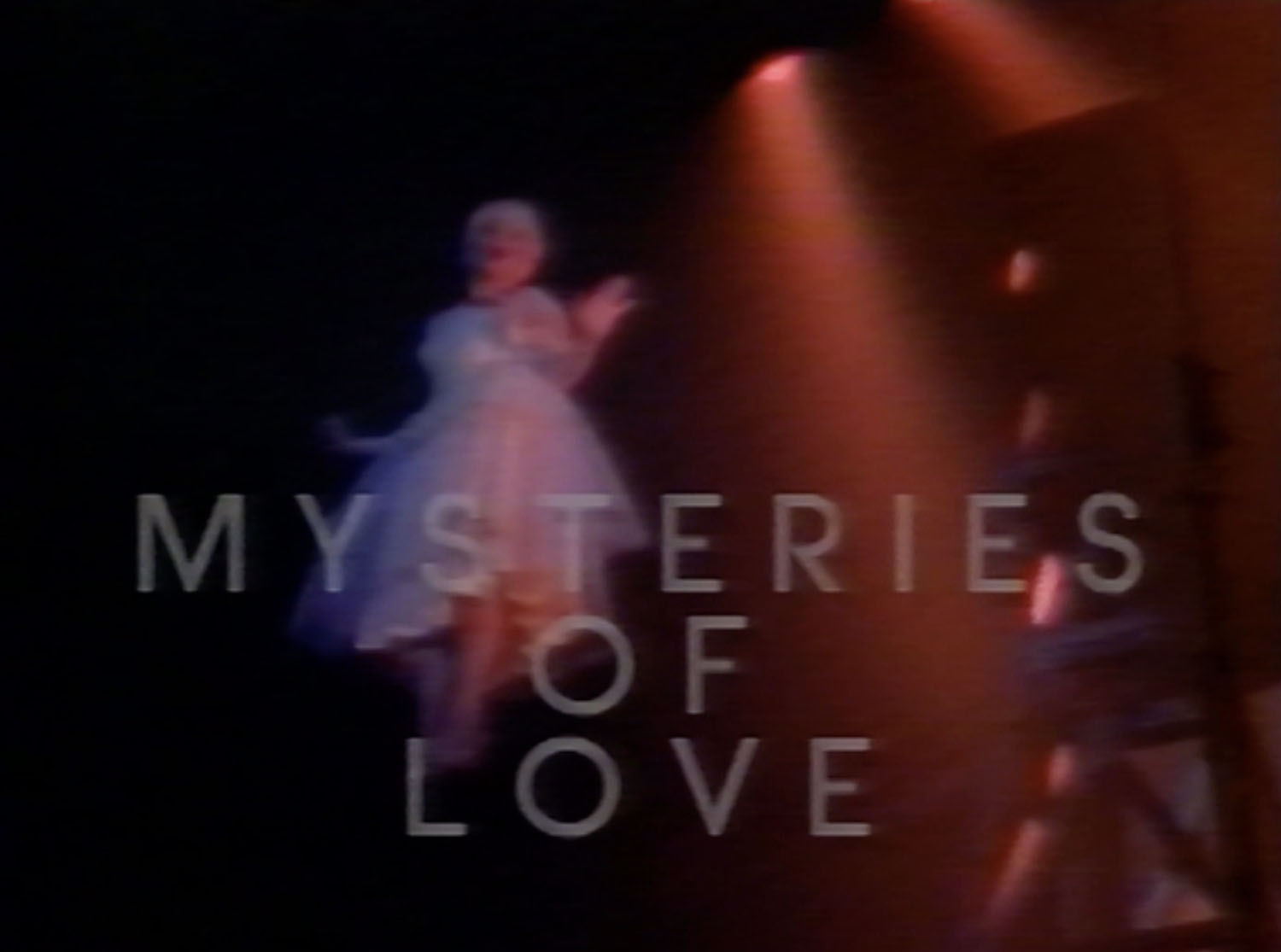
A brief scene of Jeffrey and Sandy kissing in Blue Velvet is shown until it fades to white and an image of Julee floating appears behind the title card for “Mysteries of Love.”
AB: “Actually then what happened to reference Julee Cruise was recording companies were calling because they saw ‘Blue Velvet.’ It’s the only song that David and I had written at the time. And there was saying, ‘Hey, you know, we love the sound. We don’t know what it is it’s a little bit different. It’s unusual. We love the singer, we love the song. What else do you have?’ And I said nothing.”
DL: “And then I got so that I would when I go to New York. We sit down in the room together and even if the lyrics are half baked or they’re not the music isn’t quite right. By the time we spend an hour together, you know, we’ve got songs going. So we’ve written about 40, maybe 45 songs so far. So we were, just time stands still and it’s just pure fun.”
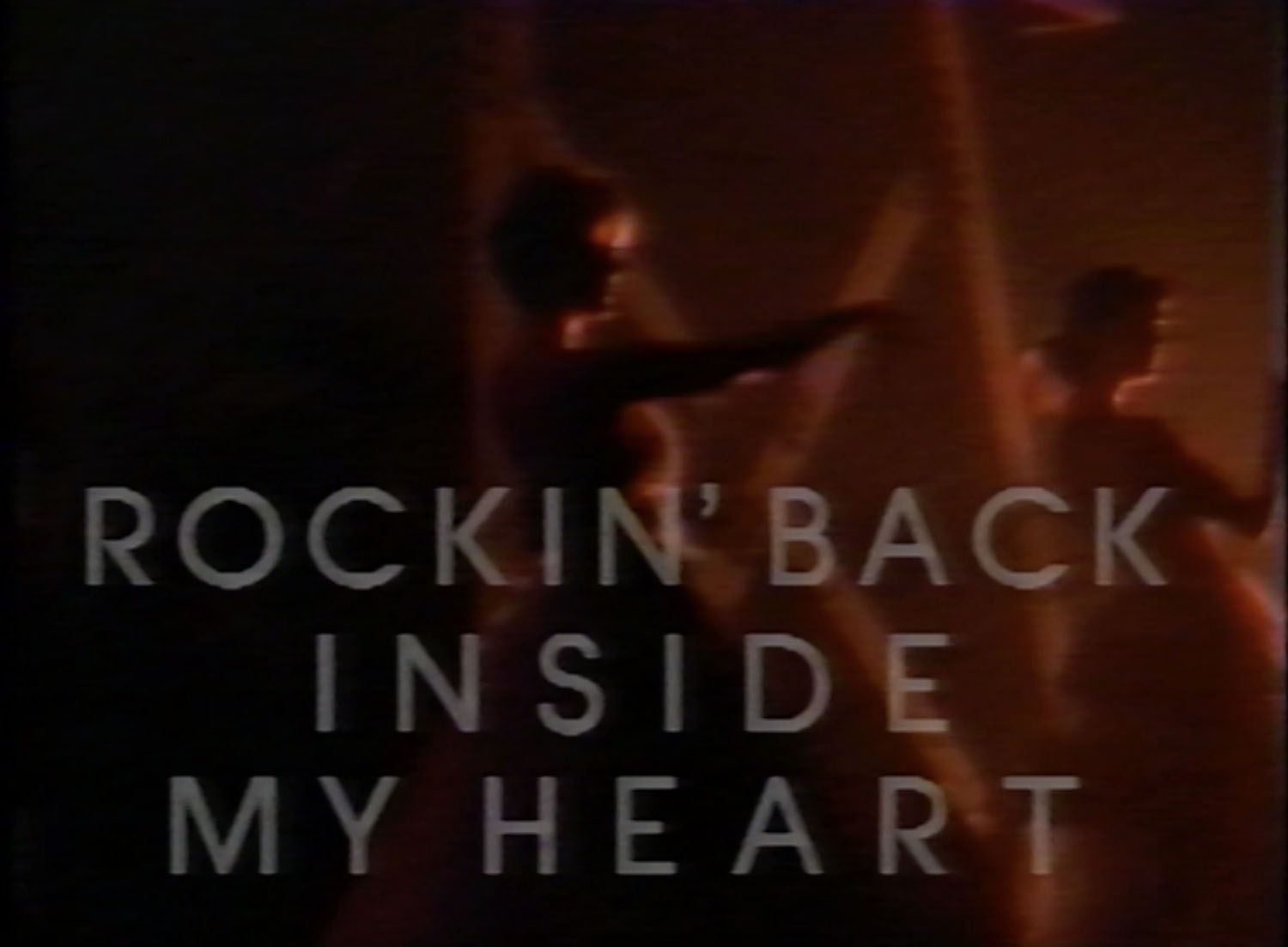
“Rockin’ Back Inside My Heart” begins to play with footage from her video for the song.
JC: “Well, a lot of people take the album for a lot of different moods, you know. It’s been called a seduction album. It’s a romantic album.”
AB: “It’s sensual, dreamlike, the mood of the album is is just hypnotic.”
JC: “It’s a relaxation album. It’s a deep album. It’s whatever.”
DL: “The word ‘floating’ came up and the word ‘night’ and it was all kind of a dreamy. But it wasn’t like set out to be an album about you know floating or anything like that. It just happened to be that that was the mood of this piece.”
JC: “I’m not the brilliant one here. I want David and Angelo’s direction you know. But what I will do is he’ll describe one thing he’ll just say one word or I’ll know what he’s talking about. One of David’s famous things that he told the sax player, “You know Al [Regni], this is a guy from the symphony, you know Al, ‘big chunks of plastic.’ Can’t you play that? Al knew what he was talking about that. That’s when it gets kind of scary and he played big chunks of plastic. The way we all work is just very frenetic and it seems like life is centered around lunch.”
DL: “Because I’m very hungry and I like to eat lunch.”
JC: “It really is. We have the same thing for lunch every day.”
DL: “Well actually that changes. Now I’m into turkey sandwiches.”
JC: “..on wheat toast with mayonnaise and David always has a big bag of chips and a Coke. And if it’s not right then the whole day’s kind of blown.
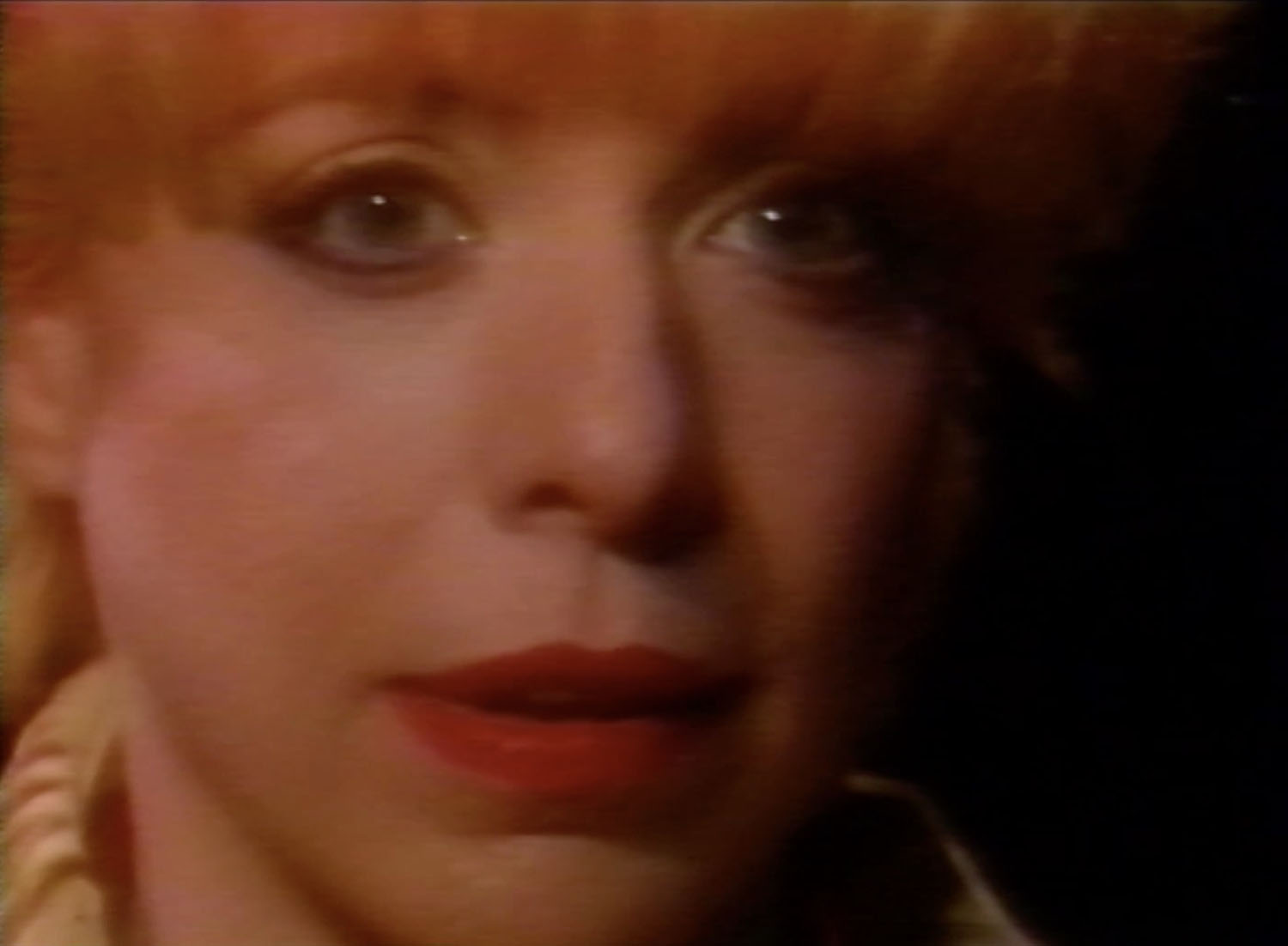
“I really believe it’s a sincere attempt on David’s part to be very intimate and romantic and what comes out on the surface is very intimate romantic and beautiful and ethereal. What’s going underneath is repression and paranoia and fetishes and obsessions. And that’s why it’s not white wine Muzak. That’s why there’s a lot more to the music than just the beautiful melody or the beautiful voice.”
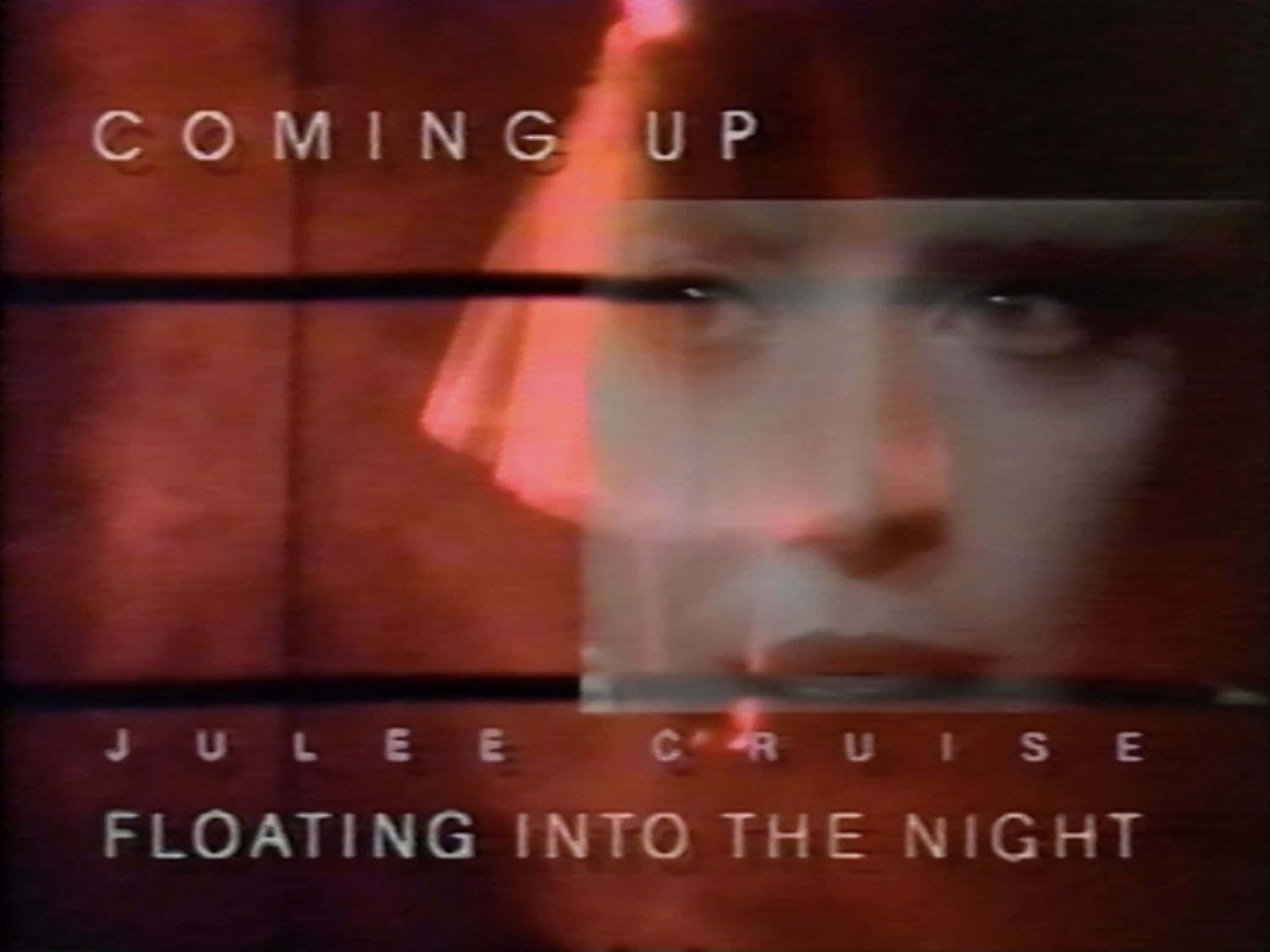
Julee then had a second commercial teaser.
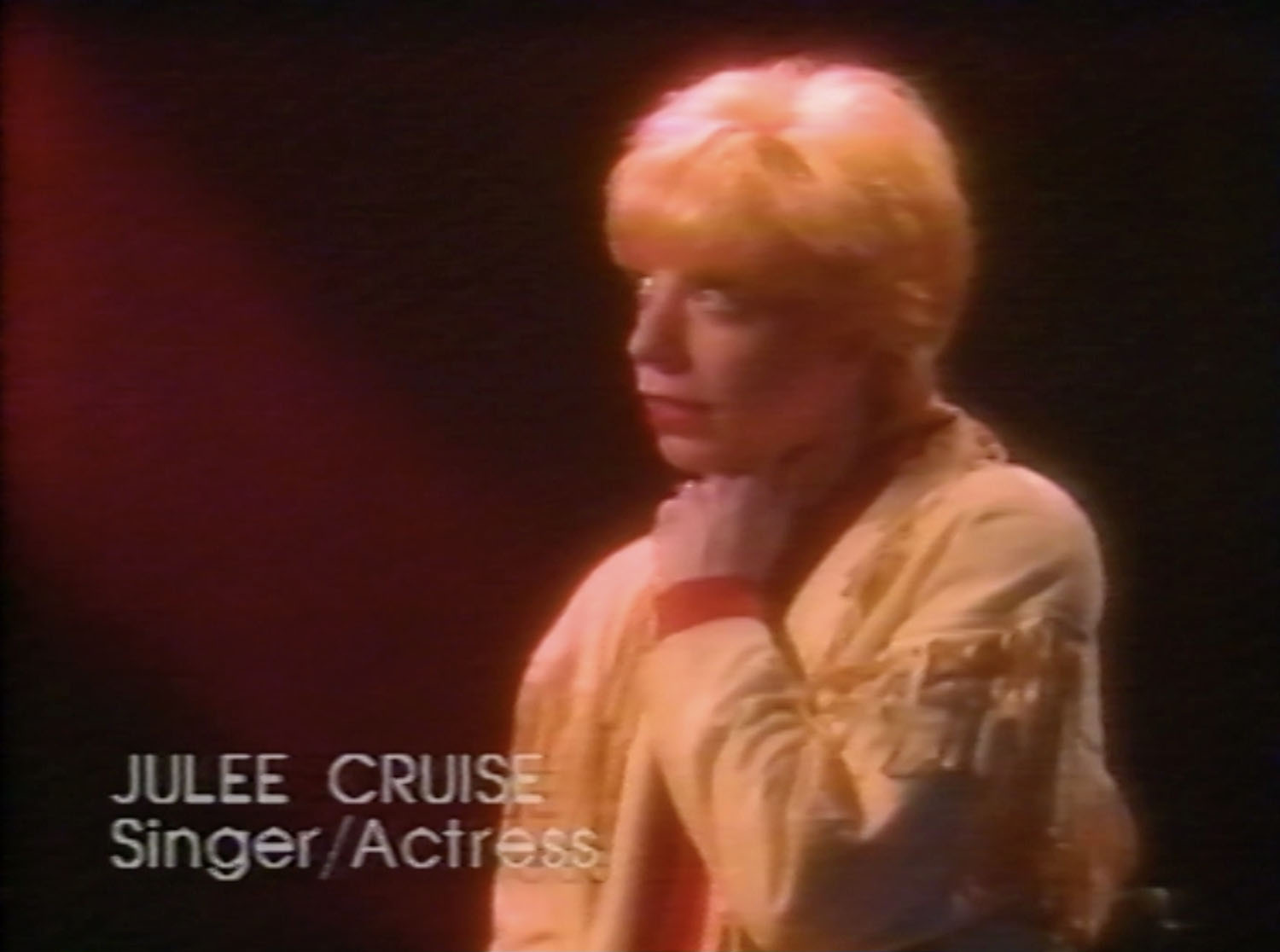
JC: “David and Angelo got accepted to do this show, ‘Industrial Symphony Number One.’ And I was the singer, I was in it. It wasn’t my show but I was the star.”
‘FLOATING INTO THE NIGHT’ | PART THREE
JC: “In November, I believe it was November 10th, we kicked off the tenth anniversary of New Music of America at BAM – Brooklyn Academy of Music – in Brooklyn. And New Music America has an old a story of itself. It’s all new works, different kinds of music. It’s not just performance art. It’s all different kinds of music that have been innovative for the past 10 years.”
AB: “And they wanted us to do the the first show. David and I to produce and write.”
DL: “And so we told him about this thing that we were working on called ‘Industrial Symphony Number One’ and I guess just a name and the idea of it got them going and they said we want that thing. So then I got off the phone and Angelo I looked at each other and you know all we really had was the name, ‘Industrial Symphony Number One.’ So we had to get to work.”
AB: “And David and I thought it would be just a great idea to to to tie in Julee Cruise with the show.”
DL: “And it’s ‘Industrial Symphony Number One’ or ‘The Dream of the Broken Hearted.’ It’s about a broken heart.”
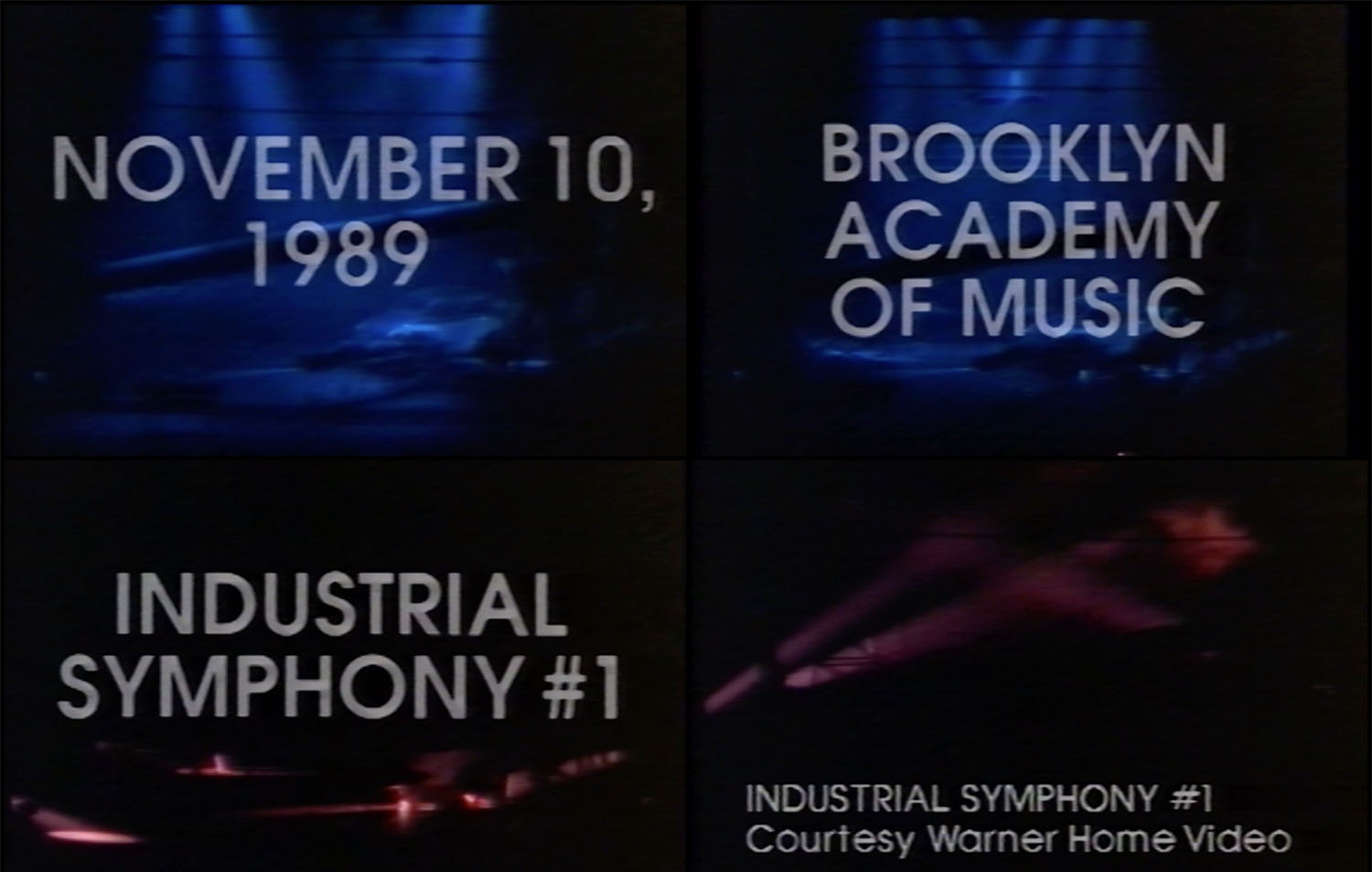
Scenes from the BAM performance were then shown with Michael J. Anderson running across the stage. By the time this special aired, the VHS of Industrial Symphony No. 1 had been released to video stores. This special then turned into a quick preview of the concert performance to drive sales. A brief segment of Julee singing “Into The Night” was shown.
JC: “Some of the things in the show, this bloody deer on stilts while screams go. I mean like crazy almost like-bird, like-rat like screams. like it’s a wrap of screaming. That along with along with the babies with their eyes blow torched out. You know a symbol of a baby doll with bald baby doll plastic with the eyes blow torched out. That’s again, you know, good and evil, white and black, dark and light. It’s it’s all the extremes of the spectrum.”
DL: “Well you know we’ve talked a lot about her tour and and how like the things we learned from the Brooklyn Academy of Music New Music America could be part of her tour
and but we haven’t designed anything and we’ll just have to see. But we’ve talked about using some. The music is the most important thing and the rest, if it supports that and adds to it, would be be nice.”
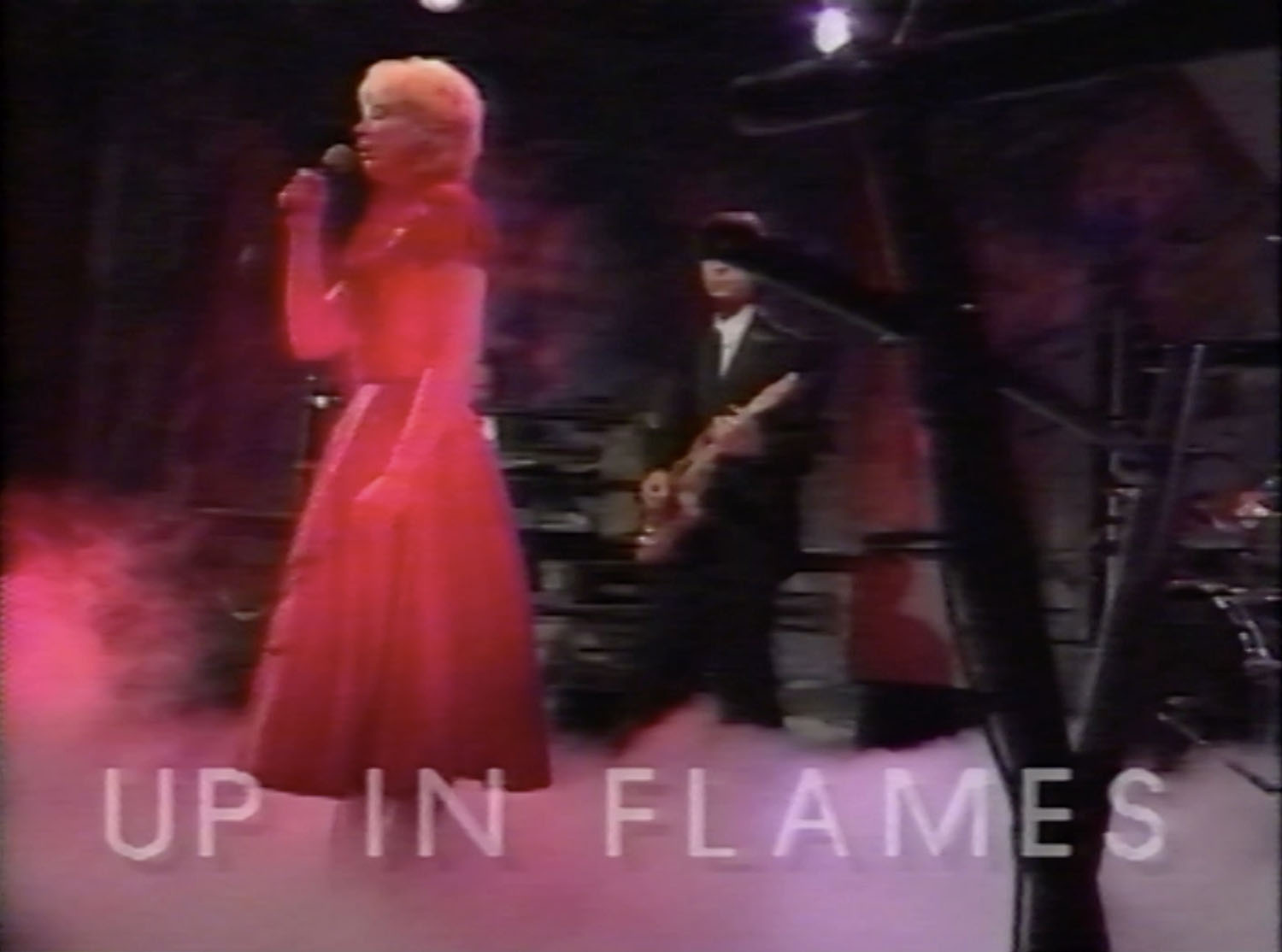
As David is speaking, the action cuts to Julee Cruise performing “Up In Flames” from VH-1’s “New Visions.” It would be more than three years later when this song would appear on her sophomore album, “The Voice of Love.”
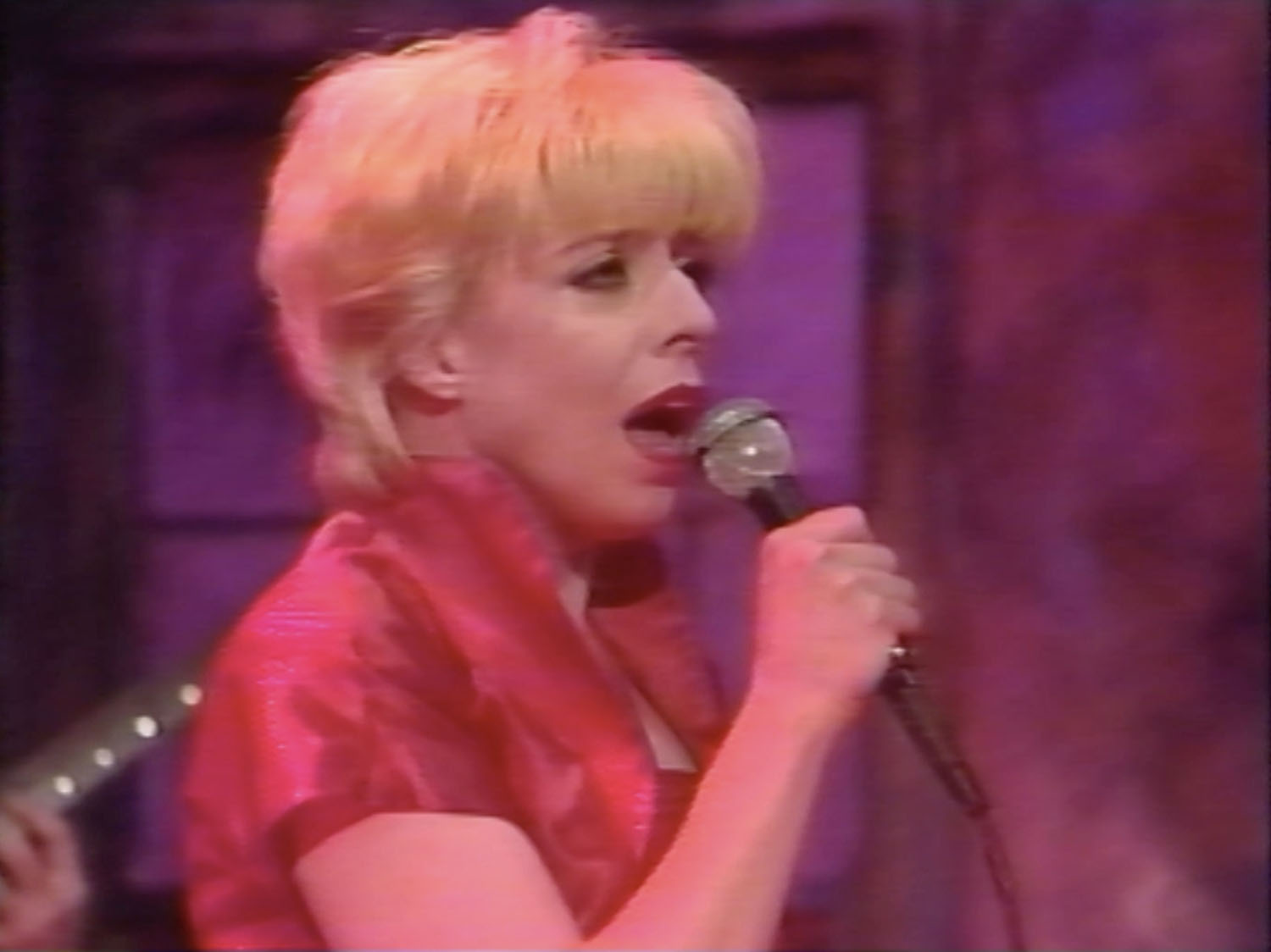
JC: “They’re doing a promotional tour and I don’t have the exact dates when that will be but these guys are hot, they’re great. They’ve got the David Lynch-Angelo Badalamenti-Julee Cruise sound down.”
DL: “You know like when you finish something, you’re left with lots of lots of feelings and you have, I love for certain types of ideas and so it would stand a reason that you would, you know, continue on and the next change may happen right in the middle of the next piece. I don’t know but really every single thing is pretty much different. What you should try to do is this concentrate on the ideas and try to be true to them and interpret them in the best way possible.”
The episode credits then roll before cutting back to David Lynch for parting thoughts.
DL: “Well ideas are to me and to you know all of us I think the most important things. But we don’t really understand, you know, where they come from, but thank goodness they they come along every now and again and they pop into your into your mind. For me, I found out that coffee and sugar and a comfortable seat in a well-lit, clean place helps these ideas come along.”
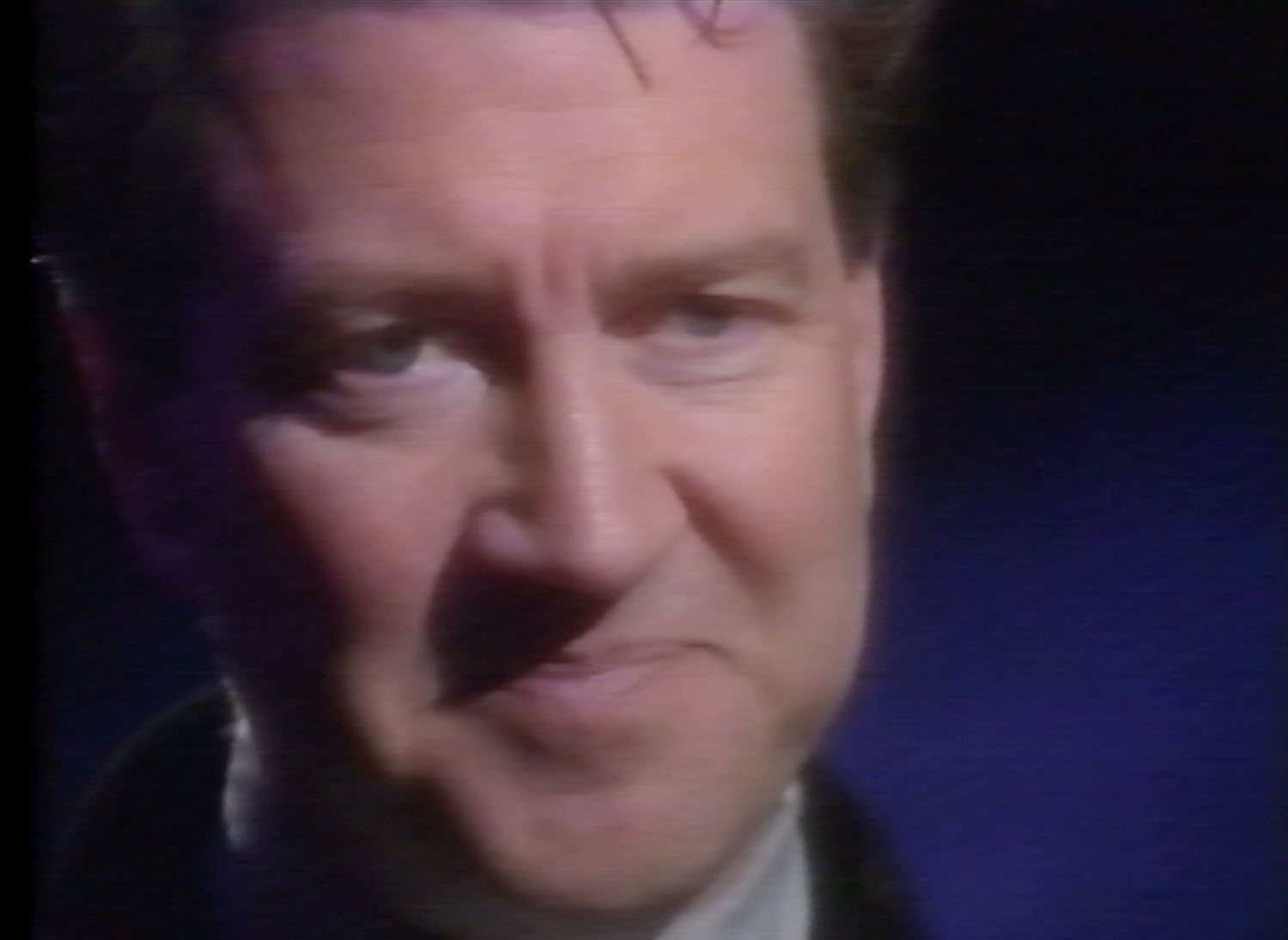
The episode fades to black.
THE TAMPA TRIBUNE – “MUSIC-VIDEO NETWORK PROFILES ‘TWIN PEAKS’ WARBLER CRUISE | SEPT. 29, 1990
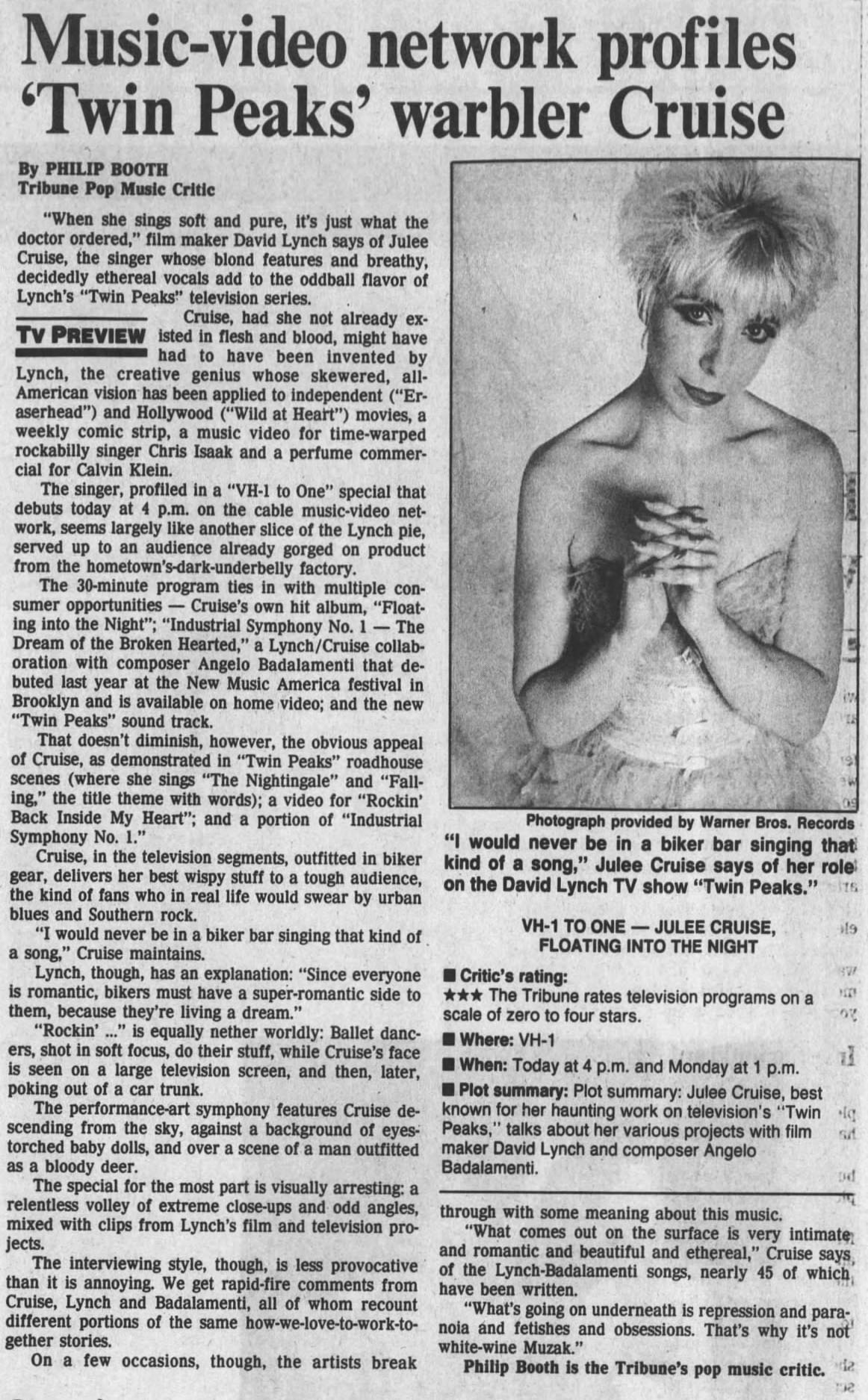
Newspapers like The Tampa Tribune provided reviews of the VH-1 show in anticipation of the start of Twin Peaks on Sept. 30. This review comes from Phillip Booth who pulls some of the most impactful quotes from the broadcast.
In the days before social media and the internet, broadcasts like this helped fill the desires for people to learn more about David Lynch, Julee Cruise and the music of Angelo Badalamenti. By today’s standards, it doesn’t contain a lot of new information but the broadcast is a great snapshot of a time when Peaks Mania had taken over the United States.
Thank you to the Internet Archive for continuing to serve as a fantastic resource for things like this.
Author
Discover more from TWIN PEAKS BLOG
Subscribe to get the latest posts sent to your email.