
Released on Oct. 12, 1993, Julee Cruise’s “The Voice Of Love” transports me to the early days of my Twin Peaks fandom as I first discovered the show and Lynch’s 1992 film on VHS at my local library around this same time. Her sophomore release became the soundtrack to my high school senior year, spending many days on heavy rotation in my portable CD player. Despite my love of what music critic Ian Gittins called an “unbearably, inevitably beautiful” album, Julee had mixed feelings about its creation. As part of Julee in June on Twin Peaks Blog, here’s an in-depth look at this record which was the final time she collaborated with David Lynch and Angelo Badalamenti on new music.
FROM FLOATING INTO THE NIGHT TO THE VOICE OF LOVE
It’s difficult to capture how much happened between the release of Julee Cruise’s first album, “Floating Into the Night” on Sept. 12, 1989 to the arrival of “The Voice of Love” in fall 1993.
Lynch, Badalamenti and Cruise produced an original full length performance video Industrial Symphony #1, a memorable extravaganza filmed live on the main opera stage at the Brooklyn Academy of Music on Nov. 10, 1991.
“Rockin’ Back Inside My Heart” was released as a single in early 1990. David Lynch and Mark Frost’s Twin Peaks debuted on the ABC Television Network, was put on hiatus late in the second season and was eventually canceled. Her song “Falling” charted in 15 countries worldwide between 1990 and 1992, including Australia, where it reached No. 1 in April 1991.
She performed in concert both in the United States, England and Australia. She provided a cover of Elvis Presley’s “Summer Kisses, Winter Tears” to Wim Wenders 1991 film Until The End of the World and performed in the off-Broadway musical, “Return to the Forbidden Planet.”
Lynch filmed and released his 1992 prequel, Twin Peaks: Fire Walk With Me where Julee performed “Questions in a World Of Blue.” She also sang that song under a full moon on a beach in the French Riviera for the film’s premiere at the Cannes Film Festival in 1992.
From Aug. 1992 to Apr. 1993, she went on tour with party band The B-52’s. She then recorded tracks for her 1993 album before returning to the stage in “Pump Boys and Dinettes” in June 1993.
Julee’s experiences during the four years between albums would come to shape the development of her second collaboration with Lynch and Badalamenti, one that was filled with tension, creative differences and frustrations.
“I worked hared on getting The Voice of Love done,” explained former Warner Bros. Records executive Kevin Laffey to Scott Ryan for his book “Always Music in the Air: The Sounds of Twin Peaks.” “It was a kiss of death to wait that long between albums. To get David and Angelo to do another record with Julee was a challenge, because David was already off onto something else. Julee got increasingly frustrated by not having her own voice. It’s a hell of a long time to wait between albums.” (“Always,” page 309).
Publicly, Julee explained why it took years to release her second album in an Aug. 1993 press release written by her husband Edward Grinnan.
“The reason why it took some time to do the second record,” Julee explains, “is because David, Angelo and I were all so busy and we really wanted to have the right amount of time together to do the music the way we wanted it, and not rush things. I think the result speaks for itself. While it’s the same basic style as my first album, the music has evolved considerably.”
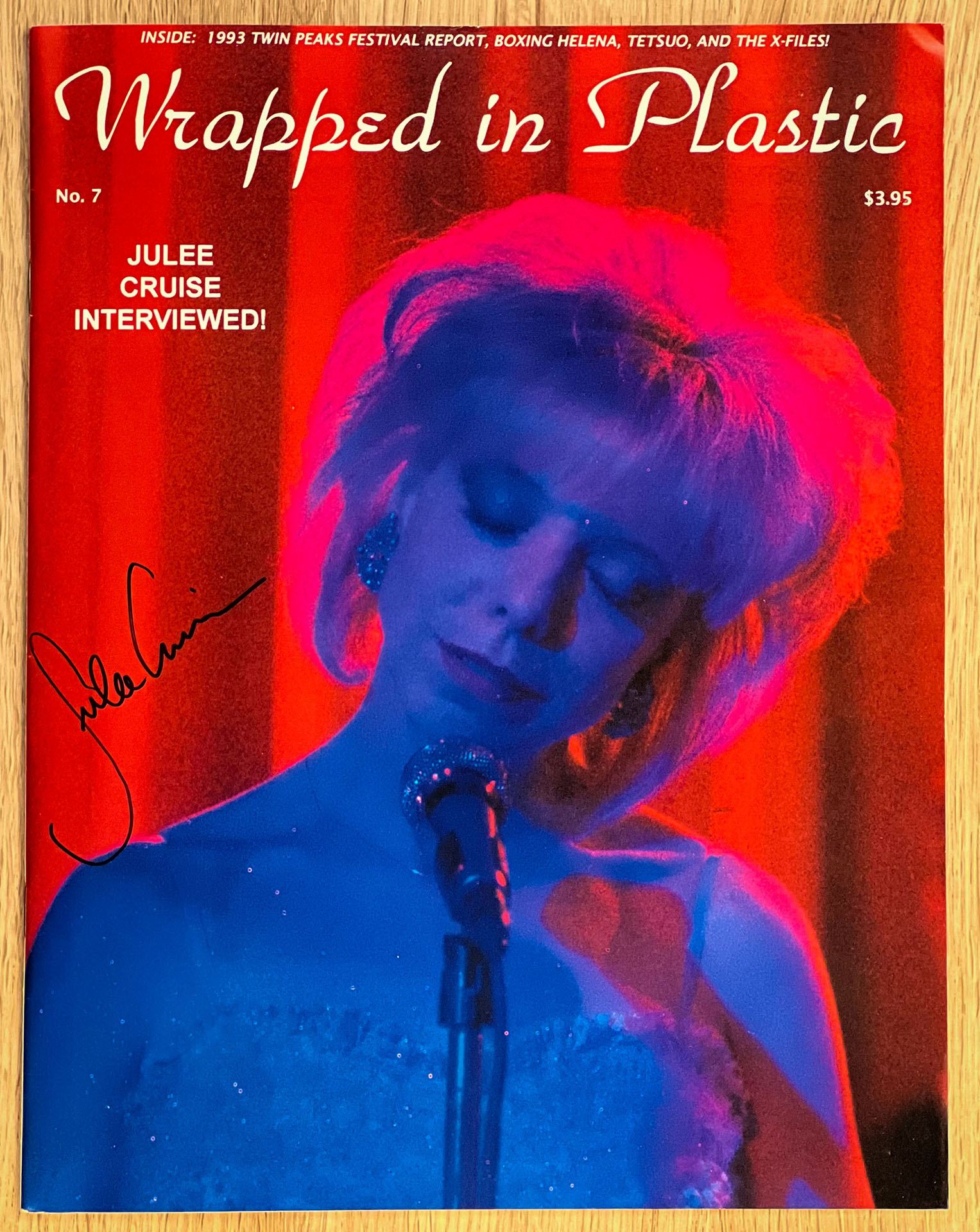
She remained positive during her first interview on Aug. 8, 1993 with Craig Miller and John Thorne’s “Wrapped In Plastic” No. 7.
“Well, in my opinion, it is a much, much better album. It’s much more sophisticated in that David, Angelo and I really know what we’re doing now,” explained Julee to the then young Twin Peaks fanzine. “We were flying by the seat of our pants [four years ago], which can really be nice for the first album. It’s very spacious and moody. But the second album is, I think , more polished. I thin the music itself, the melodies, the lyrics are better. You know, there are certain songs on the last album that I particularly thought were great, like ‘Falling’ and ‘The World Spins.’ I think this album has all those elements in every song. There’s not a dog in the bunch.”
Behind the scenes, Julee felt differently about the album. Three months later, she expressed these feelings to The Boston Globe in a Nov. 25, 1993 article.
“‘The Voice of Love’ is not that big a departure from the last one,” the singer-actress …. said from her New York home. “People who are looking for something shocking aren’t going to get it. And a lot has happened since the last album – the experience with the [B-52’s] and doing some stuff on Broadway that has nothing to do with ‘Julee Cruise – the singer? Those have changed my ideas about what I’d like to do.
It’s not that I’m not grateful – it’s a pretty album, but we could have taken it further: into pop or vocally. Really, I think we took the safe route. I don’t think I’ll do this style with Angelo and David ever again. It’s a tunnel vision we can’t get out of. I want to see some major changes. My vocal range is gigantic and I want to use it.”
Despite the feelings expressed and the behind-the-scenes drama I’ll explore next, the album remains a gorgeous testament to dreamy music from three individuals who have since transitioned to another plane of existence.
WRITING THE SONGS FOR ‘THE VOICE OF LOVE’ | 1989-1991
The eleven songs included on “The Voice of Love” were in development for several years before the album’s release. It’s unclear, however, the exact dates when tracks were written and recorded.
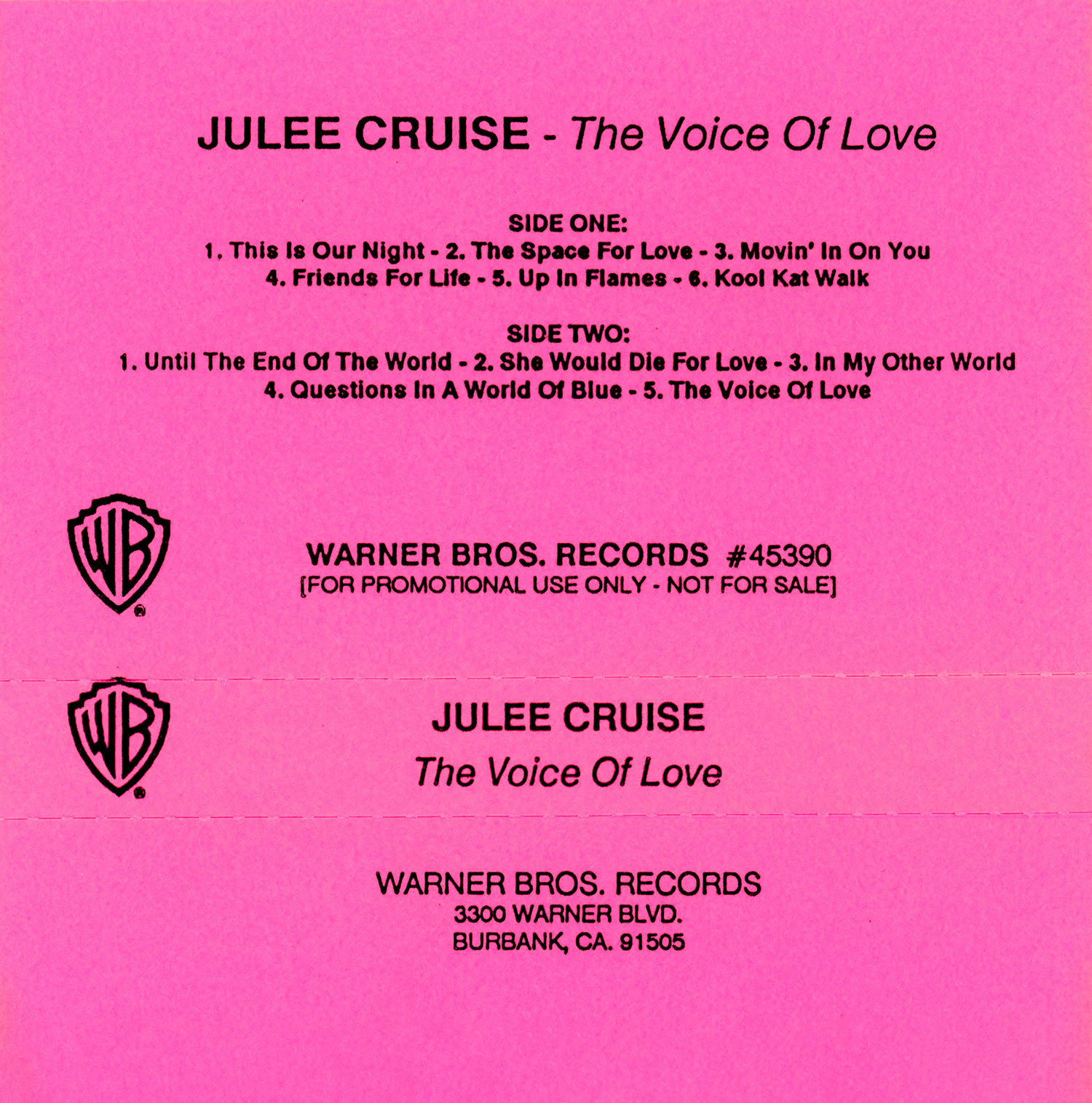
Most likely, production on the album was completed before summer 1993 as a Newsday article from July 9, 1993 had a brief mention of a September release. This date was pushed back to October.
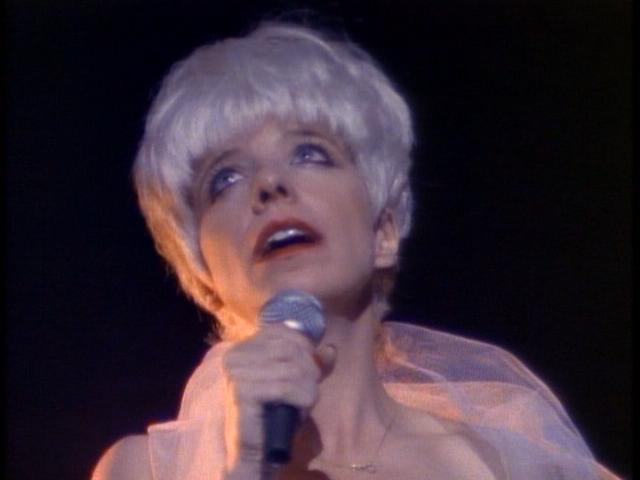
One of the earliest songs created on the album is “Up In Flames,” which Julee performed suspended from about 40 feet off the ground in David Lynch’s Industrial Symphony No. 1. The song was the opening track during the twice-live performance on Nov. 10, 1989 in New York City. Koko Taylor would also record the song for Lynch’s 1990 film Wild At Heart.
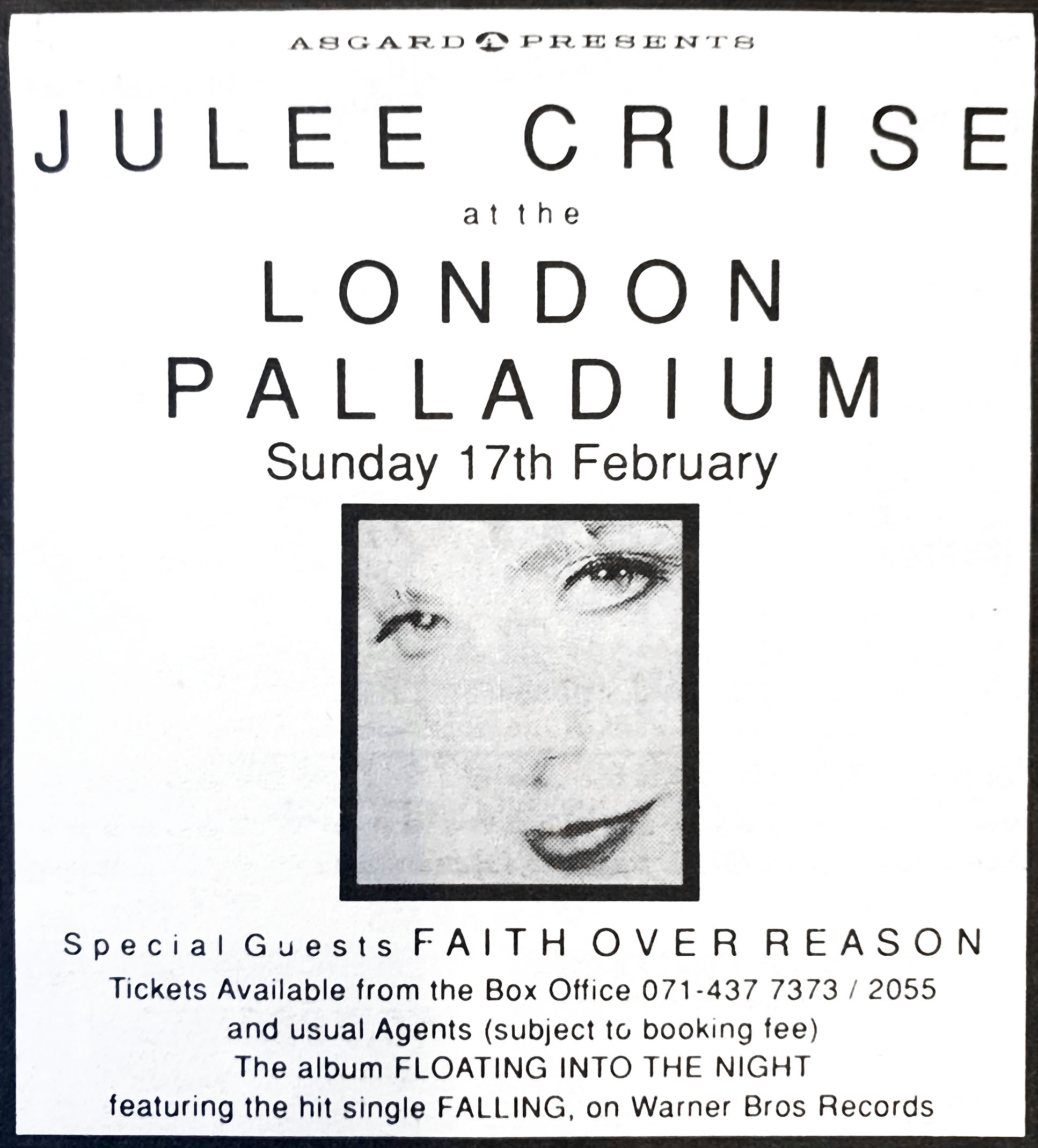
During Julee’s first United Kingdom concert on Feb. 17 1991 at the London Palladium, she performed “Kool Kat Walk,” which was an instrumental track originally created for David Lynch’s Wild At Heart. This time, it had lyrics that I still can’t get out of my head.
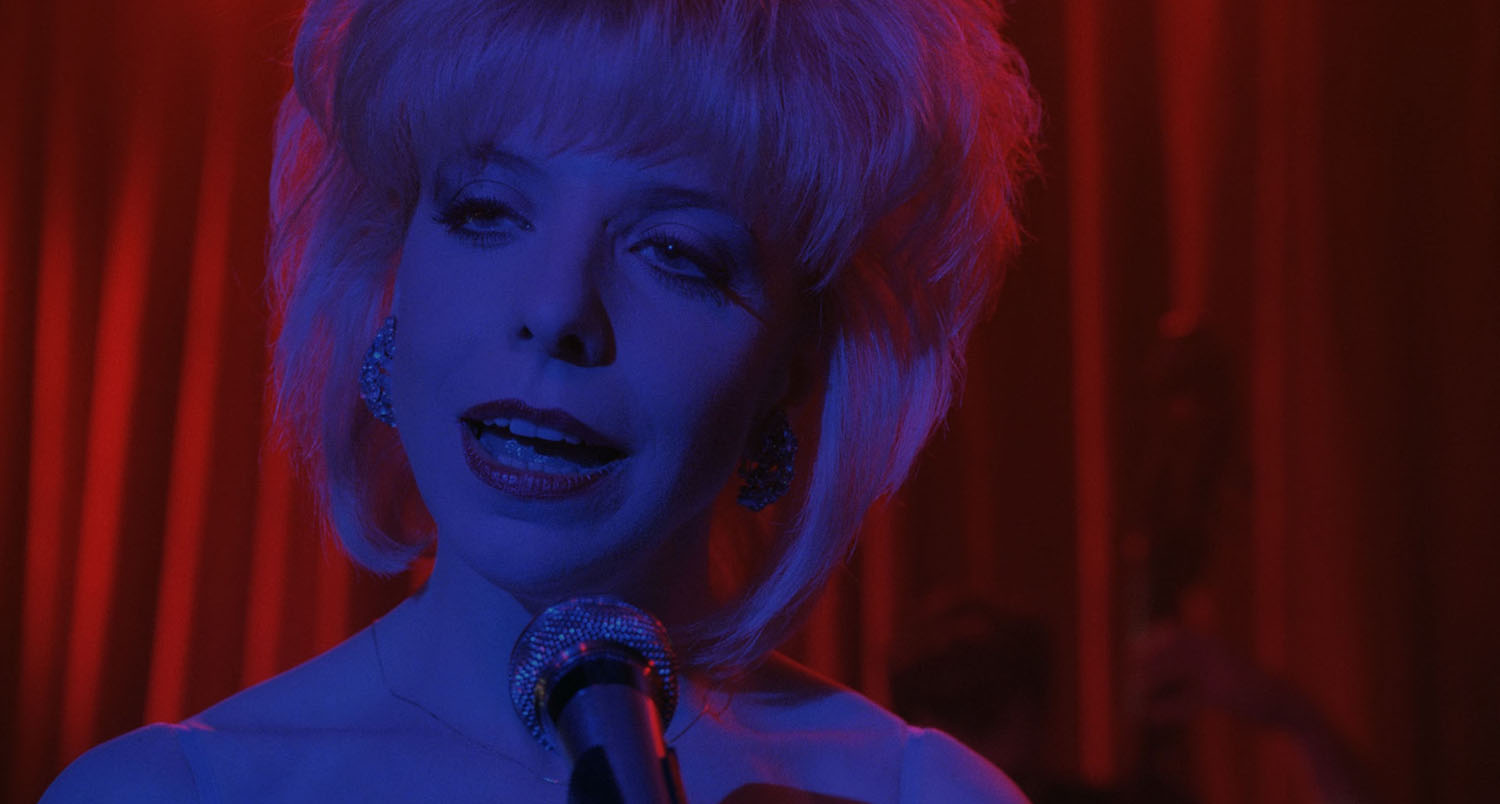
Next up, “Questions in a World of Blue,” “She Would Die For Love (The Theme to Twin Peaks: Fire Walk With Me)” and “The Voice of Love” were created for the Twin Peaks: Fire Walk With Me soundtrack, released on Aug. 11, 1992.
“I was in a play, and I had to be flown out and record [‘Questions in a World of Blue’],” explained Cruise to Scott Ryan for his Twin Peaks music book. “You don’t miss Broadway, but it was David Lynch, so they let me. On that song, I did the harmonies as a French horn quartet. This one, I had to be real careful with my vowels, I used a European accent when I sang it.”
Her scene was shot on Oct. 14, 1991 in Van Nuys, California. Julee was in the middle of performing the role of spaceship science officer, Mrs. Gloria Prospero in the Off-Broadway production of “Return to the Forbidden Planet” written and directed by Bob Carton. She performed in the musical from Sept. 27, 1991 until it closed in April 1992.
She may have recorded “Questions” in August or September 1991 around the time she recorded a cover of a 1960 Elvis Presley song and possibly, “Until the End of the World” that appears on her 1993 album.

“When we were asked to do a song [by Wim Wenders], David came up with the lyrics. And, of course, we didn’t know that U2 was doing a song [of the same title] before us!,” explained Julee to Thorne and Miller in a 1993 (“Wrapped“, page 2). “But it’s a really cool song. It turned out to be one of my favorites. Yeah, the lyrics were written first before anything else. David wrote the lyrics, and he did write it for the movie.”
Instead, Cruise’s cover of Presley’s “Summer Kisses, Winter Tears” was used in Wenders’ film soundtrack released on Dec. 10, 1991 for his feature film released a few weeks later on Dec. 25, 1991.
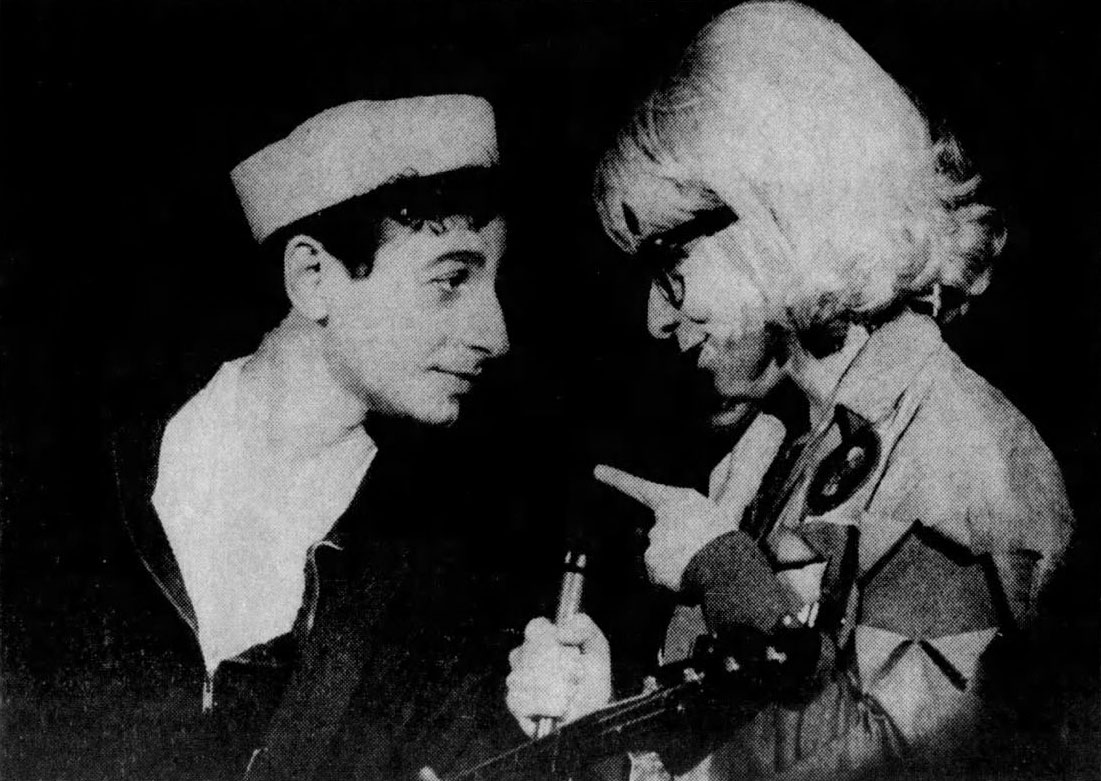
Julee told “Wrapped in Plastic” that she wrote ten songs for the album but ultimately Lynch and Badalamenti only included one, “In My Other World,” written with fellow Broadway performer Louis Tucci.
“We have tons and tons of music. Warner Brothers wanted me to start writing too, so my and Louie started collaborating, because I like how Angelo and David collaborate together. I’m a musician too, so it makes it easier for me. I wrote about ten songs. David wanted to put some of them onto this album, but they just didn’t fit into the whole context of what we were doing. ‘In My Other World’ was the only one. The thing about this album is that it is just sort of has an arc to it, and it all fits into one piece, almost. The next album with have a few other songs that I have written.” (“Wrapped“, pages 2-3)
Tucci and Cruise performed together in “Return to the Forbidden Planet” from fall 1991 to spring 1992, so “In My Other World” and those other nine mystery songs might have been written between performances.
Based on these snippets, by 1991, there were already several songs either written or performed live including:
- Up In Flames (Industrial Symphony No. 1 – Nov. 10, 1989)
- Kool Kat Walk (London Palladium concert – Feb. 17, 1991)
- Until the End of the World / Summer Kisses, Winter Tears (Wim Wenders’ Until the End of the World – soundtrack released Dec. 10, 1991)
- Questions in a World of Blue (Oct. 14, 1991)
- She Would Die For Love / The Voice of Love (the music was completed first, lyrics written later – Twin Peaks: Fire Walk With Me soundtrack released Aug. 11, 1992)
- In My Other World (written with Louis Tucci; they performed together from Sept. 1991 to April 1992)
This leaves the remaining songs, “This Is Our Night,” “The Space For Love,” “Movin’ In On You” and “Friends for Life,” all of which were written by Lynch and Badalamenti. Without detailed production notes, it’s unclear when exactly these were written or recorded. They could have been from the “Floating Into The Night” sessions where reports stated they wrote 40 songs. One day, I hope production notes are discovered from these recording sessions (I know they are out there).
RECORDING ‘THE VOICE OF LOVE’ | 1993
On Thursday, June 25, 1992, Fred Schneider and Kate Pierson of The B-52’s confirmed Julee Cruise would join their upcoming tour as Cindy Wilson’s replacement. The tour would begin on Aug. 16 and continue until April 1993. Cruise would not be a permanent member of the B’s.
“I’m not joining the B-52’s, and there was never a suggestion of that from them,” Julee told Gary Graff from the Detroit Free Press on Jan. 8, 1993.
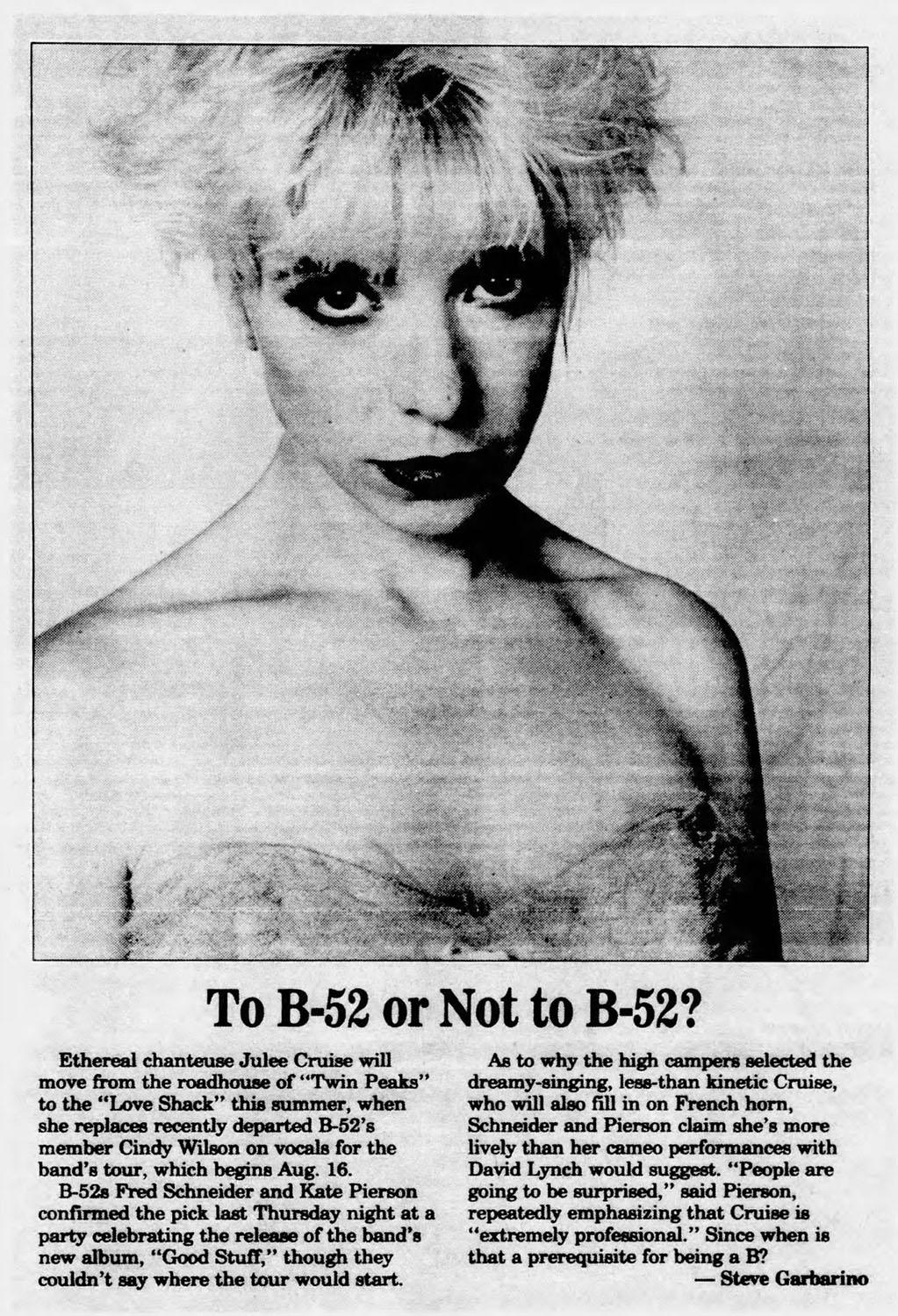
According to Greg Olsen’s book, “A Beautiful Dark,” Lynch wasn’t receptive to Cruise touring with the iconic party band (which could have transpired in June 1992).
“She told Lynch that the rock-pop singing group The B-52’s had asked her to go on tour with them, and said she wanted to accept their offer. ‘He said, ‘No,’ and I said, ‘Bye.’ I just wasn’t part of his loyal corps of people. I love Catherine Coulson dearly, but I was not going to be shut in a box with the Log Lady.” (Page 587)
Julee loved performing with The B’s, something she relayed to Graff.
“My identity, I guess, comes from ‘Twin Peaks,’ but I do a lot of different things. Someone like me should not be in the public eye, but I just lucked out with the ‘Twin Peaks’ thing … To tell the truth. I have a lot more fun with the B-52’s than doing my own music. I’ve been listening to them for 15 years. Their music’s really happy, and I guess mine s slightly psychotic, a little more introverted and serious. But the people who like my music seem to be accepting that, with the B-52’s,’ I’m acting on a different extreme, dancing up a storm.”
According to her interview, she also hoped to have a song with fellow B-52’s member Keith Strickland with some musical help from sideman Pat Irwin.
The article also mentions she wrote “four songs herself.”
“While I was touring with the B’s, I wrote constantly,” Julee shared in her Aug. 1993 press release for the album. “Unlike most touring musicians, I like tour buses, the mother ship. I like to retreat into the dark claustrophobic comfort of my bunk area. I’m not very social. It was a stimulating environment. I miss the bus. I got a lot of good material and this is just the beginning.”
She even wanted to do a James Brown cover for her new album.
“I had to fight and screech for that … [the James Brown cover would] add a lot more range to the music, get a lot wilder.”
Sadly, it never happened for “The Voice of Love” sessions.
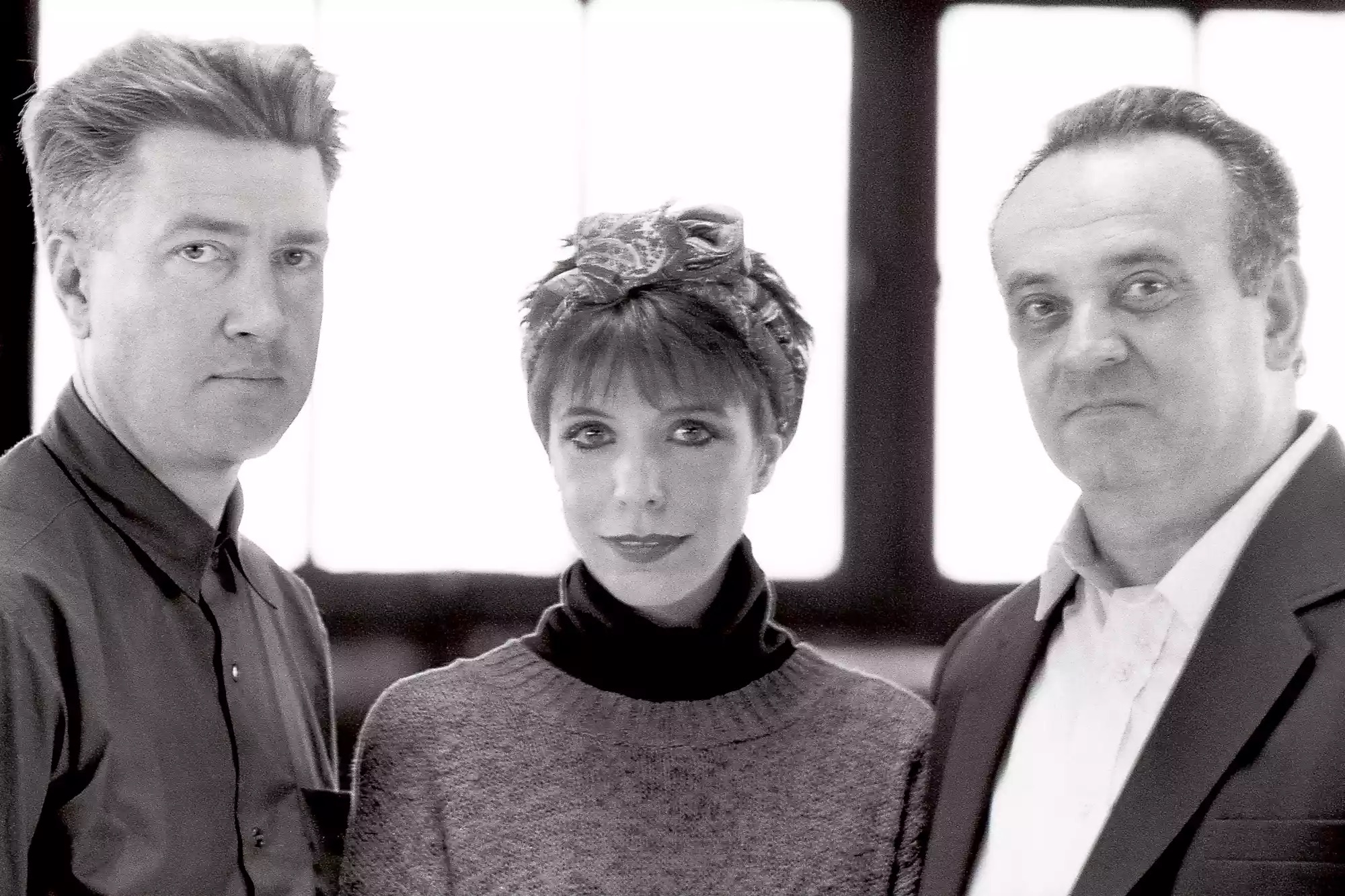
Julee shared frustrations about working with Lynch and Badalamenti in Graff’s interview from January 1993.
“It’s not that the B’s made me grow up; ‘Twin Peaks’ and my success made me grow up,” Cruise said. “I’ve always had this ‘Stepford Wives’ speech about ‘David is great, Angelo is great.’ No —I’ve grown up, had some had experiences, had some good experiences. I’d call them up and cry and David would say, ‘You can’t expect people to have respect for you. You have to earn it.’ “He sort of let me learn that the hard way.
We had a talk the other night, about a two-hour talk on the phone, and I think David feels real proud he’s brought along an artist to the point where I can write my own stuff and still work with him and Angelo. Everybody helps everyone in this career … and while you may feel forever beholden for their help, you can’t stay in one place. You can’t let yourself be tied like that.”
Years later, she would echo those same feelings for Olson’s “A Beautiful Dark” book.
“I came off the road with The B-52s and I’d been making $5,000 per show for eight months. David and Angelo did not help me financially at the beginning, and I question that. I was waiting tables when I got the call to go on Saturday Night Live and sing ‘Falling.’ I told David that with The B-52s I’d been living a different life – with respect. I said, ‘You and Angelo did not respect me,’ and he said, ‘You have to earn respect.’ He was right about that, but I sure thought I’d paid my dues with him by then.” (Page 587)
This tension hang over the recording sessions for “The Voice of Love.”
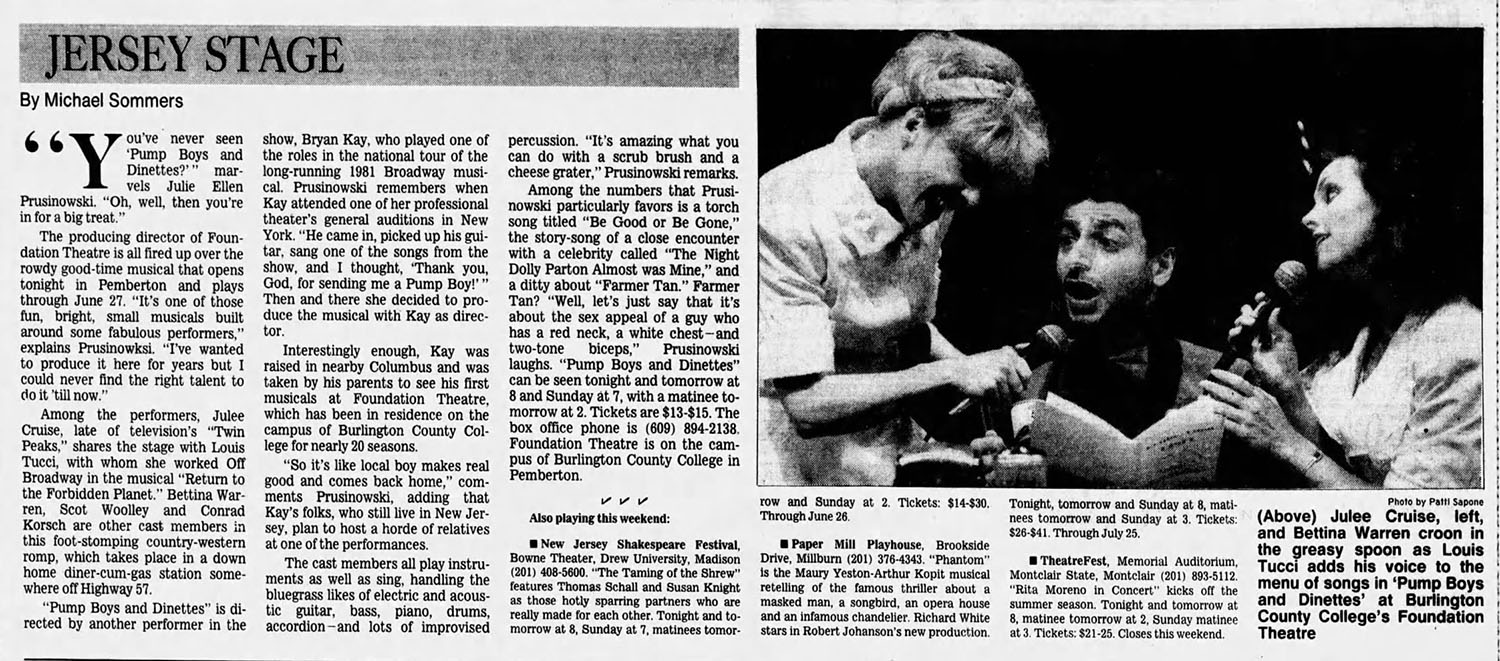
Graff’s article mentions Julee would record the new album after the B-52’s tour ended in April 1993. She only had a few weeks to record as she returned to the stage performing in “Pump Boys and Dinettes” in June 1993.
JULEE CRUISE’S THOUGHTS ABOUT ‘THE VOICE OF LOVE’ ALBUM TRACKS
Compiled from multiple interviews, here are Julee’s thoughts about the album tracks featured on her 1993 album, “The Voice of Love.” Overall, Julee didn’t feel a part of the creative process, something she told Olson.
“On the second album, unlike the first, they didn’t include me in the creative process; They had me come in and read sheet music – that’s why we split. They mixed the record without me and then played me the mix, and I said, ‘This is crap.’ The project had my name on it, but it wasn’t my record. David got so mad he had to go out in the hall to collect himself.” (“A Beautiful Dark“, Page 587)
In an Aug. 23, 2018 article with Ashley Naftule from Pitchfork, Julee commented about her second album. Decades later, she had strong feelings about the album’s sound mixing.
“Second album syndrome,” she retorted. “It sounds like soup and the songs are bad. They put on too much fucking reverb. They did it in L.A. with some turd in a suit cause the studio was cheaper. If you don’t get the right chorusing and the right mixing to make three voices sound like a single voice, it sounds like soup.”
All the songs except two were recorded by Art Pohlemus at Excalibur Studios in New York and recorded and mixed by John Karpowich at Cherokee Recording Studios in Los Angeles and Saturn Sound in Studio City, California.
The exceptions – “Up In Flames” and “Questions In A World Of Blue” – were mixed by Art Pohlemus at Excalibur Sound, New York and mastered by Stephen Marcussen at Precision Mastering in Los Angeles.
MOVIN’ IN ON YOU AND FRIENDS FOR LIFE
“I didn’t like how my voice was mixed and I didn’t like the songs ‘Movin’ In On You’ and ‘Friends For Life.’,” Julee shared with Scott Ryan. (“Always Music in the Air,” page 310)
IN MY OTHER WORLD
For her song written with fellow actor Louis Tucci, she said Angelo laughed at it.
“It was the apprentice bringing the song to the mentor to like it,” said Cruise to Ryan. “Angelo made fun of it and said it sounded like a soap opera. I wanted him t critique it, not make fun of it. It is their record as far as writing and stuff of that. I don’t think they liked that I had a song on there. I thought they produced it really well.” (“Always Music in the Air” page 311)
SHE WOULD DIE FOR LOVE
One highlight for Julee, however, was working with legendary jazz musician Ron Carter on “She Would Die For Love.”
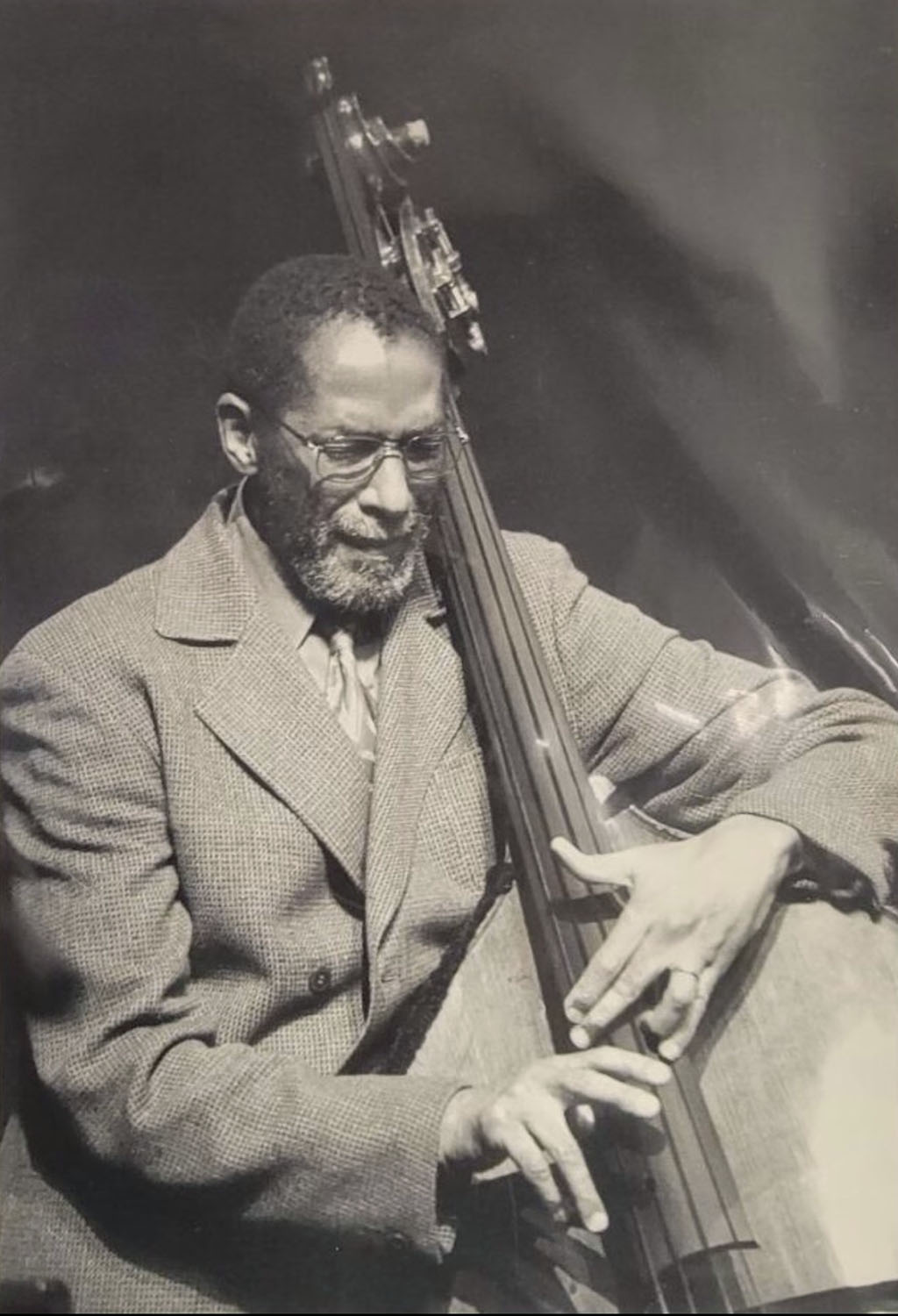
“Ron Carter played the bass. We didn’t have a stand-up bass on Floating Into The Night; we just had a Fender Rhodes, and there is a big difference. He just makes you want to hang yourself after hearing ‘She Would Die For Love’ [Laughs]. You’ve achieved something . Ron Carter is a huge jazz star, It was an honor to have that kind of a band on the record.” (“Always Music in the Air” page 310).
Julee told Craig Miller and John Thorne in her “Wrapped in Plastic” interview that the lyrics were added later.
“[The lyrics] were added later. And when we do a live performance of that [song], I’m going to play the trumpet solo.” (“Wrapped” #7, page 4)
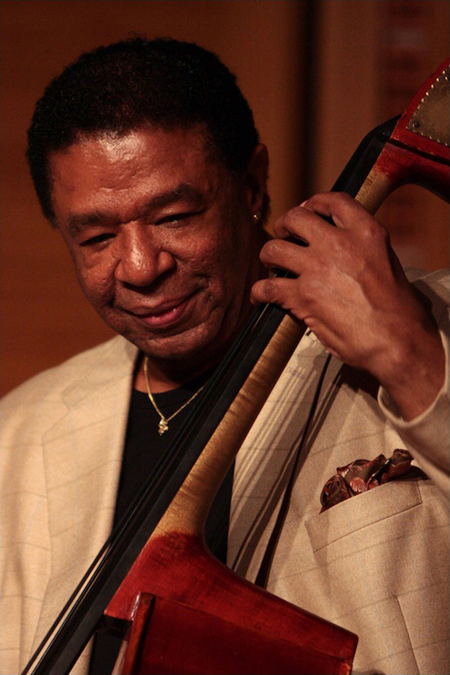
Interestingly, Ron Carter is not listed in the credits as playing base for “She Would Die for Love.” He did, however, play bass on “Sycamore Trees,” the song recorded by Little Jimmy Scott for the final episode of season two. With thanks to Scott Ryan and Dean Hurley, it was discovered Julee recorded a version of the song around 1989 (read Ryan’s “Always Music In the Air” for the full details).
She may have remembered Carter playing on that track versus Buster Williams who is credited as playing “Acoustic Bass” on “She Would Die For Love.”
QUESTIONS IN A WORLD OF BLUE
Julee discussed performing “Questions in a World of Blue” in an interview with Andreas Halskov
“I sang that a capella at the [Twin Peaks] festival a couple of years ago. That is like listening to Brahms, and to me that is musically as much about the harmonies in terms of how it was written musically and lyrically. I don’t feel a lot of emotions when I sing this song. It kind of drains you dry … it is such a strong and emotional moment in [Twin Peaks: Fire Walk With Me].”
THE VOICE OF LOVE
“The title ‘Voice of Love’ sort of made me cringe … The song itself, ‘The Voice of Love,’ that closes the album, is my favorite song. I love it because it is so over-the-top. It’s so beautiful. But I didn’t want anyone to think that I think that I’m the voice of love,” Julee laughed as she explained the album’s closing track to Miller and Thorne for issue #7 of “Wrapped in Plastic.” (page 6)
ANNOUNCING JULEE CRUISE’S ‘THE VOICE OF LOVE’ | AUGUST 1993
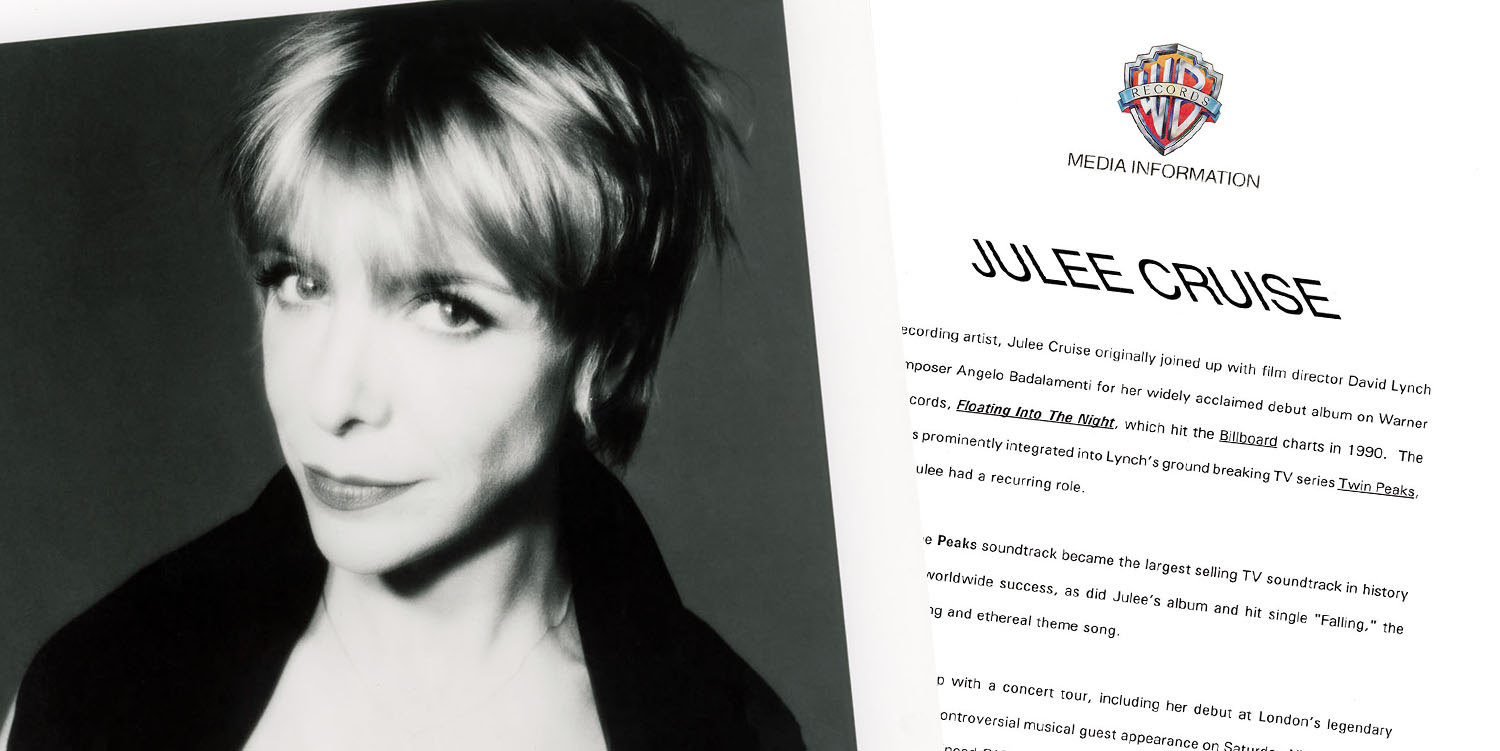
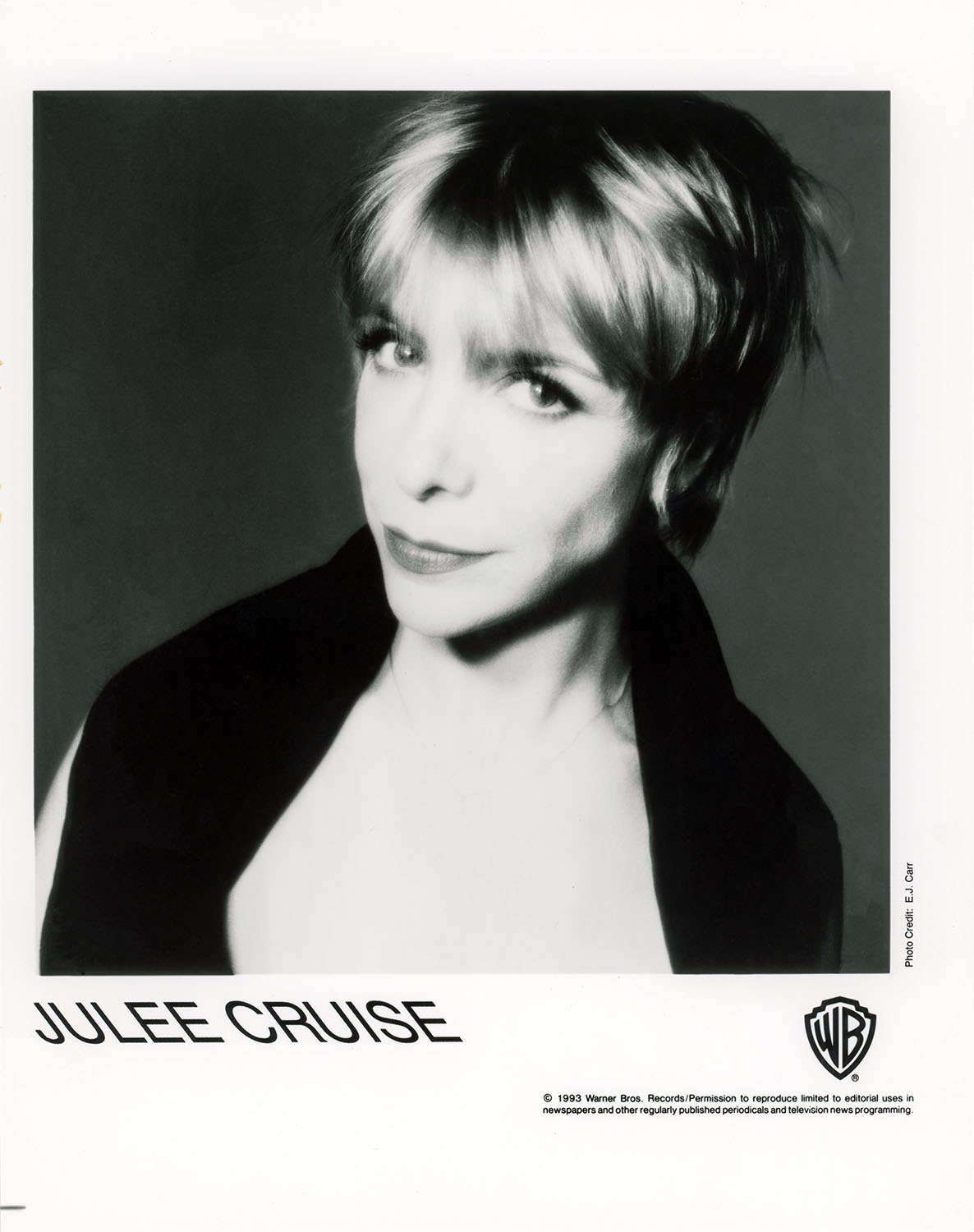
Warner Bros. Records sent a press kit to media in August 1993 in advance of the album’s official release on October 12. The kit contained a black and white headshot and a four-page press release written by Julee’s husband Edward Grinnan.
Julee’s black and white headshot was taken by E.J. Carr who studied at The Ivy School of Professional Art in Pittsburgh and the Brooks Institute of Photography in Santa Barbara, California. According to his bio, his fashion and portrait photography has included clients such as Warner Brothers Records, EMI Christian, Reprise, NBC, ABC, CBS, USA Today, USA Networks, Neiman Marcus, Lane Bryant, Marzotto, Tamotsu and Levis.
Carr would also be hired by Lynch to take additional photos of Cruise used for publicity and album packaging.
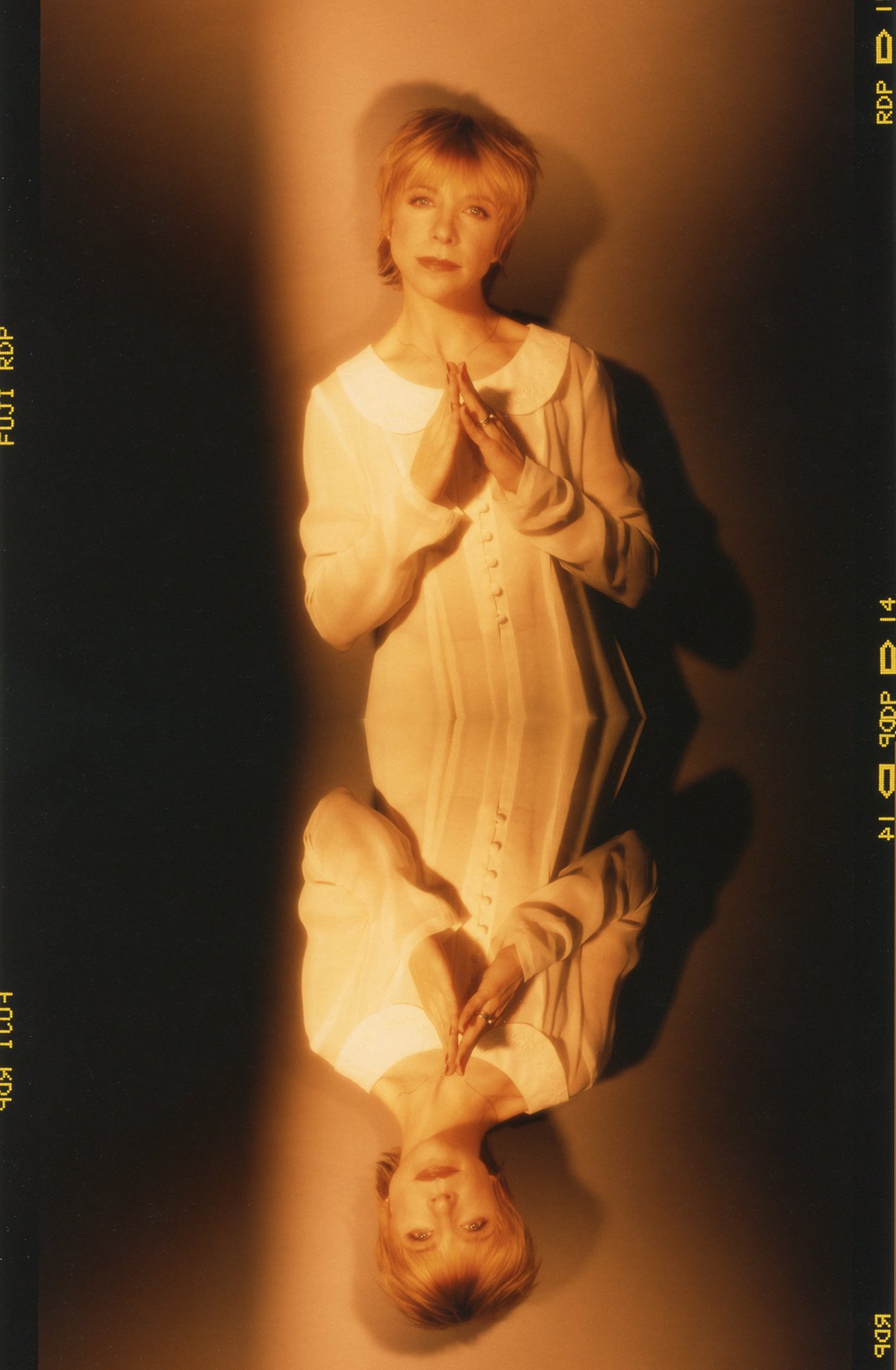
According to a Facebook post made by Carr on January 16, 2025, Warner Bros. commissioned him to “create content for the CD cover for Julee Cruise and David Lynch.” Carr explained how Lynch called him in the middle of the night about the upcoming shoot.
“Being a little nervous to be asked to impress two mega stars, my sleep the night before the shoot day was a little unsettled, to be honest,” said Carr. “At four AM, my phone rang in my home in Brooklyn, shocking me out of a deep sleep. I lept out of bed, something I wouldn’t have normally done, and answered the phone, a bit groggy and still half asleep. A voice asking for E J was on the other end of the line, a man with a youthful voice and energy.
‘Hello? Hello? Is this EJ? This is David Lynch.’
“Hello David, how are you?,” I said before David responded.
“[I] just want to touch base with you before your photoshoot tomorrow with Julee. I did some photos but they don’t seem right for the project. Have fun with the shoot and make something great.’”
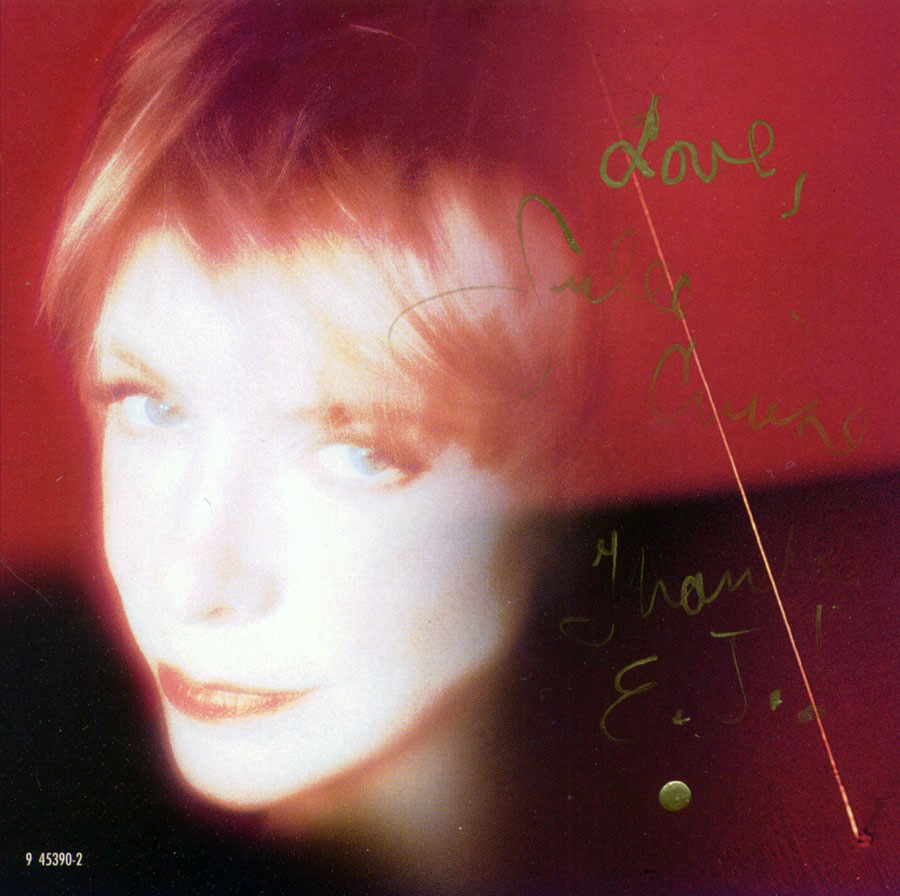
Cruise would later autograph her photo for Carr. These images would appear in the CD packaging.
JULEE CRUISE’S “THE VOICE OF LOVE” IS RELEASED ON OCTOBER 12, 1993
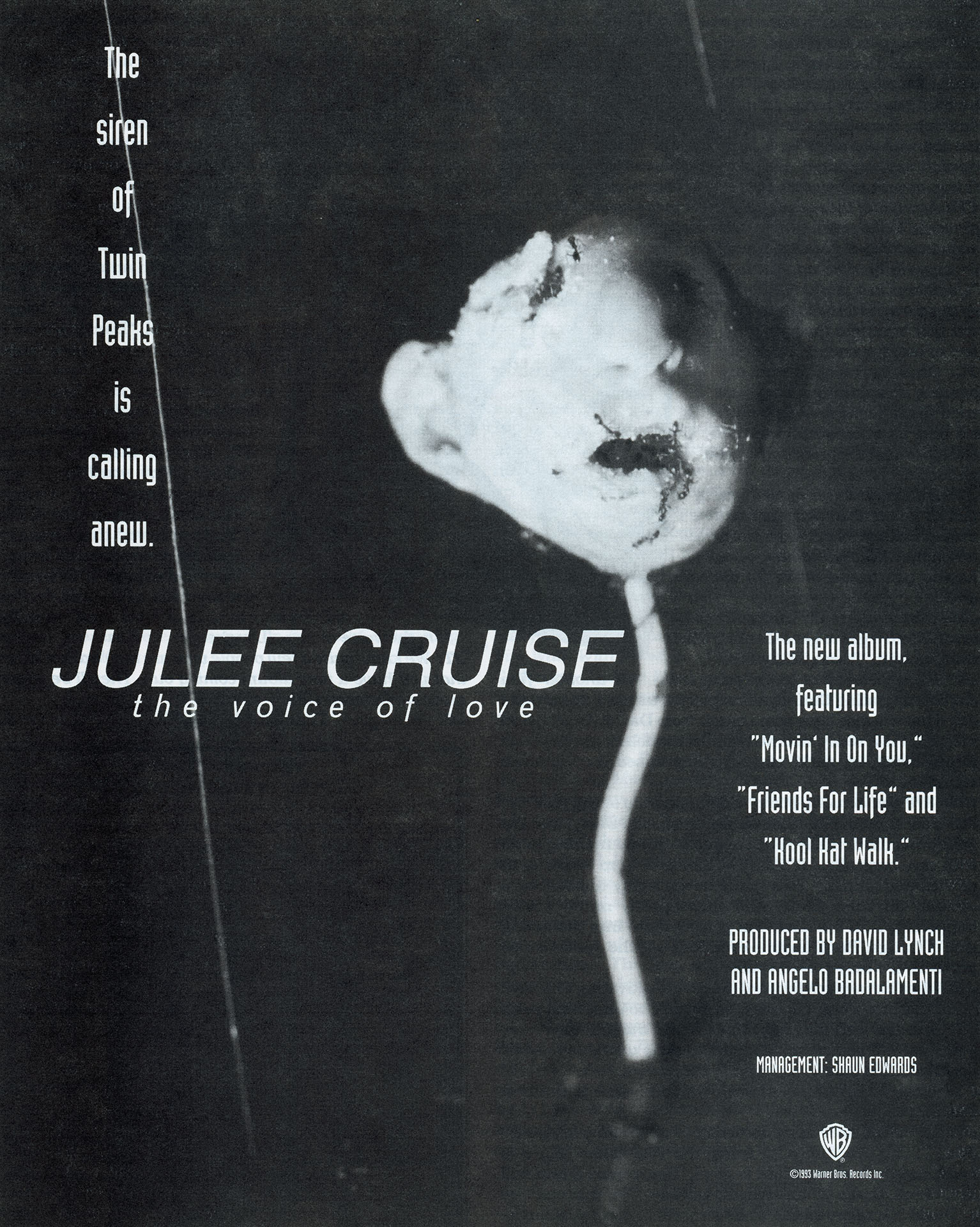
On Tuesday, Oct. 12, the “Siren of Twin Peaks” called anew with the release of “The Voice of Love.” An advertisement printed in “Wrapped in Plastic” No. 7 highlighted a few key songs from the new work including “Movin’ In On You,” “Friends for Life” and “Kool Kat Walk.”
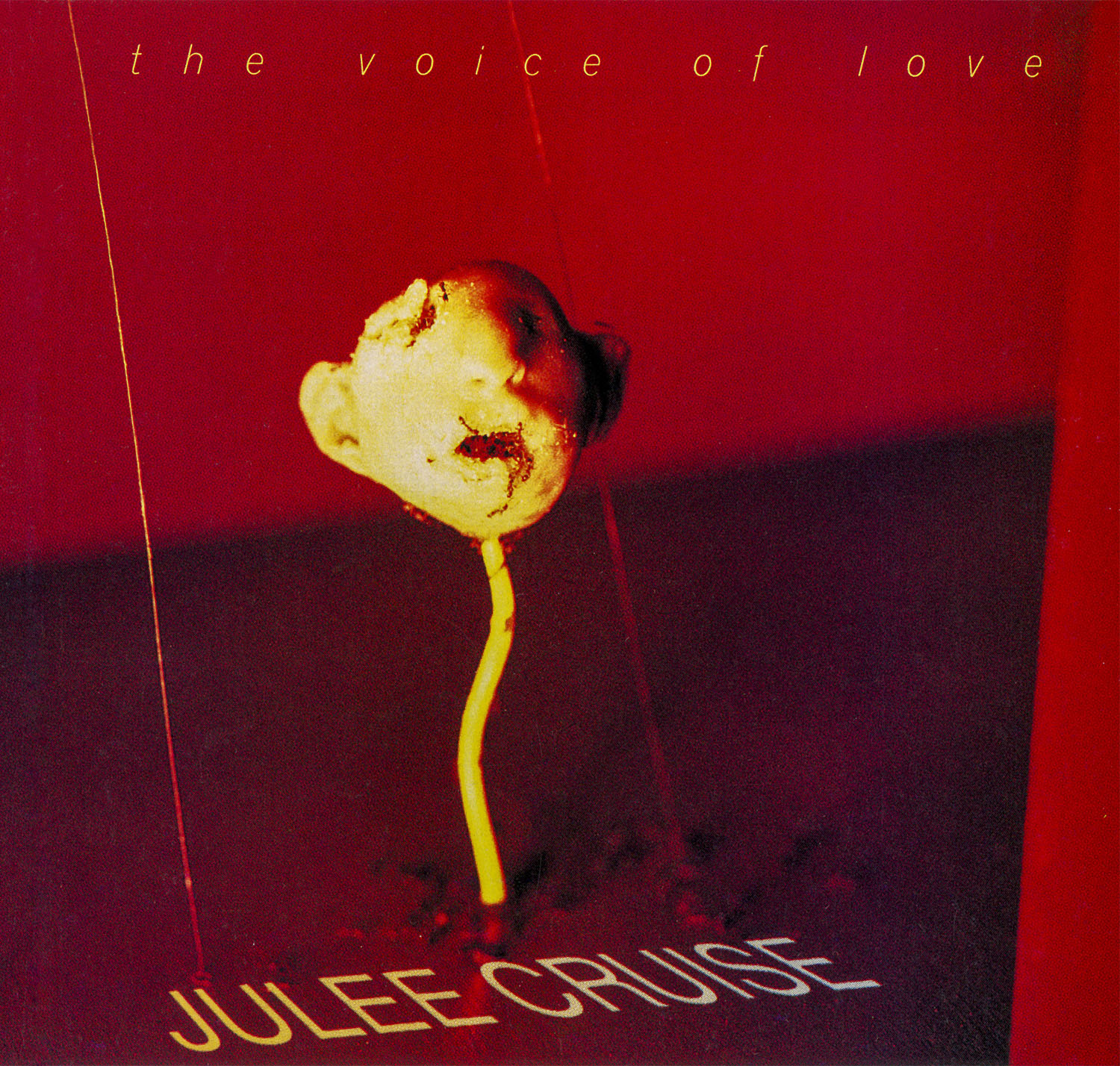
The album’s cover contained artwork created by David Lynch. Julee thought the cover was incredibly unique.
“David did a really fantastic sculpture for the cover,” explained Julee to “Wrapped in Plastic” in 1993. “It’s really unusual. He took a ball of turkey and cheese and mushed it together and put it on a toothpick, and pit it on the middle of a makeshift cardboard stage with curtains. Then he put clay around the ball of turkey and cheese and carved out eyes and put on ears, and sort of hair, and a mouth. And took a series of photographs as ants in his kitchen ate out the turkey and cheese. So pretty soon, in the photos, you see an empty head with ants crawling out of this kind of tortured man. And it’s so cool! That’s my cover, and I begged him for it. I said, ‘David, please let me have the turkey and cheese head.'”
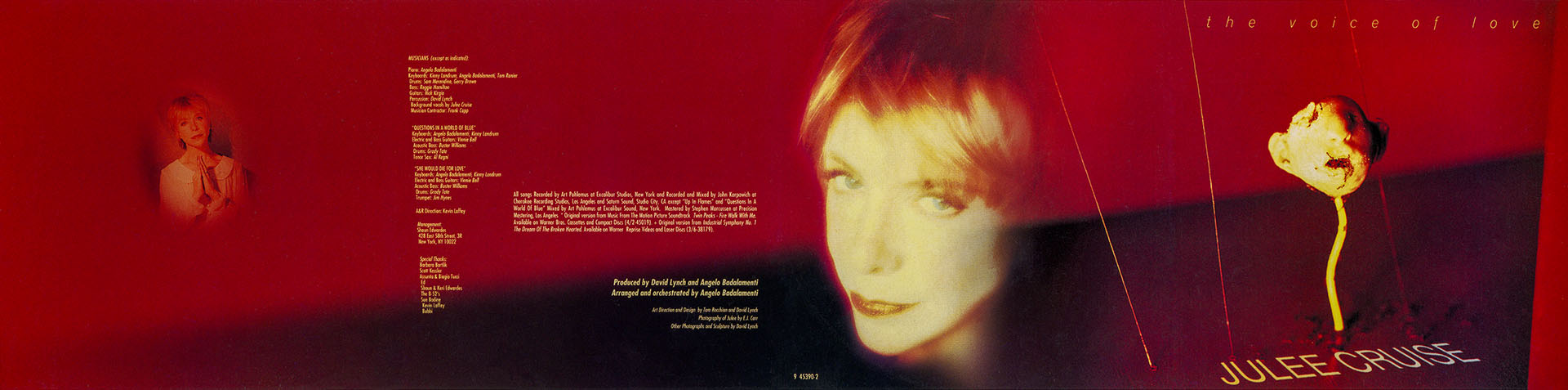
The foldout booklet also contains E.J. Carr’s photos., including a cropped version of the previously shown angel photo.
The musicians are listed for this album with exceptions for two songs.
- Piano: Angelo Badalamenti
- Keyboards: Kinny Landrum, Angelo Badalamenti, Tom Ranier
- Drums: Sam Merendino, Gerry Brown
- Bass: Reggie Hamilton
- Guitars: Nick Kirgio
- Percussion: David Lynch
- Background vocals by Juke Cruise
- Musician Contractor: Frank Capp
“Questions in a World of Blue”
- Keyboards: Angelo Badalamenti, Kinny Landrum
- Electric and Bass Guitars: Vinnie Bell
- Acoustic Bass: Buster Williams
- Drums: Grady Tate
- Tenor Sax: Al Regni
“She Would Die For Love
- Keyboards: Angelo Badalamenti, Kinny Landrum
- Electric and Bass Guitars: Vinnie Bell
- Acoustic Bass: Buster Williams
- Drums: Grady Tale
- Trumpet: Jim Hynes
Julee also included special thanks to several individuals
- Barbara Bartlik – A triple board-certified doctor in psychiatry, integrative medicine, and sexology based in New York
- Scott Kessler
- Assunta & Biagio Tucci – A nod to fellow Broadway star and co-writer Louis Tucci
- Ed – Most likely husband Edward Grinnan
- Shaun & Keri Edwardes – Keri appears to be a yoga instructor
- The B-52’s
- Sue Bodine
- Kevin Laffey the A&R executive who first signed Julee along with Lynch and Badalamenti
- Bubbi – Also appears in the credits to the original “Twin Peaks Soundtrack”
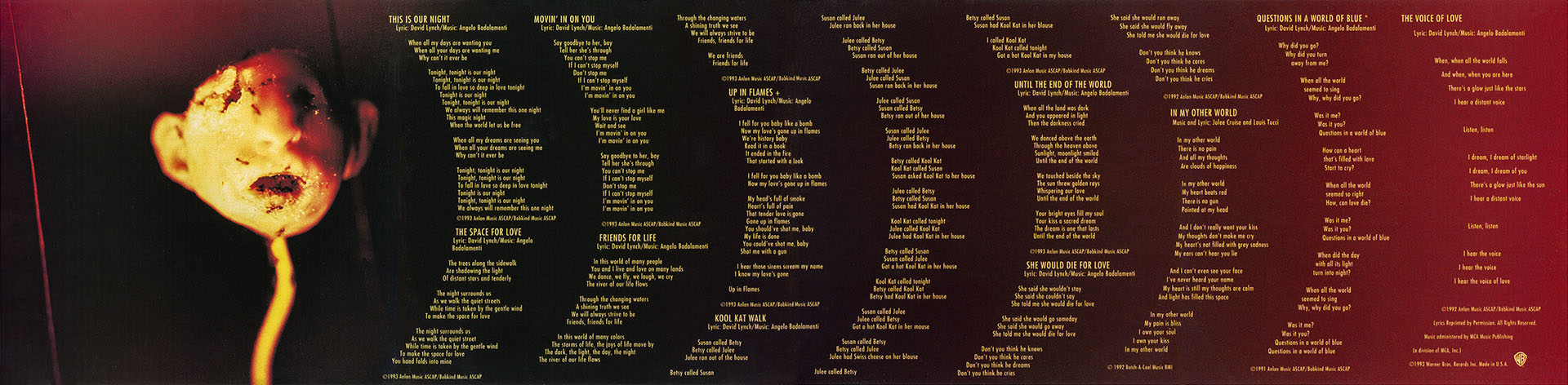
The inside booklet contains another image of David Lynch’s “Turkey Cheese Head” along with lyrics to every song on the album.

This is the CD with Julee’s name in yellow and a font that matches the previously shared press release photo.
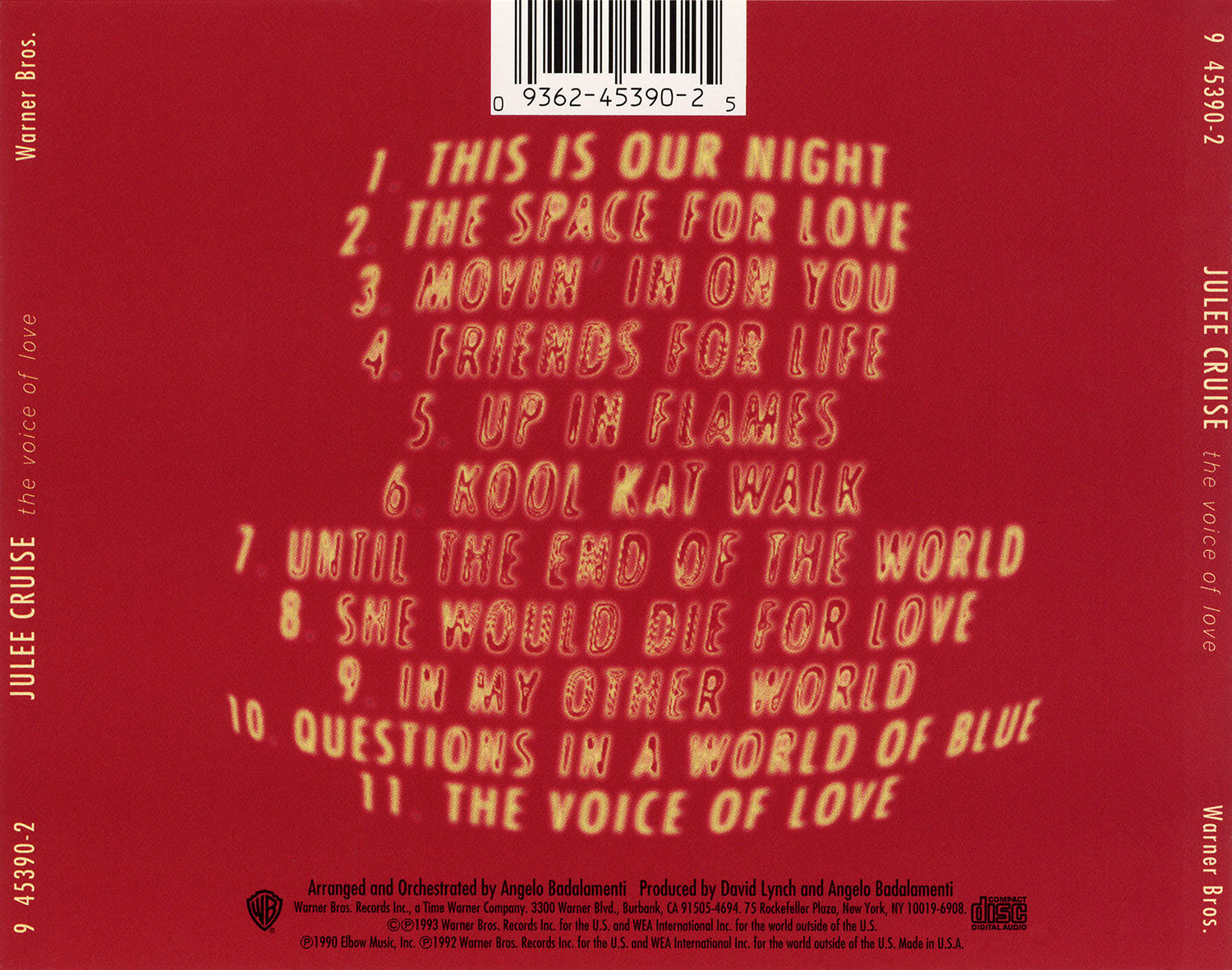
This is the CD tray image with contains the Warner Bros. Records catalog number of 9 45390-2.
The album was also released on cassette (but I still need to find a copy for my collection). A vinyl release from Sacred Bones Records would happen years later in 2018. But that’s a different story for another time.
JULEE CRUISE’S “MOVIN’ IN ON YOU”
At least one of those songs was released as a single, “Movin’ In On You. This promotion CD from Warner Bros. Records (PRO-CD-6606) contained the album version of 4-minute and 2-second song that Julee didn’t like.
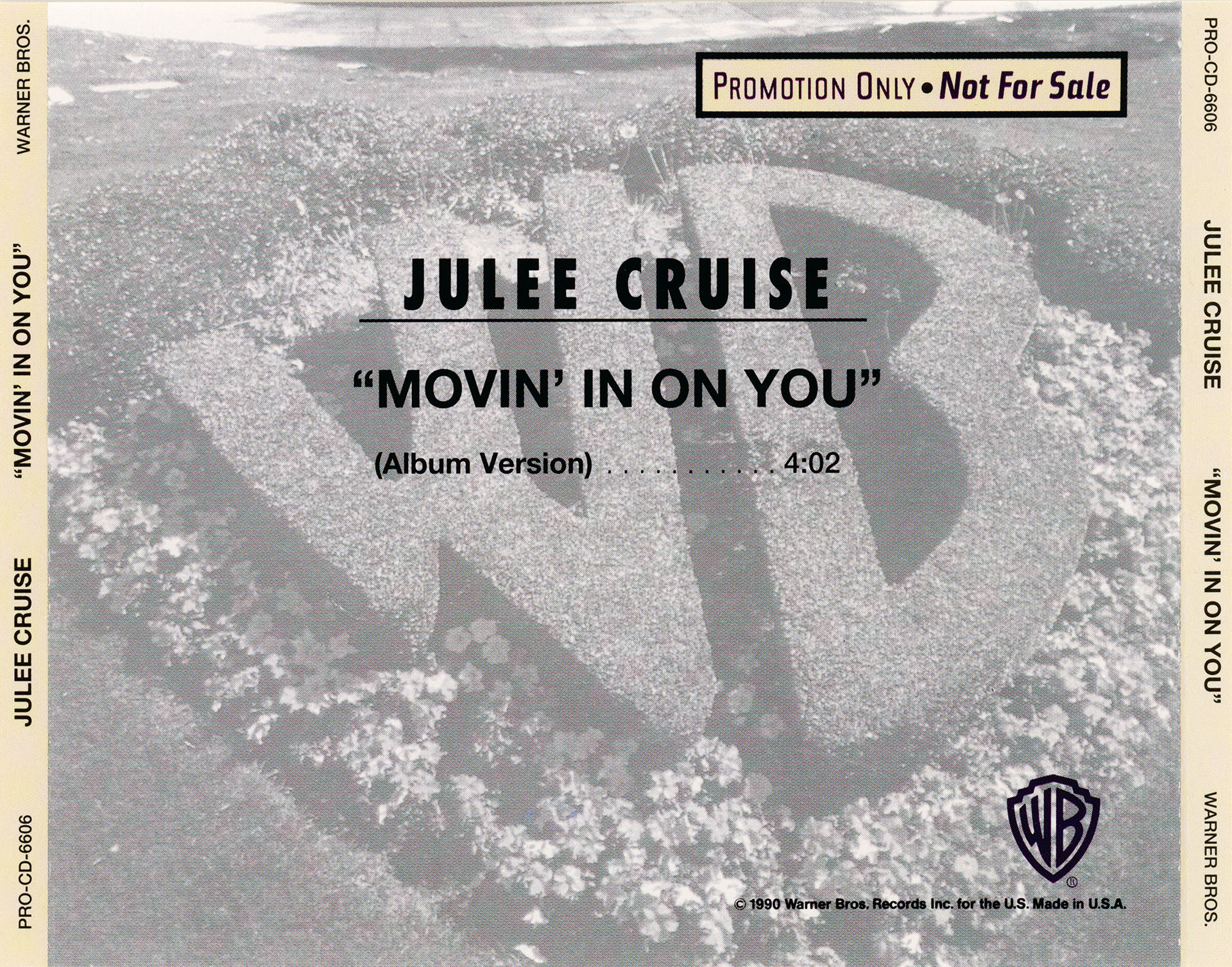
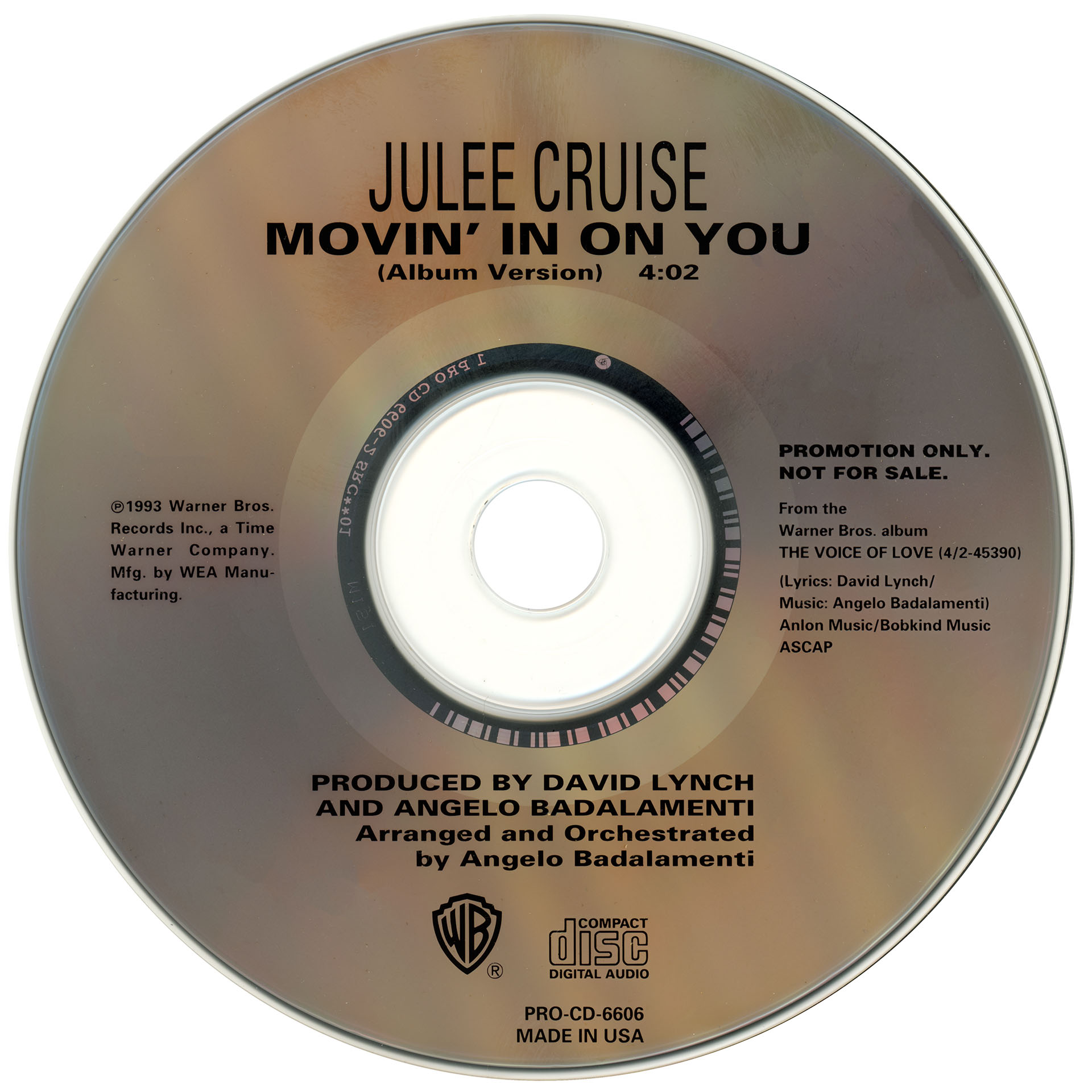
Despite endlessly searching, I could not locate exactly when this promotional CD was sent to radio stations. One assumes it coincided with the release of Julee’s album. It doesn’t appear to have charted.
ADVERTISEMENTS FOR JULEE CRUISE’S “THE VOICE OF LOVE”
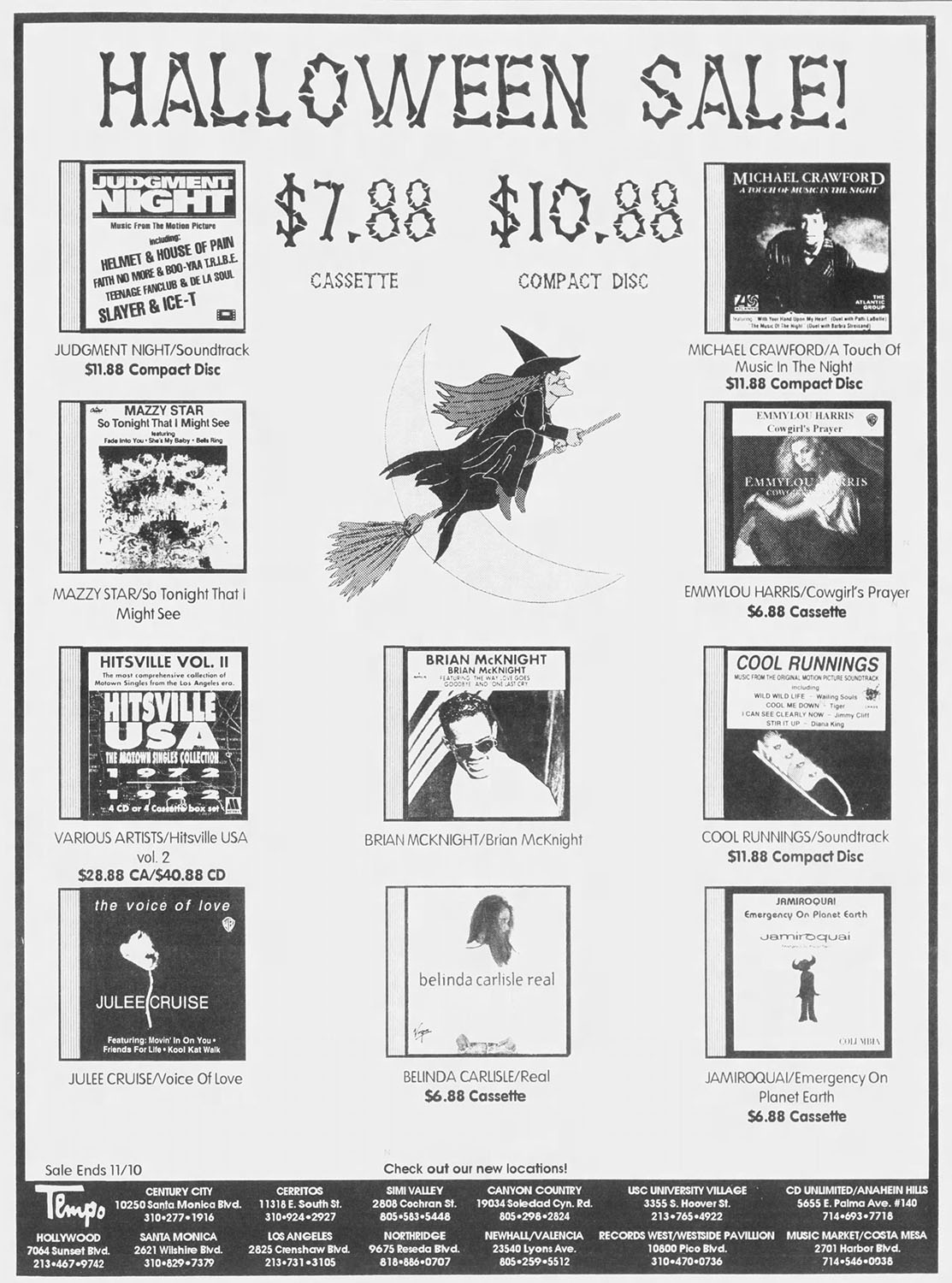
During my research, I found two advertisements ror Julee’s “The Voice of Love” album by Tempo music store in Hollywood, California. The first appeared in L.A. Weekly on Nov. 4, 1993.
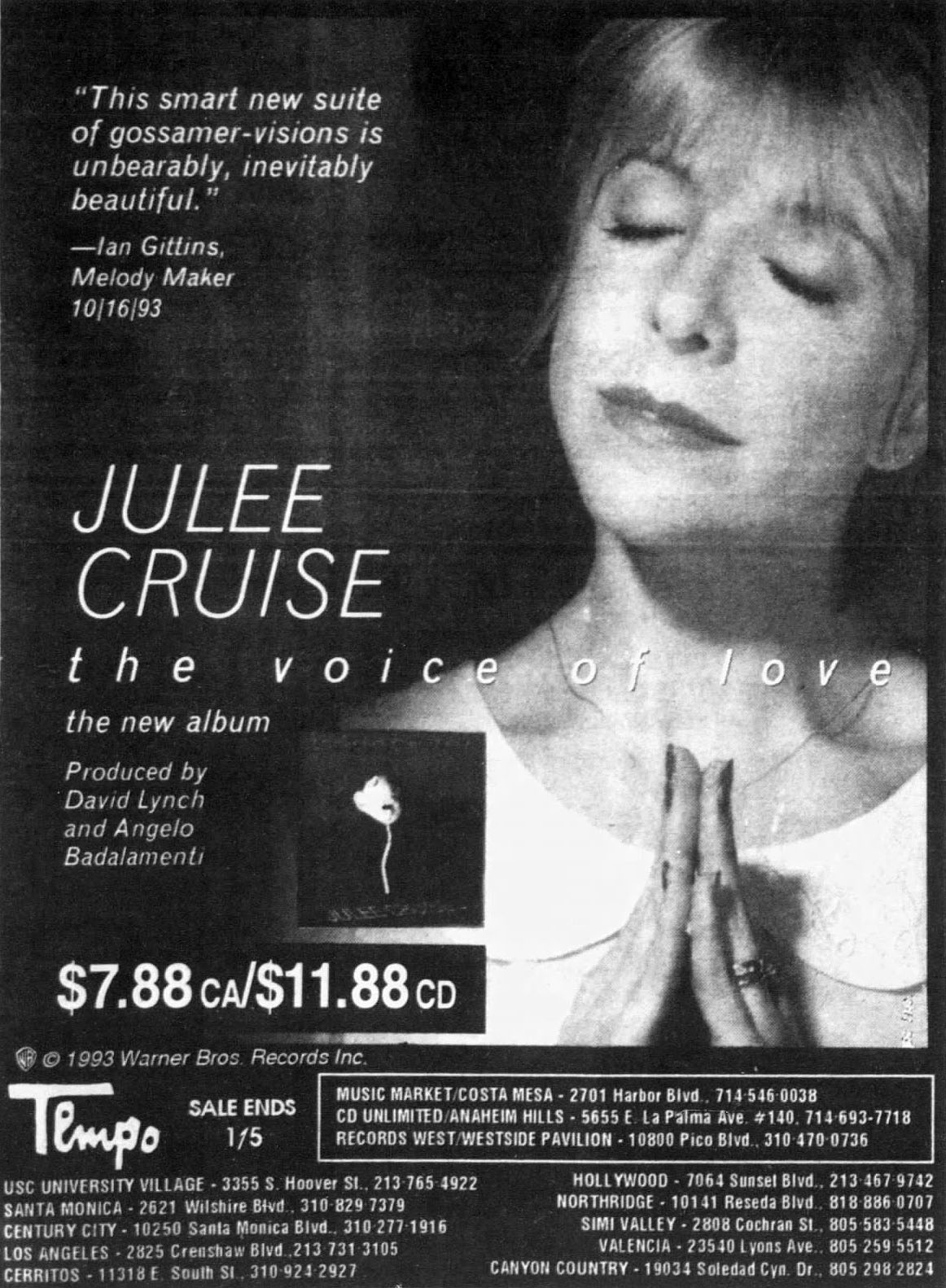
The second Tempo ad was published on Dec. 30, 1993 in L.A. Weekly. Most likely, E.J. Carr also took the photograph of Julee posing like an angel.
REVIEWS OF JULEE CRUISE’S “THE VOICE OF LOVE”
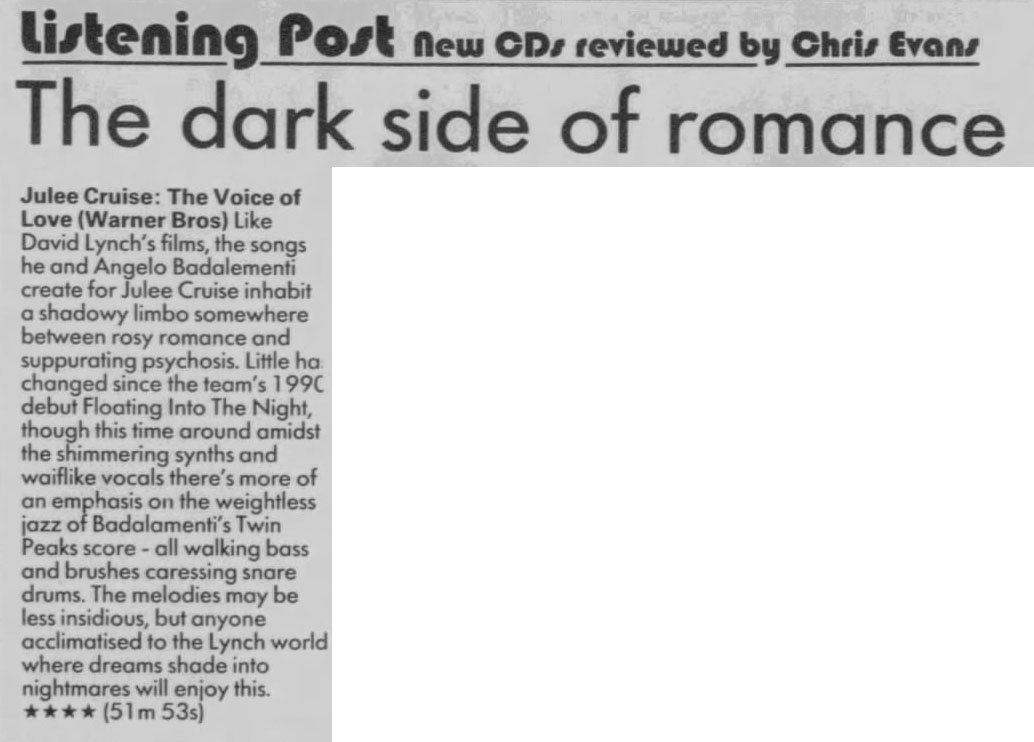
Chris Evans (not that one) published a review in the “Burntwood Post” on Oct. 28, 1993 where he gave the album four stars.
“Like David Lynch’s films, the songs he and Angelo Badalamenti create for Julee Cruise inhabit a shadowy limbo somewhere between rosy romance and suppurating psychosis. Little has changed since the team’s 199C debut Floating Into The Night, though this time around amidst the shimmering synths and waiflike vocals there’s more of an emphasis on the weightless jazz of Badalamenti’s Twin Peaks score – all walking bass and brushes caressing snare drums. The melodies may be less insidious, but anyone acclimatised to the Lynch world where dreams shade into nightmares will enjoy this.”
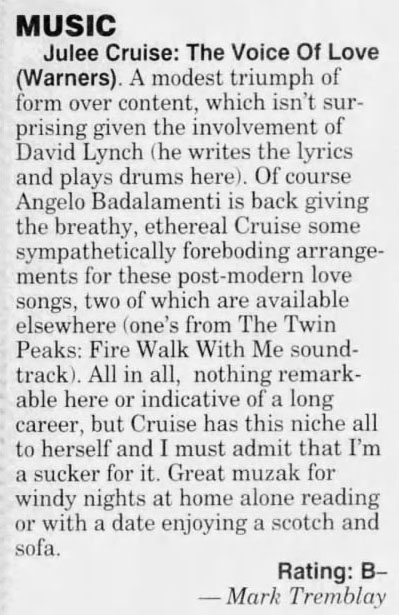
Mark Tremblay from Calgary Herald Voice gave the album a B- in his Nov. 1, 1993 review.
“A modest triumph of form over content, which isn’t surprising given the involvement of David Lynch (he writes the lyrics and plays drums here). Of course Angelo Badalamenti is back giving the breathy, ethereal Cruise some sympathetically foreboding arrangements for these post-modern love songs, two of which are available elsewhere (one’s from The Twin Peaks: Fire Walk With Me sound-track). All in all, nothing remarkable here or indicative of a long career, but Cruise has this niche all to herself and I must admit that Im a sucker for it. Great muzak for windy nights at home alone reading or with a date enjoying a scotch and sofa.”
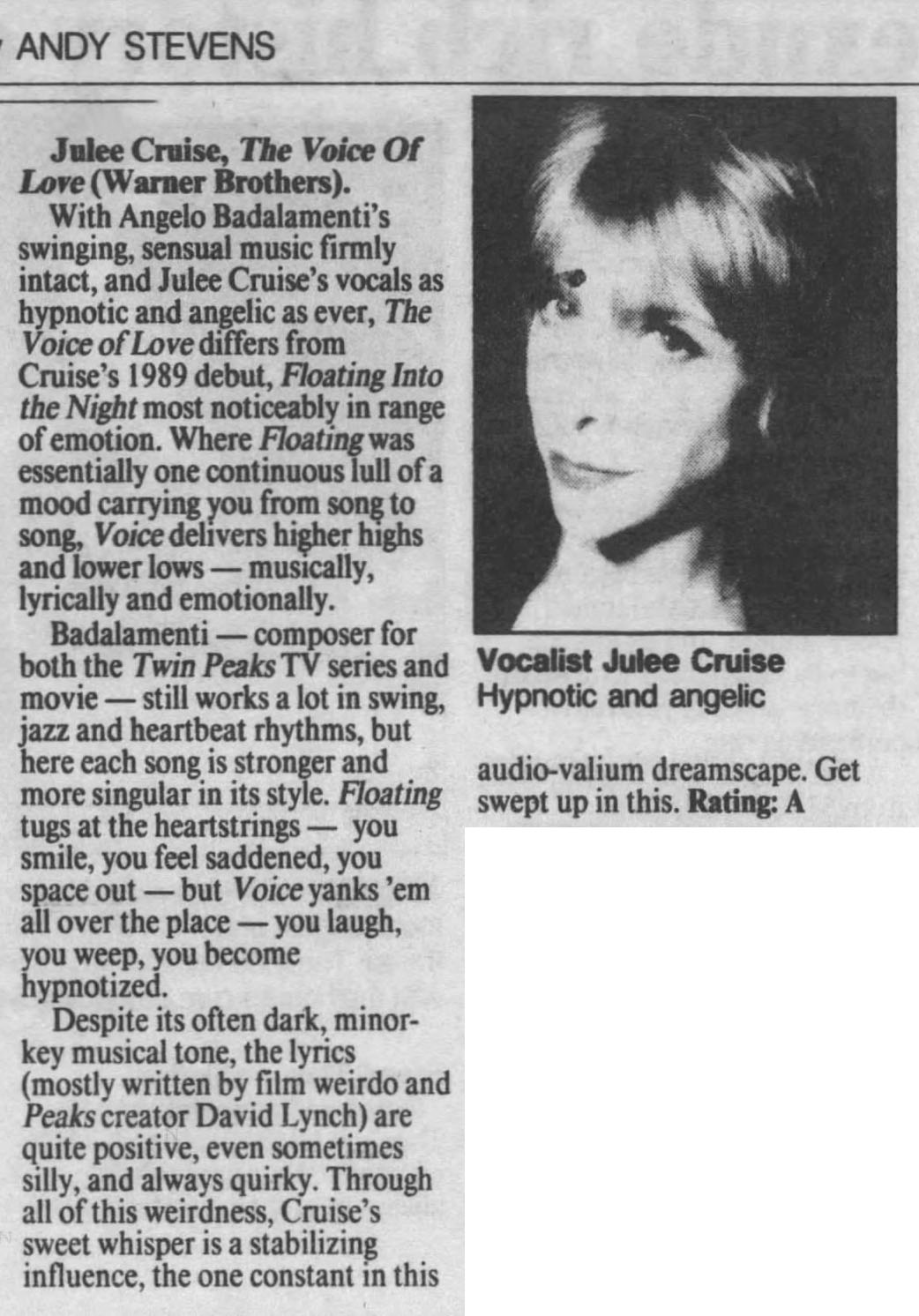
Andy Stevens from the Press and Sun Bulletin awarded the album an “A Rating” in his Nov. 5, 1993 review.
“With Angelo Badalamenti’s swinging, sensual music firmly intact, and Julee Cruise’s vocals as hypnotic and angelic as ever, The Voice of Love differs from Cruise’s 1989 debut, Floating Into the Night most noticeably in range of emotion. Where Floating was essentially one continuous lull of a mood carrying you from song to song, Voice delivers higher highs and lower lows — musically, lyrically and emotionally.
Badalamenti – composer for both the Twin Peaks TV series and movie still works a lot in swing, jazz and heartbeat rhythms, but here each song is stronger and more singular in its style. Floating tugs at the heartstrings — you smile, you feel saddened, you space out – but Voice yanks ’em all over the place — you laugh, you weep, you become hypnotized.
Despite its often dark, minor-key musical tone, the lyrics (mostly written by film weirdo and Peaks creator David Lynch) are quite positive, even sometimes silly, and always quirky. Through all of this weirdness, Cruise’s sweet whisper is a stabilizing influence, the one constant in this audio-valium dreamscape. Get swept up in this. Rating: A”
A short review on Nov. 5, 1993 in the Berkshire Eagle called the album “mood music for the millennium.”
Roger Catlin from “Hartford Courant” said the album recreated the “bizarre world of ‘Twin Peak’ through sound alone.”
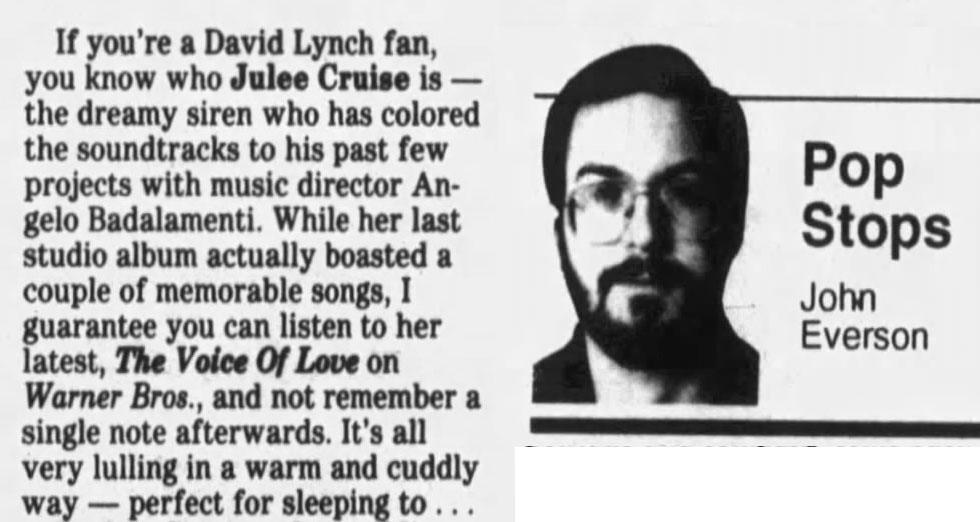
Southtown Star’s John Everson wasn’t a fan of Cruise’s new work in his brief mention on Nov. 18, 1993.
“If you’re a David Lynch fan, you know who Julee Cruise is – the dreamy siren who has colored the soundtracks to his past few projects with music director Angelo Badalamenti. While her last studio album actually boasted a couple of memorable songs, I guarantee you can listen to her latest, The Voice Of Love on Warner Bros., and not remember a single note afterwards. It’s all very lulling in a warm and cuddly way – perfect for sleeping to …”
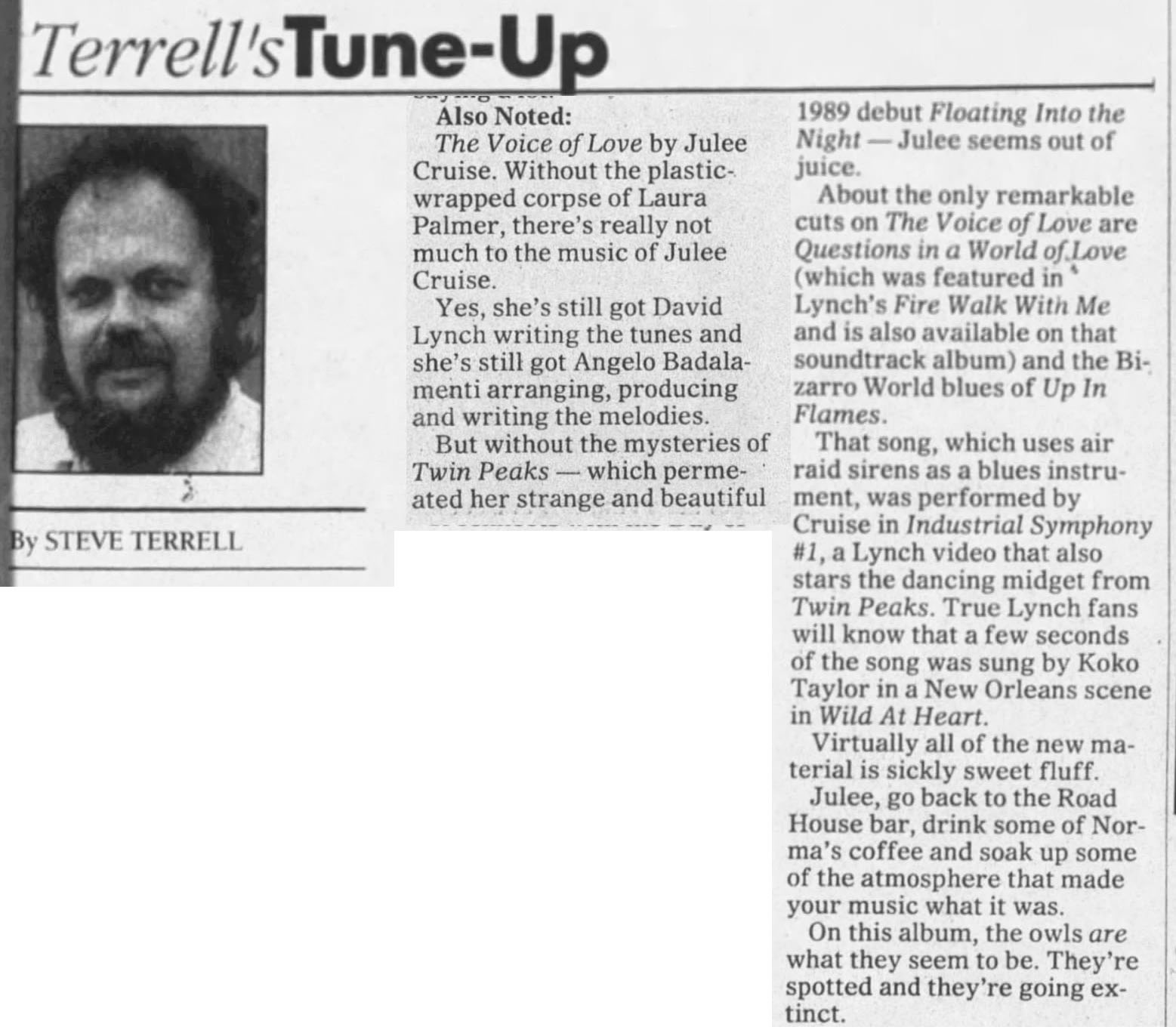
Steve Terrell joined Everson’s critical review in “The Santa Fe New Mexican” on Nov. 19.
“The Voice of Love by Julee Cruise. Without the plastic-wrapped corpse of Laura Palmer, there’s really not much to the music of Julee Cruise.
Yes, she’s still got David Lynch writing the tunes and she’s still got Angelo Badalamenti arranging, producing and writing the melodies.
But without the mysteries of Twin Peaks – which perme ated her strange and beautiful 1989 debut Floating Into the Night — Julee seems out of juice.
About the only remarkable cuts on The Voice of Love are Questions in a World of Love (which was featured in Lynch’s Fire Walk With Me and is also available on that soundtrack album) and the Bizarro World blues of Up In Flames.
That song, which uses air raid sirens as a blues instrument, was performed by Cruise in Industrial Symphony #1, a Lynch video that also stars the dancing midget from Twin Peaks. True Lynch fans will know that a few seconds of the song was sung by Koko Taylor in a New Orleans scene in Wild At Heart.
Virtually all of the new material is sickly sweet fluff.
Julee, go back to the Road House bar, drink some of Norma’s coffee and soak up some of the atmosphere that made your music what it was.
On this album, the owls are what they seem to be. They’re spotted and they’re going extinct.”
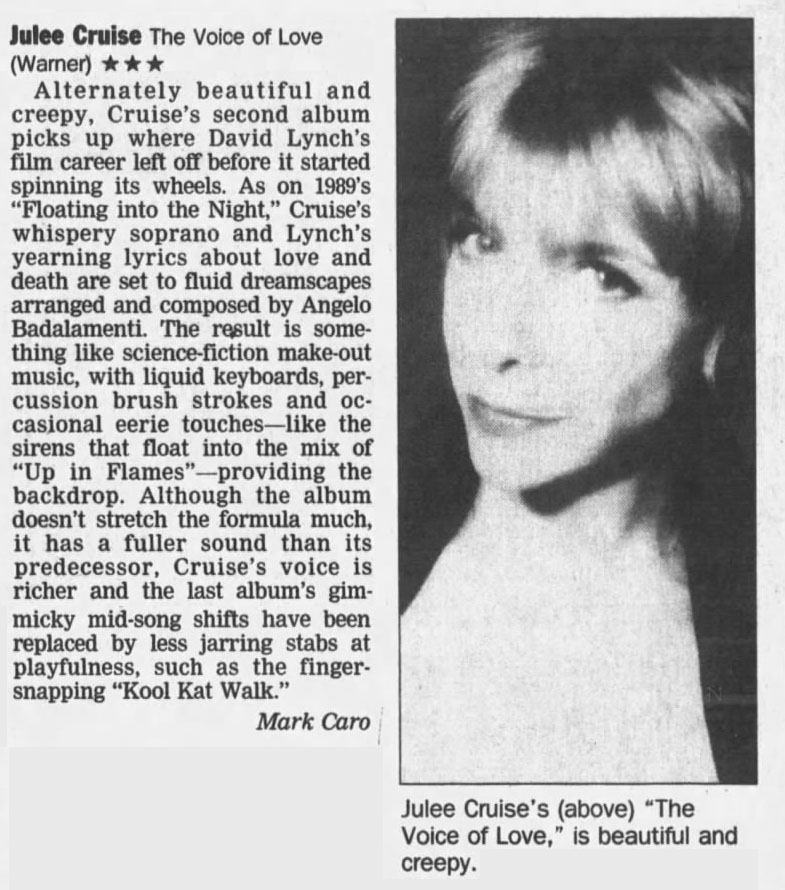
Mark Curo’s review for the “Chicago Tribune” on Nov. 25, 1993 called the album “science-fiction make-out music.”
Alternately beautiful and creepy, Cruise’s second album picks up where David Lynch’s film career left off before it started spinning its wheels. As on 1989’s “Floating into the Night,” Cruise’s whispery soprano and Lynch’s yearning lyrics about love and death are set to fluid dreamscapes arranged and composed by Angelo Badalamenti. The result is something like science-fiction make-out music, with liquid keyboards, percussion brush strokes and occasional eerie touches-like the sirens that float into the mix of “Up in Flames”-providing the backdrop. Although the album doesn’t stretch the formula much, it has a fuller sound than its predecessor, Cruise’s voice is richer and the last album’s gimmicky mid-song shifts have been replaced by less jarring stabs at playfulness, such as the finger-snapping “Kool Kat Walk.”
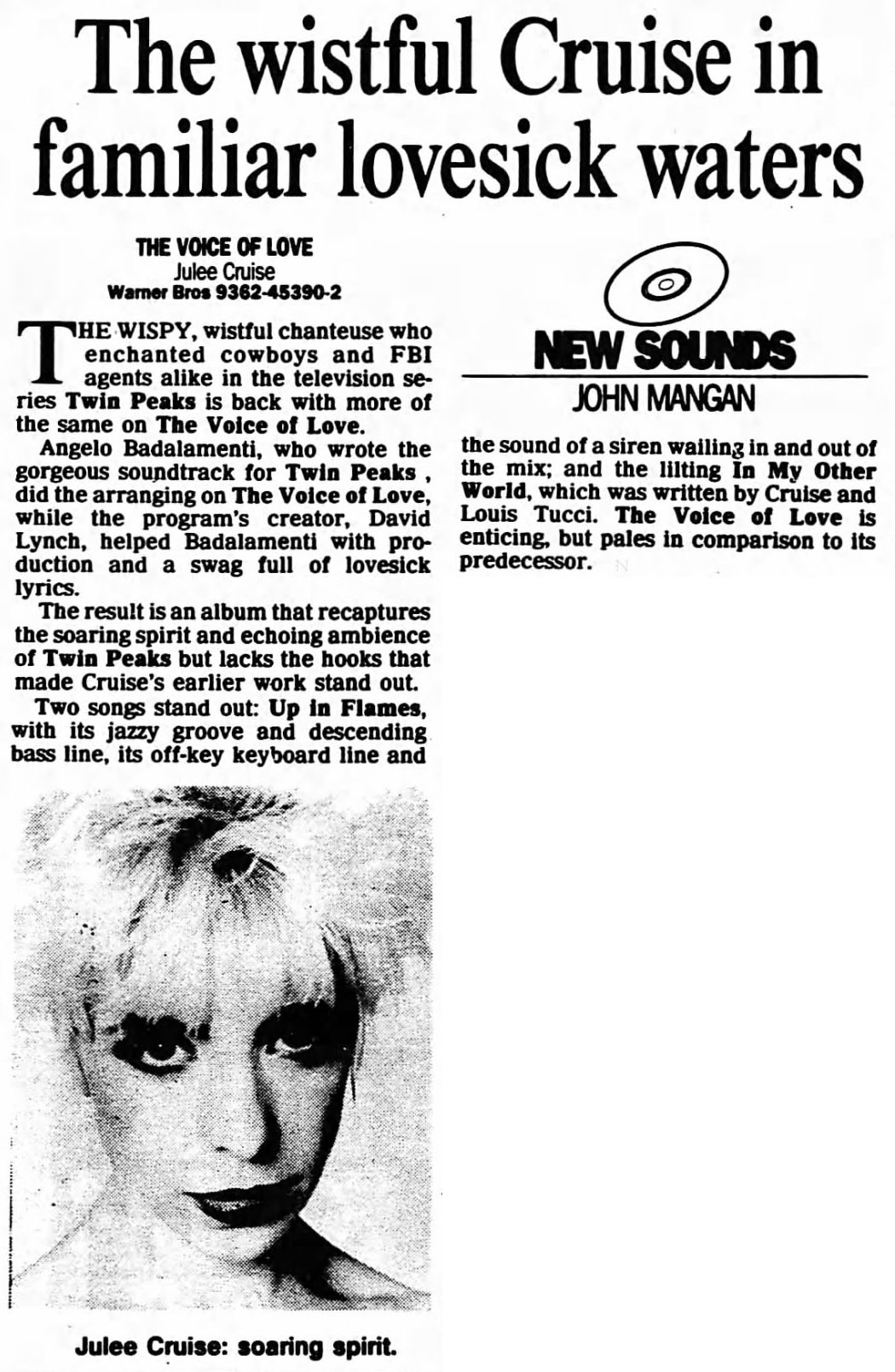
John Mangan from “The Age” said the album “lacks the hooks” that made “Floating Into The Night” standout in his Dec. 2 review.
“The wispy, wistful chanteuse who agents alike in the television series Twin Peaks is back with more of the same on The Voice of Love.
Angelo Badalamenti, who wrote the gorgeous soundtrack for Twin Peaks, did the arranging on The Voice of Love, while the program’s creator, David Lynch, helped Badalamenti with production and a swag full of lovesick lyrics.
The result is an album that recaptures the soaring spirit and echoing ambience of Twin Peaks but lacks the hooks that made Cruise’s earlier work stand out.
Two songs stand out: Up in Flames, with its jazzy groove and descending bass line, its off-key keyboard line and the sound of a siren wailing in and out of the mix; and the lilting In My Other World, which was written by Cruise and Louis Tucci. The Voice of Love is enticing, but pales in comparison to its predecessor.”
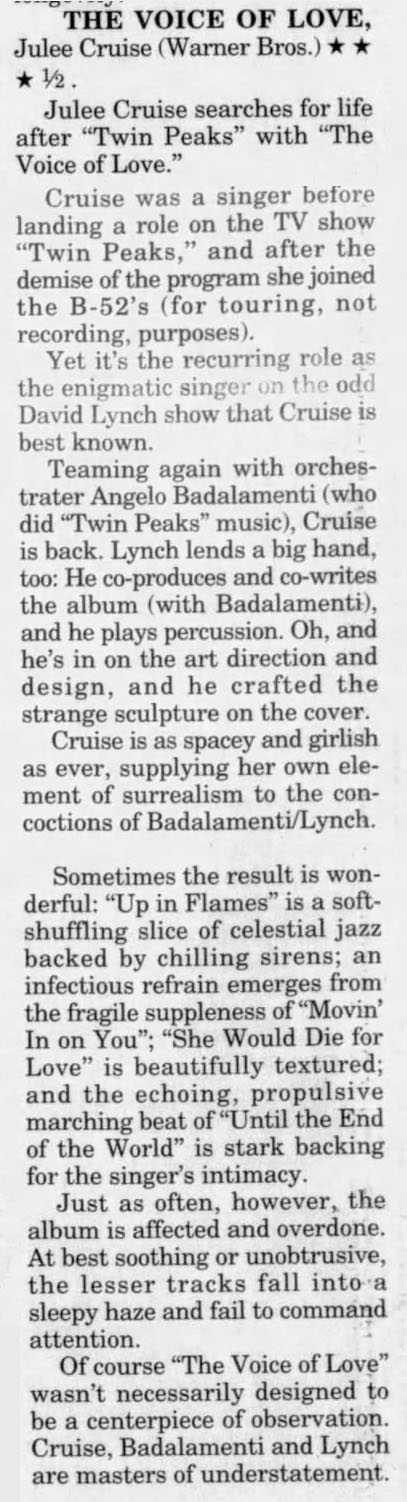
Chuck Campbell’s review ran in “The Mississippi Press” on Jan. 7, 1994.
“Julee Cruise searches for life after `Twin Peaks” with “The Voice of Love.”
Cruise was a singer before landing a role on the TV show “Twin Peaks,” and after the demise of the program she joined the B-52’s (for touring, not recording, purposes).
Yet it’s the recurring role as the enigmatic singer the odd David Lynch show that Cruise is best known.
Teaming again with orchestrater Angelo Badalamenti (who did `Twin Peaks” music), Cruise is back. Lynch lends a big hand, too: He co-produces and co-writes the album (with Badalamenti), and he plays percussion. Oh, and he’s in on the art direction and design, and he crafted the strange sculpture on the cover.
Cruise is as spacey and girlish as ever, supplying her own element of surrealism to the concoctions of Badalamenti/Lynch.
Sometimes the result is wonderful: “Up in Flames” is a soft-shuffling slice of celestial jazz backed by chilling sirens; an infectious refrain emerges from the fragile suppleness of “Movin’ In on You”; “She Would Die for Love” is beautifully textured; and the echoing, propulsive marching beat of “Until the End of the World” is stark backing for the singer’s intimacy.
Just as often, however, the album is affected and overdone. At best soothing or unobtrusive, the lesser tracks fall into a sleepy haze and fail to command attention.
Of course “The Voice of Love” wasn’t necessarily designed to be a centerpiece of observation. Cruise, Badalamenti and Lynch are masters of understatement.”
EPILOGUE – RECONCILIATION
Cruise told Greg Olson that she reconciled with David Lynch on page 588 of his book, “A Beautiful Dark.”
“After they split, Cruise sent Lynch a card, from one dog lover to another. “I had said some awful, horrible things to David. The card showed a snarling German shepherd wearing a tiara—he’d understand that this was me—and inside I wrote, ‘I’m sorry I was such an asshole.’”
But the creative divorce from Lynch sent Julee into a four year depression.
“I don’t have children. Music and performing are my whole life, and my life stopped. My agency, William Morris, dropped me. The phone didn’t ring. No one wanted to hire the ethereal voice that David Lynch made famous all around the world. I get real depressed and angry when I don’t work. This went on for four years, and I had a nervous breakdown; I didn’t realize that show business could do that to you.”
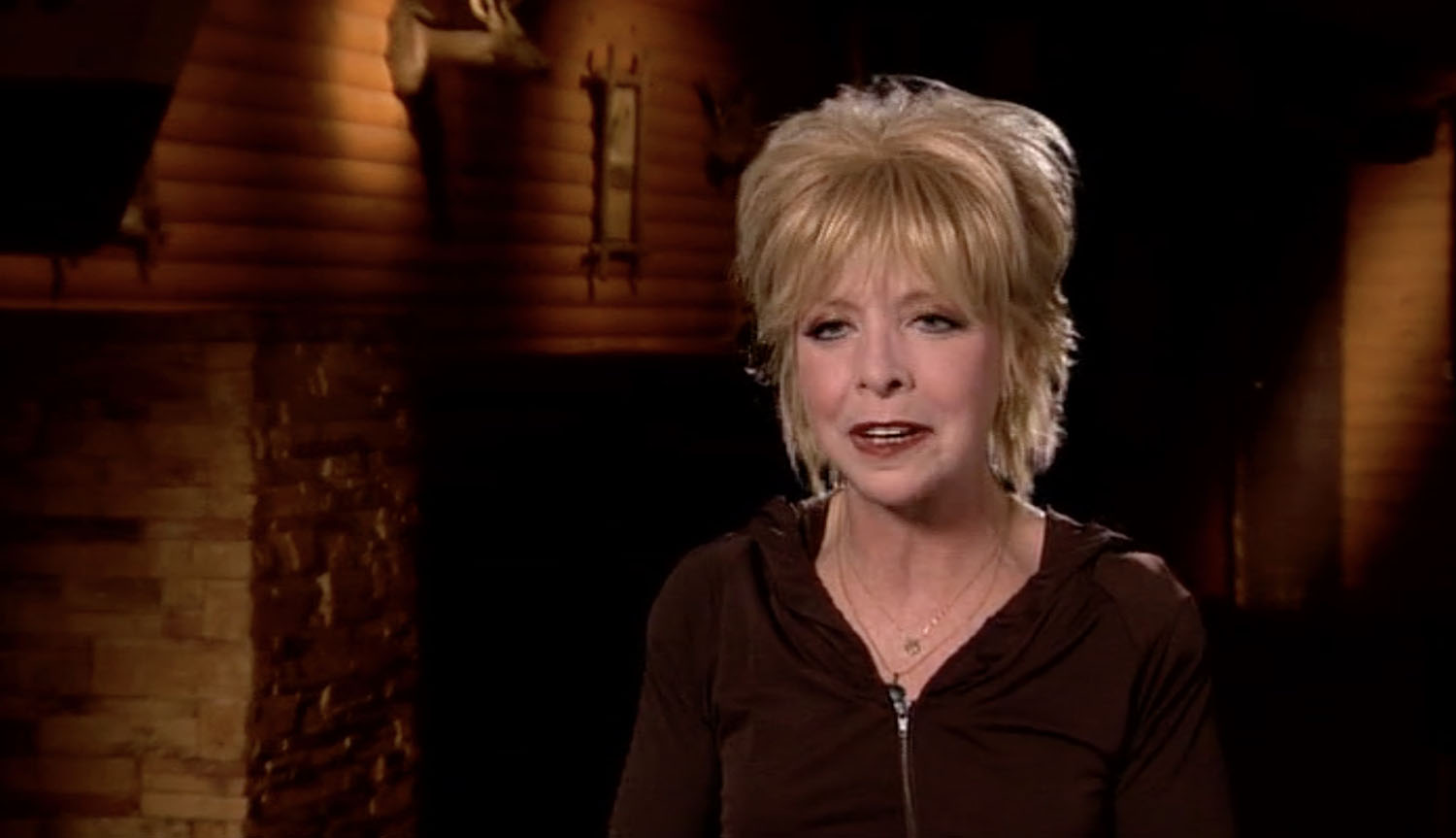
It would take Julee seven years to reconcile with David, a story she shared in a documentary created for the Twin Peaks: Definitive Gold Box Edition from 2007.
“I called him and said, “Is David there?” And I said, “This is Julee Cruise … and I went, David, I’m sorry.”
And he said, “No, no, no, no. Julee, I’m sorry. I’m sorry, I didn’t respect you.”
And I said, “No, David, I’m sorry. I didn’t show you the proper respect. After everything you’ve done for me. I’m really, really sorry. An over-inflated sense of self worth and seeing my name in the paper and thinking I’m somebody. No, I’m sorry.”
They exchanged apologies until they started laughing.

Two years after that reconciliation, Julee would return to the stage in a small, intimate performance during the 2002 Twin Peaks Festival in Snoqualmie Valley, Washington. That weekend, she performed an a cappella version of “Questions in a World of Blue” at the North Bend Theatre.
While Julee had challenges creating her sophomore album, decades later it’s considered an underrated gem, filled with some of the most beautiful music ever created. She never created new music again with David and Angelo. She would set out on her own path, creating the music she wanted.
In 2017, she returned to Twin Peaks by performing “The World Spins” for Part 17. This was her final performance.
Julee passed on June 9, 2022 yet she remains the voice of love for many, her angelic voice inviting us to “listen, listen.”
Author
Discover more from TWIN PEAKS BLOG
Subscribe to get the latest posts sent to your email.