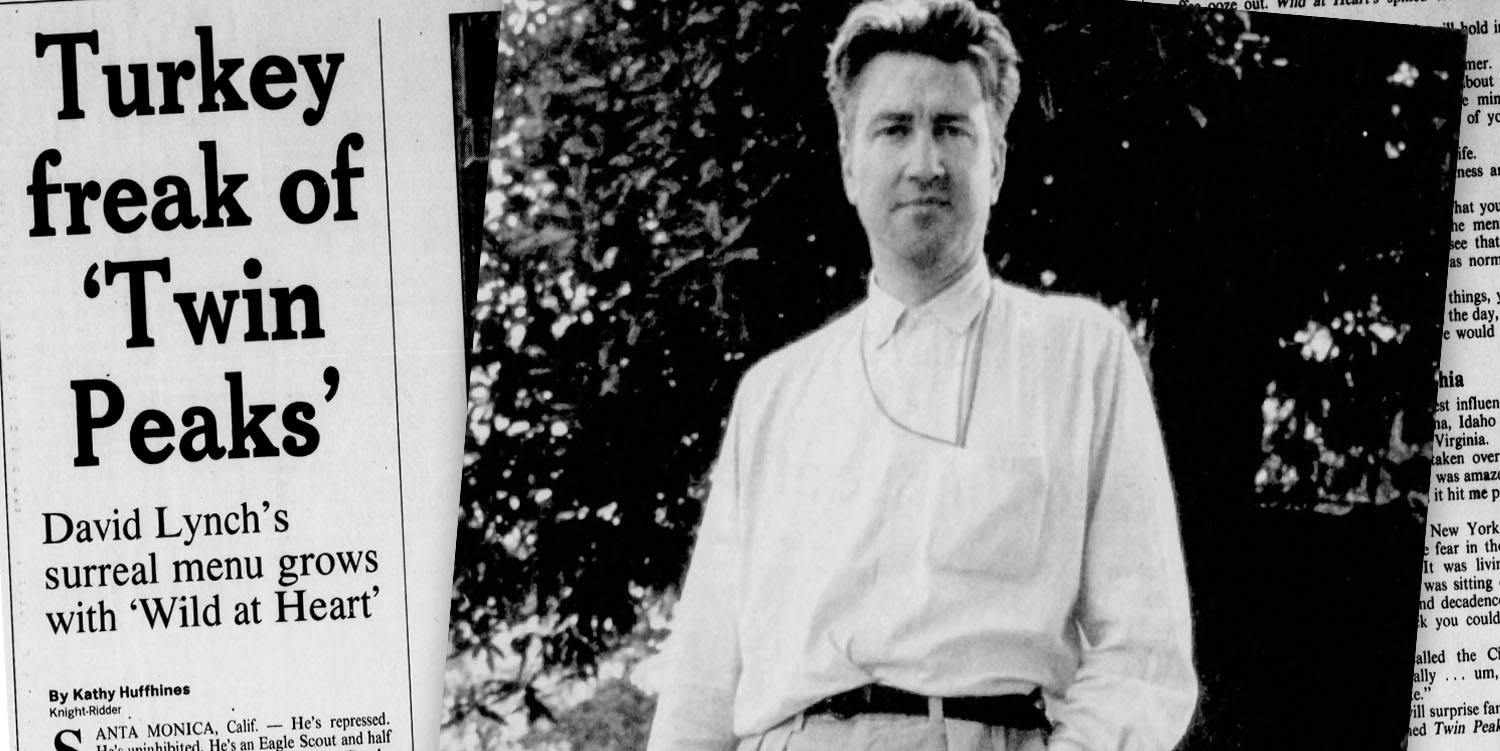
In late summer 1990, David Lynch was “hotter than Georgia asphalt.” His roadtrip film Wild At Heart was released in theatres in mid-August. ABC Television was rebroadcasting the groundbreaking first season of Twin Peaks. And the show’s second season along with product tie-ins would soon be released in September. The world couldn’t get enough of the Eagle Scout turned filmmaker. The late Detroit Free Press movie critic profiled Mr. Lynch for an article first published in The Detroit Free Press on August 19, 1990 and later syndicated by Knight-Ridder Tribune News.
WHO IS KATHY HUFFHINES?
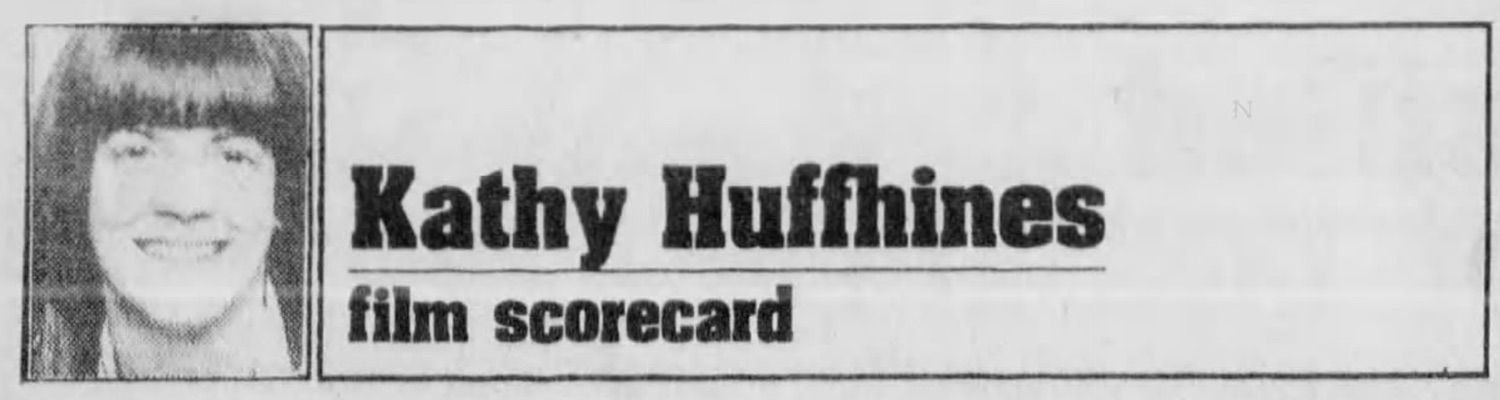
Katherine Schulz Huffhines was born in Akron, Ohio, where her father was a tax accountant for B. F. Goodrich Co. She graduated from Stanford University in Palo Alto, Califorinia and earned a master’s degree in English and education from Harvard University. She was serving as a lecturer at Tufts University and Boston College when she got her first reviewing job as a critic for the alternative-press Real Paper in Boston.
The Detroit Free Press hired her in 1987 as their movie critic after receiving recommendations New Yorker critic Pauline Kael, San Francisco critic Michael Sragow and Jay Carr from the Boston Globe. Mr. Carr and Kathy were engaged to be married after meeting in Boston outside a movie screening.
Kathy would tell the Dallas Morning News in September 1990 that she got her position as a movie critic because she “has the stereotypically male characteristics required for the job: ‘stubbornness, boldness, and meanness.'”
Sadly, Ms. Huffhines died Thursday, July 18, 1991 at the age of 48. She never regained consciousness after an accident on July 13 in which a tree fell on the roof of a car in which she was a passenger.
At the time, Detroit Free Press Executive Editor Heath Meriwether, who nominated her for a Pulitzer Prize in criticism in 1990, said she “blossomed as a new and interesting critical voice in the forest of motion picture critics. When you talked to Kathy, you could just feel her exuberance about movies-and life, really.”
KATHY HUFFHINES PROFILE ON DAVID LYNCH IN 1990
Kathy Huffhines profile about David Lynch first appeared in The Detroit Free Press on August 19, 1990. It became a syndicated story from Knight-Ridder Tribune News. For the syndicated articles, newspaper editors cut up and delete entire sections from a story in order to fit space in a particular paper. Additionally, headlines appeared differently based on what a particular editor may feel would help grab a reader’s attention. The best example is seen in the featured image of this article – “Turkey freak of ‘Twin Peaks'”
The Rock Island Argus published the complete profile on September 16, 1990. This was the same day the 42nd Primetime Emmy Awards took place at the Pasadena Civic Auditorium where Twin Peaks was nominated for 14 awards (only receiving two that night). It makes sense the paper would run this profile about a month after it was first published since David Lynch’s name was all over the news at the time.
Here is a transcript along with additional photos found in other newspapers between August and September 1990.
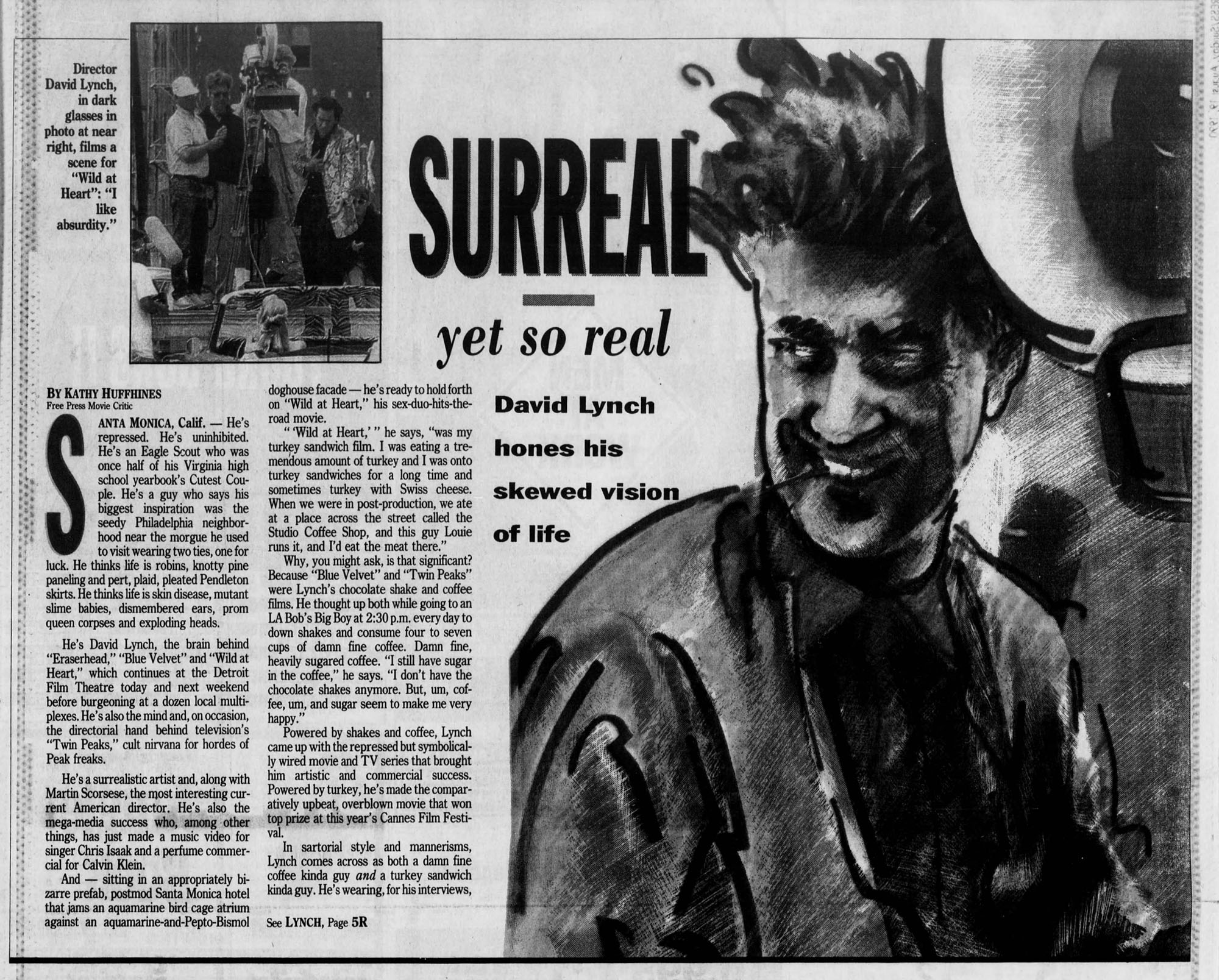
Surreal – Yet So Real: David Lynch hones his skewed vision of life.
By: Kathy Huffhines, Free Press Movie Critic
SANTA MONICA, Calif. — He’s repressed. He’s uninhibited. He’s an Eagle Scout who was once half of his Virginia high school yearbook’s Cutest Couple. He’s a guy who says his biggest inspiration was the seedy Philadelphia neighborhood near the morgue he used to visit wearing two ties, one for luck. He thinks life is robins, knotty pine paneling and pert, plaid, pleated Pendleton skirts. He thinks life is skin disease, mutant slime babies, dis-membered ears, prom queen corpses and exploding heads.
He’s David Lynch, the brain behind “Eraserhead,” “Blue Velvet” and “Wild at Heart.” He’s also the mind and, on occasion, the directorial hand behind television’s “Twin Peaks,” cult nirvana for hordes of Peak freaks.
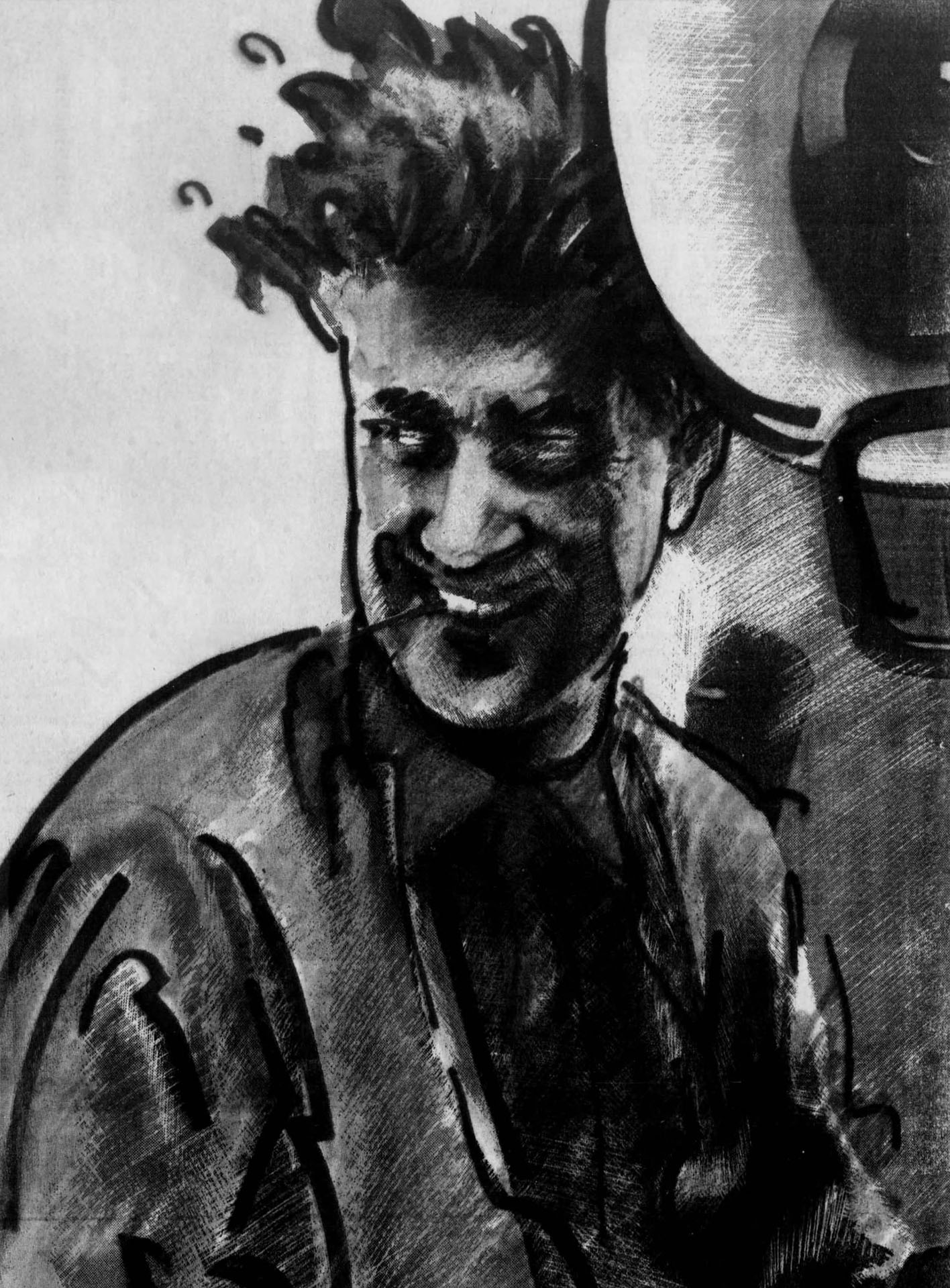
He’s a surrealistic artist and, along with Martin Scorsese, the most interesting current American director. He’s also the mega-media success who, among other things, has just made a music video for singer Chris Isaak and a perfume commercial for Calvin Klein.
And — sitting in an appropriately bizarre prefab, postmod Santa Monica hotel that jams an aquamarine bird cage atrium against an aquamarine-and-Pepto-Bismol dog-house facade — he’s ready to hold forth on “Wild at Heart,” his sex-duo-hits-the-road movie.”
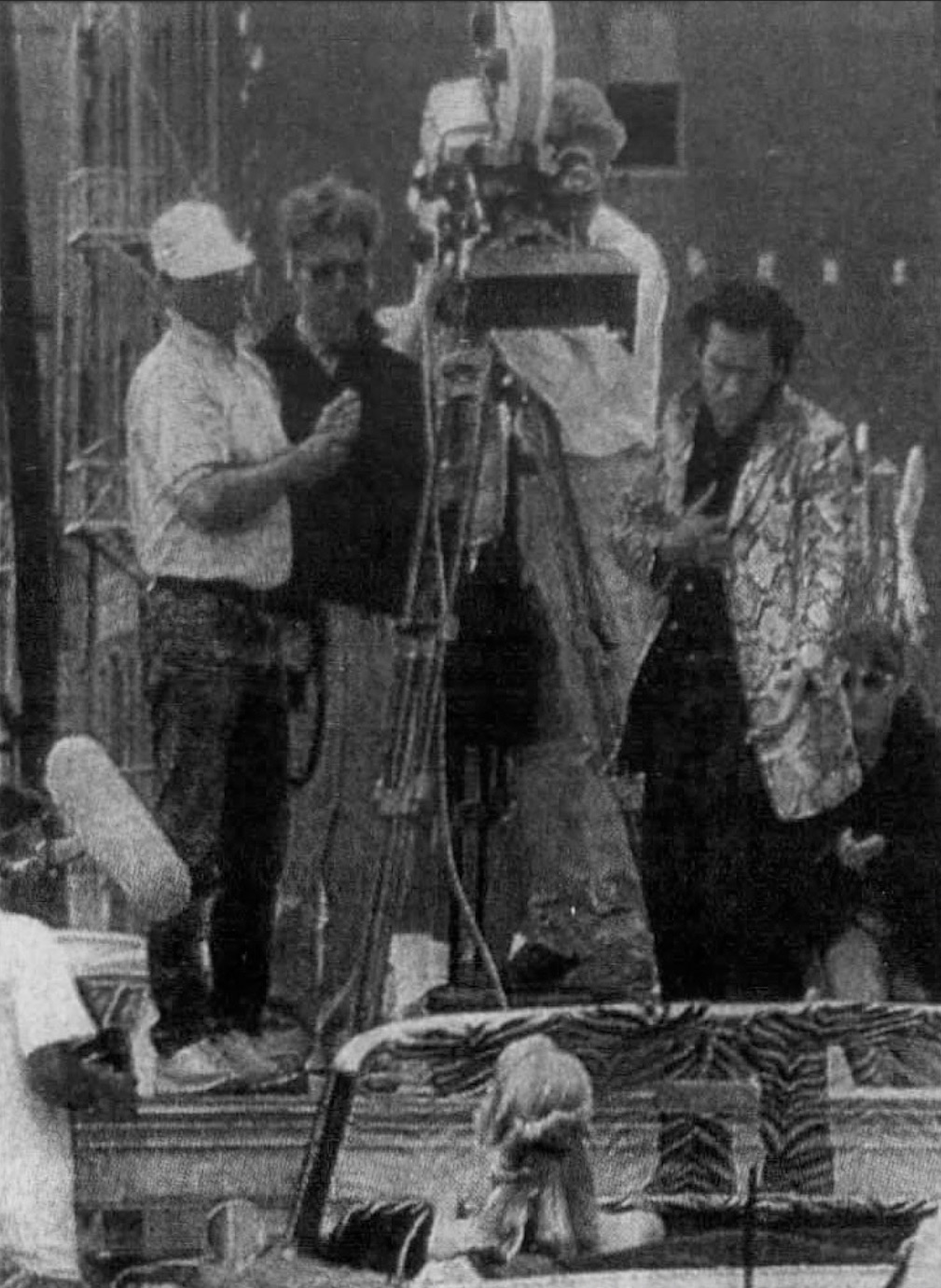
‘Wild at Heart,’ ” he says, “was my turkey sandwich film. I was eating a tremendous amount of turkey and I was onto turkey sandwiches for a long time and sometimes turkey with Swiss cheese. When we were in post-production, we ate at a place across the street called the Studio Coffee Shop, and this guy Louie runs it, and I’d eat the meat there.”
Why, you might ask, is that significant? Because “Blue Velvet” and “Twin Peaks” were Lynch’s chocolate shake and coffee films. He thought up both while going to an LA Bob’s Big Boy at 2:30 p.m. every day to down shakes and consume four to seven cups of damn fine coffee. Damn fine, heavily sugared coffee. “I still have sugar in the coffee,” he says. “I don’t have the chocolate shakes anymore. But, um, coffee, um, and sugar seem to make me very happy.”
Powered by shakes and coffee, Lynch came up with the repressed but symbolically wired movie and TV series that brought him artistic and commercial success. Powered by turkey, he’s made the comparatively upbeat, overblown movie that won top prize at this year’s Cannes Film Festival.
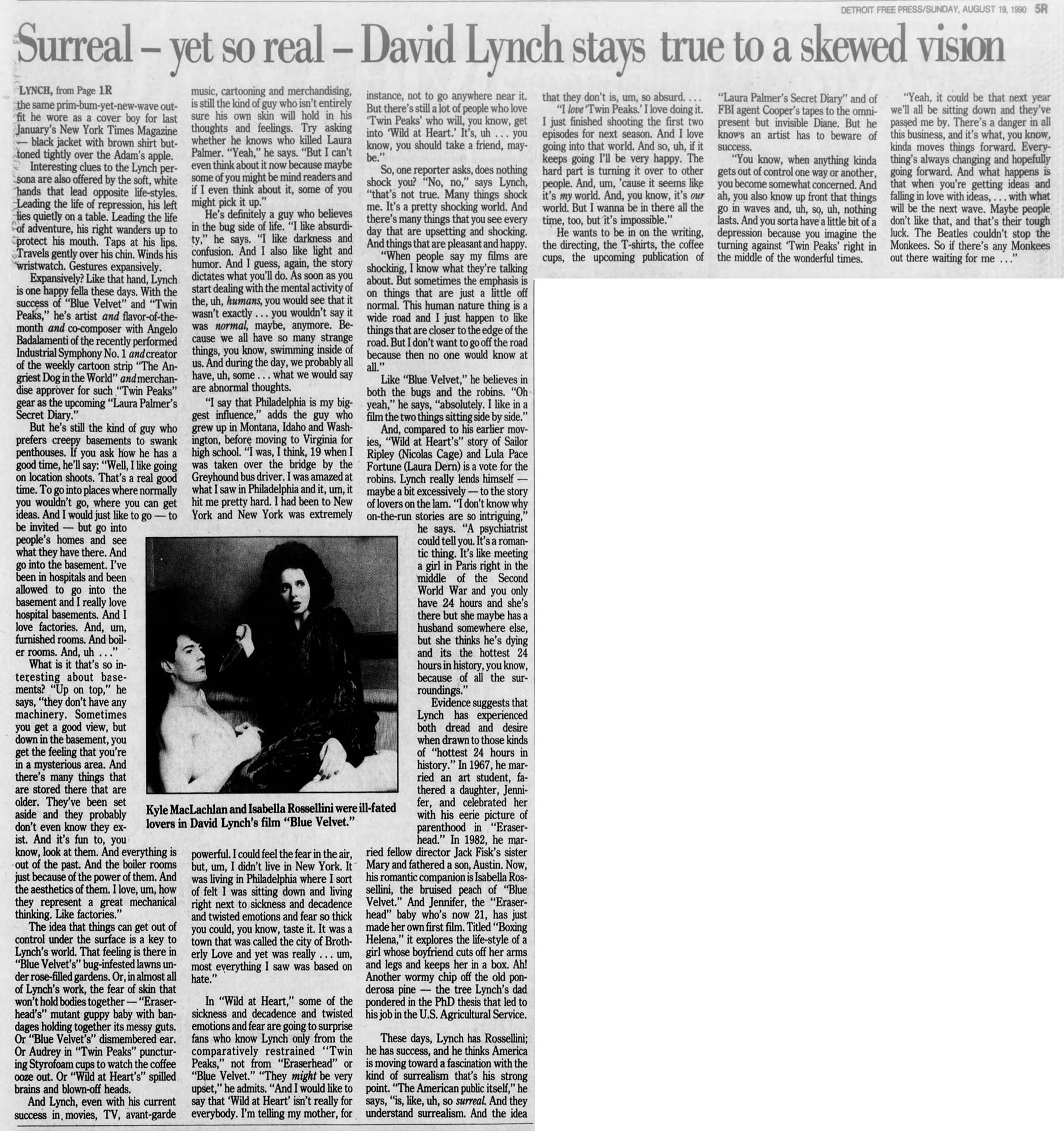
In sartorial style and mannerisms, Lynch comes across as both a damn fine coffee kinda guy and a turkey sandwich kinda guy. He’s wearing, for his interviews, the same prim-bum-yet-new-wave outfit he wore as a cover boy for last January’s New York Times Magazine – black jacket with brown shirt but-toned tightly over the Adam’s apple.
Interesting clues to the Lynch persona are also offered by the soft, white hands that lead opposite lifestyles. Leading the life of repression, his left lies quietly on a table. Lead-ing the life of adventure, his right wanders up to protect his mouth. Taps at his lips. Travels gently over his chin. Winds his wristwatch. Gestures expansively.
Expansively? Like that hand, Lynch is one happy fella these days. With the success of “Blue Velvet” and “Twin Peaks,” he’s artist and flavor-of-the-month and co-com-poser with Angelo Badalamenti of the recently performed Industrial Symphony No. 1 and creator of the weekly cartoon strip “The Angriest Dog in the World” and merchandise approver for such “Twin Peaks” gear as the upcoming “Laura Palmer’s Secret Diary.”
But he’s still the kind of guy who prefers creepy basements to swank penthouses. If you ask how he has a good time, he’ll say: “Well, I like going on location shoots. That’s a real good time. To go into places where normally you wouldn’t go, where you can get ideas. And I would just like to go – to be invited – but go into people’s homes and see what they have there. And go into the basement. I’ve been in hospitals and been allowed to go into the basement and I really love hospital basements. And I love factories. And, um, furnished rooms. And boiler rooms. And, uh .”
What is it that’s so interesting about basements? “Up on top,” he says, “they don’t have any machinery. Sometimes you get a good view, but down in the basement, you get the feeling that you’re in a mysterious area. And there’s many things that are stored there that are older. They’ve been set aside and they probably don’t even know they exist. And it’s fun to, you know, look at them. And everything is out of the past. And the boiler rooms just because of the power of them. And the aesthetics of them. I love, um, how they represent a great mechanical thinking. Like factories.”

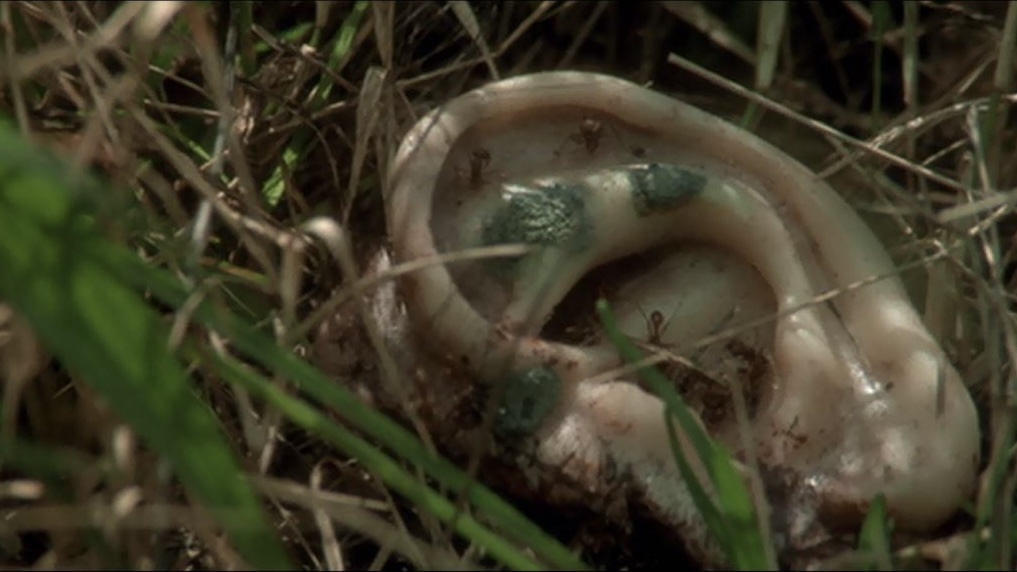
The idea that things can get out of control under the surface is a key to Lynch’s world. That feeling is there in “Blue Velvet’s” bug-infested lawns under rose-filled gardens. Or, in almost all of Lynch’s work, the fear of skin that won’t hold bodies together — “Eraserhead’s” mutant guppy baby with bandages holding together its messy guts. Or “Blue Velvet’s” dismembered ear. Or Audrey in “Twin Peaks” puncturing Styrofoam cups to watch the coffee ooze out. Or “Wild at Heart’s” spilled brains and blown-off heads.
And Lynch, even with his current success in movies, TV, avant-garde music, cartooning and merchandising, is still the kind of guy who isn’t entirely sure his own skin will hold in his thoughts and feelings. Try asking whether he knows who killed Laura Palmer. “Yeah,” he says. “But I can’t even think about it now because maybe some of you might be mind readers and if I even think about it, some of you might pick it up.”
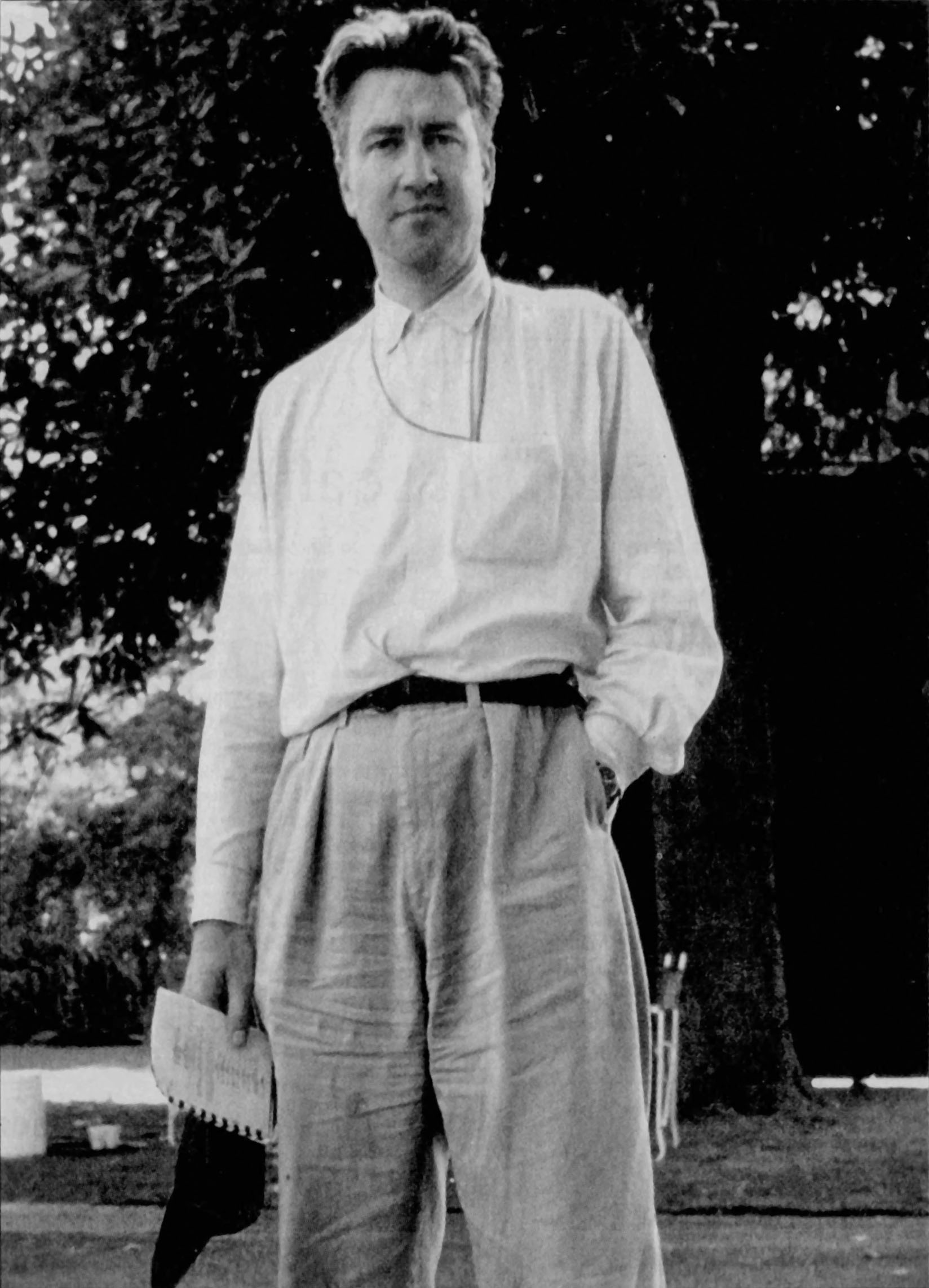
He’s definitely a guy who believes in the bug side of life. “I like absurdity,” he says. “I like darkness and confusion. And I also like light and humor. And I guess, again, the story dictates what you’ll do. As soon as you start dealing with the mental activity of the, uh, humans, you would see that it wasn’t exactly … you wouldn’t say it was normal, maybe, anymore. Because we all have so many strange things, you know, swimming inside of us. And during the day, we probably all have, uh, some … what we would say are abnormal thoughts.
“I say that Philadelphia is my biggest influence,” adds the guy who grew up in Montana, Idaho and Washington, before moving to Virginia for high school. “I was, I think, 19 when I was taken over the bridge by the Greyhound bus driver. I was amazed at what I saw in Philadelphia and it, um, it hit me pretty hard. I had been to New York and New York was extremely powerful. I could feel the fear in the air, but, um, I didn’t live in New York. It was living in Philadelphia where I sort of felt I was sitting down and living right next to sickness and decadence and twisted emotions and fear so thick you could, you know, taste it. It was a town that was called the city of Brotherly Love and yet was really . . . um, most everything I saw was based on hate.”
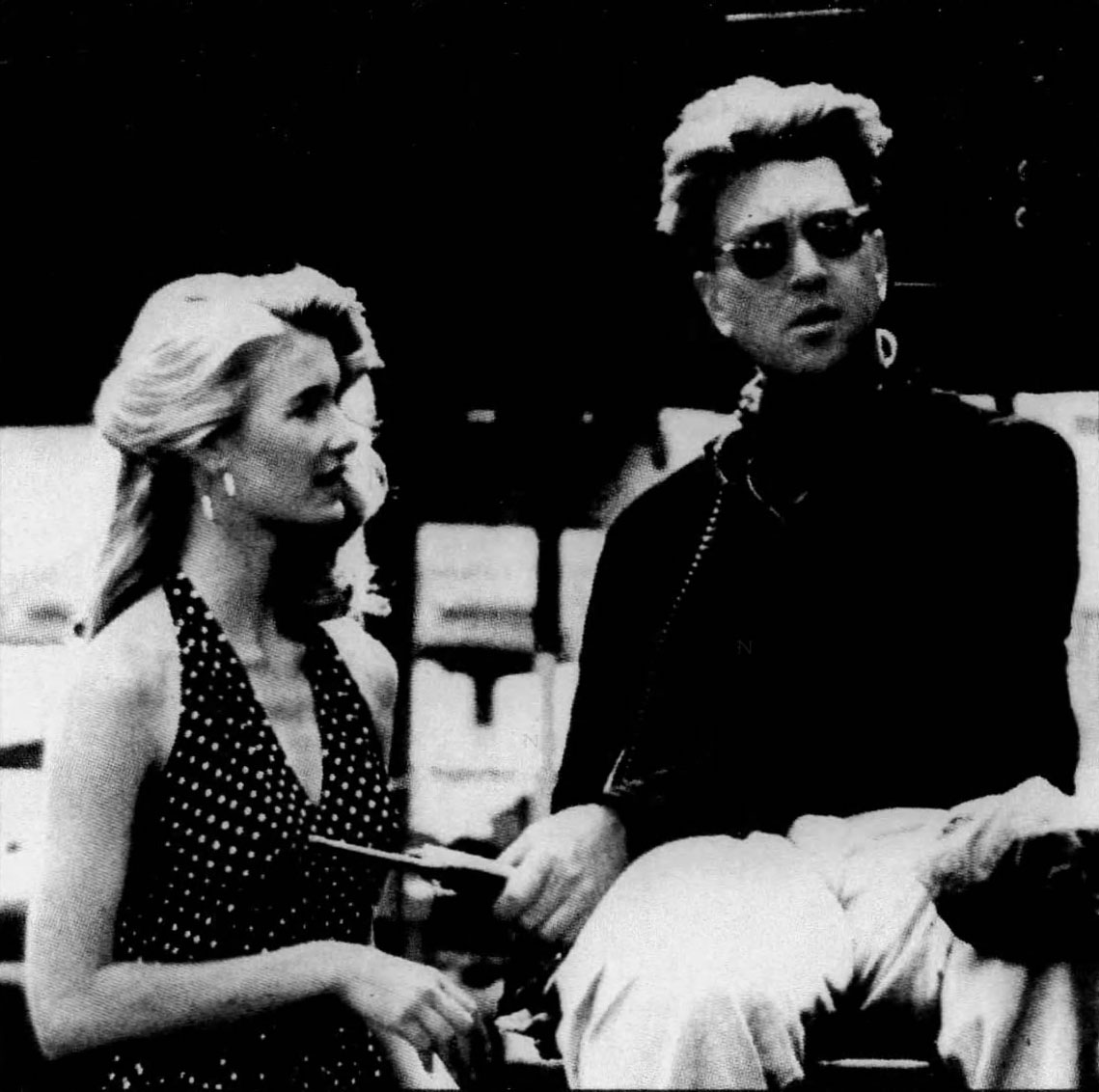
In “Wild at Heart,” some of the sickness and decadence and twisted emotions and fear are going to surprise fans who know Lynch only from the comparatively restrained “Twin Peaks,” not from “Eraserhead” or “Blue Velvet.” “They might be very upset,” he admits. “And I would like to say that ‘Wild at Heart’ isn’t really for everybody. I’m telling my mother, instance, not to go anywhere near it. But there’s still a lot of people who love ‘Twin Peaks’ who will, you know, get into ‘Wild at Heart.’ It’s, uh … you know, you should take a friend, maybe.”
So, one reporter asks, does nothing shock you? “No, no,” says Lynch, “that’s not true. Many things shock me. It’s a pretty shocking world. And there’s many things that you see every day that are upsetting and shocking. And things that are pleasant and happy.
“When people say my films are shocking, I know what they’re talking about. But sometimes the emphasis is on things that are just a little off normal. This human nature thing is a wide road and I just happen to like things that are closer to the edge of the road. But I don’t want to go off the road because then no one would know at all.”
Like “Blue Velvet,” he believes in both the bugs and the robins. “Oh yeah,” he says, “absolutely. I like in a film the two things sitting side by side.”
And, compared to his earlier movies, “Wild at Heart’s” story of Sailor Ripley (Nicolas Cage) and Lula Pace Fortune (Laura Dern) is a vote for the robins. Lynch really lends himself – maybe a bit excessively – to the story of lovers on the lam. “I don’t know why on-the-run stories are so intriguing,” he says. “A psychiatrist could tell you. It’s a romantic thing. It’s like meeting a girl in Paris right in the middle of the Second World War and you only have 24 hours and she’s there but she maybe has a husband somewhere else, but she thinks he’s dying and its the hottest 24 hours in history, you know, because of all the surroundings.”
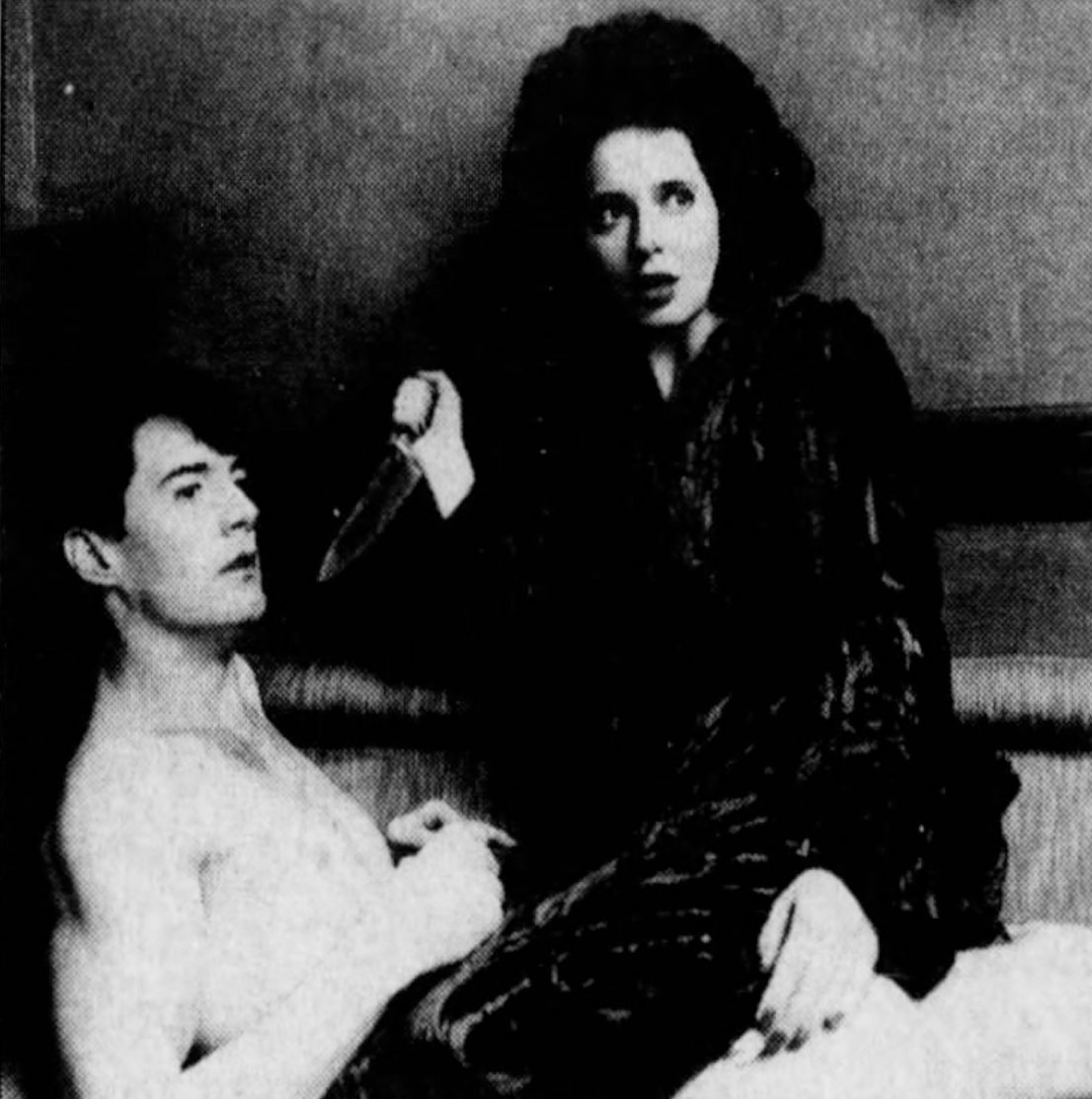
Evidence suggests that Lynch has experienced both dread and desire when drawn to those kinds of “hottest 24 hours in history.” In 1967, he married an art student, fathered a daughter, Jennifer, and celebrated her with his eerie picture of parenthood in “Eraserhead.” In 1982, he married fellow director Jack Fisk’s sister Mary and fathered a son, Austin. Now, his romantic companion is Isabella Rossellini, the bruised peach of “Blue Velvet.” And Jennifer, the “Eraserhead” baby who’s now 21, has just made her own first film. Titled “Boxing Helena,” it explores the lifestyle of a girl whose boyfriend cuts off her arms and legs and keeps her in a box. Ah! Another wormy chip off the old ponderosa pine – the tree Lynch’s dad pondered in the PhD thesis that led to his job in the U.S. Agricultural Service.
These days, Lynch has Rossellini; he has success, and he thinks America is moving toward a fascination with the kind of surrealism that’s his strong point. “The American public itself,” he says, “is, like, uh, so surreal. And they understand surrealism. And the idea for that they don’t is, um, so absurd.
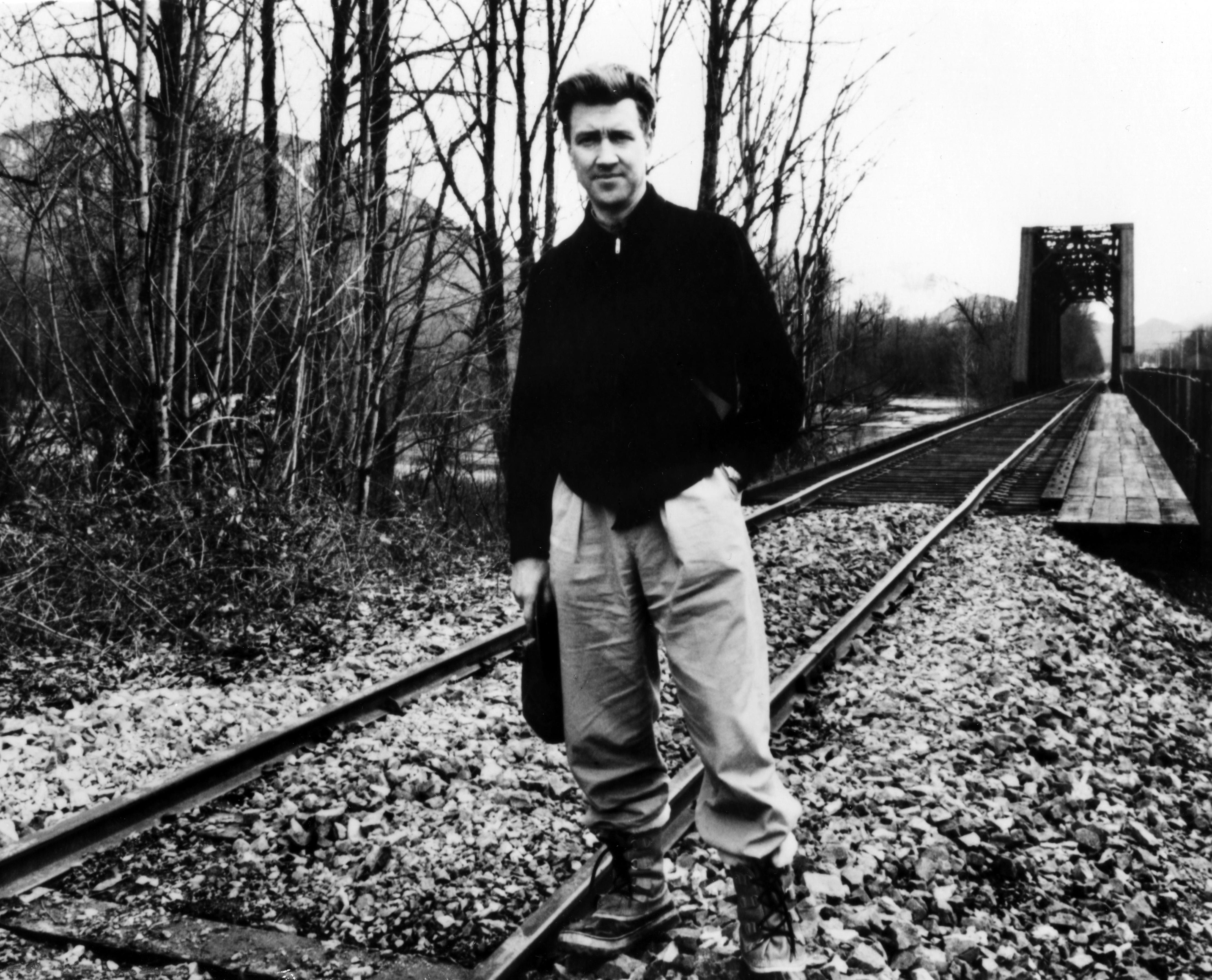
“I love ‘Twin Peaks.’ I love doing it. I just finished shooting the first two episodes for next season. And I love going into that world. And so, uh, if it keeps going I’ll be very happy. The hard part is turning it over to other people. And, um, ’cause it seems like it’s my world. And, you know, it’s our world. But I wanna be in there all the time, too, but it’s impossible.”
He wants to be in on the writing, the directing, the T-shirts, the coffee cups, the upcoming publication of “Laura Palmer’s Secret Diary” and of FBI agent Cooper’s tapes to the omni-present but invisible Diane. But he knows an artist has to beware of success.
“You know, when anything kinda gets out of control one way or another, you become somewhat concerned. And ah, you also know up front that things go in waves and, uh, so, uh, nothing lasts. And you sorta have a little bit of a depression because you imagine the turning against ‘Twin Peaks’ right in the middle of the wonderful times.
“Yeah, it could be that next year we’ll all be sitting down and they’ve passed me by. There’s a danger in all this business, and it’s what, you know, kinda moves things forward. Everything’s always changing and hopefully going forward. And what happens is that when you’re getting ideas and falling in love with ideas, … with what will be the next wave. Maybe people don’t like that, and that’s their tough luck. The Beatles couldn’t stop the Monkees. So if there’s any Monkees out there waiting for me …”
Author
Discover more from TWIN PEAKS BLOG
Subscribe to get the latest posts sent to your email.