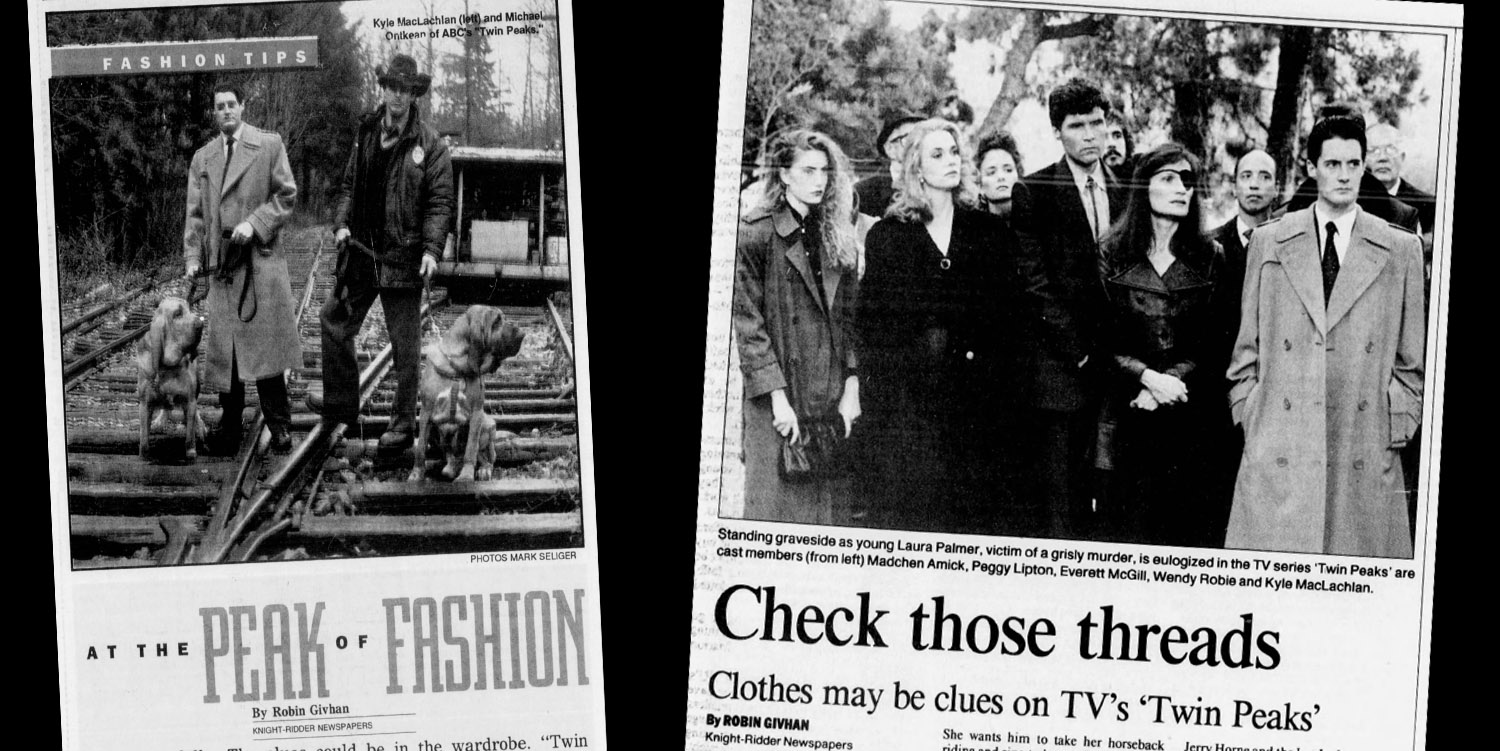
Audiences had never seen anything like Mark Frost and David Lynch’s Twin Peaks when the series first aired in April 1990 on the ABC Television Network. Viewers were just as captivated by the mystery of Laura Palmer’s murder as they were by Angelo Badalamenti and Julee Cruise’s music and the small towns of Snoqualmie Valley, Washington where part of the series was filmed. Beyond the sights and sounds, people were captivated by the fashion – a mix of 1950s paired with Pacific Northwest chic. In April, 1990, Free Press Staff Writer Robin D. Givhan interviewed Costume Designer Sara Markowitz about her work on the show. The article was syndicated via Knight-Ridder News Service and published in newspapers throughout the end of May, 1990.
WHO IS ROBIN D. GIVHAN?
Robin D. Givhan is an American fashion editor and Pulitzer Prize winning writer. She was born on September 11, 1964 in Detroit, Michigan. In 1982, she was named valedictorian at Renaissance High School and graduated from Princeton University four years later. Givhan holds a master’s degree in journalism from the University of Michigan in Ann Arbor, Michigan.

She joined the Detroit Free Press in 1988 covering arts, nightlife and fashion. Givhan left the paper after seven years and held positions at the San Francisco Chronicle and Vogue magazine. In 1995 she joined The Washington Post as their fashion editor. She left in 2010 to become the fashion critic and fashion correspondent for The Daily Beast and Newsweek. She returned to the Post in 2014.
In 2006, Givhan won the Pulitzer Prize for Criticism, which was the first time the award was given to a fashion writer. The Pulitzer Committee cited her “witty, closely observed essays that transform fashion criticism into cultural criticism.”
In 2013, the University of Michigan inducted Givhan into the Detroiter Hall of Fame. Flatiron Books published her book titled, The Battle of Versailles: The Night American Fashion Stumbled into the Spotlight and Made History in 2015. Ten years later on June 24, 2025, she published Make It Ours: Crashing the Gate of Culture with Virgil Abloh, which details how he changed the fashion industry and how the fashion industry transformed to allow an unconventional creative force like him to flourish.
You can follow her work today on Robingivhanwriter.com.
INTERVIEW WITH TWIN PEAKS COSTUME DESIGNER SARA MARKOWITZ
For the first two seasons of the show, Sarah Markowitz served as the Costume Designer, taking over for Patricia Norris who designed the show’s look for the Pilot. Robin spoke with her at some point just after the show aired on April 8, 1990. At that time, reporters couldn’t write fast enough to capture the frenzy that overtook homes in America.

Givan’s article was first published in the Detroit Free Press on April 26, 1990 and was then syndicated in select newspapers through May 23. The first article is the most complete with other articles being edited for space.
In a time before the relentless drum beat of social media, it’s fascinating a story like this could stretch for nearly a month. Local newspapers editors used newswire services like Knight-Ridder News Service to fill pages, often times pairing the story with a snappy headline or publicity photos from the show. I’ll share a summary of those headlines after a transcription of the story.
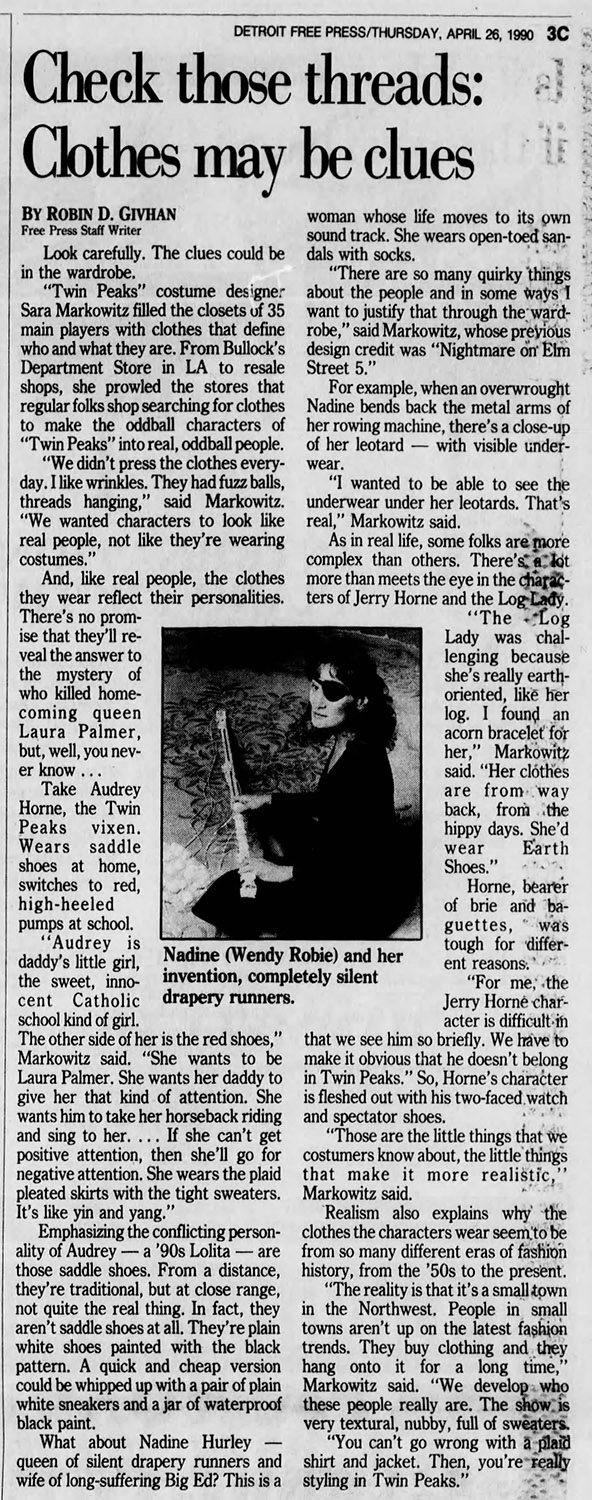
Check those threads: Clothes may be clues
BY ROBIN D. GIVHAN Free Press Staff Writer
Look carefully. The clues could be in the wardrobe.
“Twin Peaks” costume designer: Sara Markowitz filled the closets of 35 main players with clothes that define who and what they are. From Bullock’s Department Store in LA to resale shops, she prowled the stores that regular folks shop searching for clothes to make the oddball characters of “Twin Peaks” into real, oddball people.
“We didn’t press the clothes every-day. I like wrinkles. They had fuzz balls, threads hanging,” said Markowitz. “We wanted characters to look like real people, not like they’re wearing costumes.”
And, like real people, the clothes they wear reflect their personalities. There’s no promise that they’ll re-veal the answer to the mystery of who killed home-coming queen Laura Palmer, but, well, you never know…

Take Audrey Horne, the Twin Peaks vixen. Wears saddle shoes at home, switches to red, high-heeled pumps at school.
“Audrey is daddy’s little girl, the sweet, innocent Catholic school kind of girl. The other side of her is the red shoes,” Markowitz said. “She wants to be Laura Palmer. She wants her daddy to give her that kind of attention. She wants him to take her horseback riding and sing to her. . . . If she can’t get positive attention, then she’ll go for negative attention. She wears the plaid pleated skirts with the tight sweaters. It’s like yin and yang.”

Emphasizing the conflicting personality of Audrey – a ’90s Lolita – are those saddle shoes. From a distance, they’re traditional, but at close range, not quite the real thing. In fact, they aren’t saddle shoes at all. They’re plain white shoes painted with the black pattern. A quick and cheap version could be whipped up with a pair of plain white sneakers and a jar of waterproof black paint.
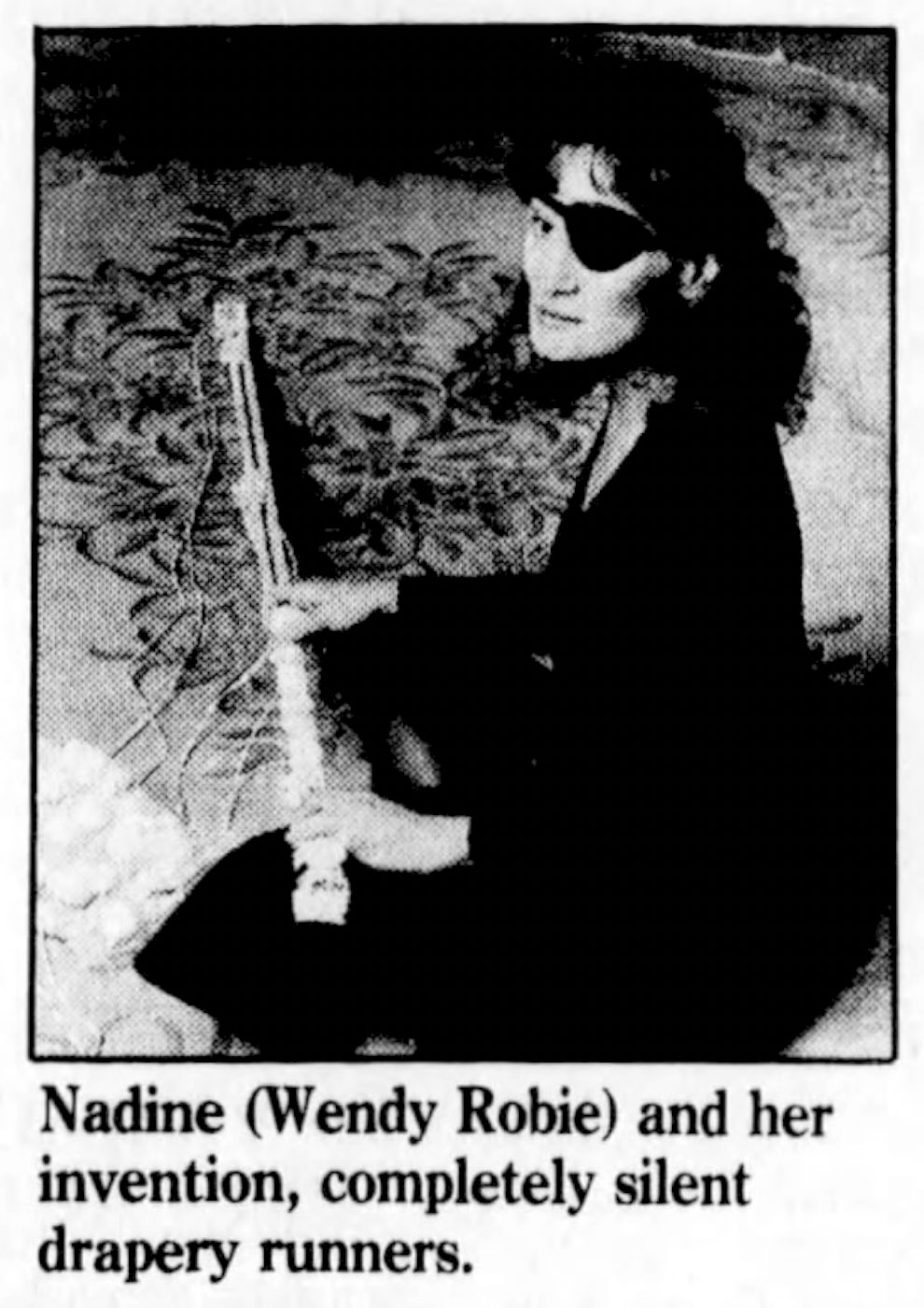
What about Nadine Hurley —queen of silent drapery runners and wife of long-suffering Big Ed? This is a woman whose life moves to its own sound track. She wears open-toed sandals with socks.
“There are so many quirky ‘things about the people and in some ways I want to justify that through the wardrobe,” said Markowitz, whose previous design credit was “Nightmare on Elm Street 5.”

For example, when an overwrought Nadine bends back the metal arms of her rowing machine, there’s a close-up of her leotard – with visible underwear.
“I wanted to be able to see the underwear under her leotards. That’s real,” Markowitz said.
As in real life, some folks are more complex than others. There’s: alot more than meets the eye in the characters of Jerry Horne and the Log Lady.
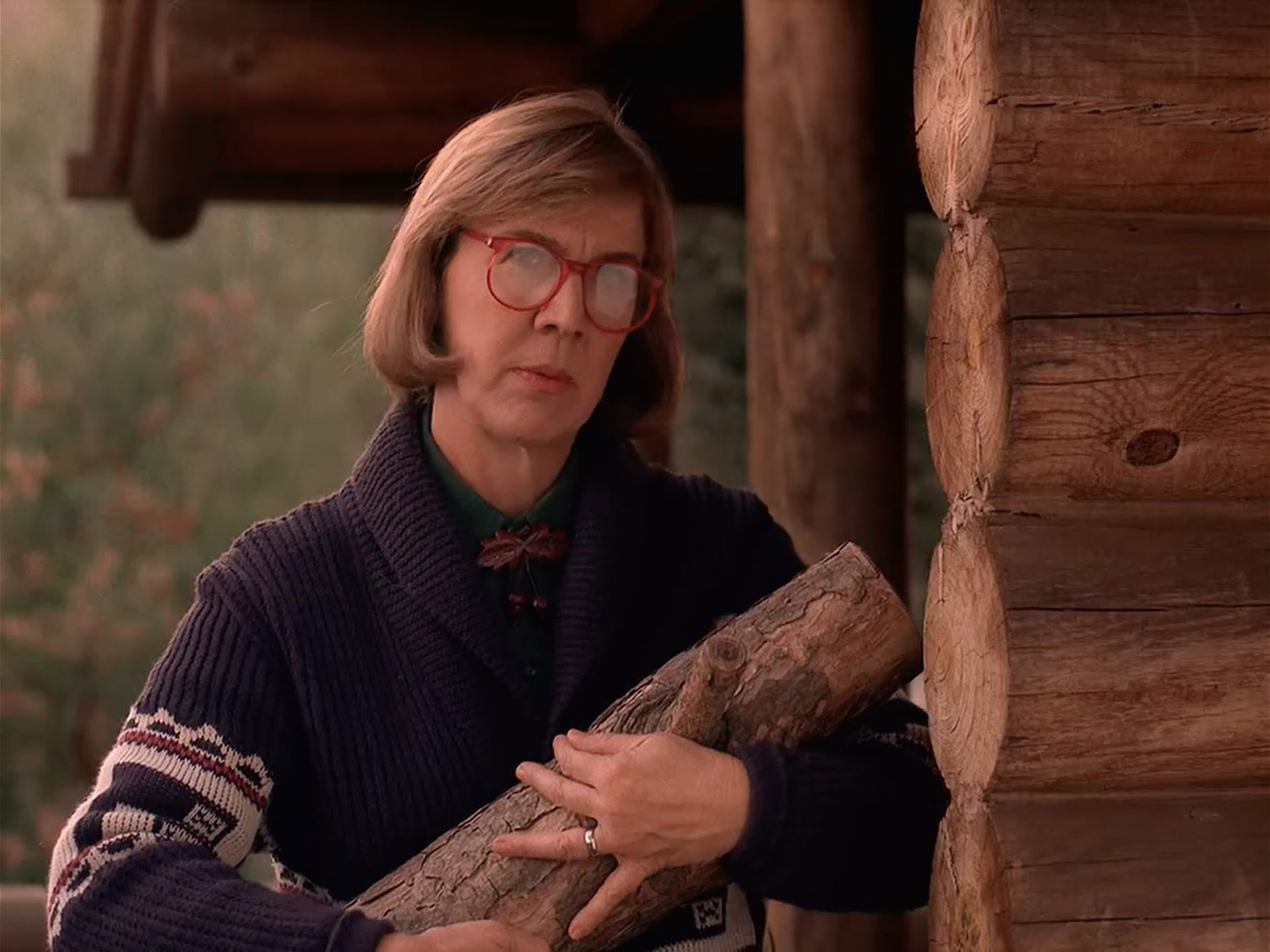
“The Log Lady was challenging because she’s really earth-oriented, like her log. I found an acorn bracelet for her,” Markowitz said. “Her clothes are from way back from the hippy days. She’d wear Earth Shoes.”
Horne, bearer of brie and baguettes, was tough for different reasons.
“For me, the Jerry Horne character is difficult in that we see him so briefly. We have to make it obvious that he doesn’t belong in Twin Peaks.” So, Home’s character is fleshed out with his two-faced watch and spectator shoes.
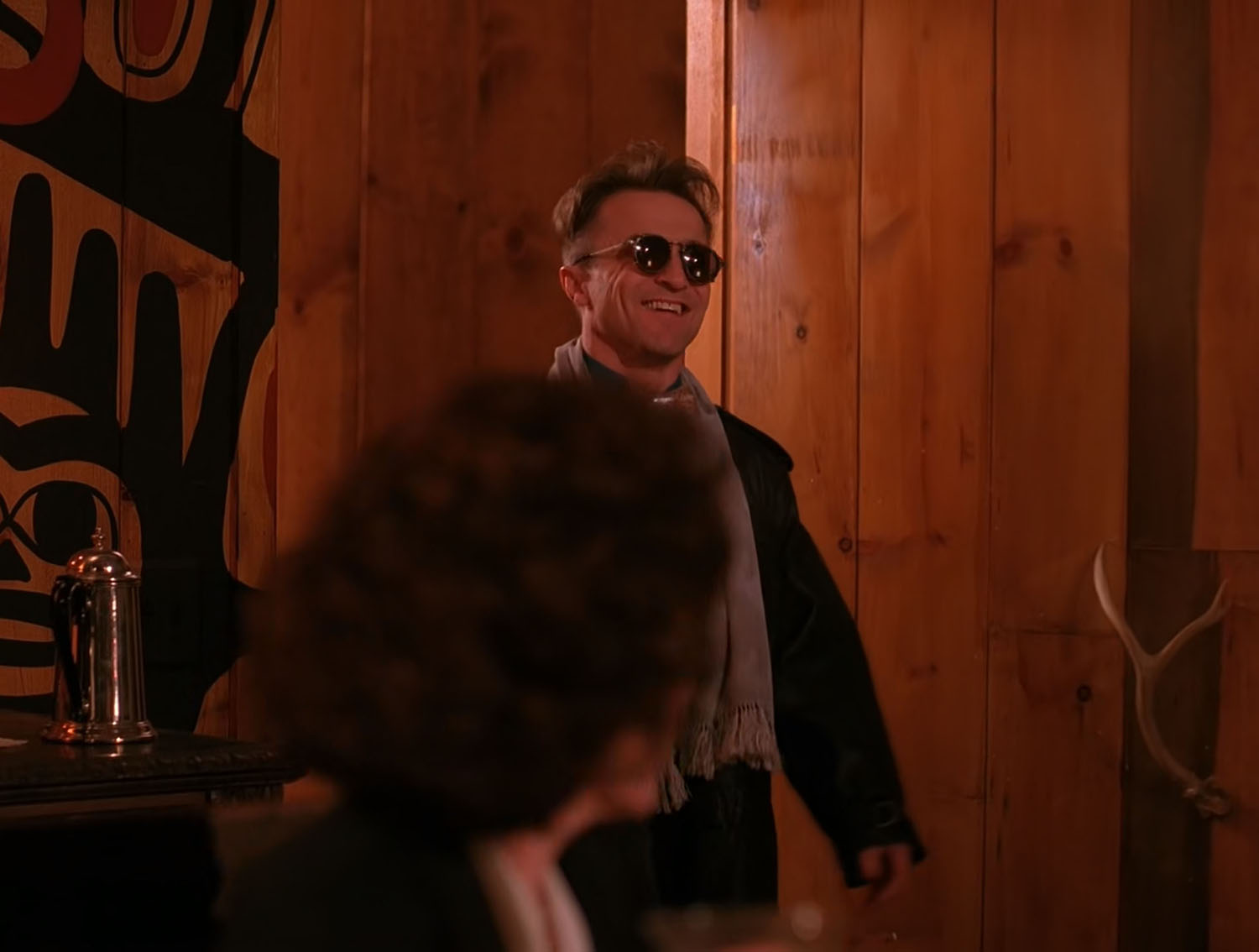
“Those are the little things that we costumers know about, the little things that make it more realistic,” Markowitz said.
Realism also explains why the clothes the characters wear seem to be from so many different eras of fashion history, from the ’50s to the present.
“The reality is that it’s a small town in the Northwest. People in small towns aren’t up on the latest fashion trends. They buy clothing and they hang onto it for a long time,” Markowitz said. “We develop who these people really are. The show is very textural, nubby, full of sweaters.
“You can’t go wrong with a plaid shirt and jacket. Then, you’re really styling in Twin Peaks.”
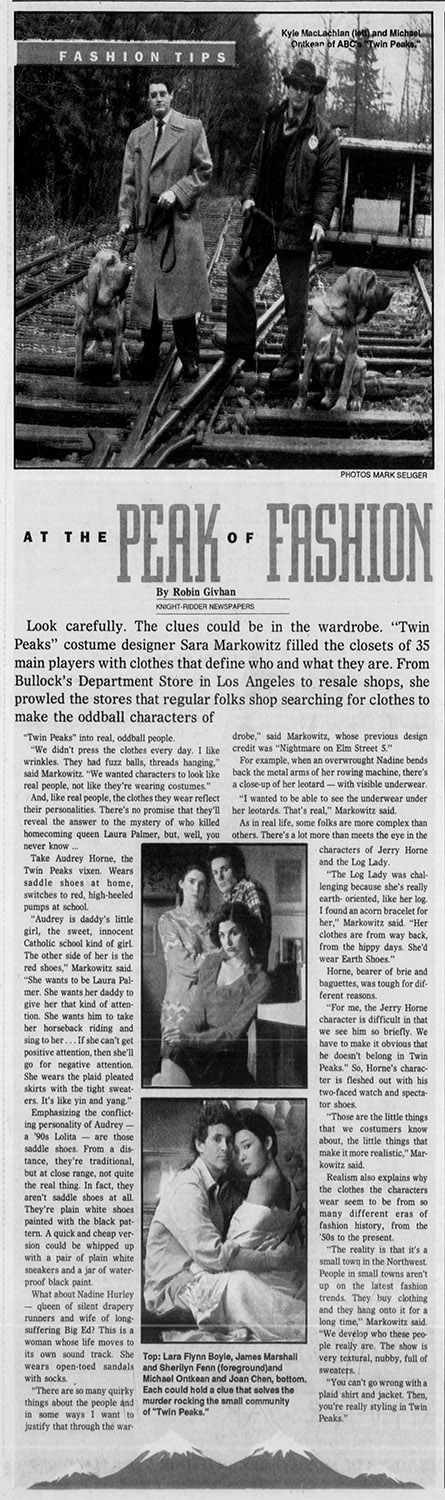
I like what the Albuquerque Journal did with Givhan’s interview with Markowitz when they ran the story on May 12. The artwork of twin mountains drawn along the bottom is a nice touch.
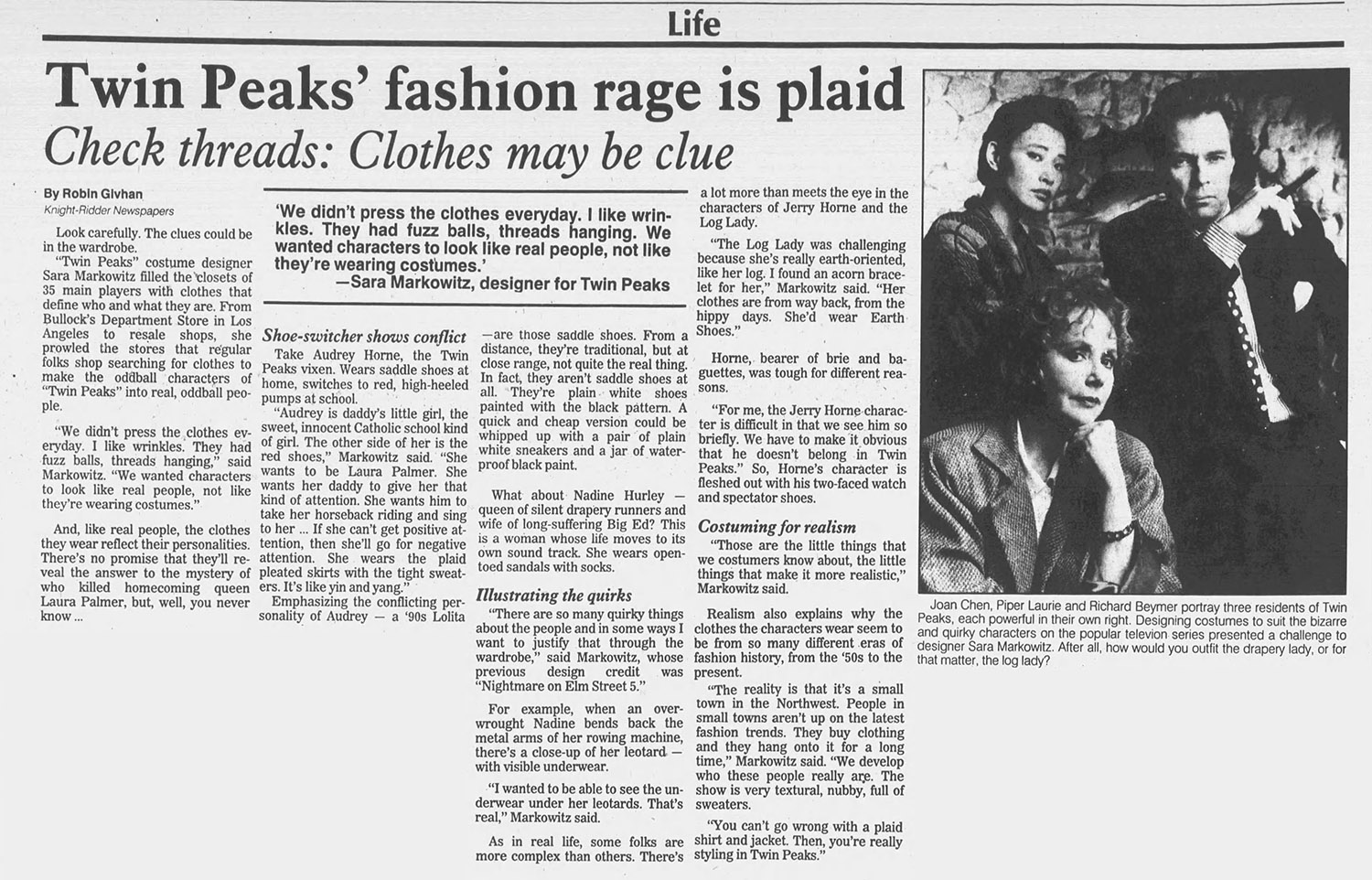
The Rock Island Argus ran the story on May 13, 1990 and did something similar to what I do on Twin Peaks Blog – they broke up the story by adding section headers.
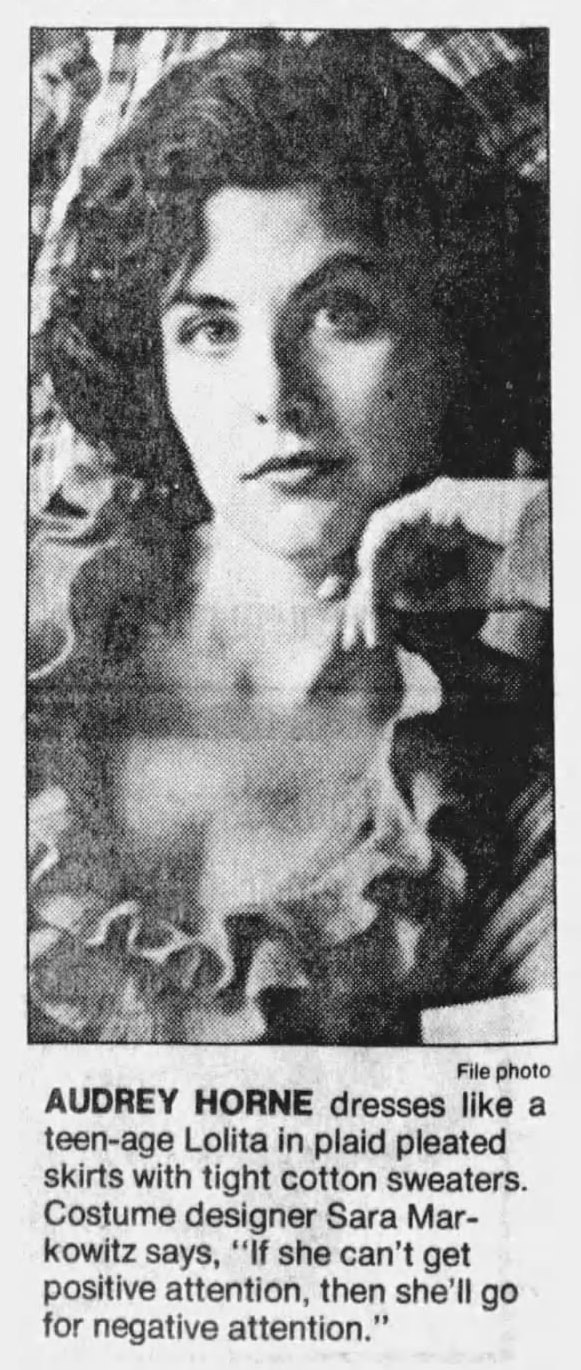
The Syracuse Herald Journal also ran Givhan’s article on May 23 1990, the night ABC aired the final episode of the first season. This was the last newspaper I found which had the syndicated story. They cropped a publicity photo of Audrey Horne (Sherilyn Fenn) from the Double R Diner set and added a quote.
“AUDREY HORNE dresses like a teen-age Lolita in plaid pleated skirts with tight cotton sweaters. Costume designer Sara Markowitz says, “If she can’t get positive attention, then she’ll go for negative attention.”
ALL THE HEADLINES FROM ROBIN GIVHAN’S INTERVIEW WITH SARA MARKOWITZ
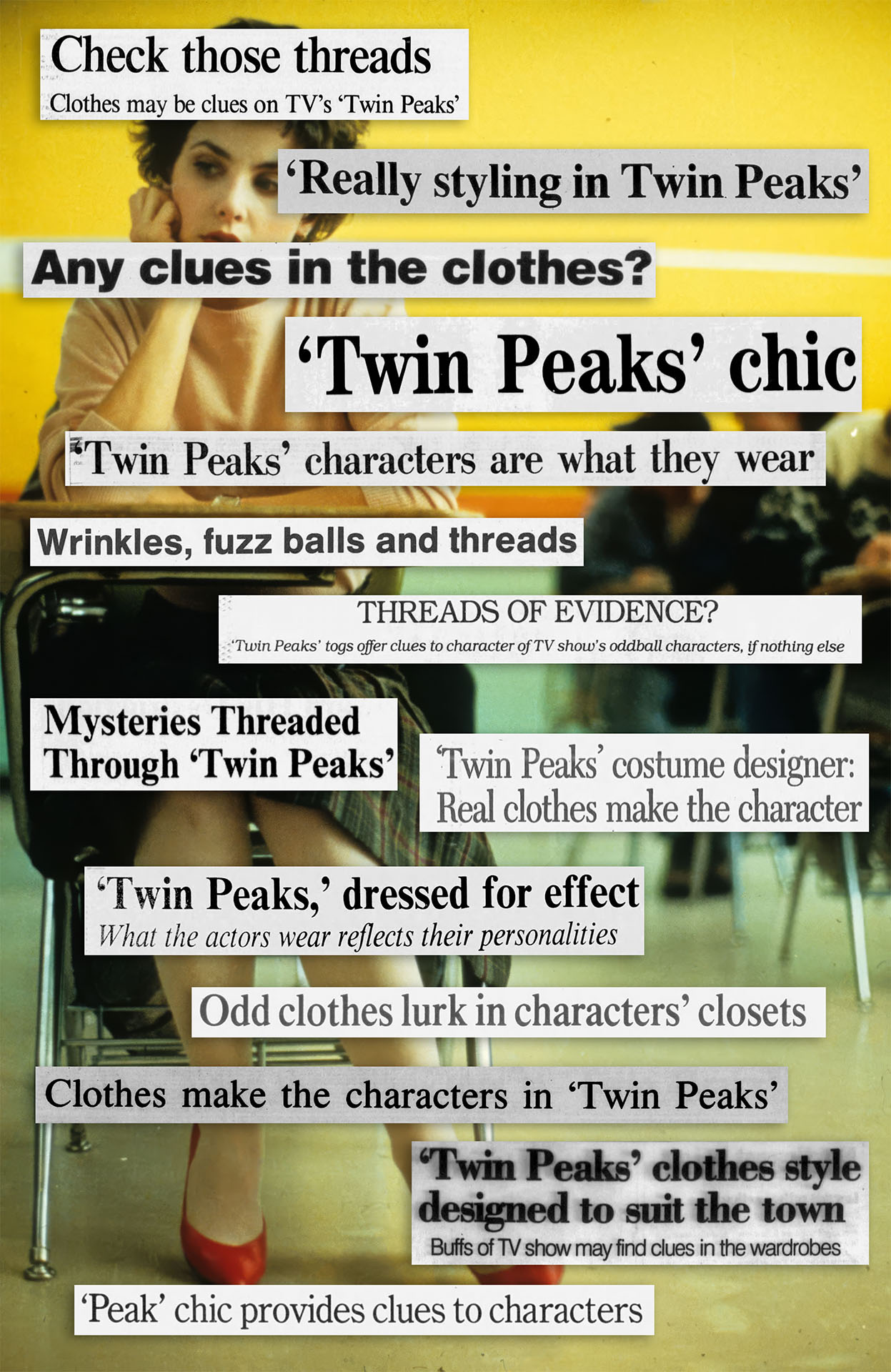
The one syndicated story by Robin Givhan generated a multitude of headlines in newspapers across America as seen in the image below.
I love stories like this as they offer rare insights into the early production details of this wonderful and strange show. At the time it was published, stories like Givhan’s helped audiences craving for answers to the mystery of who killed Laura Palmer.
Author
Discover more from TWIN PEAKS BLOG
Subscribe to get the latest posts sent to your email.