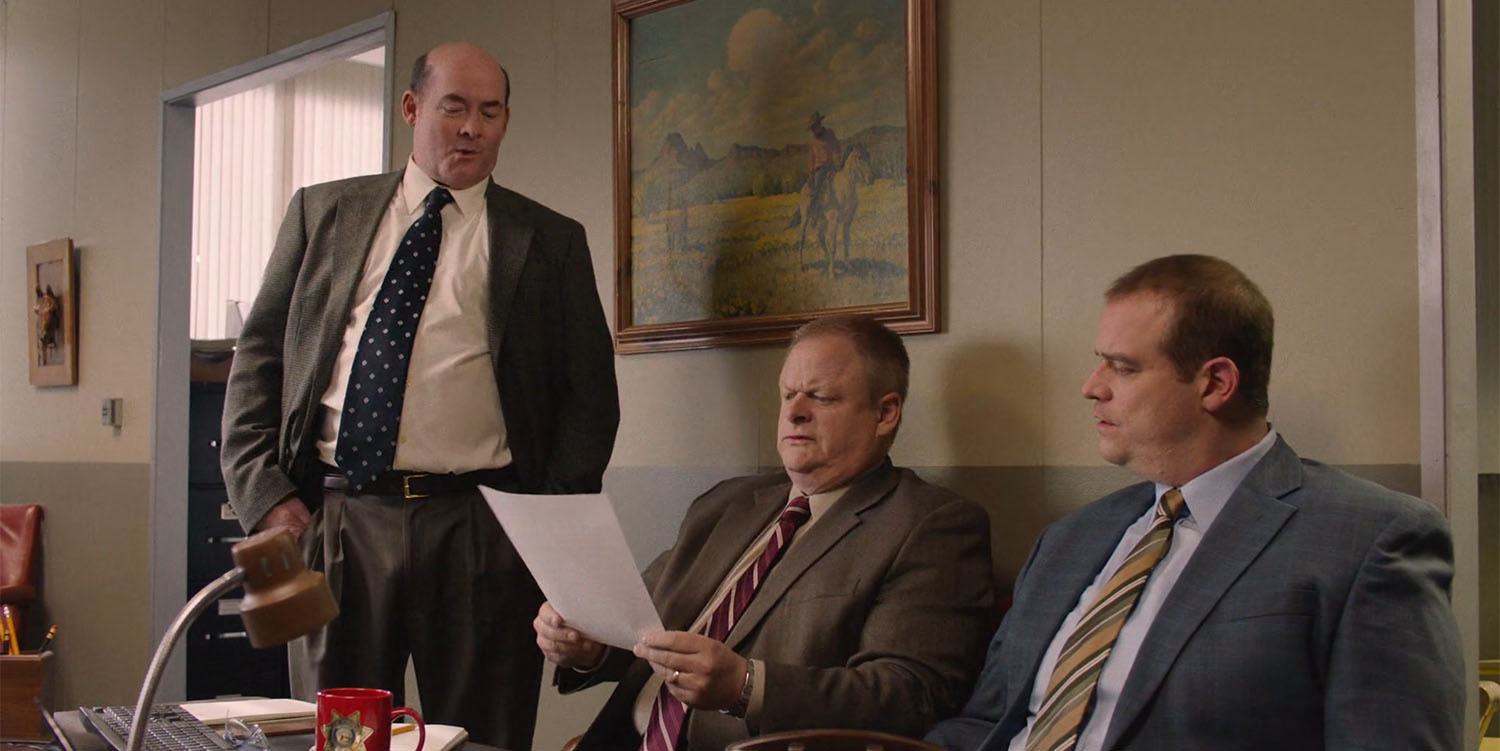
In the quest to identify all props and set decor from Twin Peaks, I sometimes get lucky with finding an item very quickly. This happened with western-themed artwork hanging above Detective D. Fusco’s desk at the Las Vegas Metropolitan Police Department headquarters in Twin Peaks: The Return.
“SLOW POKE” BY RAY STRANG AT LAS VEGAS METROPOLITAN POLICE DEPARTMENT
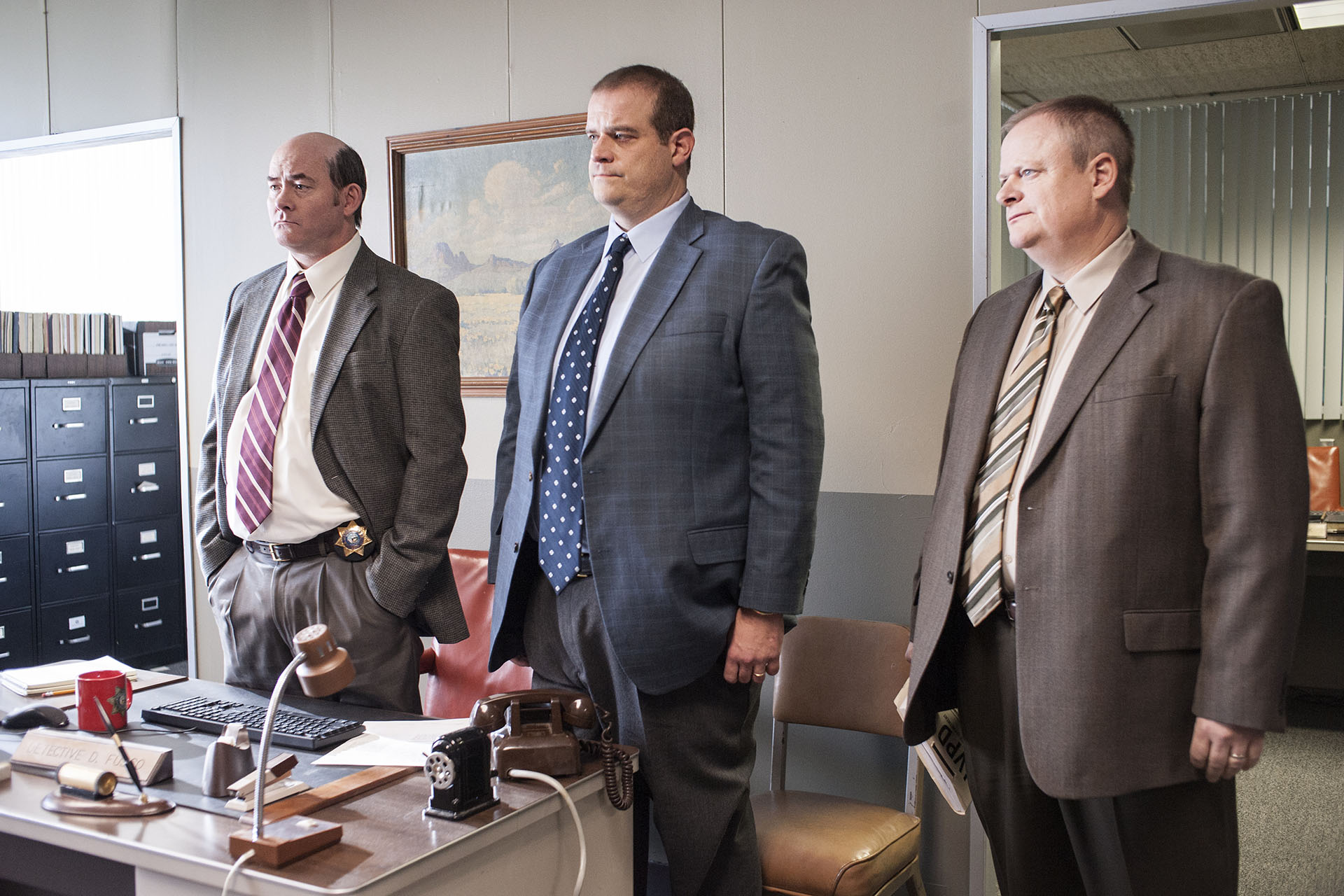
In Parts 9 and 13 from Twin Peaks: Return, a Western-themed painting is seen hanging above Detective D. Fusco’s desk in the Las Vegas Metropolitan Police Department. David Koechner (far left) played D. Fusco, Eric Edelstein (center) played “Smiley” Fusco and Larry Clark (far right) was T. Fusco. To identify the decorative artwork, I cropped the artwork and performed a Google Image search. Results were immediate.
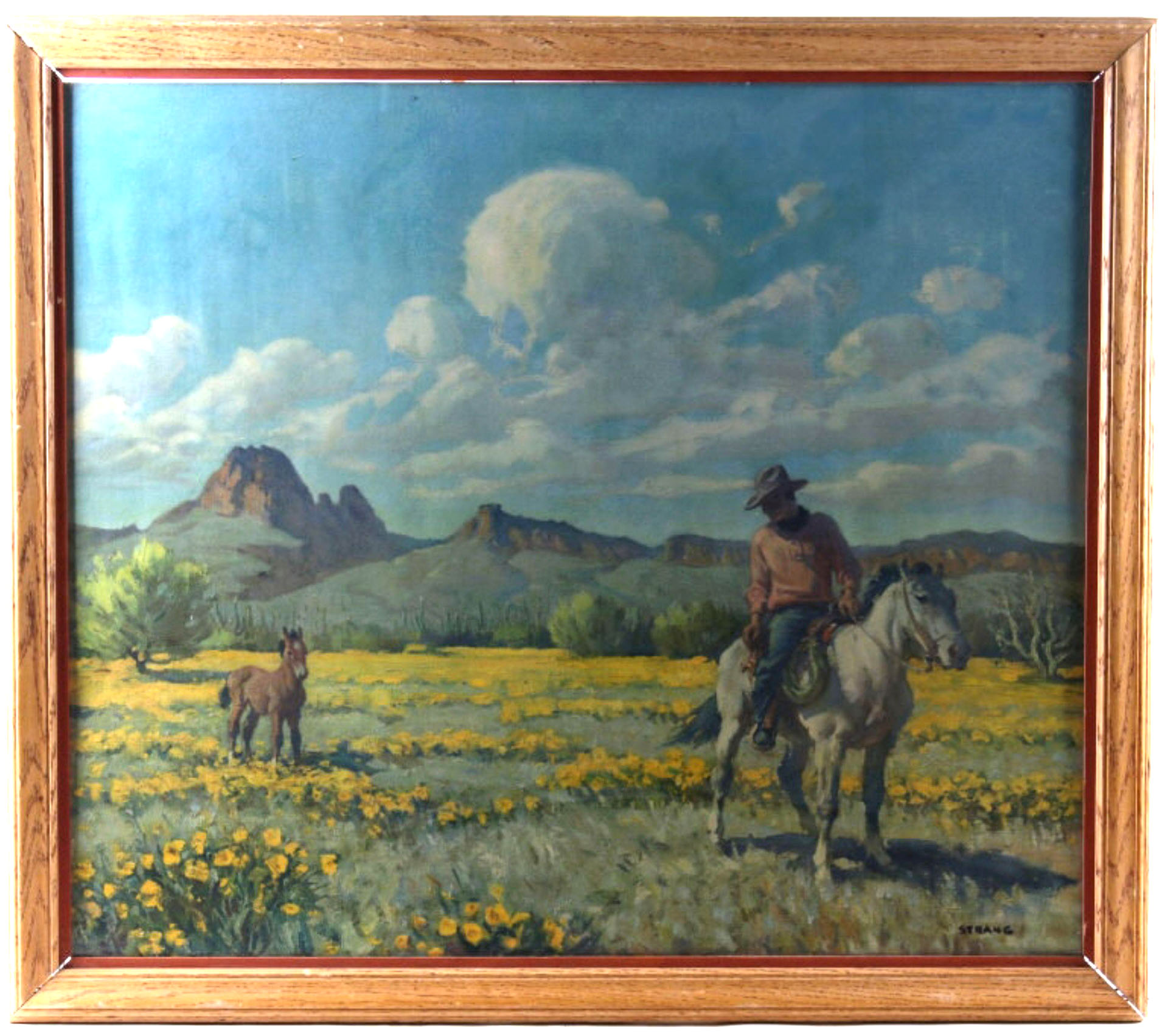
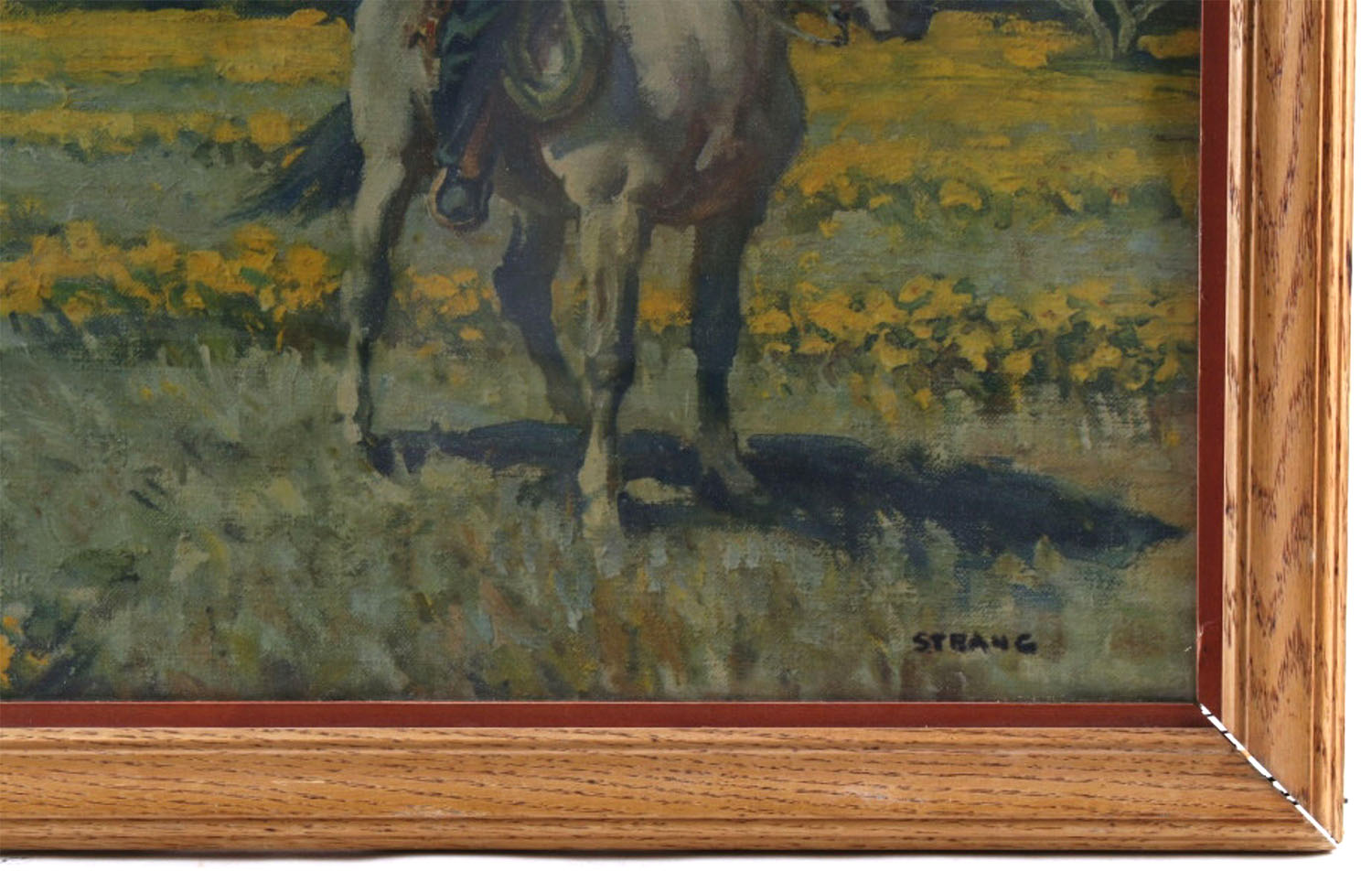
The artwork titled “Slow Poke” was created by Ray C. Strang, which was his most famous painting sparking numerous recreations. The measurements of this picture are 27-inches by 31 1/4-inches.
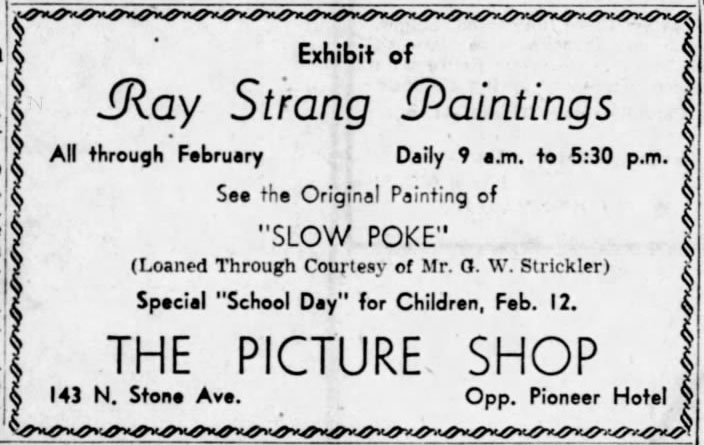
Strang painted “Slow Poke” for University of Arizona professor Glen W. Strickler sometime in the late 1940s. A newspaper article from 1948 mentions “Slow Poke” and it was later shown during a month-long exhibit of Strang’s paintings at The Picture Shop located at 143 N. Stone Avenue in Tucson, Arizona in February 1949.
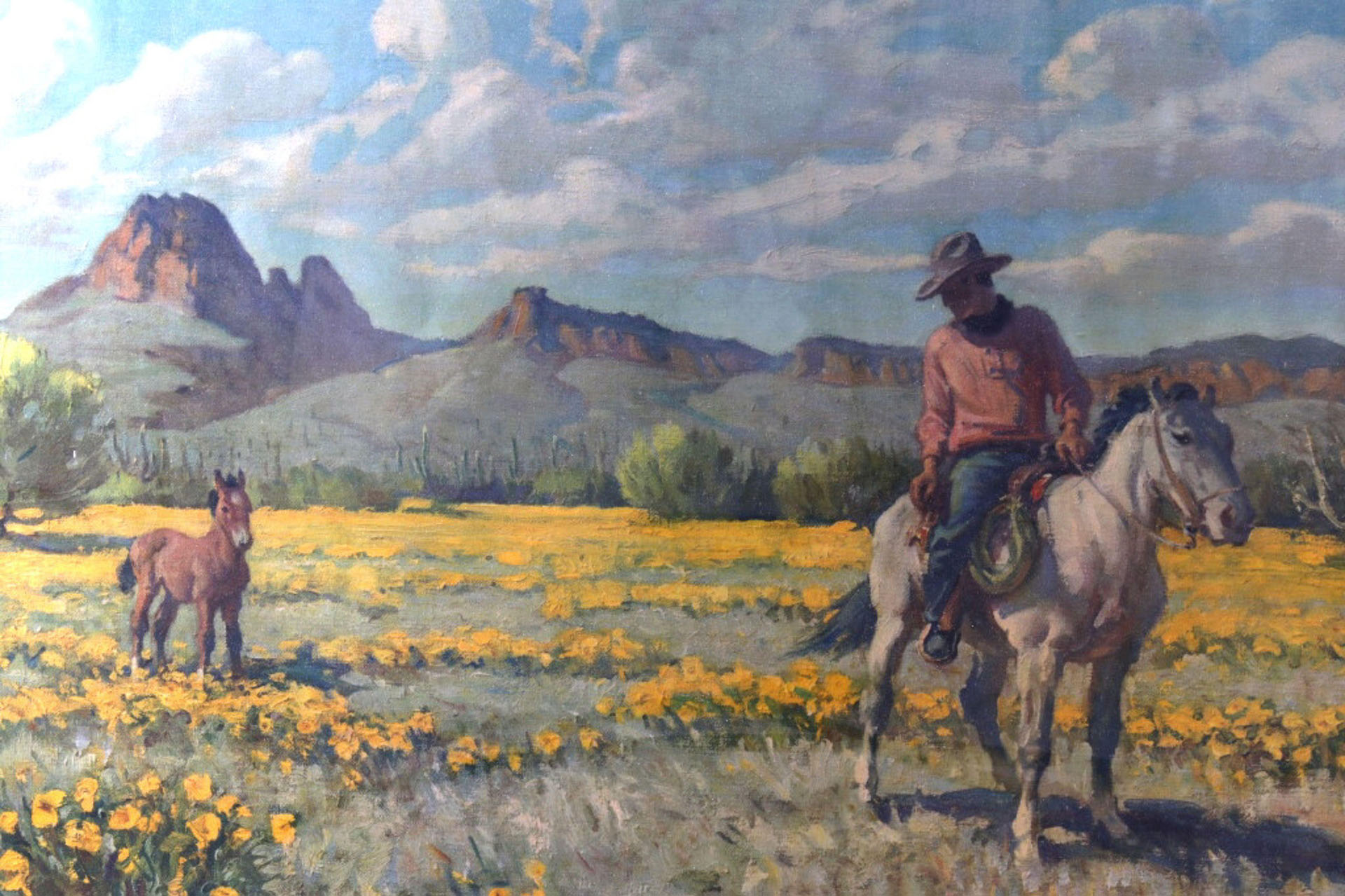
According to an article in the Arizona Daily Star on Mar. 3, 1952, reproductions of Strang’s painting, “Slow Poke,” had sold more than reproductions of any other western painting once listed in 1954 among the 32 best selling reproductions in the world.
WHO WAS RAY. C STRANG?
Born in Sandoval, Illinois in 1893 (or 1894), Ray C. Strang began his studies in Centralia and attended the Chicago Art Institute, graduating in 1920 following two years of serice in World War I. From there he went to New York City and studied under Walter Biggs, Harvey Dunn and George Bellows after attending Art Students League of New York and the New York School of Fine Arts.
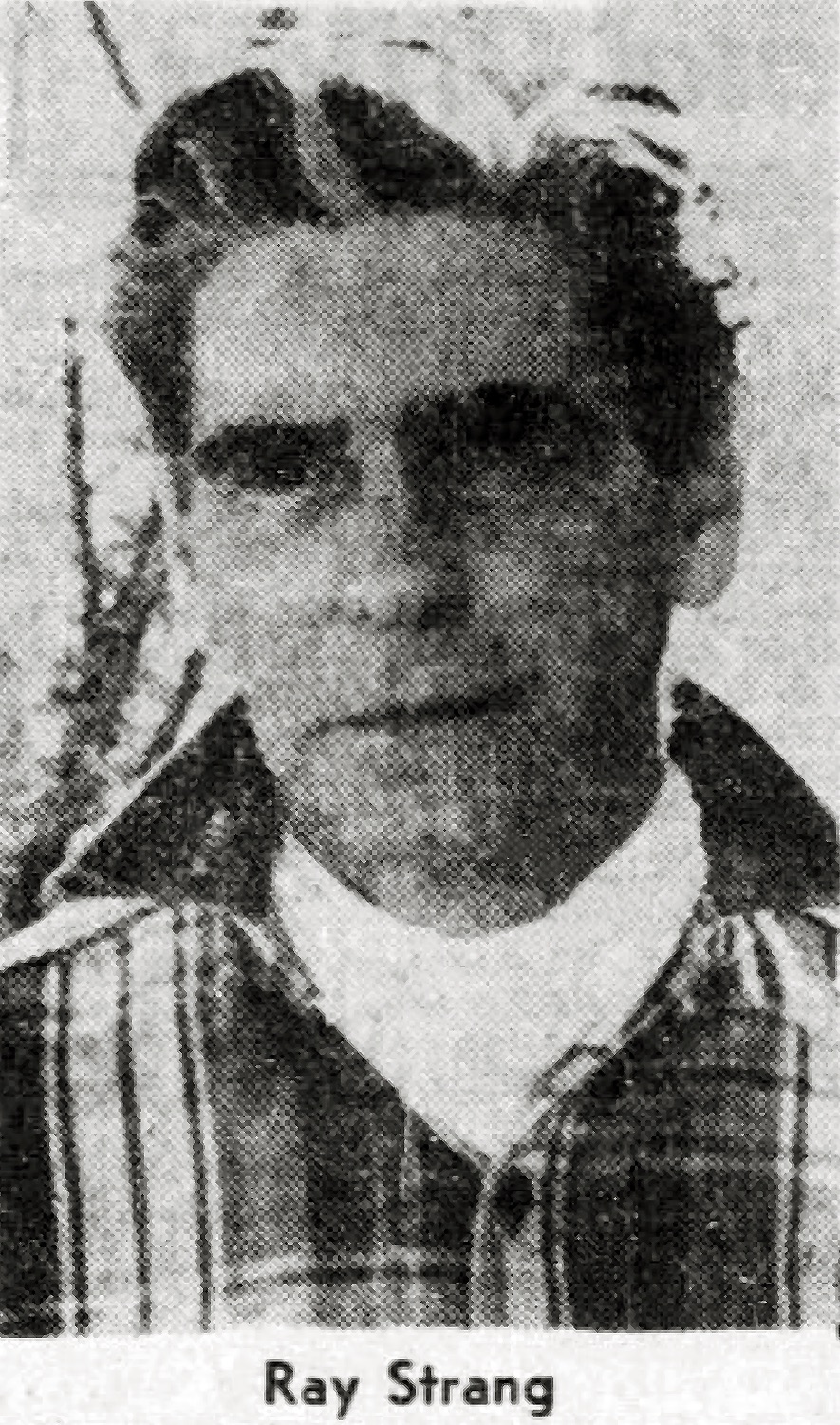
He opened a small studio on 69th Street, near Broadway, and began working on illustrations for magazines as a freelance artist. For the next 17 years, his work appeared in countless magazines including he Saturday Evening Post, The American Magazine, Ladies’ Home Journal, Collier’s, Country Gentleman and Harper’s. He also created covers for publishers such as Dodd, Mead and Company.
Tired of the mad rush and constant deadlines of the New York advertising scene, he moved West in 1937 purchasing 60 acres near Safford Peak in the Picture Rocks section of the Tucson Mountains. His home sat atop a desert hill with sweeping views of both the valley and mountains.
The Arizona desert inspired Strang and he immersed himself in western themes. He visited ranches to “see and live with the cowpounchers.” The artist’s love of horses came naturally. As a boy on a Illinois farm, he often helped his father raise colts and “gentle” them for others. According to a Tucson Citizen article from Jan. 9, 1950, Strang saw these men “spend long hours in the saddle, sleep on bedrolls, eat from chuck wagons, rope and brand cattle.”
“These are my subjects,” he told the paper, “the pioneers and builders of the coming era. It is my job to portray their lives and characters with truth and understanding. I’m always in search of human interest subjects; and as such, the color and romance of western pioneers hold more than a passing interest.”
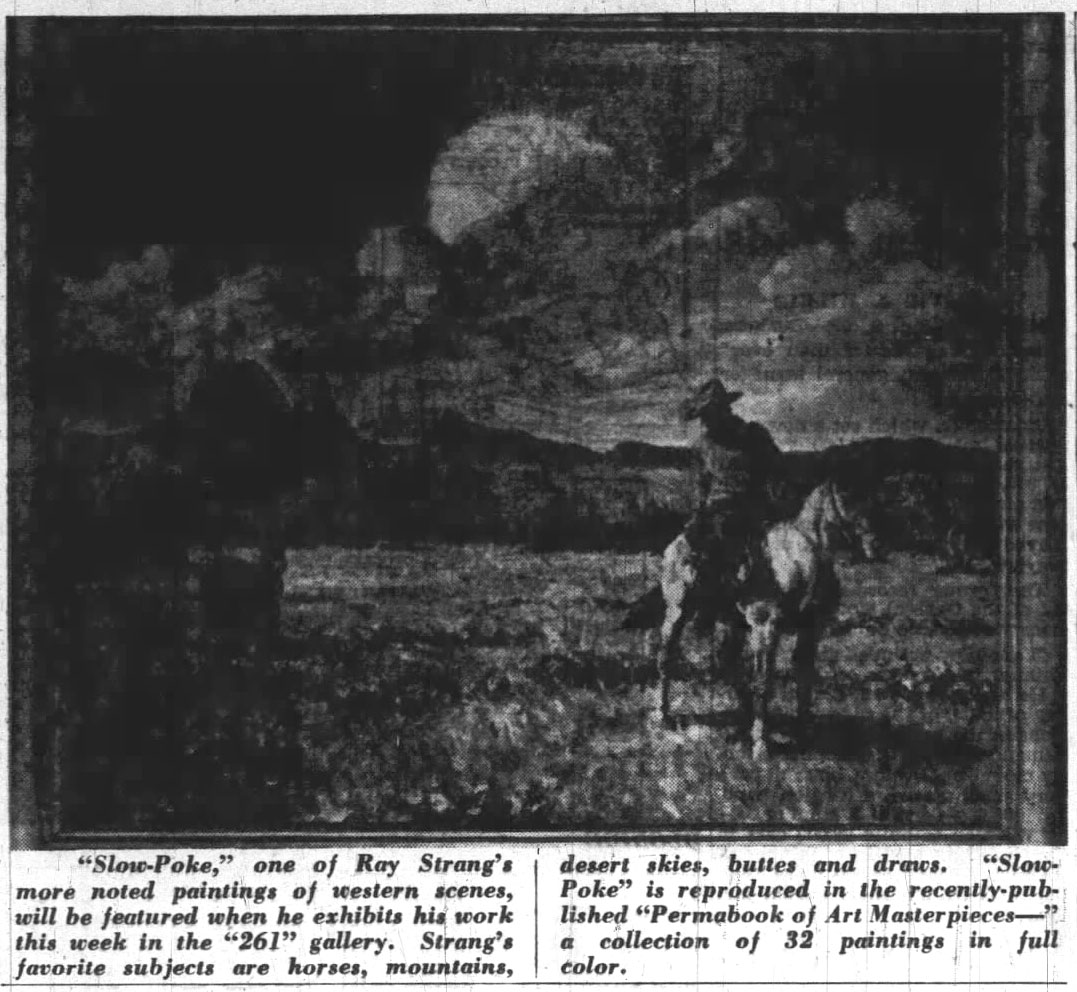
“Slow Poke” shows an impatient cowpuncher downright annoyed with a frisky colt that has broken corral. The cowpoke’s afraid to use a lasso on the romping “critter” because it might rear and hurt itself explained the Tucson Citizen reporter.
In October 1951, Congressman Charles Hailed of Indiana, who Strang had never met, was listed in the Congressional Record for “his achievement in portray-ing and keeping alive the spirit of the Great Southwest in America.” Congressman Halleck received Strang’s painting titled “Arizona Cutting Horse” which he and Speaker Rayburn, speaker of the house, were so enamored with the artwork they wanted his name in the record.
His paintings hung in many galleries, including Grand Central palace in New York, Bender Gallery in Kansas City, Alden Gallery in St. Louis, the Chicago Art Institute and the New York Art Center.
Strang served for years on the Board of Directors for the Tucson Fine Arts association. His life ended May 8, 1954 at the age of 60 following a brief illness. He left behind his wife Gladys, son Richard, two brothers and seven sisters. He was buried in Evergreen Cemetery in Tucson.
APPEARENCES IN TWIN PEAKS

The artwork appears in only two episodes from Twin Peaks: The Return – Parts 9 and 13. The crew used the former City of Glendale, California police department building located at 140 N. Isabel Street for this location. Scenes from both episodes were filmed on the same day, Feb. 5, 2016.
Since this building was an empty shell used as a film and television location, this mean the Twin Peaks crew had to decorate Detective Fusco’s office. They purposely hung “Slow Poke” above his desk.
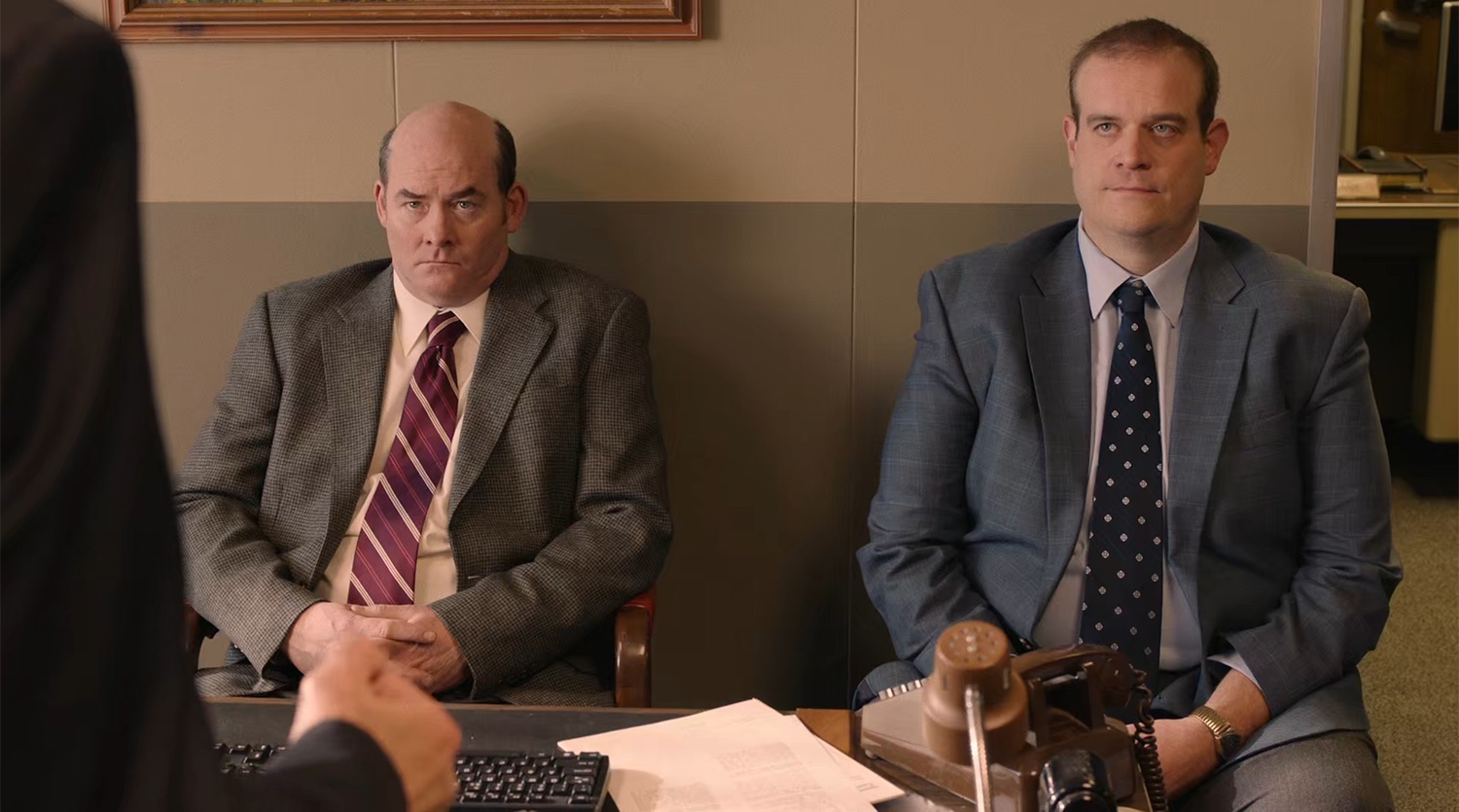
The first time we see part of the painting is when Bushnell Mullins is speaking with Detectives D. and Smiley Fusco in Part 9.
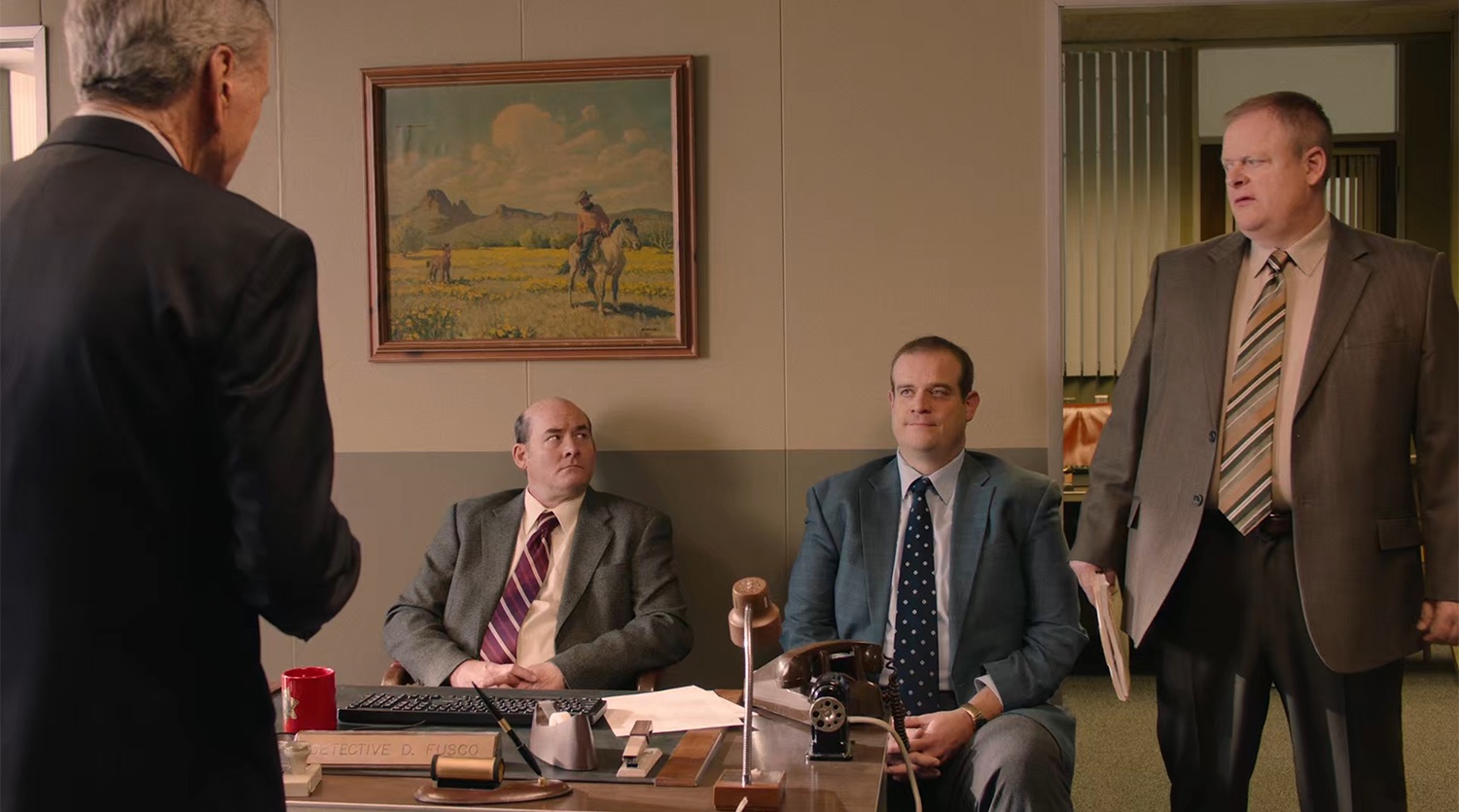
T. Fusco joins his brothers from another room and the entire “Slow Poke” painting is revealed.
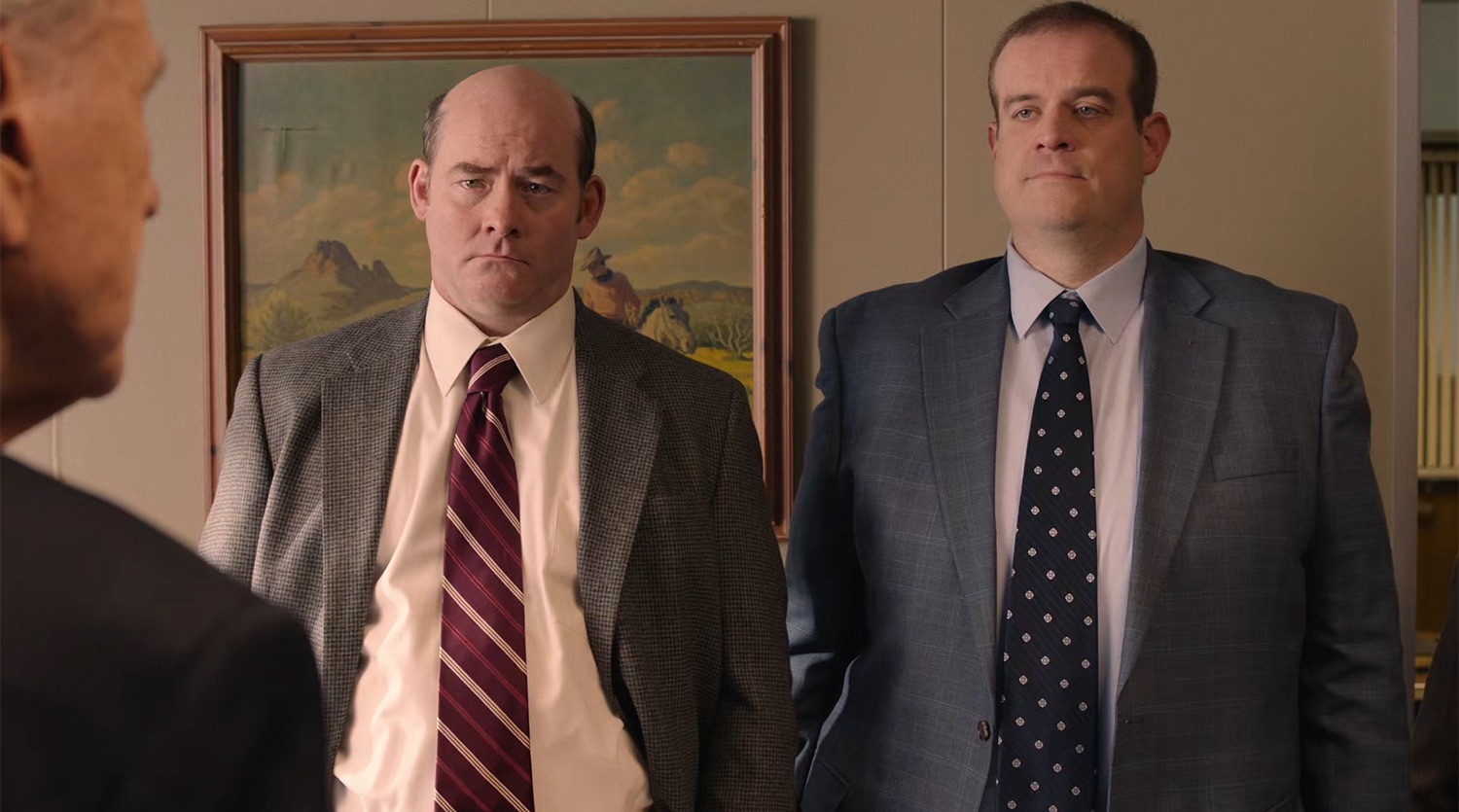
When two of the Brothers Fusco stand to address Mullins, the artwork is seen behind D. Fusco.
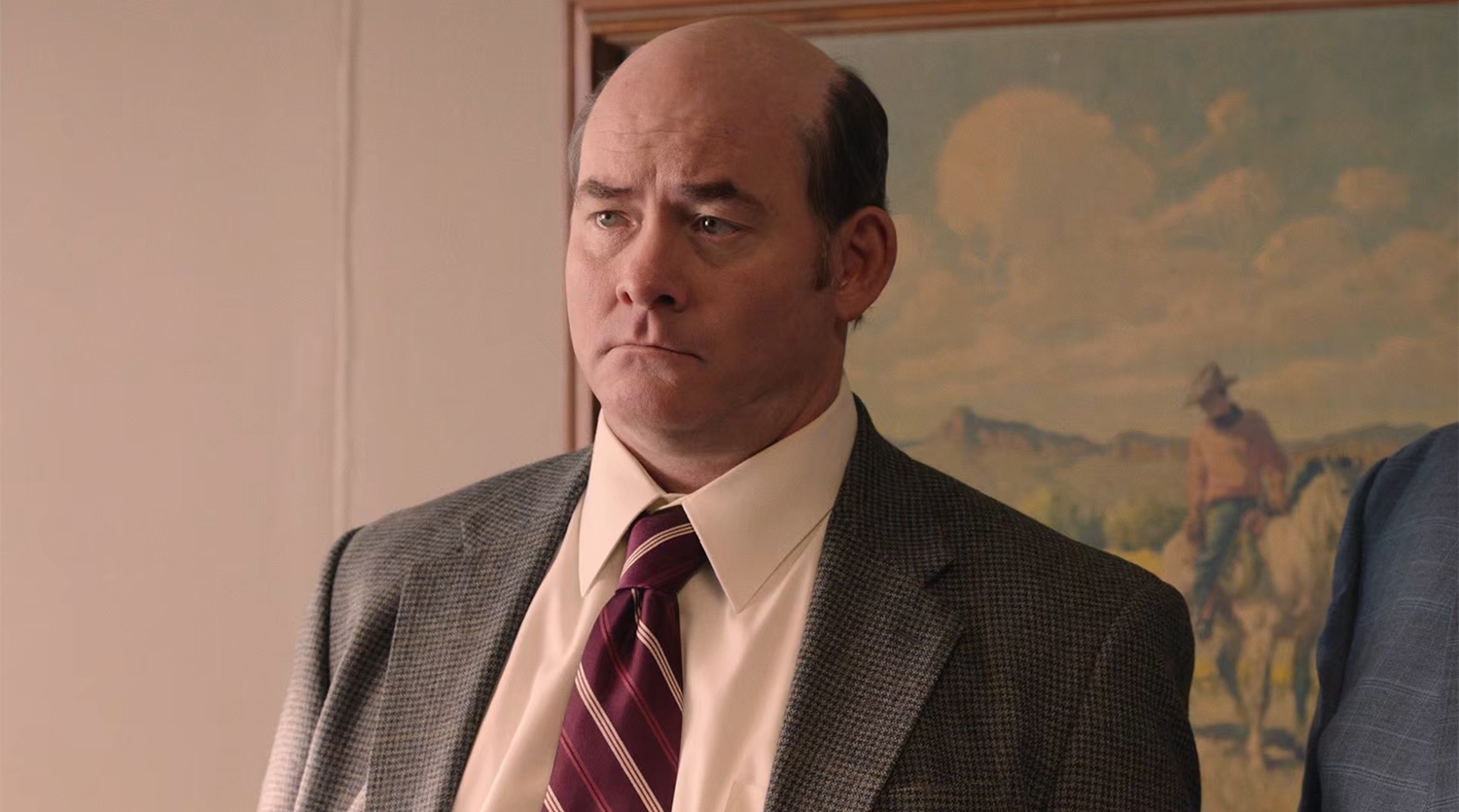
Panning from one brother to another, the camera lands on D. Fusco. The cowboy is seen in the background.
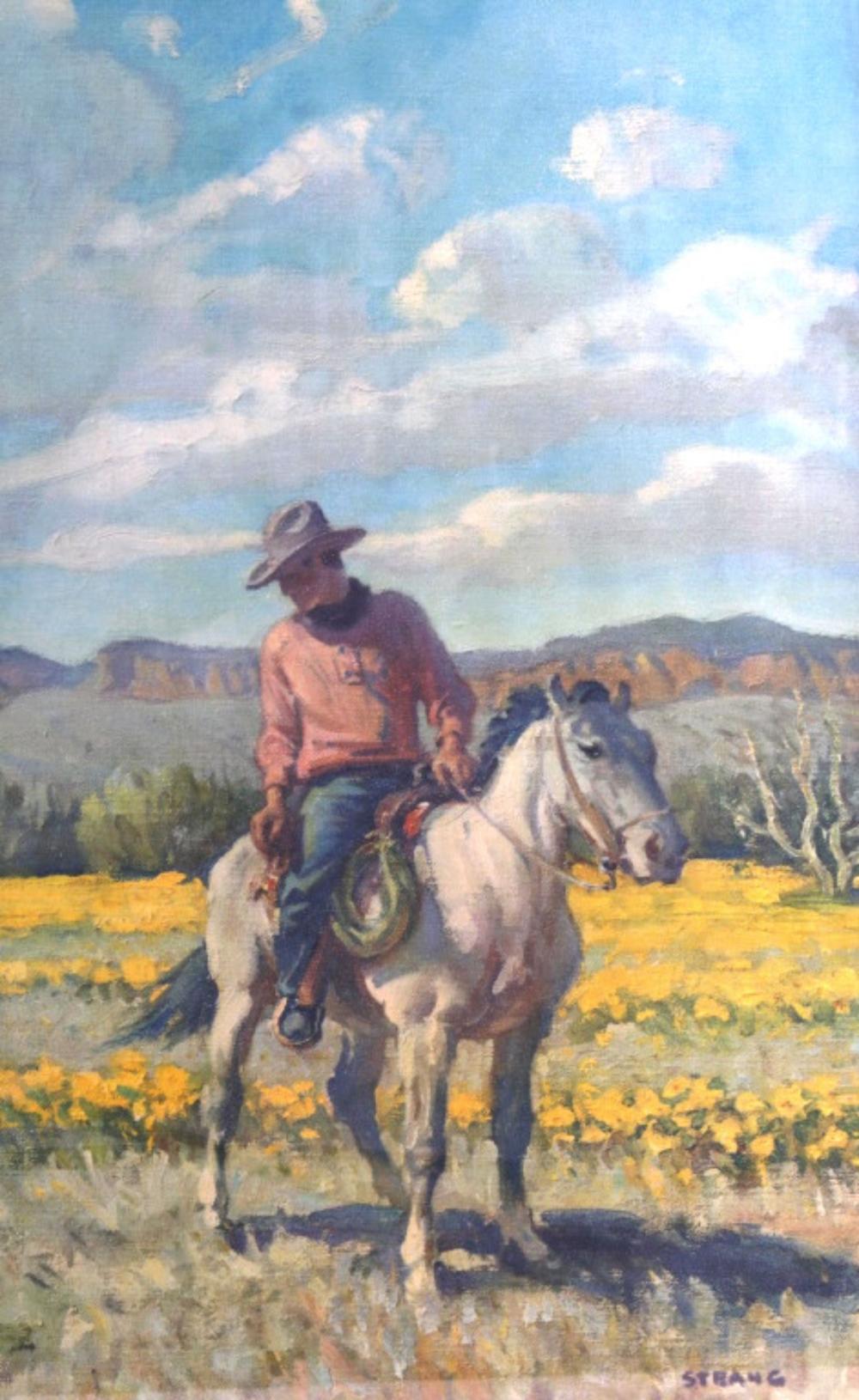
Here’s a close up look at the cowboy from Strang’s art.
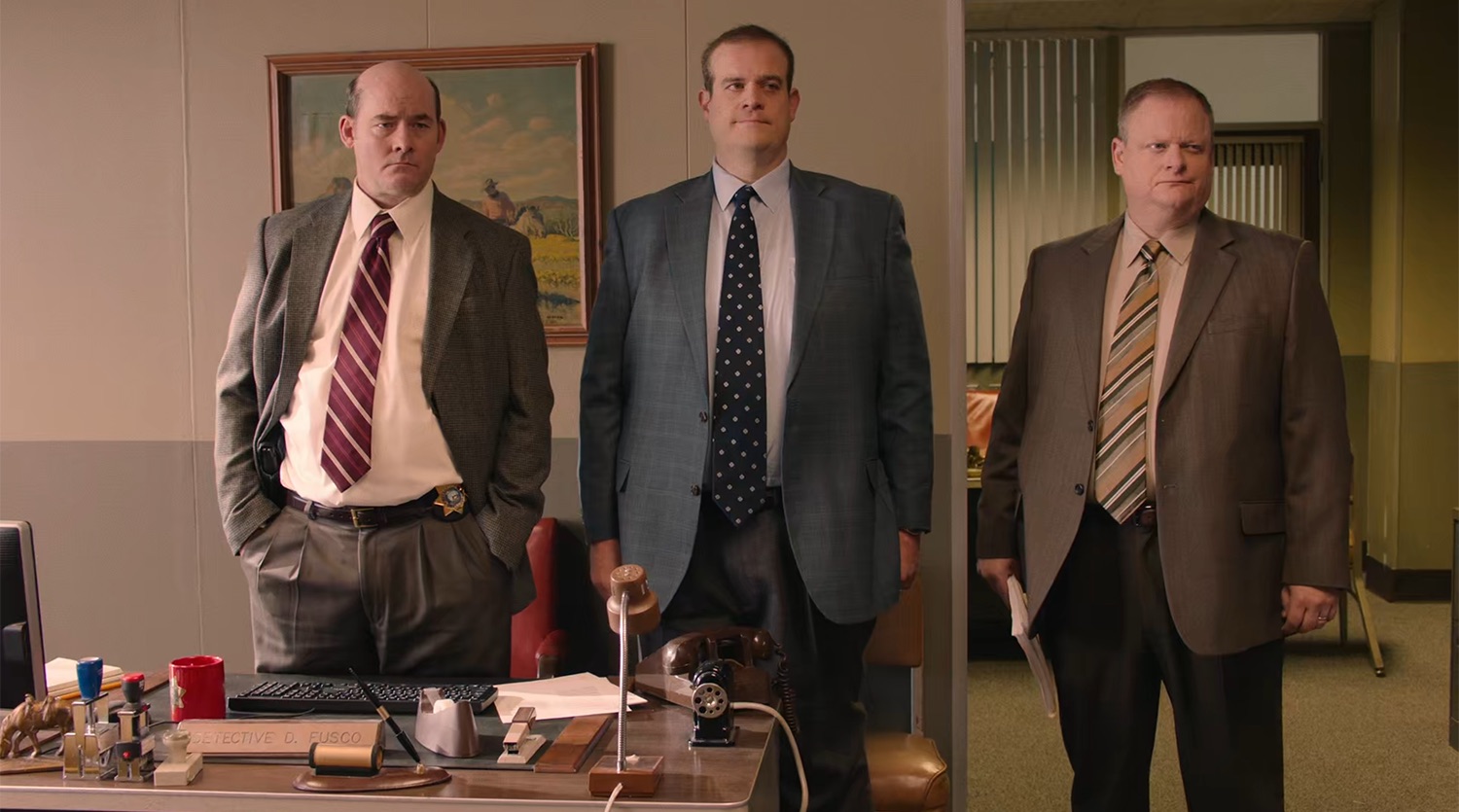
The three brothers watch Mullins leave the office.
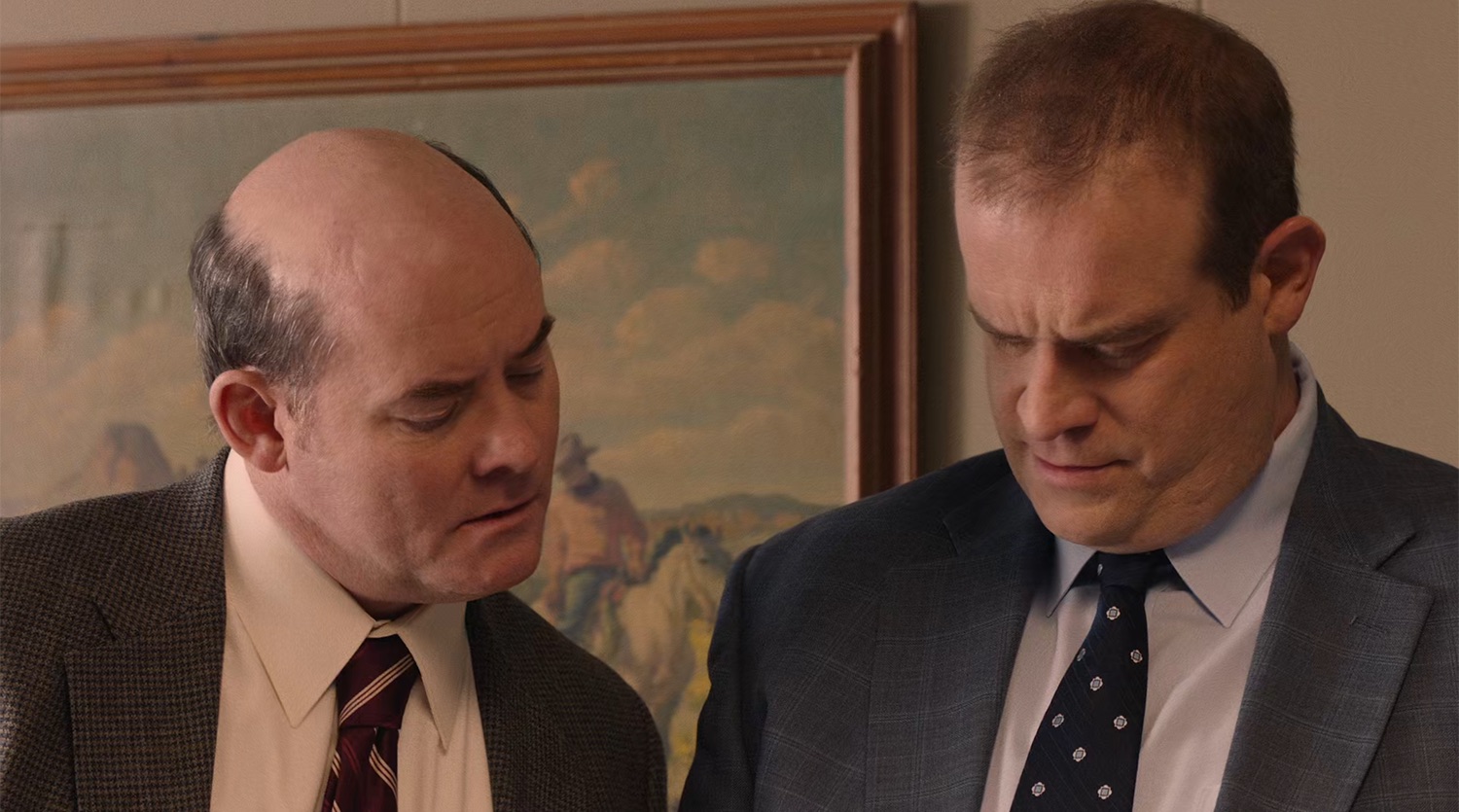
Another close up shows the cowboy positioned between D. and Smiley Fusco. This artwork isn’t the original; it’s most likely a reproduction since many copies were made.
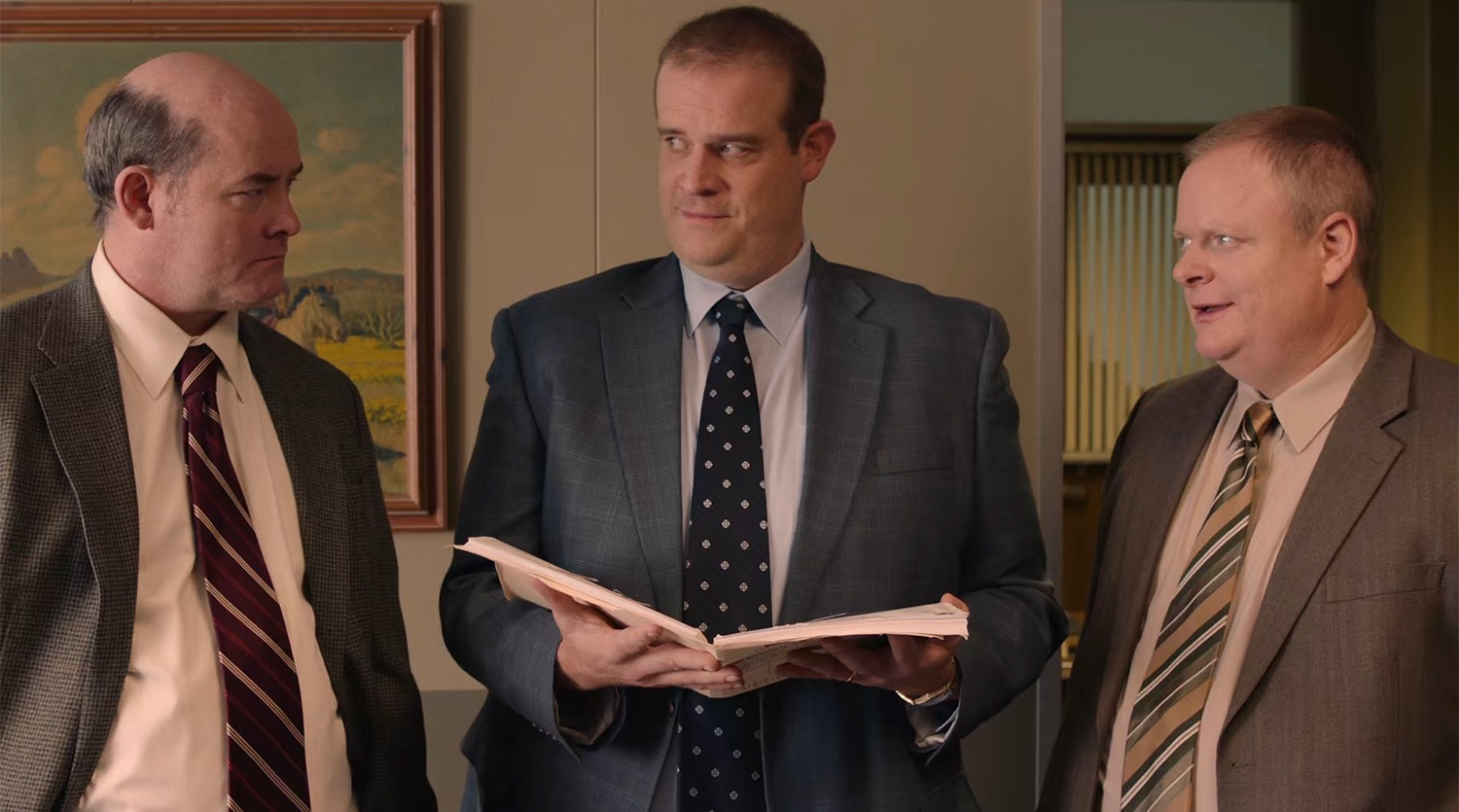
The scene in part 9 closes with the Brothers Fusco reviewing a case file.
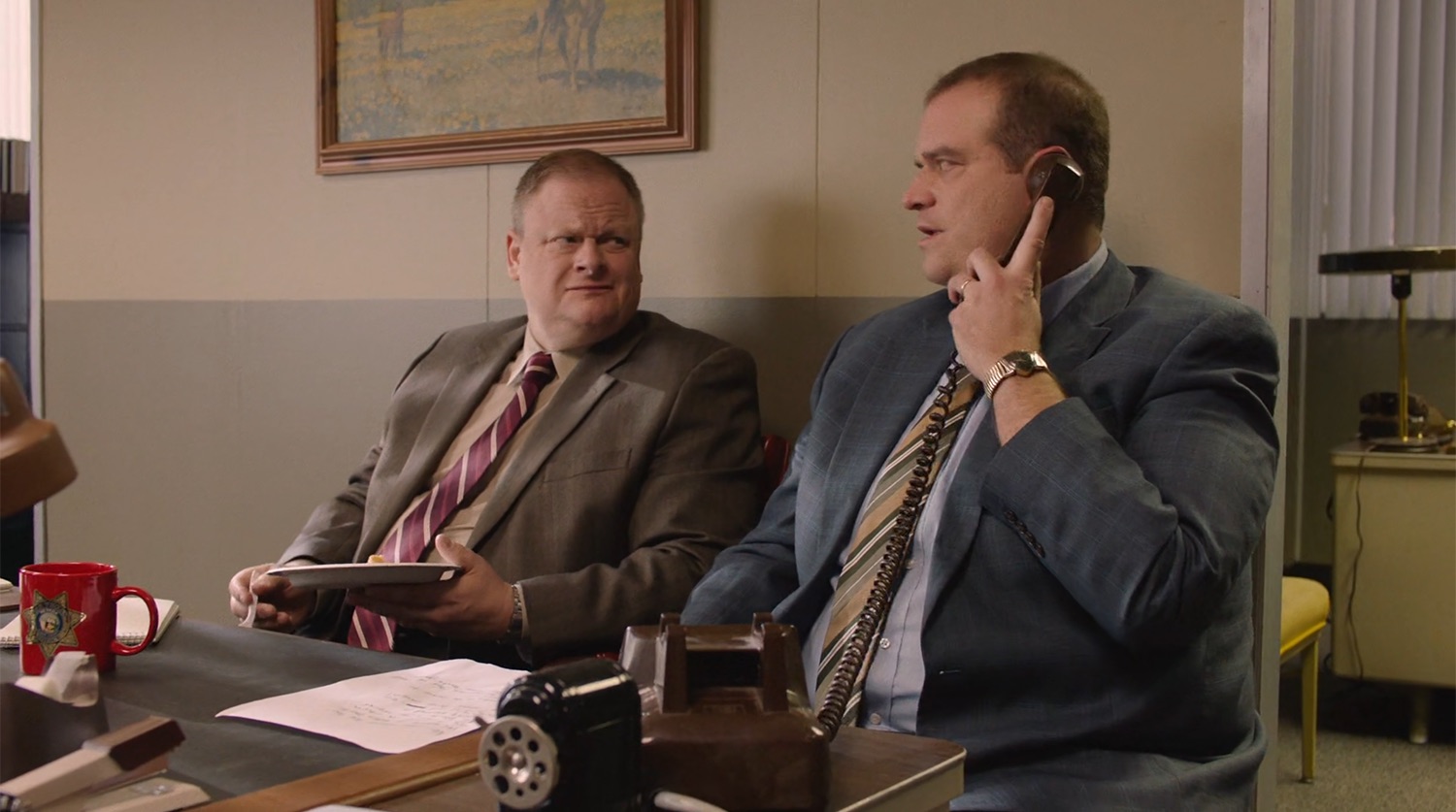
T. and Smiley Fusco are seen in Part 13 with the painting hanging above while they converse.
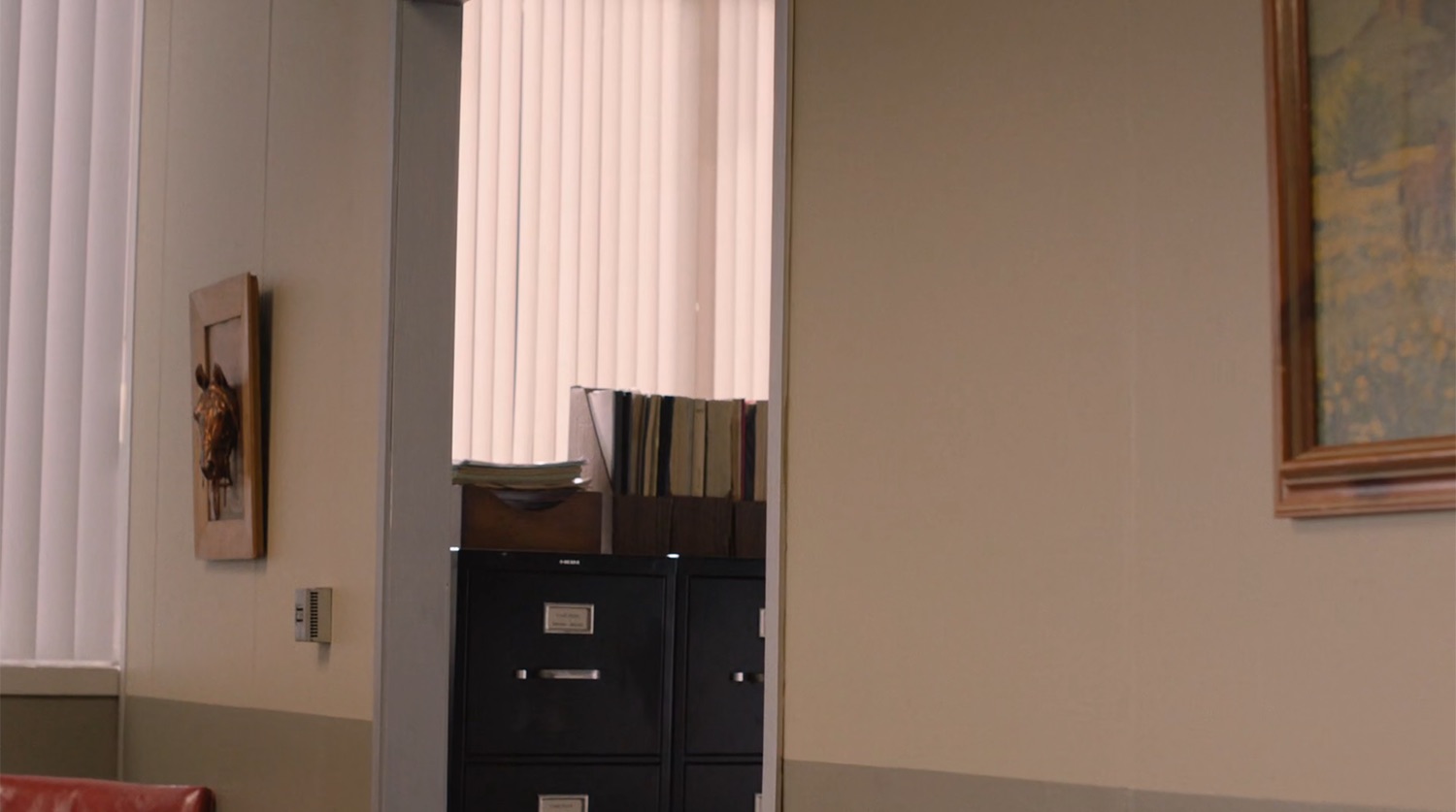
A corner of the painting and frame is seen before D. Fusco enters the room. There is also a framed horse relief hanging on another wall (I’ll need to find that one too!).
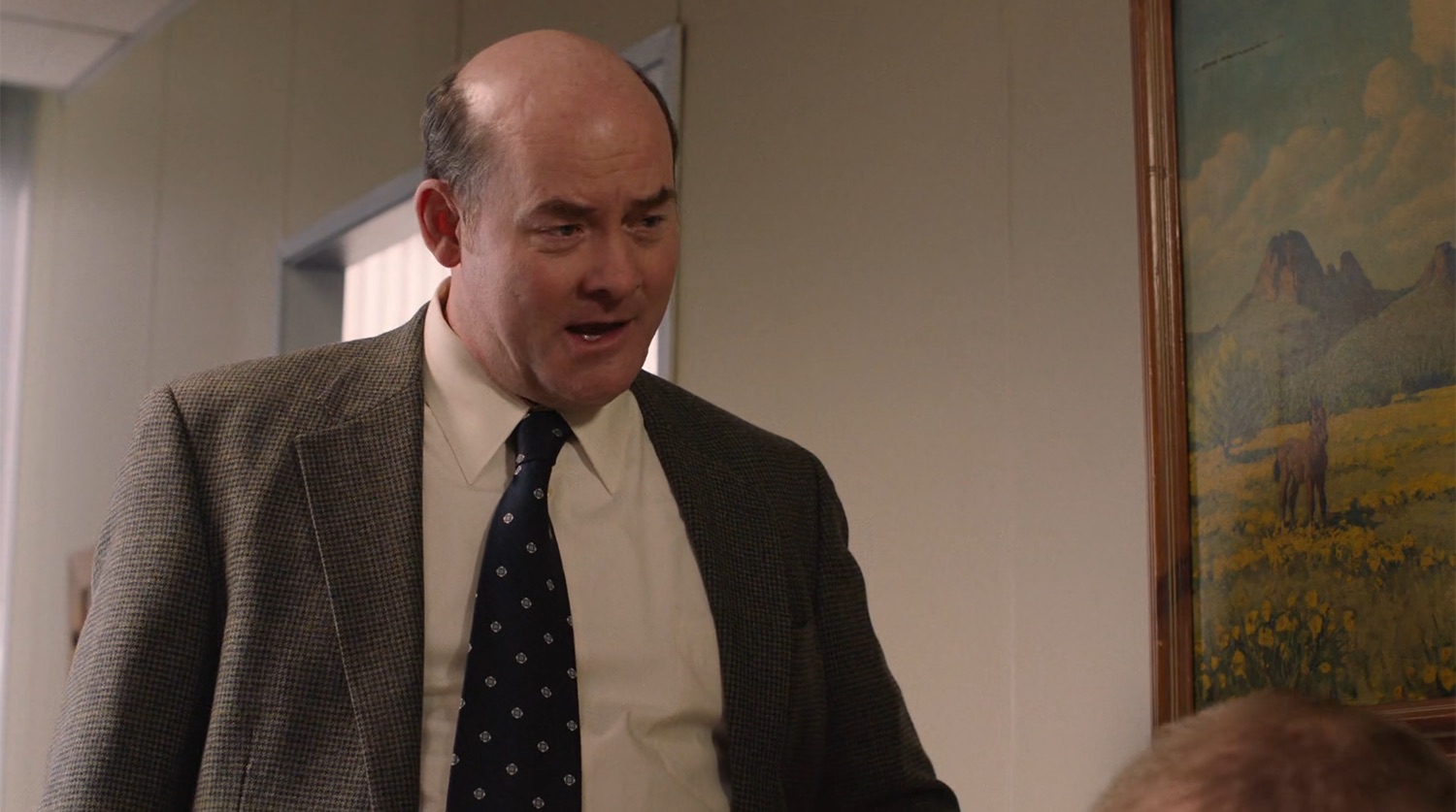
D. Fusco enters the chat and we can see the colt in the artwork above T. Fusco’s head.
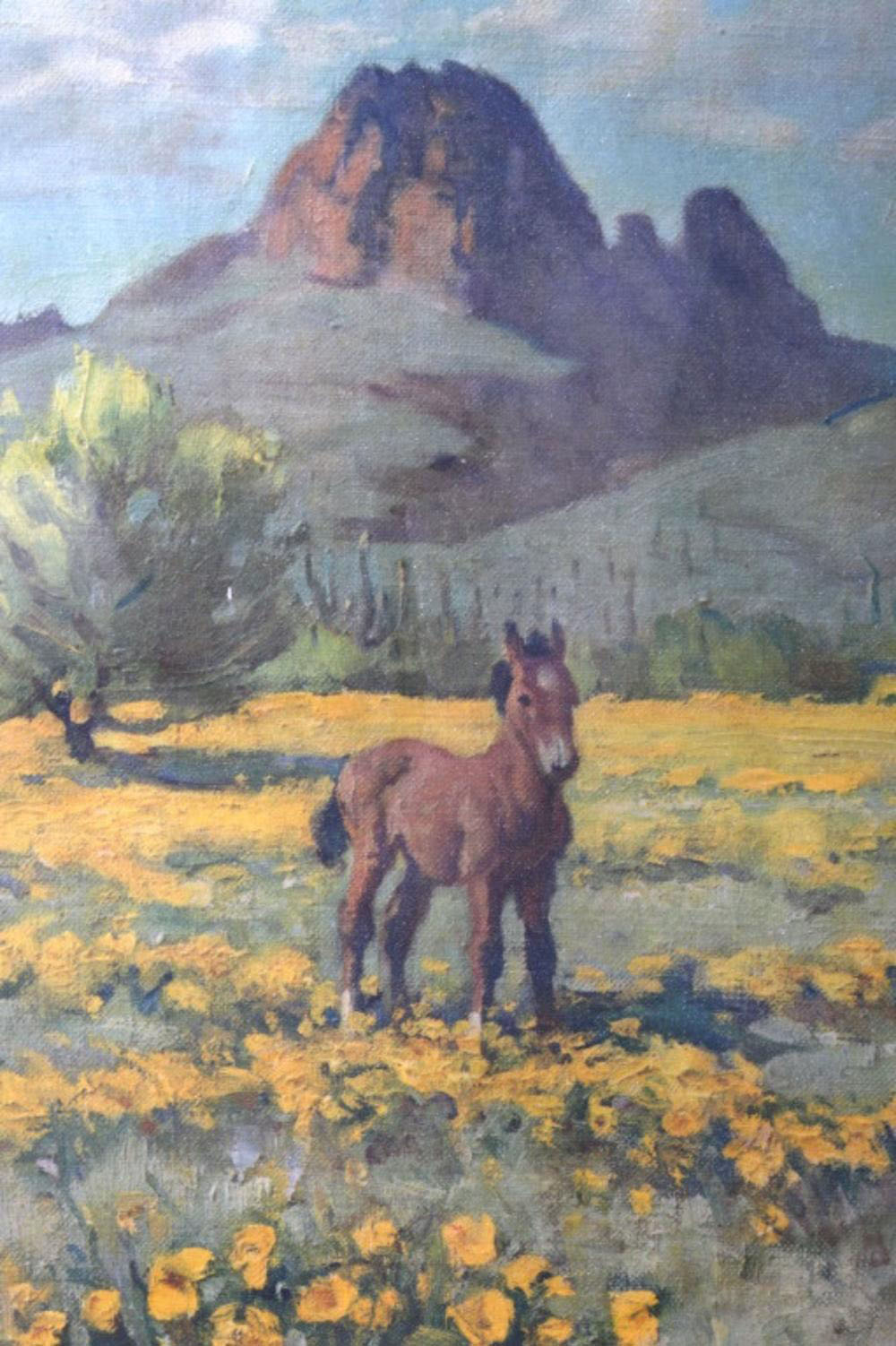
Here’s a look at the colt from Strang’s “Slow Poke.”
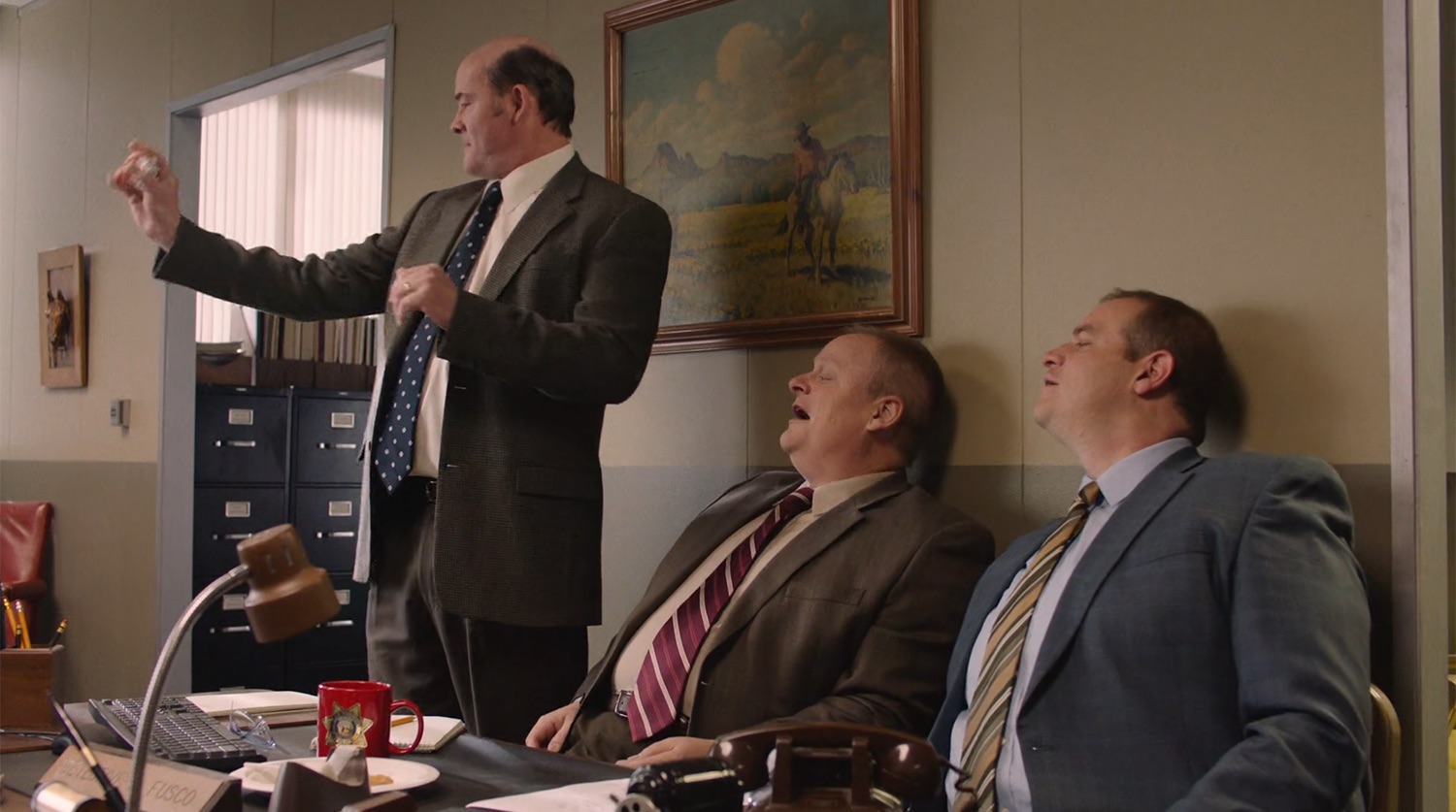
The Fuscos’ scene closes with D. Fusco shooting a paper ball into the wastebasket.
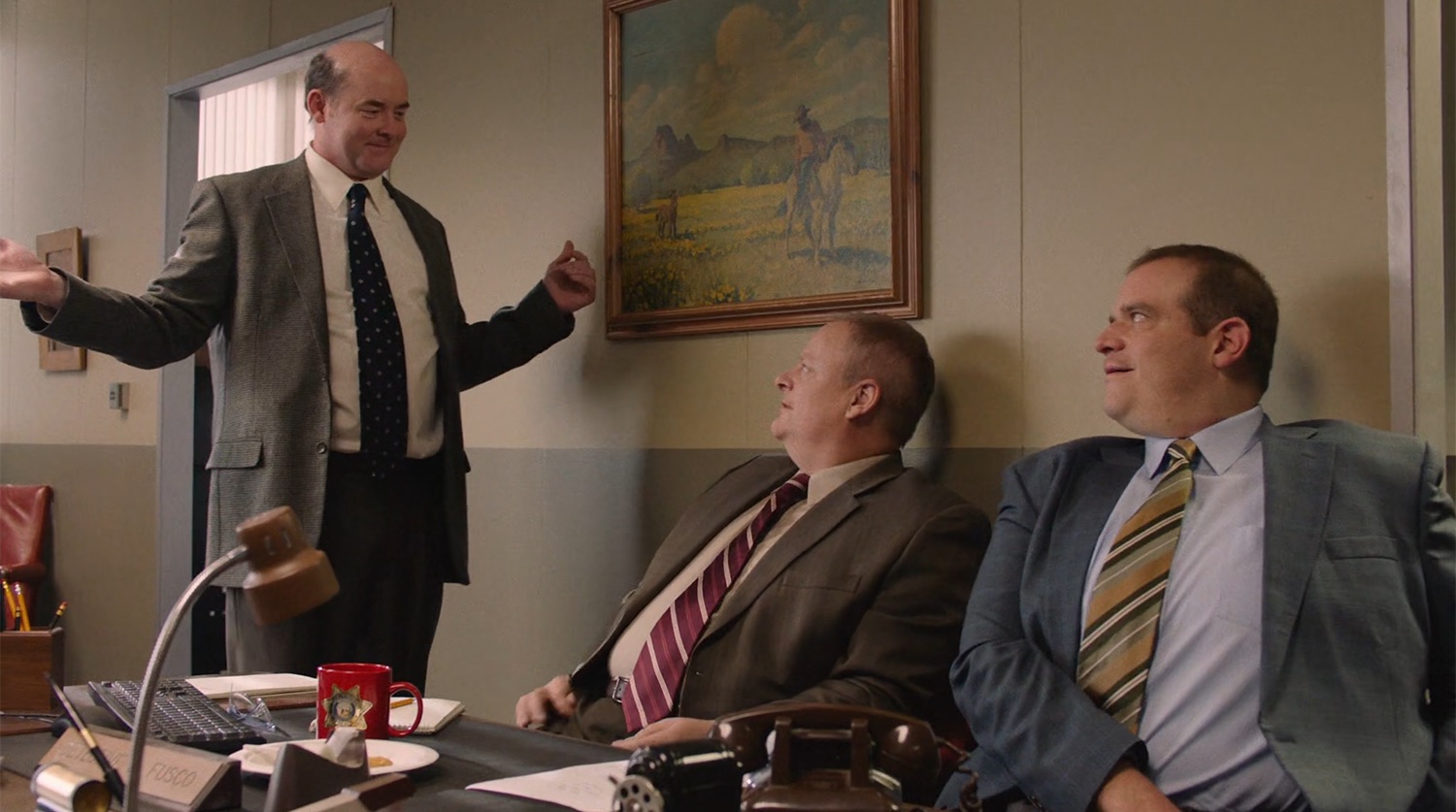
He makes the shot and his brothers need to pay up. This is the last time we’ll see “Slow Poke” in Twin Peaks.
Author
Discover more from TWIN PEAKS BLOG
Subscribe to get the latest posts sent to your email.