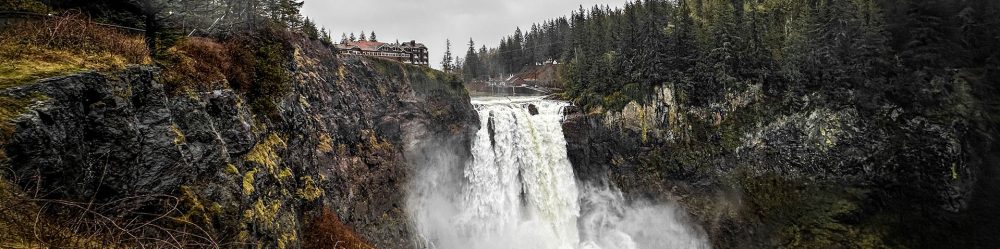
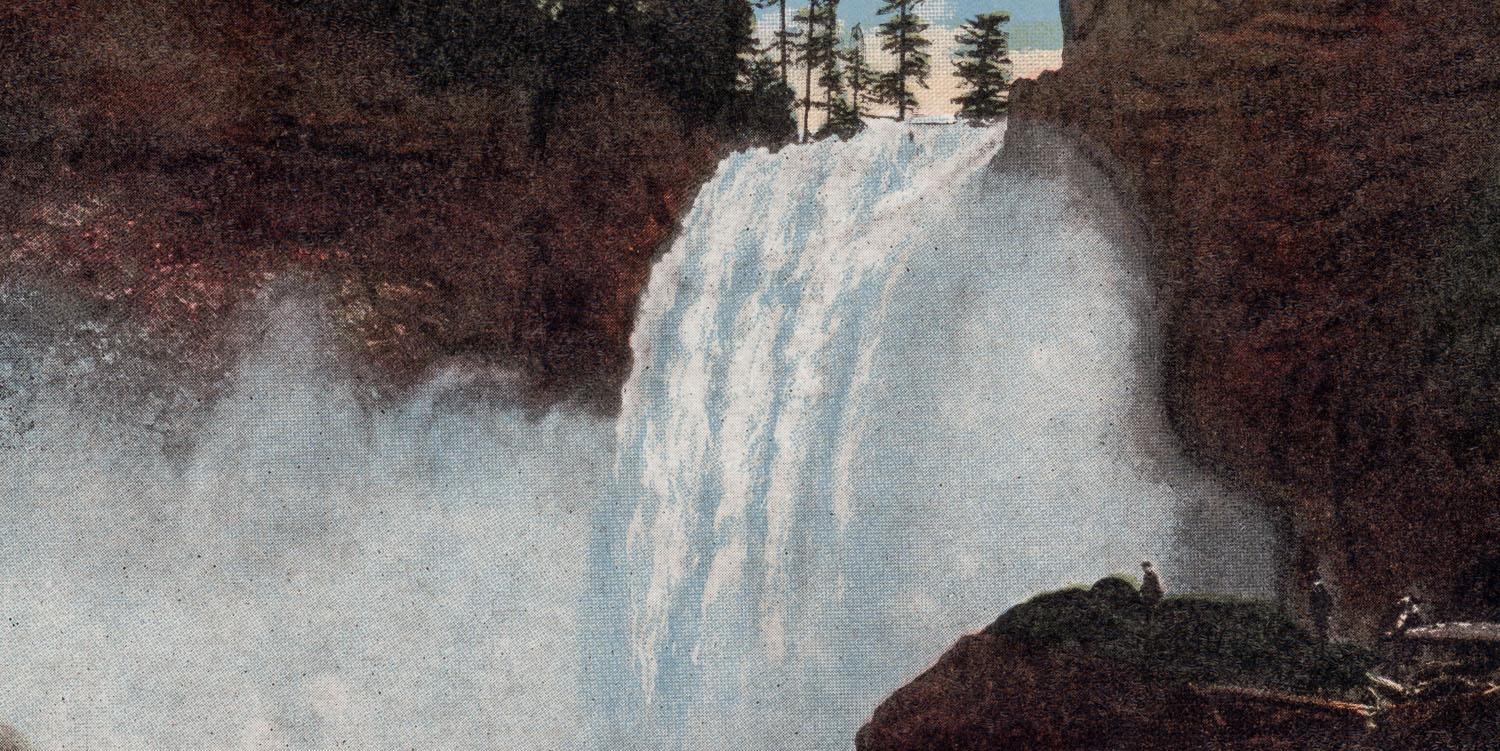
I am still fascinated that several of my Snoqualmie Falls postcards are more than 120 years old (granted, I also think 20 years ago is the 1970s). A sacred site to the Snoqualmie Tribe, this 268-foot waterfall in the town of Snoqualmie is the second most visited natural landmark in Washington state behind Mount Rainier. It’s been a popular spot for photographs since the early 1900s as seen on this vintage postcard that used a stylized image of the falls originally taken by Webster & Stevens, two Seattle-based photographers that took a half a million of images of the Pacific Northwest.
SNOQUALMIE FALLS POSTCARD BY PUGET SOUND NEWS COMPANY – 16142 | FRONT
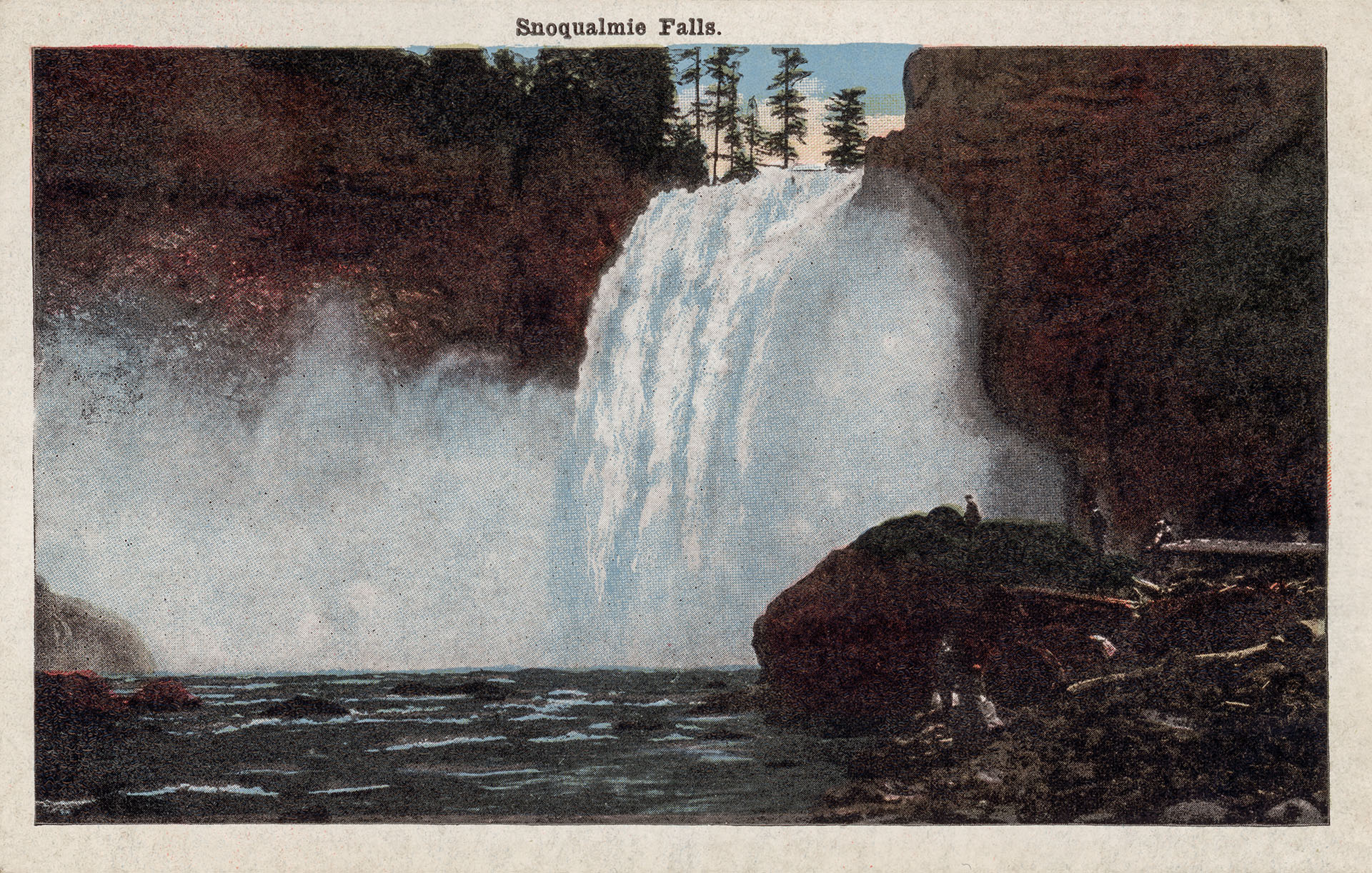
This Snoqualmie Falls postcard features a heavy flowing waterfall captured at the base downstream of the Snoqualmie River. This was most likely captured at some point around or before 1906. You’ll notice the Snoqualmie Falls Lodge, known today as the magnificent Salish Lodge and Spa, is absent. The original roadside inn opened in 1916, ten years after this image was most likely taken.
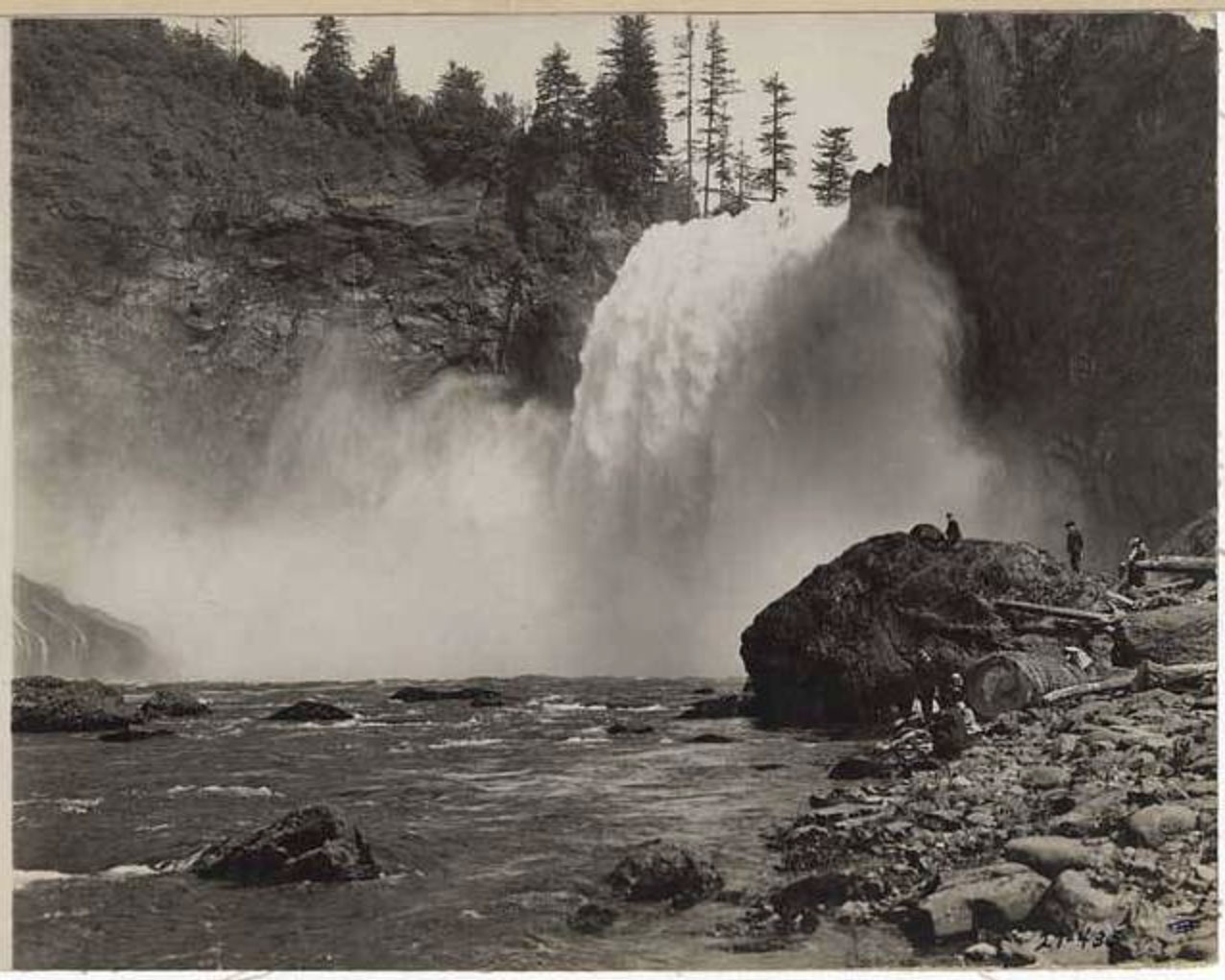
The postcard image is a cropped and colorized image based on an original photo taken by Ira J. Webster and Nelson Stevens around 1906. This was a common practice with postcard companies at the time.
SNOQUALMIE FALLS POSTCARD BY PUGET SOUND NEWS COMPANY – 16142 | BACK
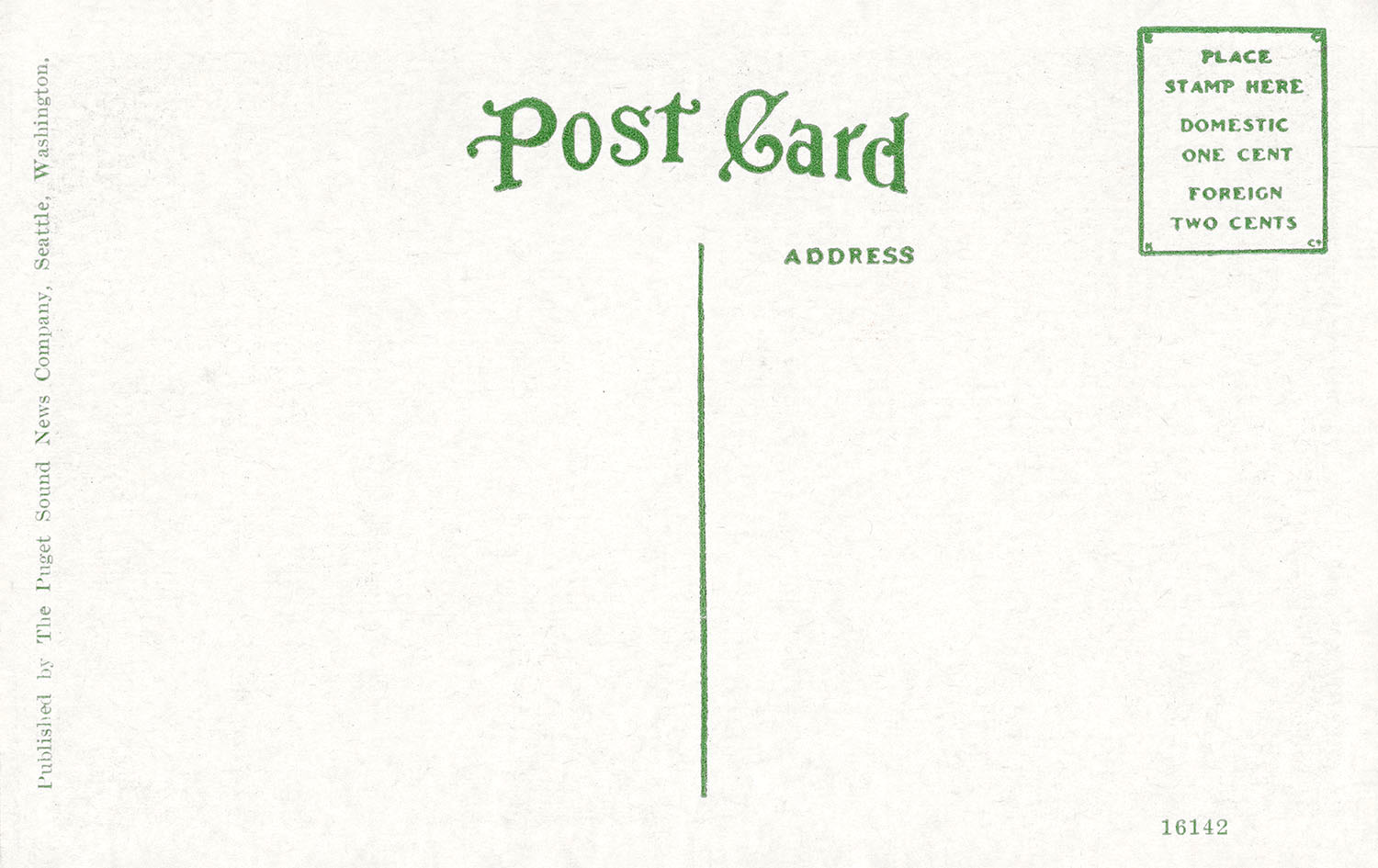
The back of the card contains no inscription or details other than it was produced by The Puget Sound News Company in Seattle, Washington. It’s card number 16142 in their collection.
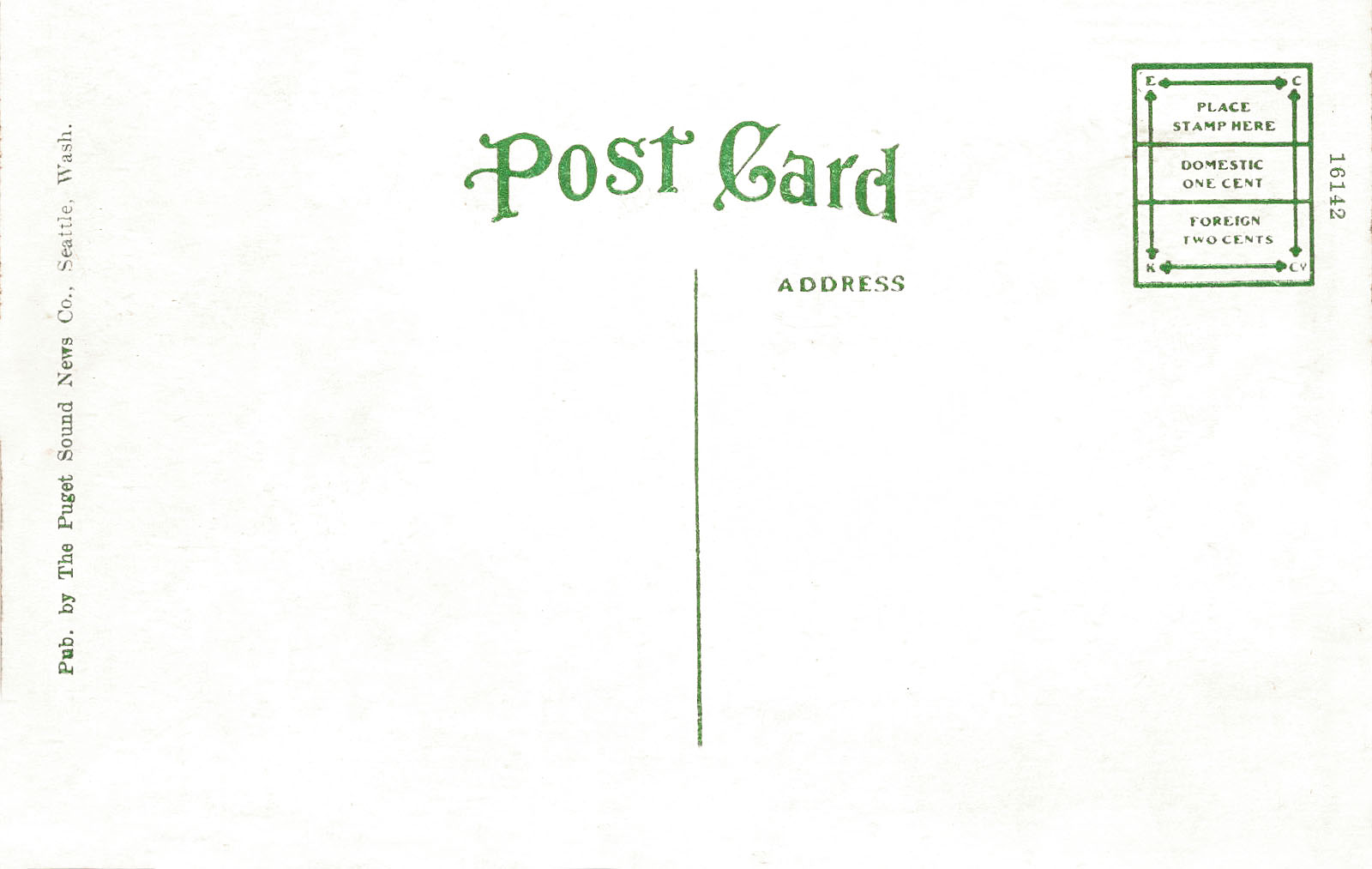
I’ve seen a different card back that places the catalog number next to the stamp box.
Founded in 1894, the Puget Sound News Company was part of the American News Company. Based on limited research, it appears they owned small newspapers throughout the Pacific Northwest.
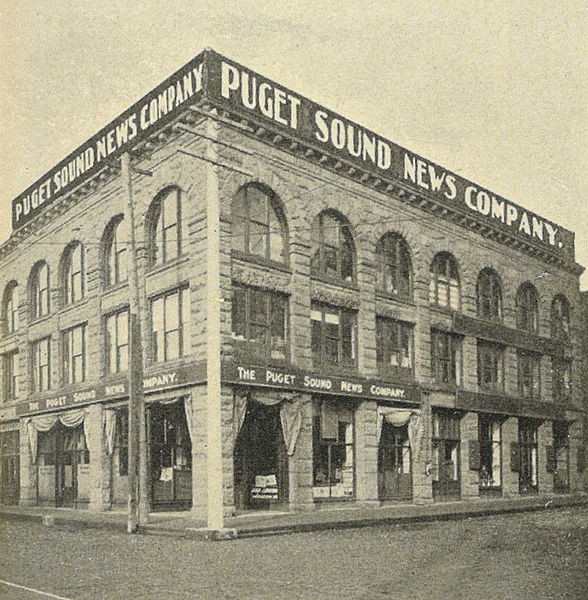
Around 1900, their headquarters were located at the corner of Western Avenue and Columbia Street in Seattle. American News Company was a major distributor of periodicals and producer of picture postcards, which could explain why I’ve found several early 1900s postcards from them.
WHO WERE PHOTOGRAPHERS IRA WEBSTER AND NELSON STEVENS OF SEATTLE, WA?
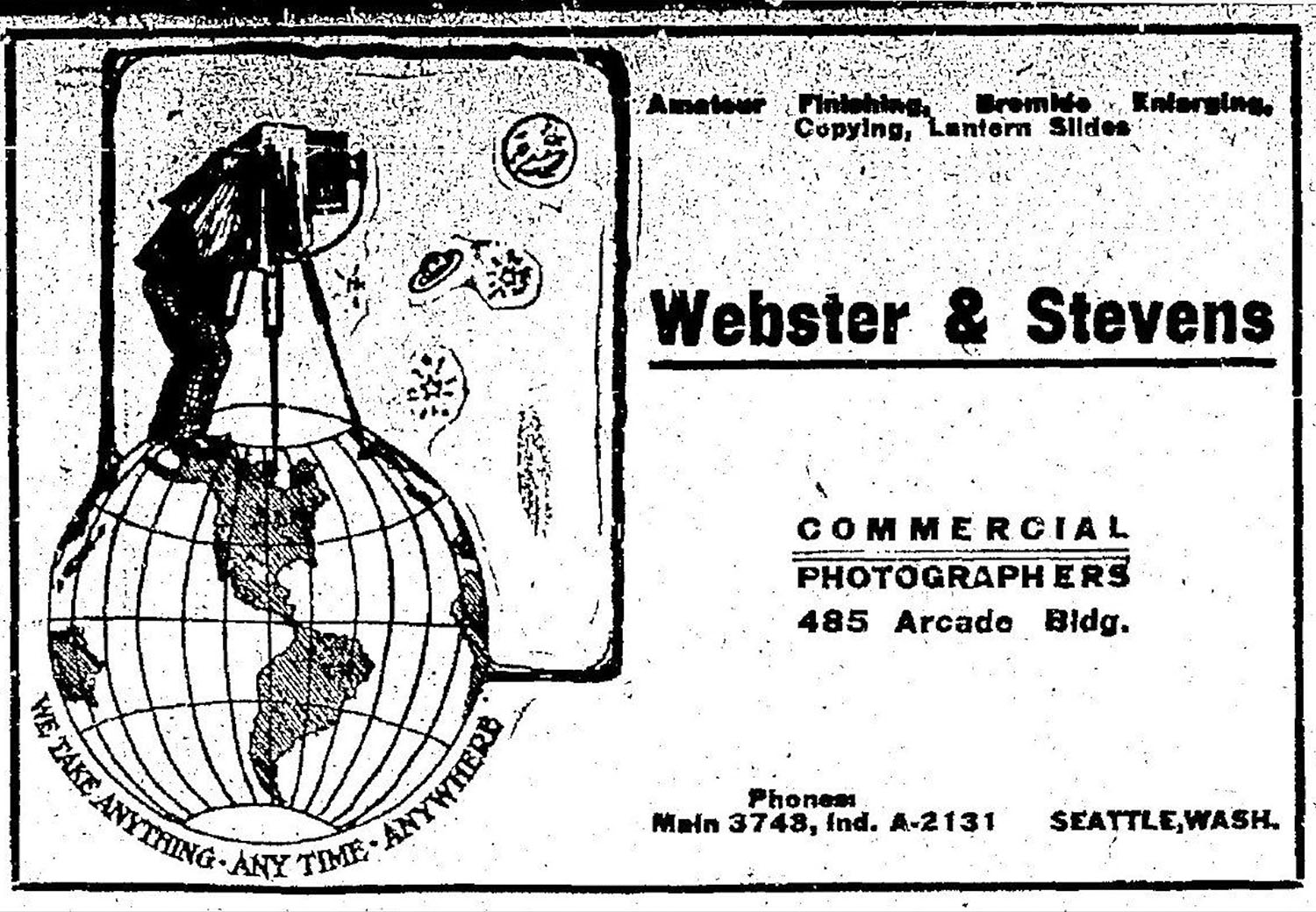
Ira Webster and Nelson Stevens established a photography studio in Seattle, Washington around 1904, only four years after moving from Michigan. They operated the studio at 485 Arcade Building in downtown Seattle, moving into the complex before it had been completed. Their motto was “We take anything, any time, anywhere,” as they helped popularize the use of photos in commercial advertising and journalism and for businesses in the Pacific Northwest. Together, they produced approximately 60,000 print photos for their business.
Between 1906 and 1942, Ira and Nelson provided all local photography for The Seattle Times until the paper established its own photography department. They also founded the Seattle Commercial Photographers’ Association and became members of the Pacific International Photographic Association.
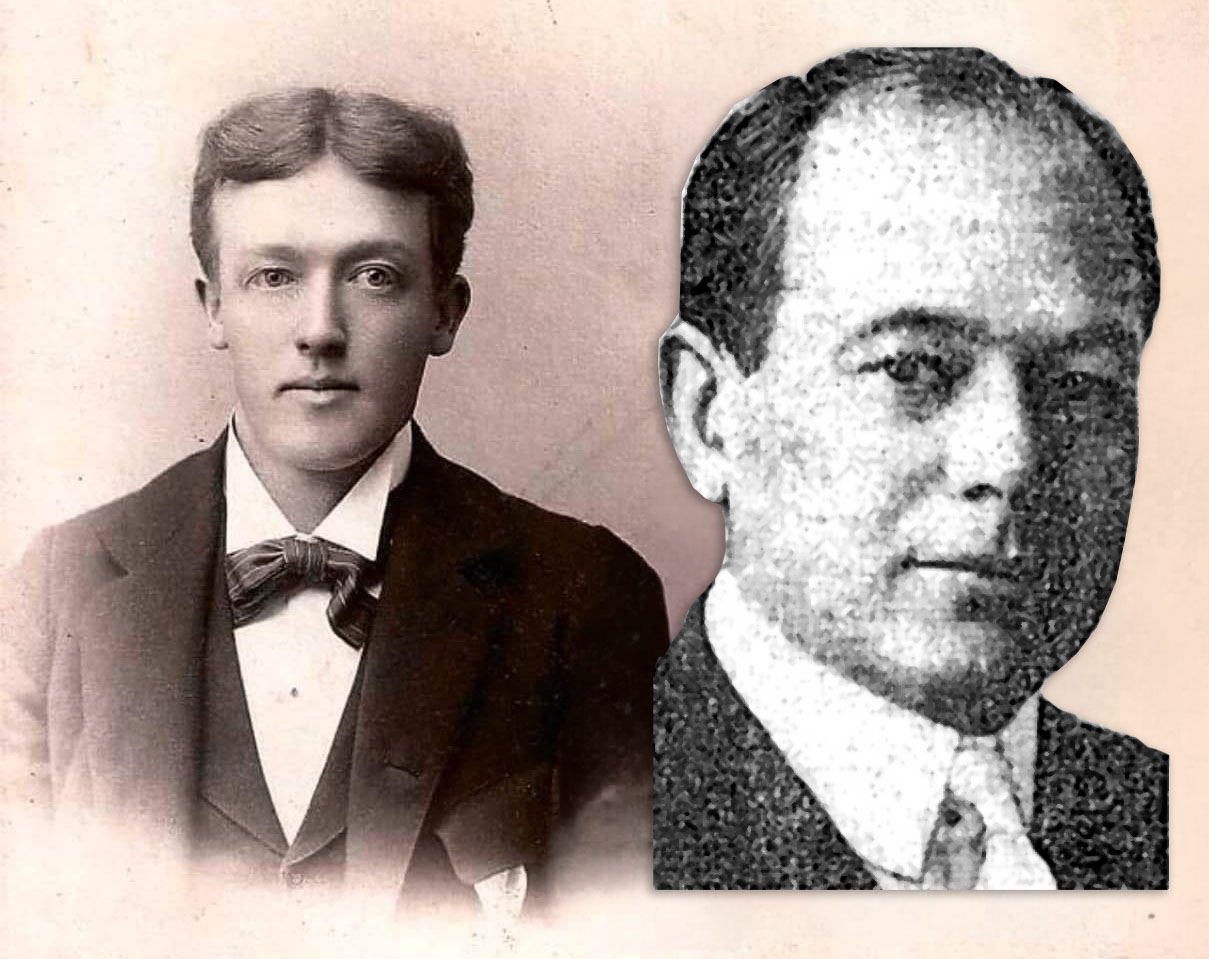
Ira was born in 1871 to James M. Webster and Mary Bailey Webster, both of Portland, Michigan. Nelson Stevens was born in 1874 to Nathan and Ira Goff Stevens also of Michigan.
In high school, the pair formed a photography company. Upon graduation, they made a cross country “barnstorming” trip exploring the United States with funds from sales of their scenic photos and portraits. During their their seven year journey, they visited all states in the U.S. and British Columbia in Canada.
The young men arrived in Seattle in 1900 at the ages of 29 and 26 respectively and formed Webster & Stevens.
Nelson died rom a heart attack on April 27, 1938 at the age of 63. A prior heart ailment had forced his retirement in 1925. He lived at 1510 33rd Avenue in Seattle. He is buried is Section 7 at Evergreen-Washelli Memorial Park in Seattle, Washington. This is the same cemetery where G. Kenneth Davidson, who played the Old Guy at Hap’s Diner in Twin Peaks: Fire Walk With Me, is buried.
Ira died at his home at 1633 39th Ave. in Seattle on November 18, 1942 at the age of 69. He had been ill for sometime prior to passing. To youngsters of his neighborhood he was affectionately known as “Uncle Ike.” According to his obituary on November 20, 1942, Mr. Webster had recently estimated that his photography firm “had made a half a million photographs.” He is buried at Acaia Memorial Park and Funeral Home in Lake Forest Park, Washington (MN102 Violet Corridor, L-1, Niche 15).
As a photographer who enjoys taking pictures in the Pacific Northwest, I have a lot of respect for Ira and Nelson who extensively documented the region. I can only hope photos I take are still seen more than 120 years from now.
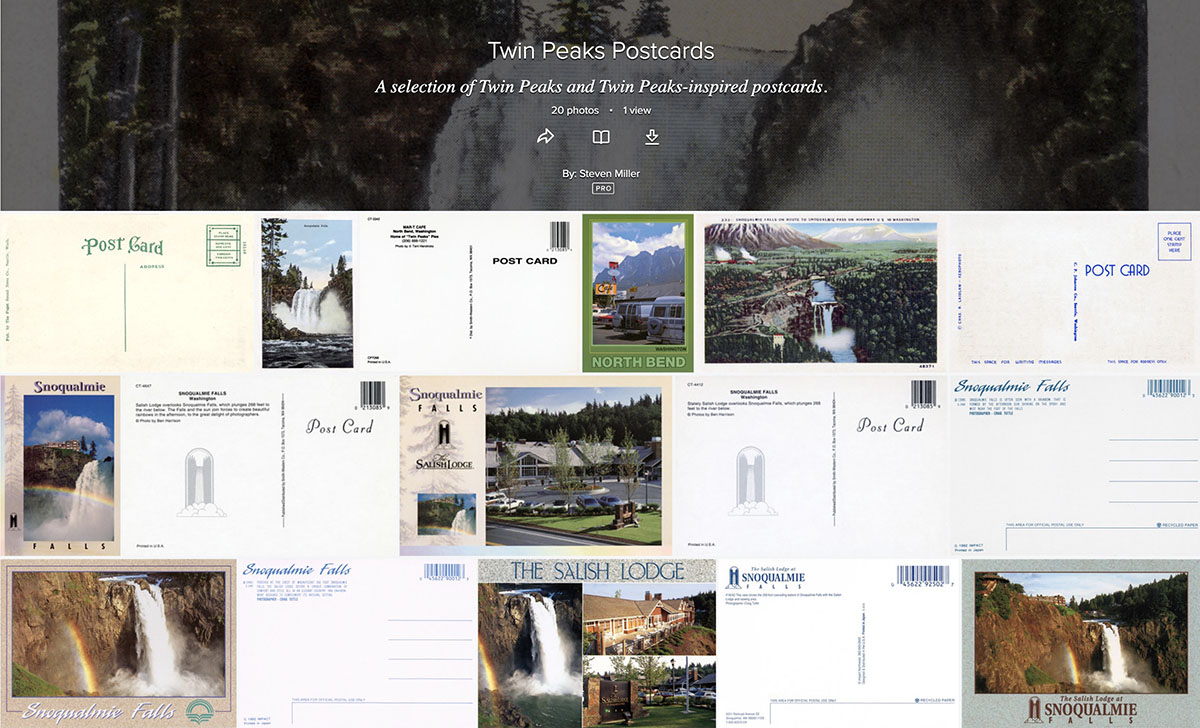
See more high-resolution postcard images from the Real Twin Peaks on my Flickr account.
Author

Discover more from TWIN PEAKS BLOG
Subscribe to get the latest posts sent to your email.