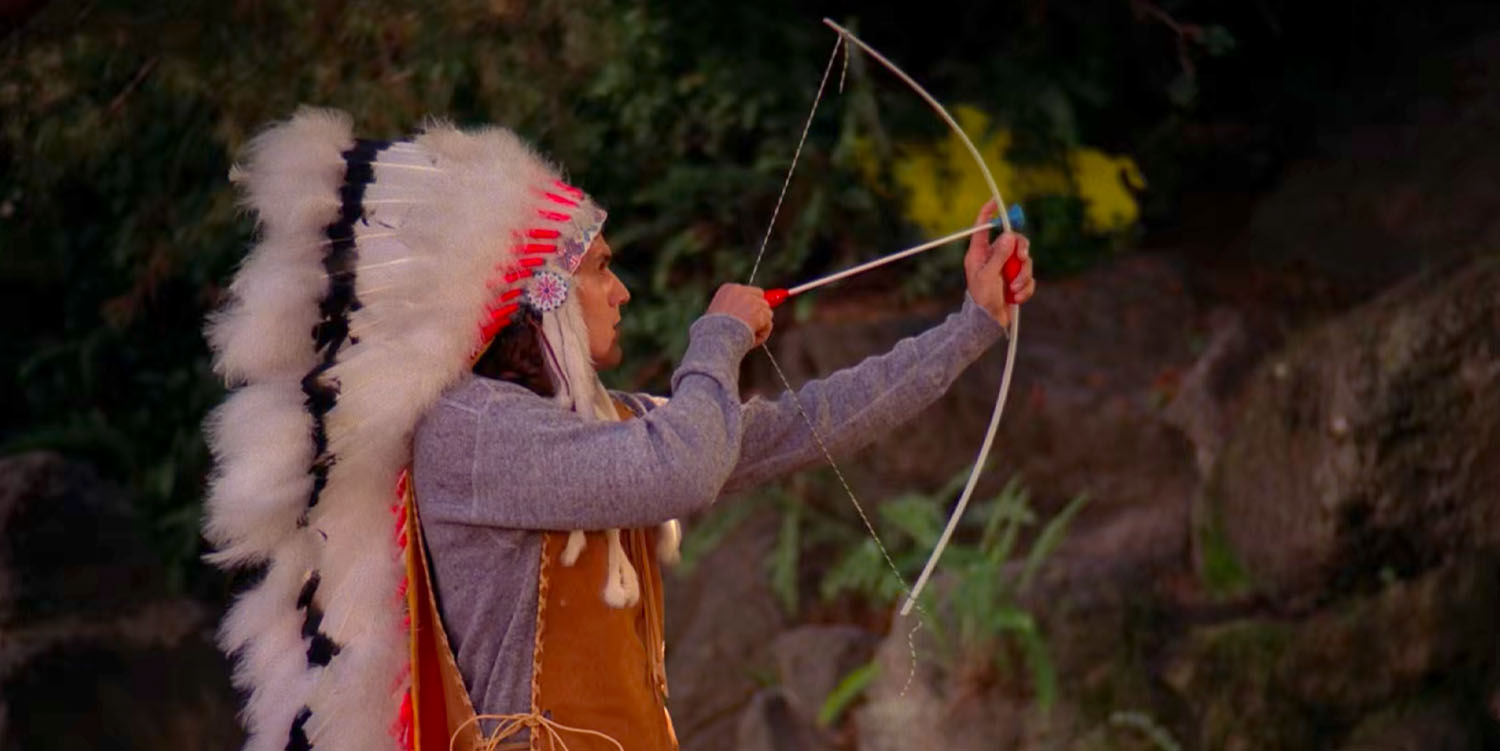
During a recent visit to Southern California, I crossed off another Twin Peaks location from my list thanks to an anonymous tip from a fellow Bookhouse Boy. A few months ago, I wrote about the scene with Donna Hayward visiting her mom at The Great Northern Hotel in the James Foley-directed episode 2.018 (#25). I mentioned the scene with Johnny Horne and his toy buffalo. Shortly after that article was published, I was directed to look at the historic Los Angeles Arboretum and Botanical Garden. I didn’t take long to identify the iconic waterfall. Interestingly, the footage of Johnny was recycled from a deleted scene originally filmed for episode 1.001 (#1). Grab your toy bow and arrow set and let’s go “buffalo hunting” (to paraphrase David Lynch’s Wild at Heart).
WHERE WAS THE SCENE WITH JOHNNY HORNE AND THE TOY BUFFALO FILMED?
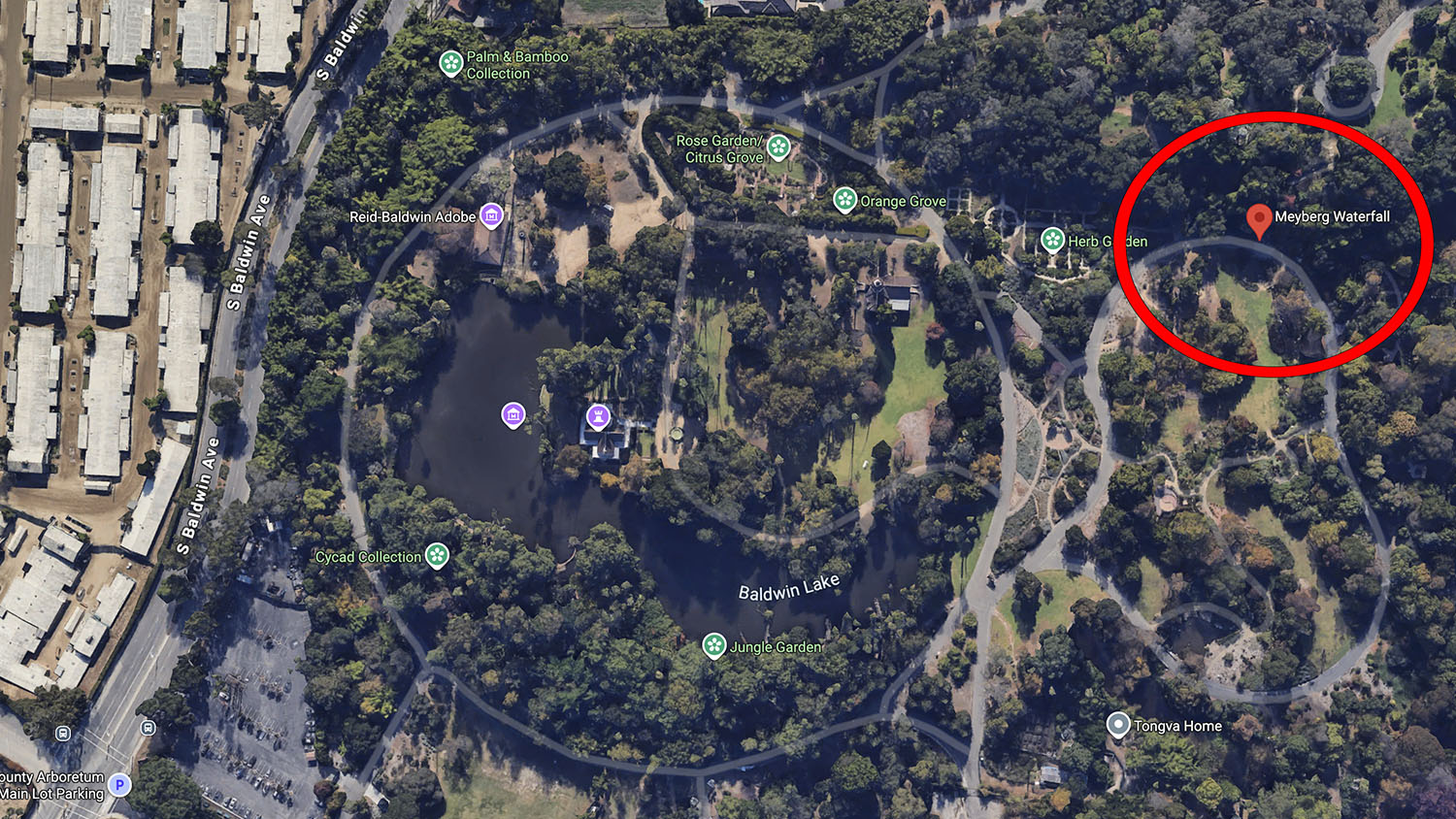
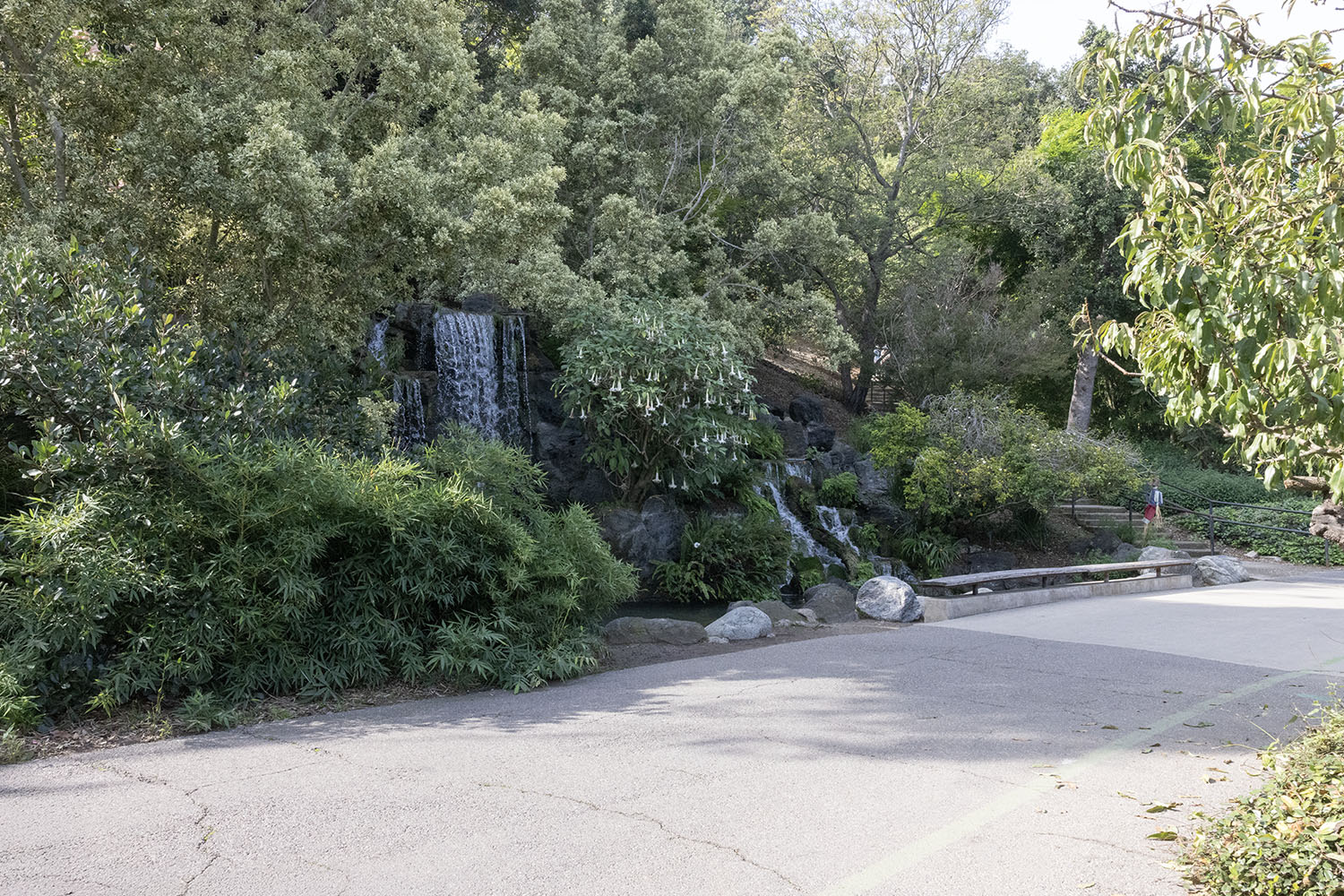
You’ll find the location where Johnny Horne and his toy buffalo was filmed at the Mayberg Waterfall in the Los Angeles Arboretum and Botanical Garden. The garden is located at 301 N Baldwin Avenue in Arcadia, California. The specific coordinates to the waterfall are 34°08’26.3″N 118°03’24.3″W.
There is an admission fee to access the Arboretum (I paid $18.00 on October 26, 2025) and the park opens at 9:00 a.m. Visit TheArboretum.org for full details.
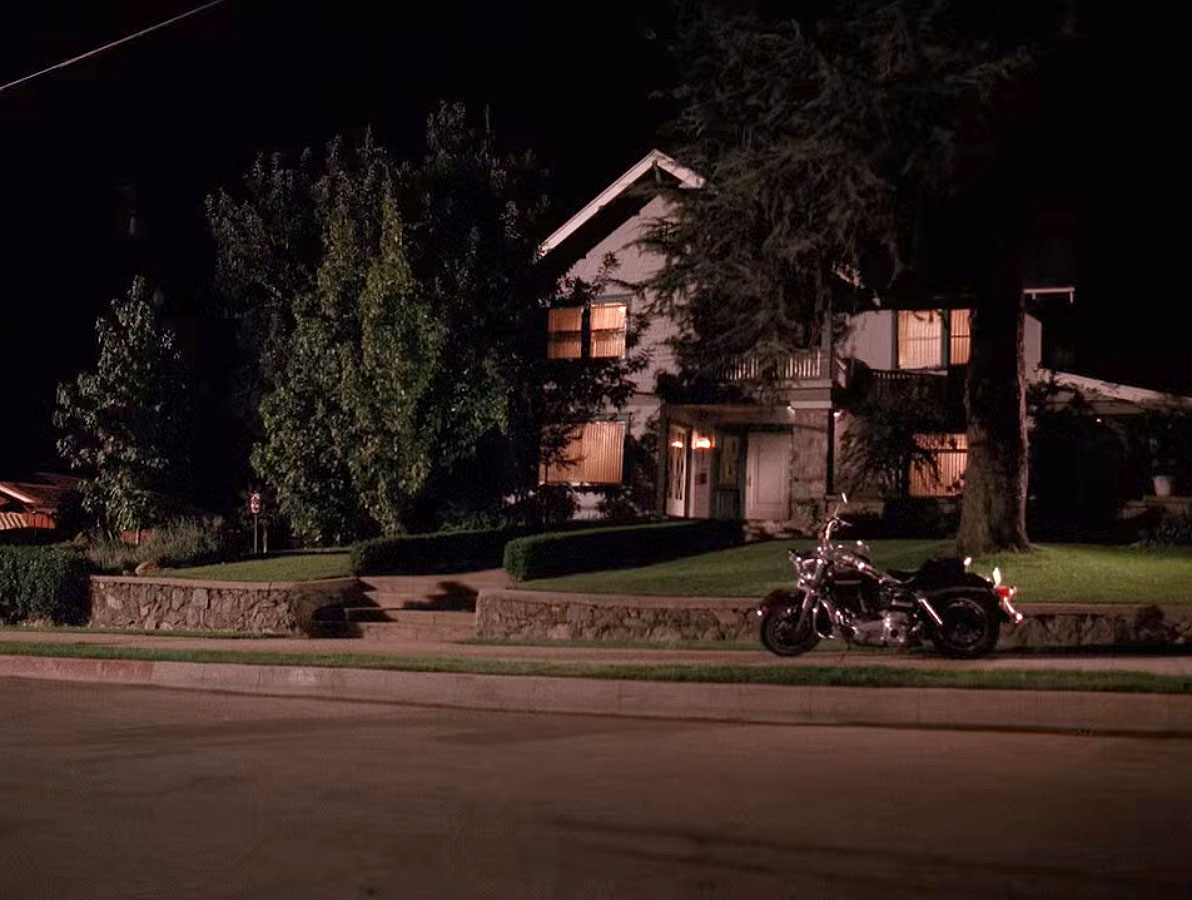
For a long time, I had assumed the Johnny Horne scene was shot somewhere near Monrovia, California. This small California town was the setting for several locations seen in episode 1.001 such as the Hayward House, the Twin Peaks General Store and a deleted scene at Wagon Wheel Do-Nuts. From a production perspective, it would have made sense that the crew found some local waterfall for use in the Johnny Horne scene. As it turns out, Arcadia is the town nestled between Monrovia and Pasadena.
WHAT IS THE LOS ANGELES ARBORETUM AND BOTANICAL GARDEN?
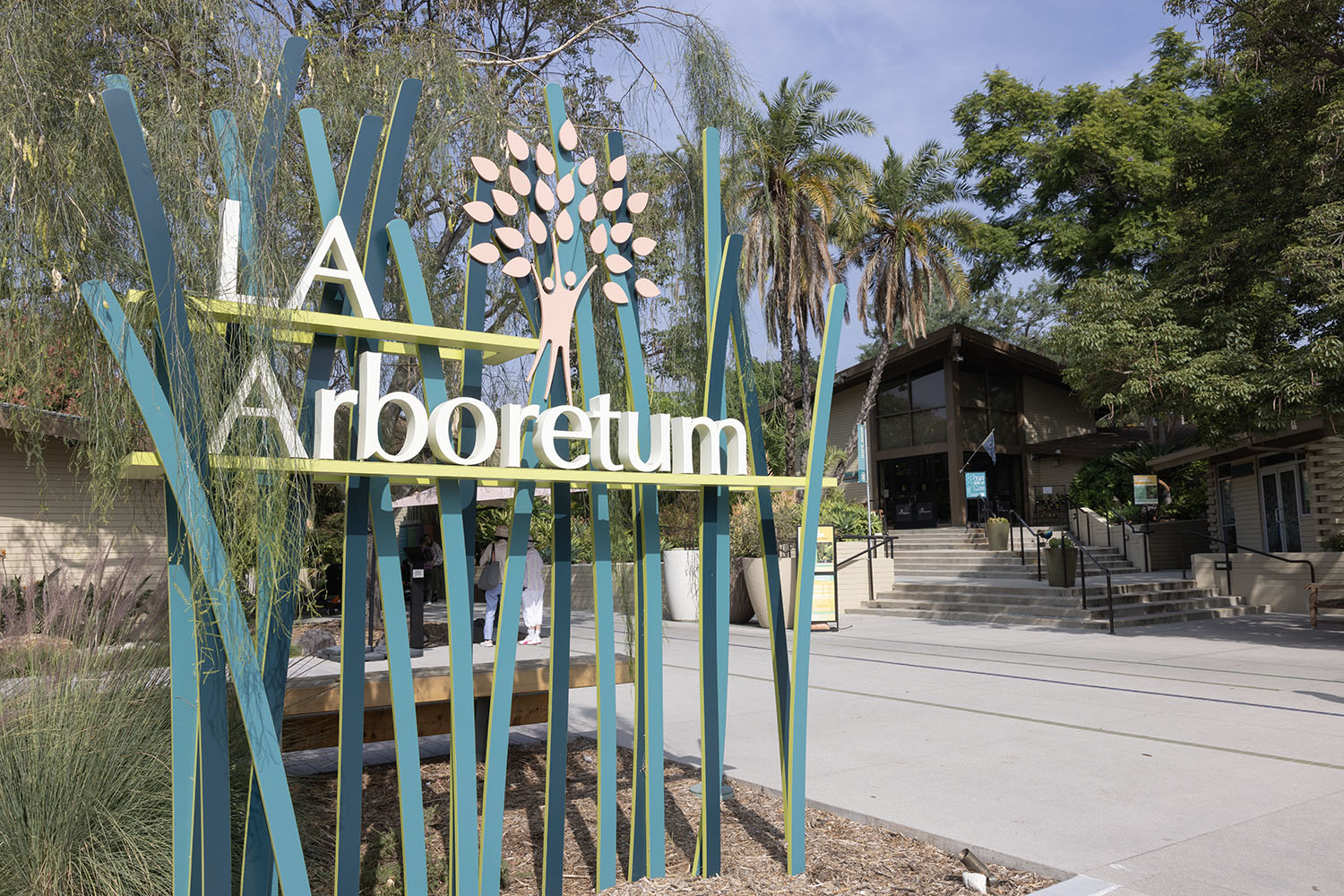
According to a historic marker outside the Los Angeles Arboretum from the Arcadia Historical Society, this 127-acre Arboretum occupies the heart of historic Rancho Santa Anita, a fertile property whose spring-fed lake attracted a trail of owners over the years, perhaps none more colorful and effectual than the founder and first Mayor of the City of Arcadia, Elias Jackson ‘Lucky’ Baldwin.
“The area was originally an outpost of Mission San Gabriel, E.J. Baldwin’s Santa Anita reached new heights during his 35-year tenure both as a working ranch and as a premiere Southern California show place. With his purchase of 8,500 acres of Rancho Santa Anita in 1875, Baldwin started a land acquisition program that eventually encompassed seven former Mexican era ranchos and nearly 50,000 acres of today’s San Gabriel Valley.
Lucky Baldwin died in 1909 and asked in his will that his beloved Santa Anita home site “be permanently kept and not disposed of.” That wish was honored by Baldwin’s daughter Anita until the financial burdens of the Great Depression took their toll.
In 1936 Anita Baldwin sold Rancho Santa Anita to a real estate syndicate headed by the Chandler family (longtime owners of the Los Angeles Times), and subdivision began to eat away increasing swaths of acreage. The historic significance of the land and Baldwin structures near the lake were apparent even then, however, and it was representatives of the real estate group who applied for California State Landmark designations for both Baldwin’s Adobe home and his fanciful guest house, now known as the Queen Anne Cottage.
In 1947 the Chandlers sold this prime property at less than market value to an ambitious group of horticulturists seeking land for an Arboretum. The County of Los Angeles, with support from the State, stepped forward to make the purchase, and a year later a private Arboretum Foundation was incorporated to help with development, preservation and programming. That public private collaboration continues today, and history still lives here because of their efforts.”
I was happy to see a Land Acknowledgement on their website especially knowing the early history of Southern California:
“The County of Los Angeles recognizes that we occupy land originally and still inhabited and cared for by the Tongva, Tataviam, Serrano, Kizh, and Chumash Peoples. We honor and pay respect to their elders and descendants — past, present, and emerging — as they continue their stewardship of these lands and waters. We acknowledge that settler colonization resulted in land seizure, disease, subjugation, slavery, relocation, broken promises, genocide, and multigenerational trauma. This acknowledgment demonstrates our responsibility and commitment to truth, healing, and reconciliation and to elevating the stories, culture, and community of the original inhabitants of Los Angeles County.”
A number of television shows and movies were filmed on location at the Arboretum including Tarzan Escapes (1936), Attack Of The Giant Leeches (1959), Love Boat (1978), Buck Rogers In The 25th Century (1979), The Fall Guy (1983) and many others. Oddly, the website list stops at the year 1984.
WHAT IS THE MEYBERG WATERFALL?
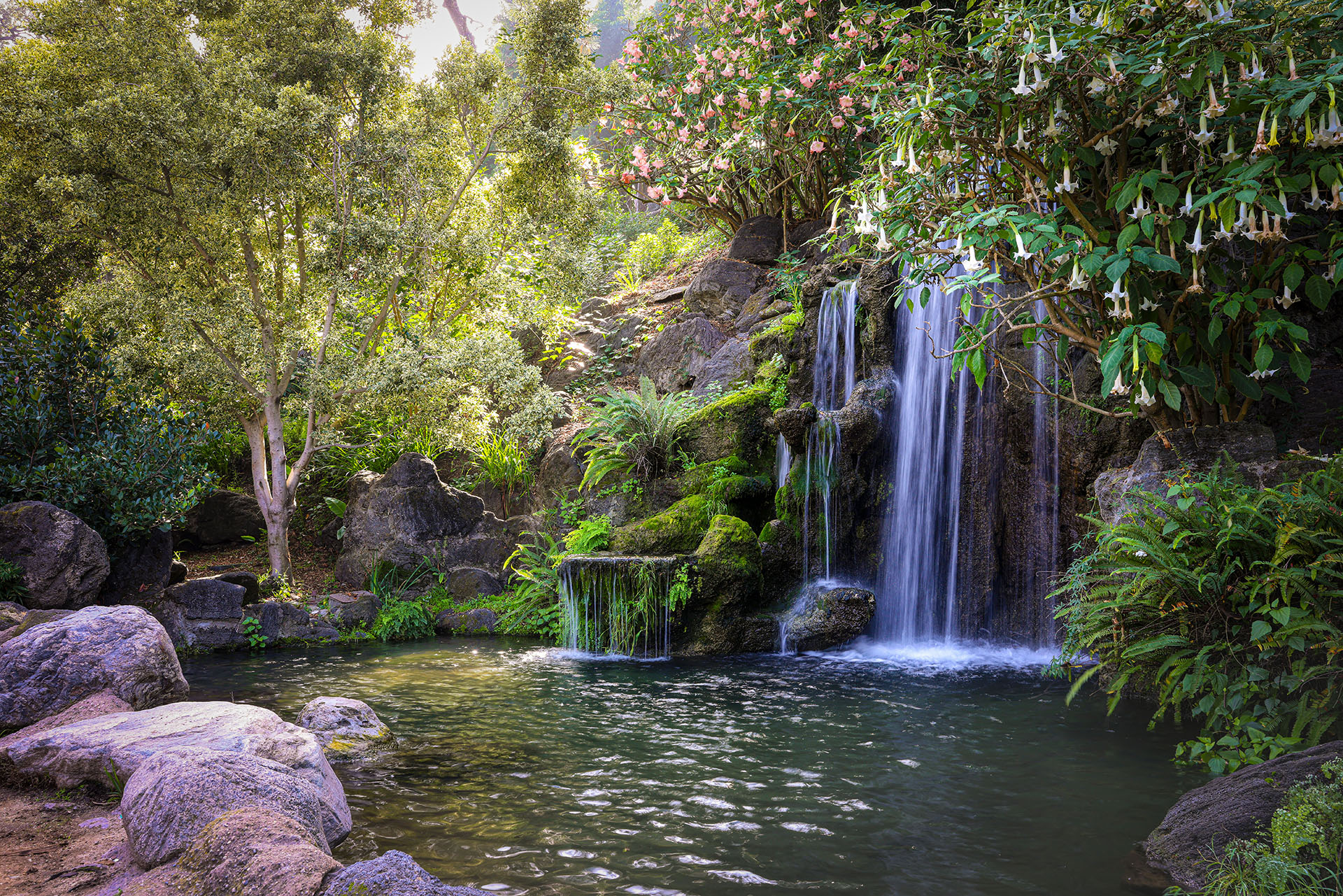
The Meyberg Waterfall was constructed in 1968-69 as a memorial for Manfred Meyberg, owner of Germain’s Seed Co. The waterfall cascades from the top of Tallac Knoll into a pool below with the central falls dropping 20 feet down. It’s located about a mile from the Arboretum’s main entrance. I visited on a Sunday morning around 10:30 a.m. and the park was already busy.
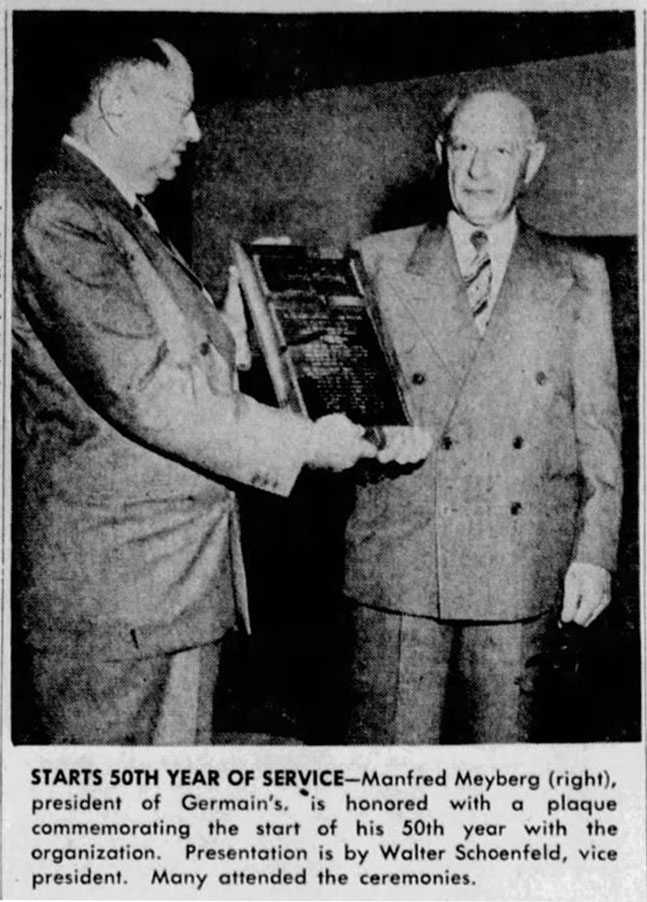
Manfred’s father Max Meyberg settled in Southern California in 1876 and organized the first of a series of fiestas. Manfred’s mother, daughter of Isaiah Hellman, also born in Los Angeles. She gave birth to Manfred in 1886. As a young boy in 1904, he joined the Germain Seed and Plant Company where he would later become president of the organization in 1921. The firm was the nation’s largest seed distributor and a leading developer of new roses, producing award-winning roses named Capistrano, Mission Bell, Queen Elizabeth and Golden Showers. (No ‘blue rose’ it seems).
Meyberg was a founding member of Los Angeles Beautiful, a civic organization devoted to “making the city more attractive,” and a member of the Los Angeles Men’s Garden Club. He was a trustee of the California Arboretum Foundation, Inc., a member of the Caltech Athenaeum governing board of the American Rose Society, American Camellia Society, the Royal Horticultural Society of England and a senior fellow of the American Institute of Park Executives. He was a Mason and a Shriner.
Manfred passed from a heart aliment on Sept. 29, 1956 at the age of 70 in his home in Bel-Air. Mr. Meyberg left a widow Elva, who was also is active in horticultural work, and a sister, Mrs. Marco Newmark, of Los Angeles.
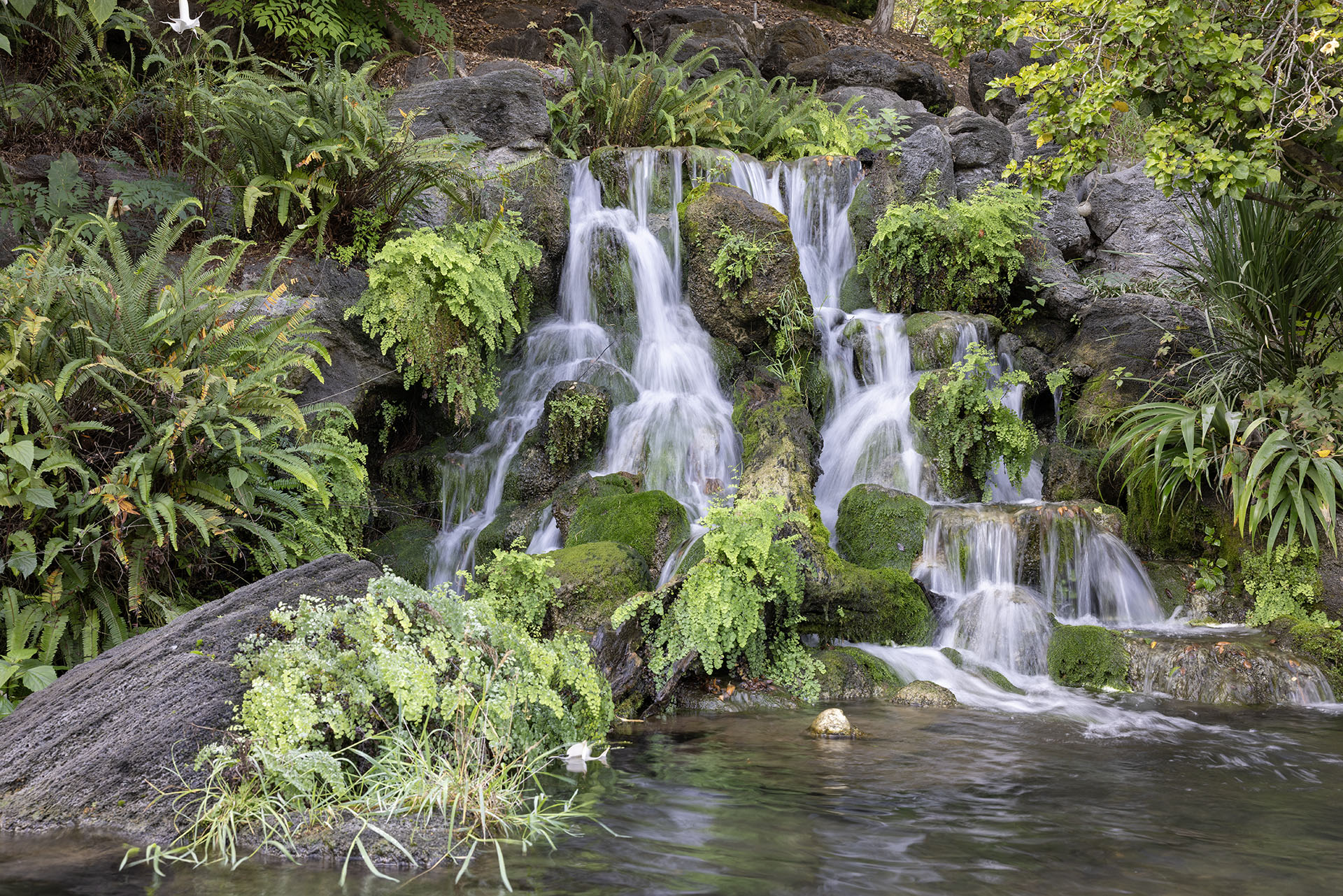
The waterfall is a gorgeous spot in the park. There is a trail next to the waterfall where you can hike up to the top and look down.
JOHNNY HORNE AND TOY BUFFALO IN TWIN PEAKS EPISODE 2.018
Harley Peyton and Robert “Bob” Engles wrote the script for Twin Peaks episode 2.018. There was a revision made to scenes 23-24 on Jan. 22, 1991 and printed on Green pages. There is, however, no mention of Johnny Horne and the toy buffalo.
23. 24. EXT. GREAT NORTHERN HOTEL – DAY
Establish.
INT. BEN HORNE’S OFFICE – DAY
CUT TO:
Ben paces, taking bites from a carrot. Audrey, sits upon the office sofa, looks on with an admiring smile.
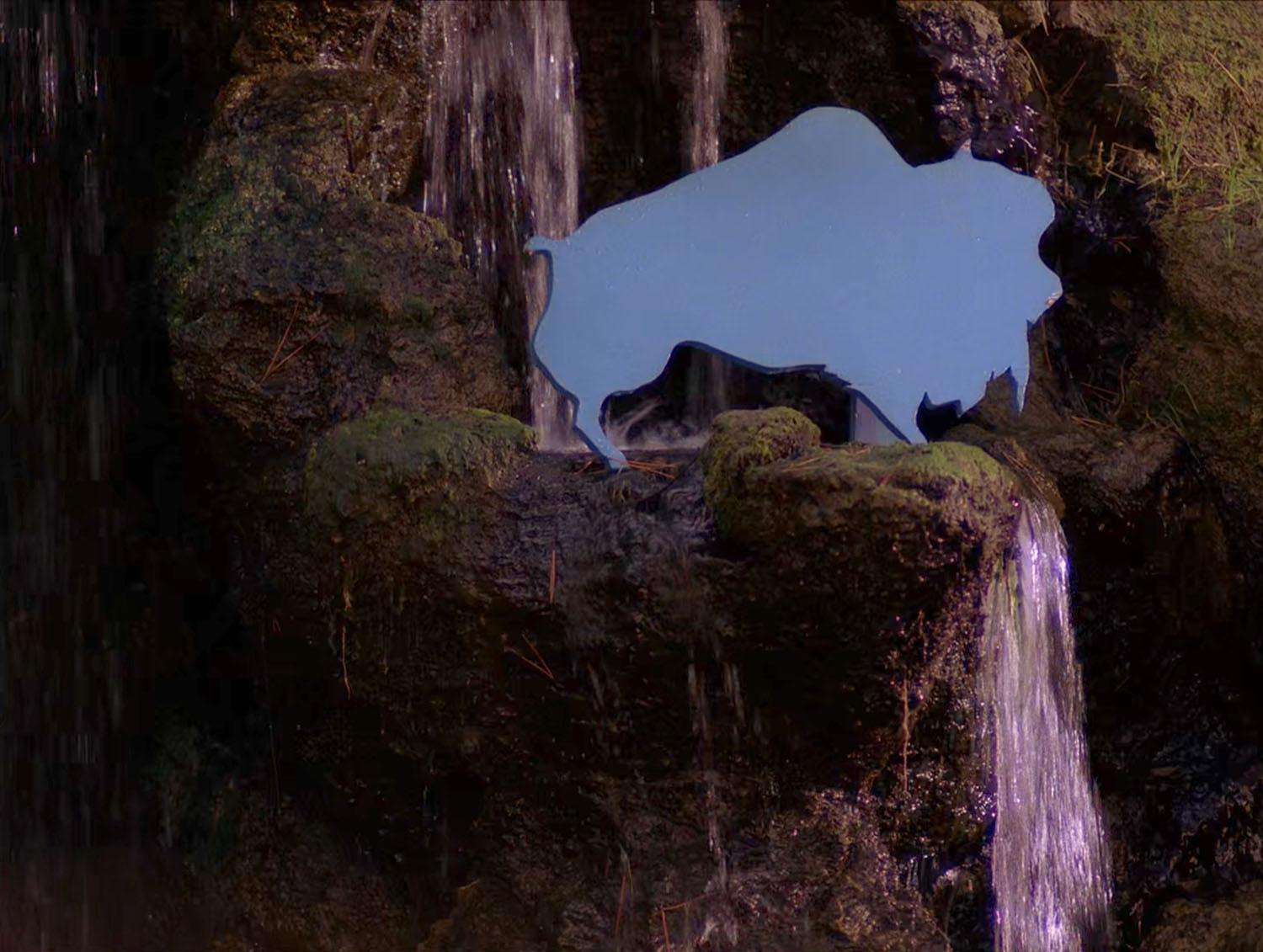
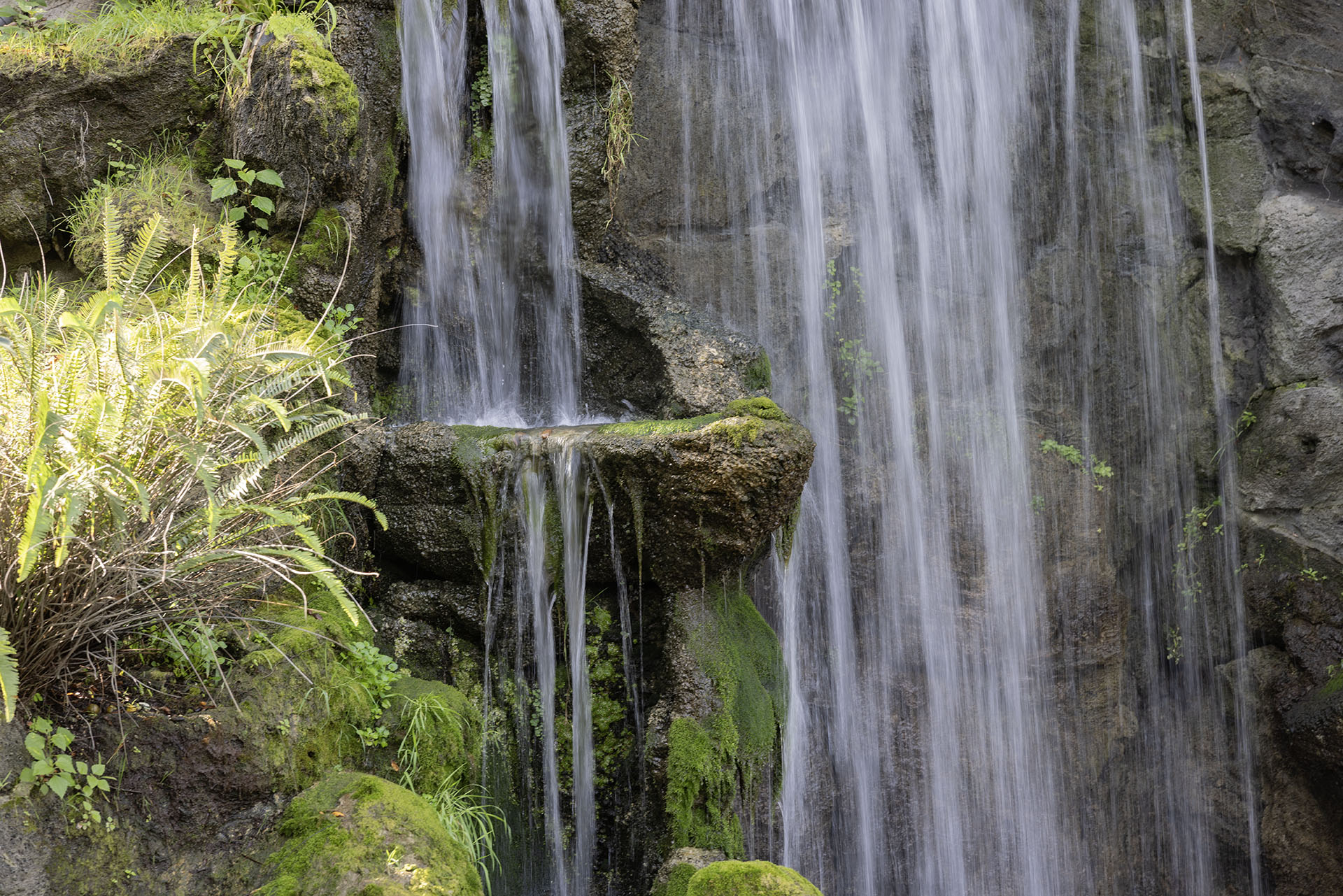
The establishing shot opens with a wooden toy blue buffalo perched on a rock by a waterfall.
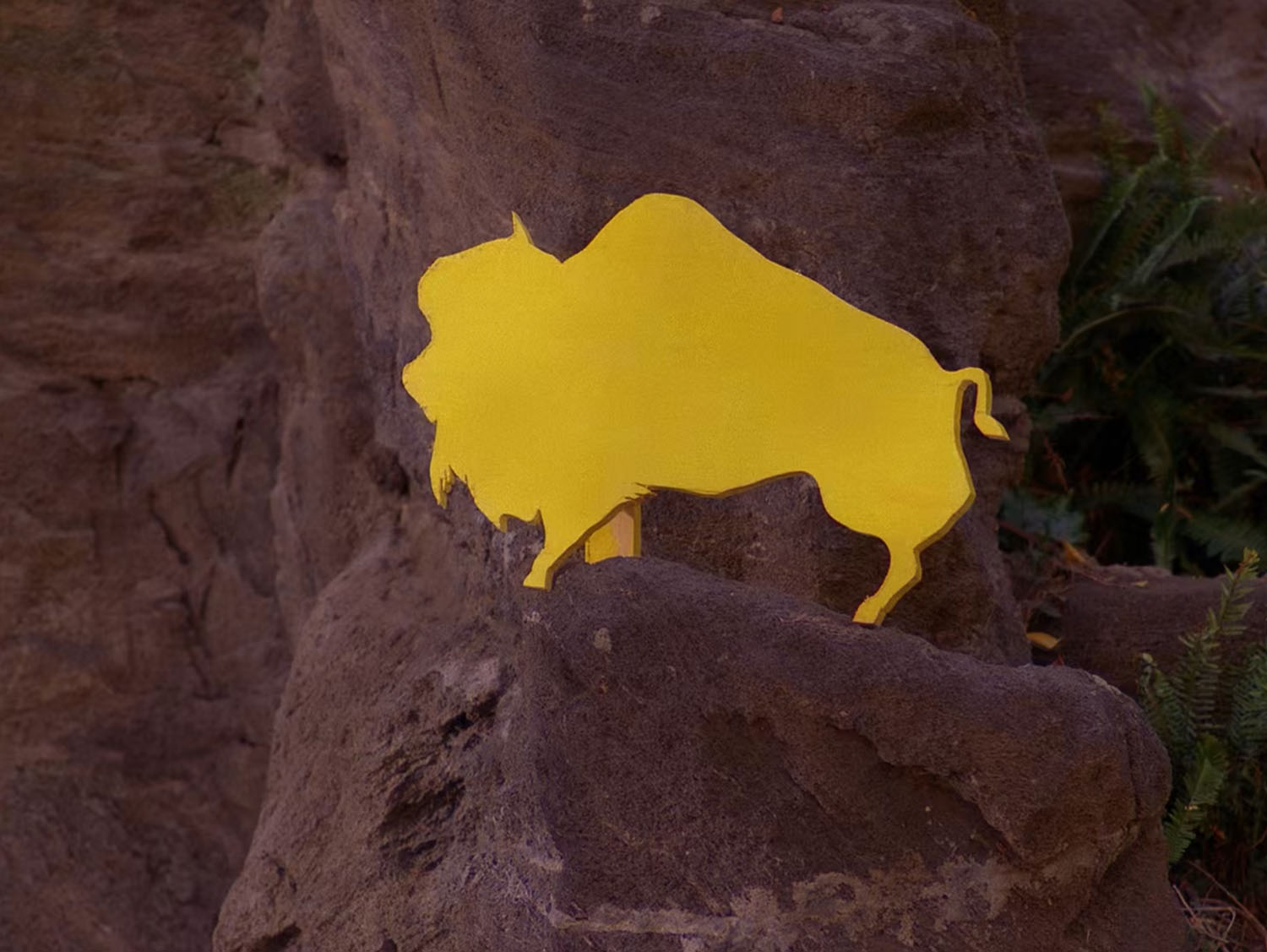
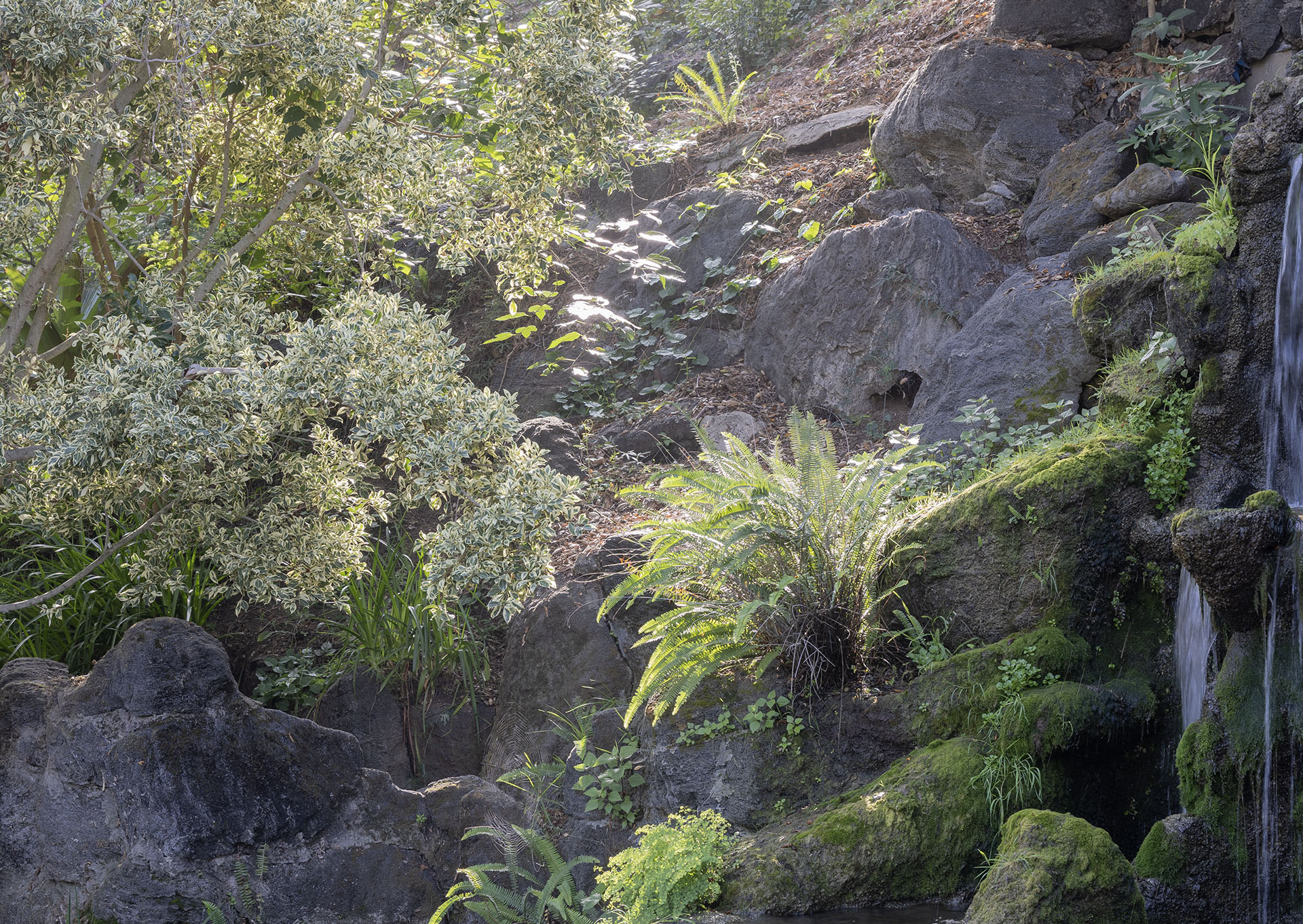
The second shot is the first of two yellow buffalo. For some reason, I didn’t bring my 100-500mm lens so I had to capture the scene using my 28-70mm lens. If I would have brought the telephoto lens, I could have properly captured the location. Based on a shot later in the scene, the yellow buffalo would have been positioned on the rocks above the fern in the right center of the shot above.
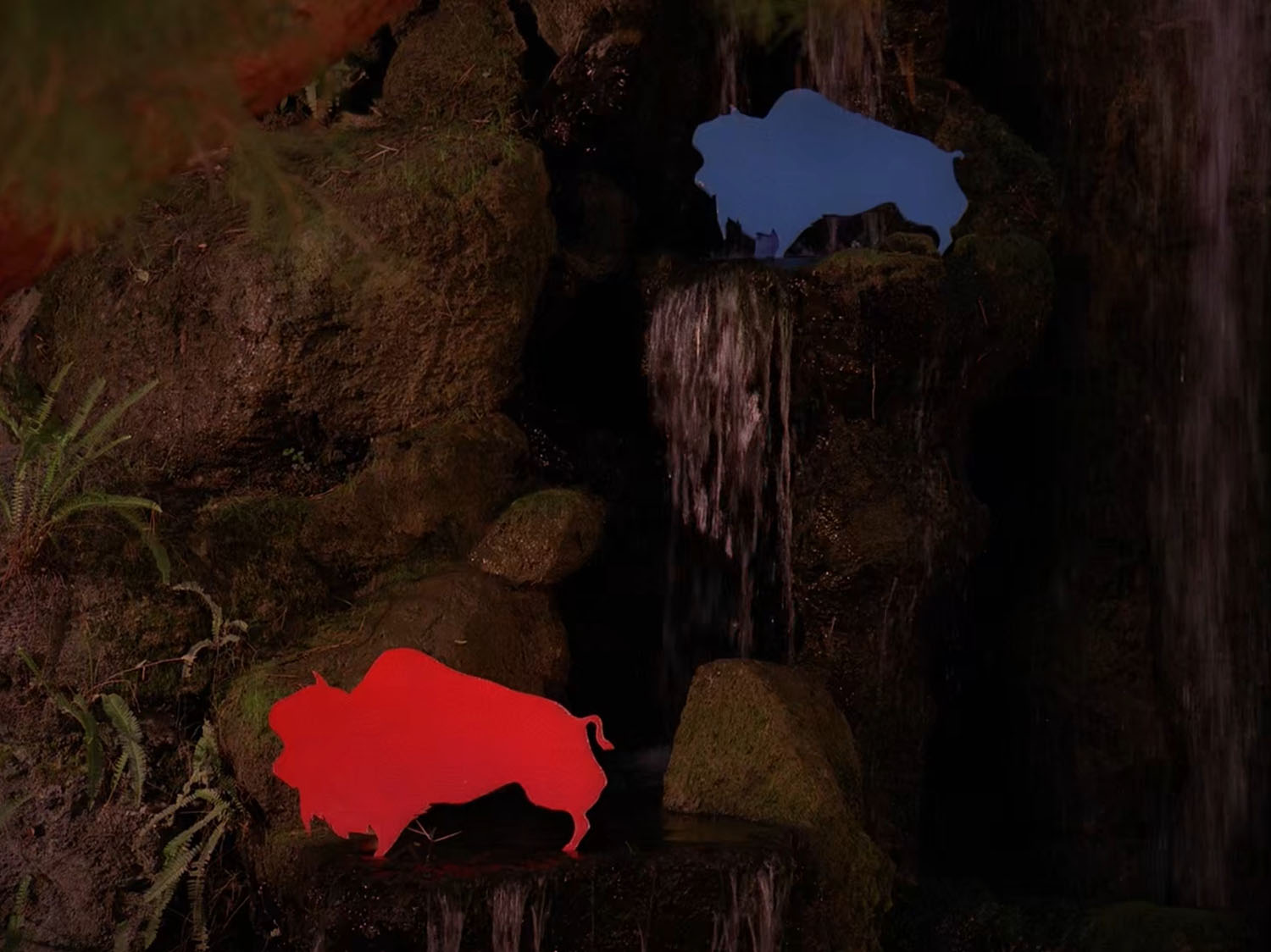
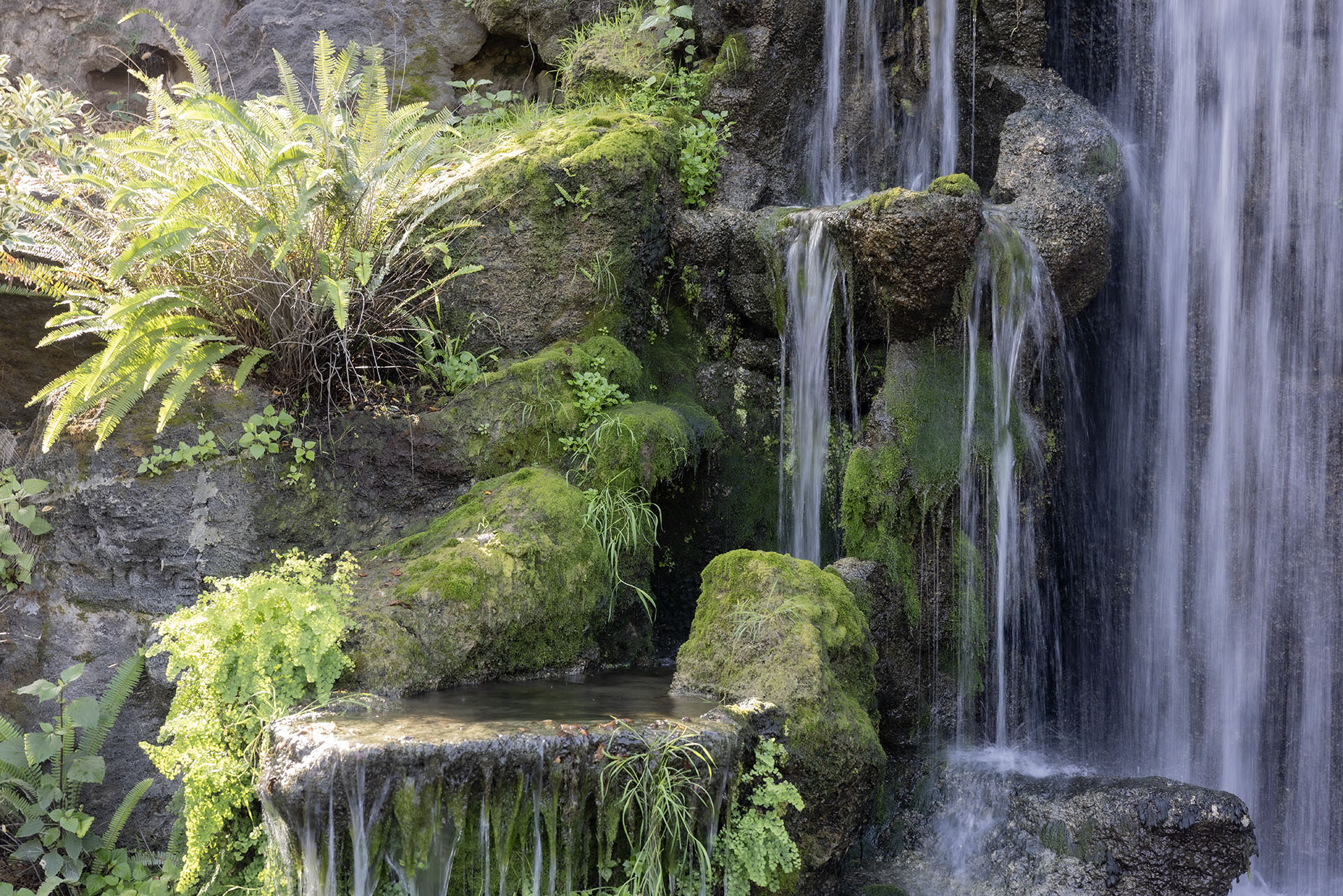
The third shot is of a red and blue wooden buffalo perched next to each other. It’s a wider shot from the first blue buffalo shot.
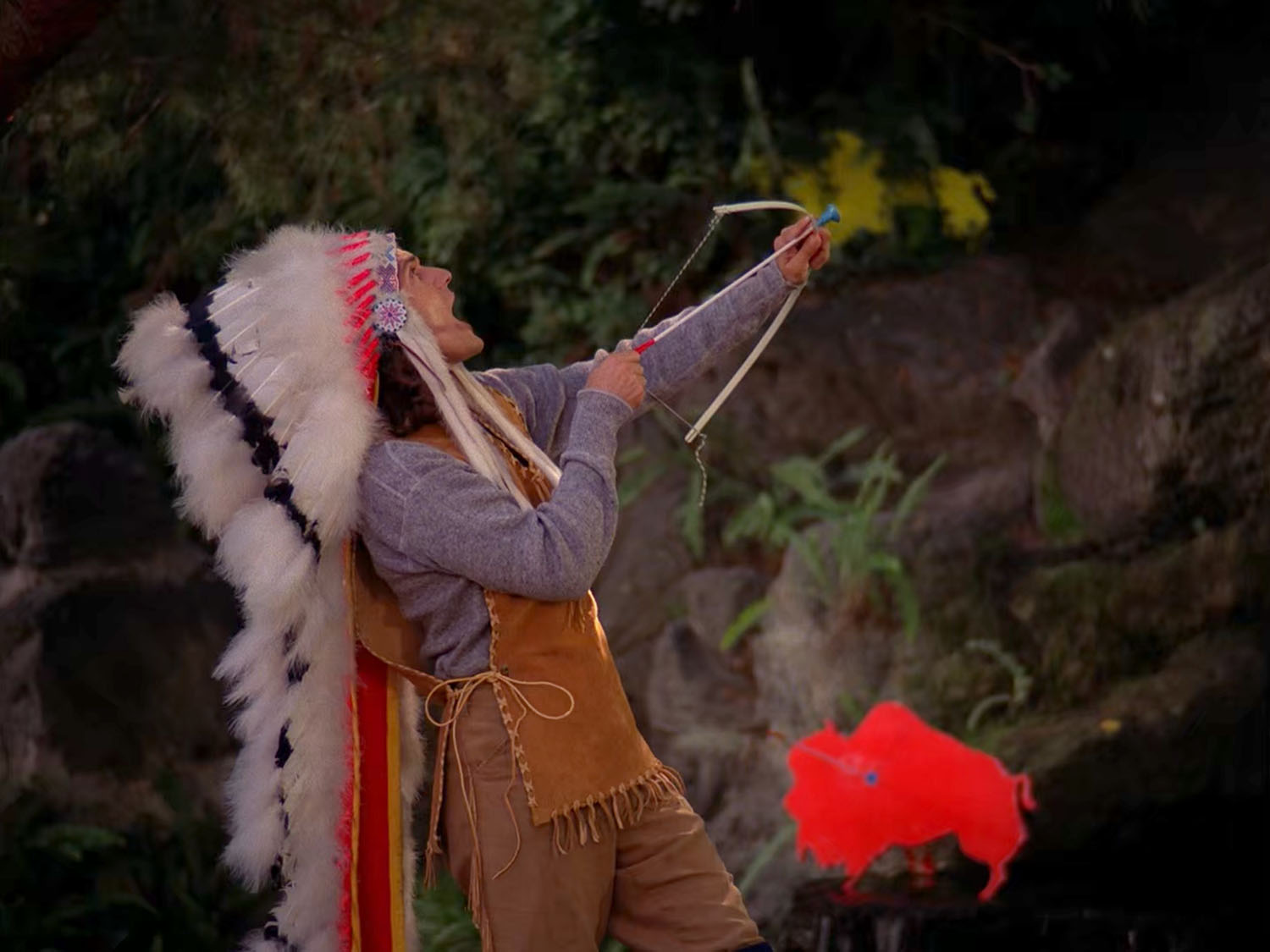
We then seen Johnny Horne howl while drawing his bow. You can see that a toy arrow already shot the red buffalo. The yellow buffalo is just out of focus in the distance. This means the crew used a later take after Johnny shot the red buffalo since the previous shot of did not show an arrow.
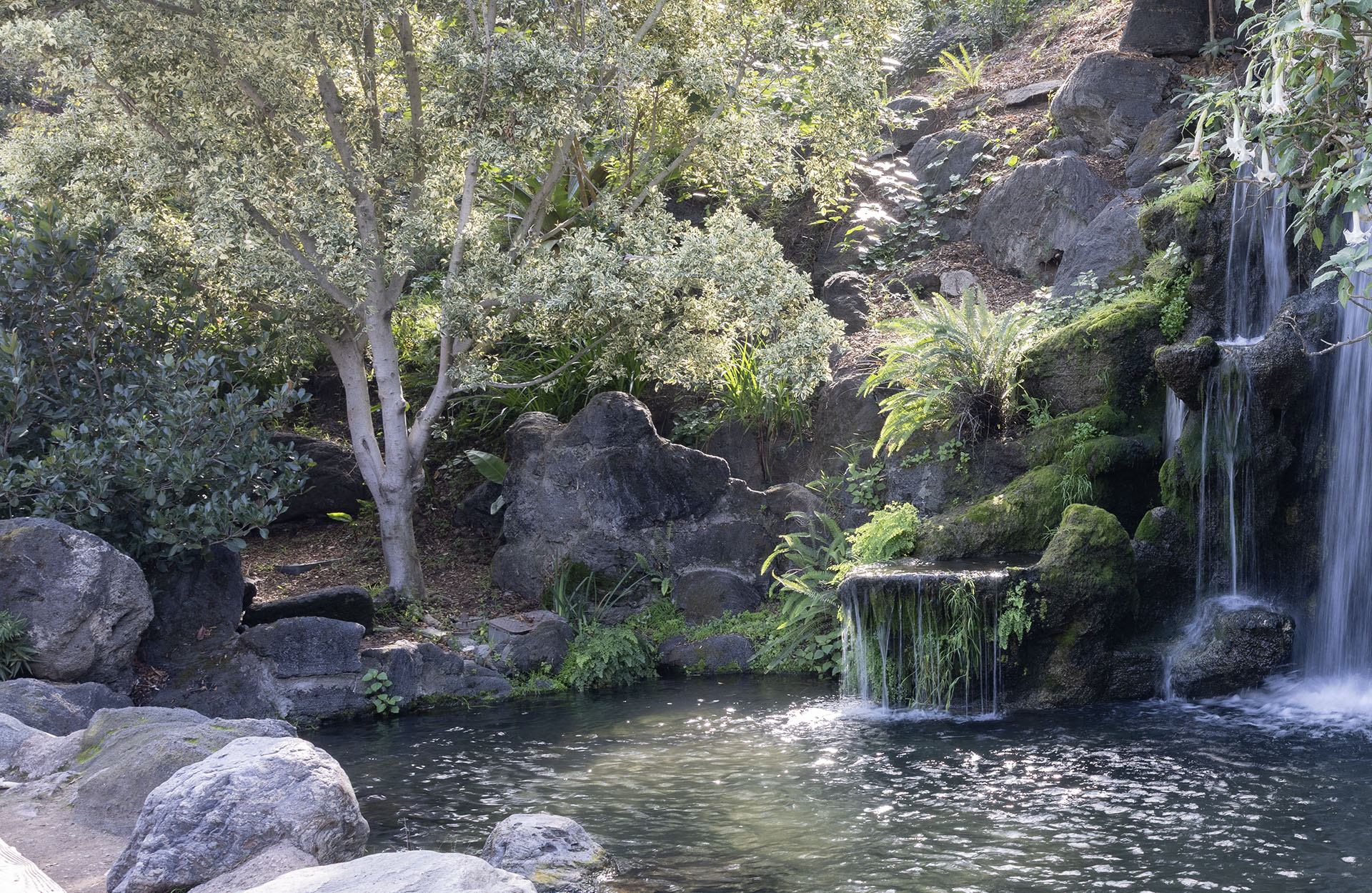
Johnny would have stood on the rocks at the bottom left of the screen. The camera zoomed in to get the shot of him which compressed the background.
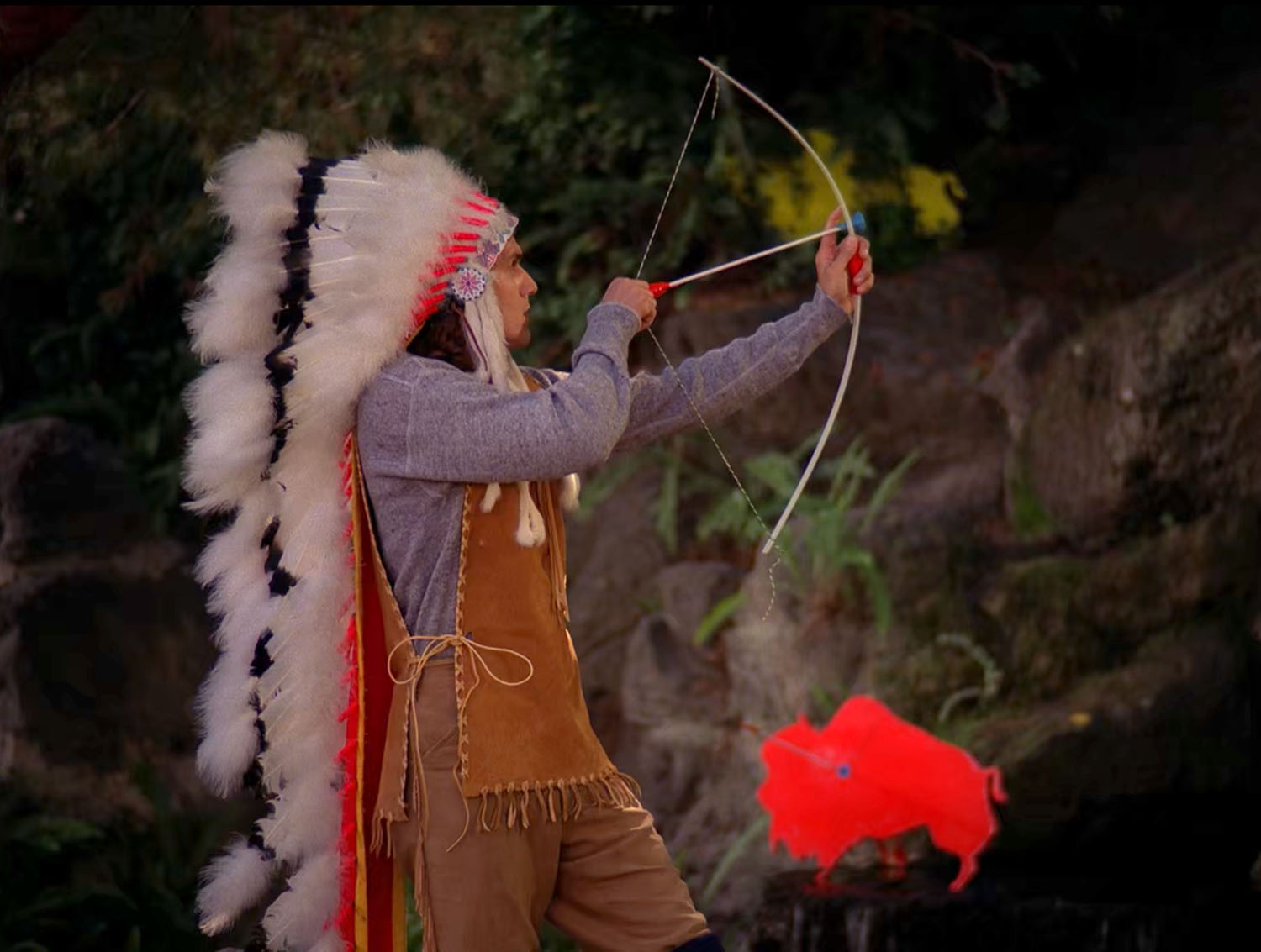
Johnny aims and then fires his toy arrow.
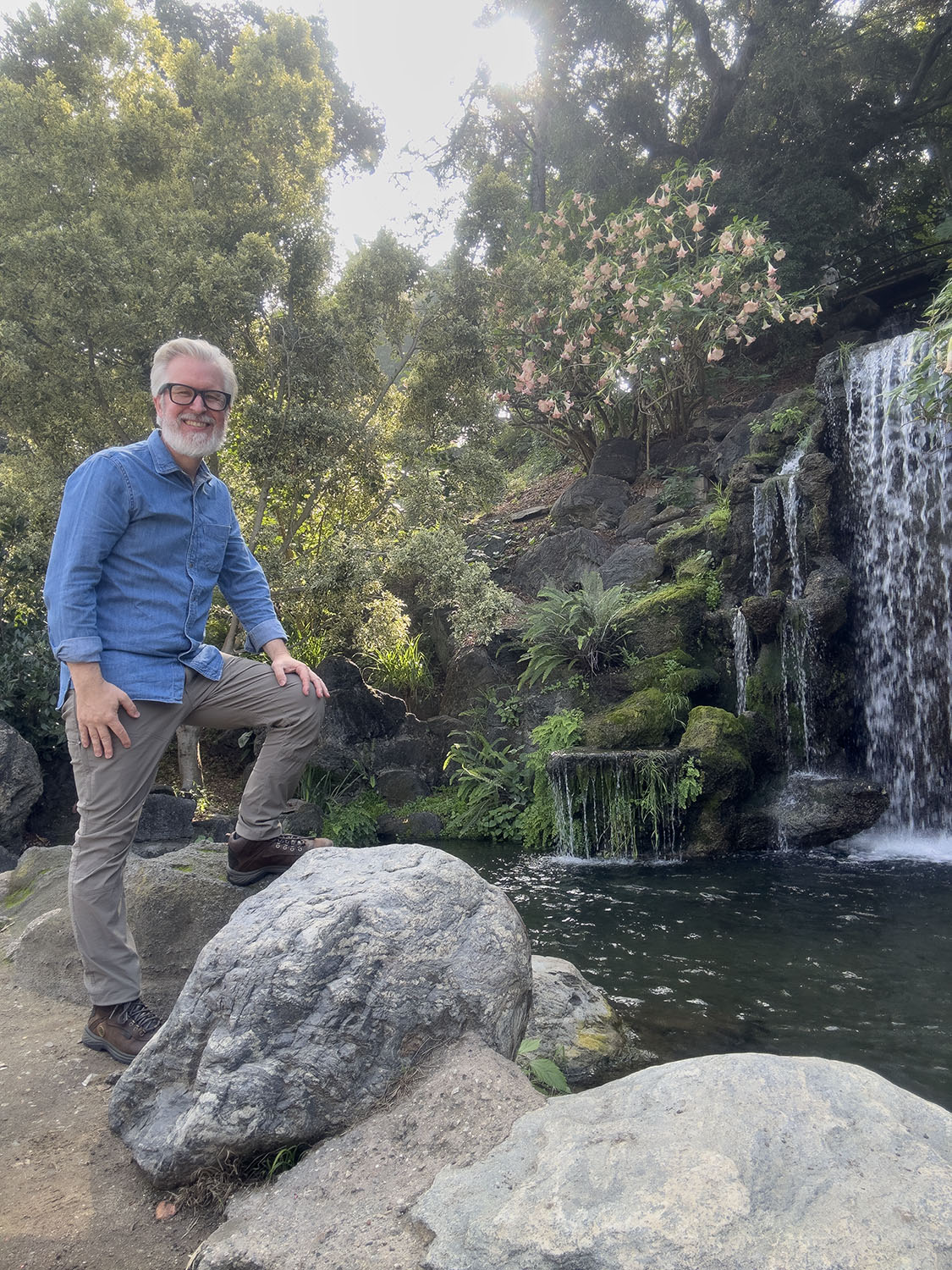
I’m standing around the spot where Robert Bauer who played Johnny would have stood.
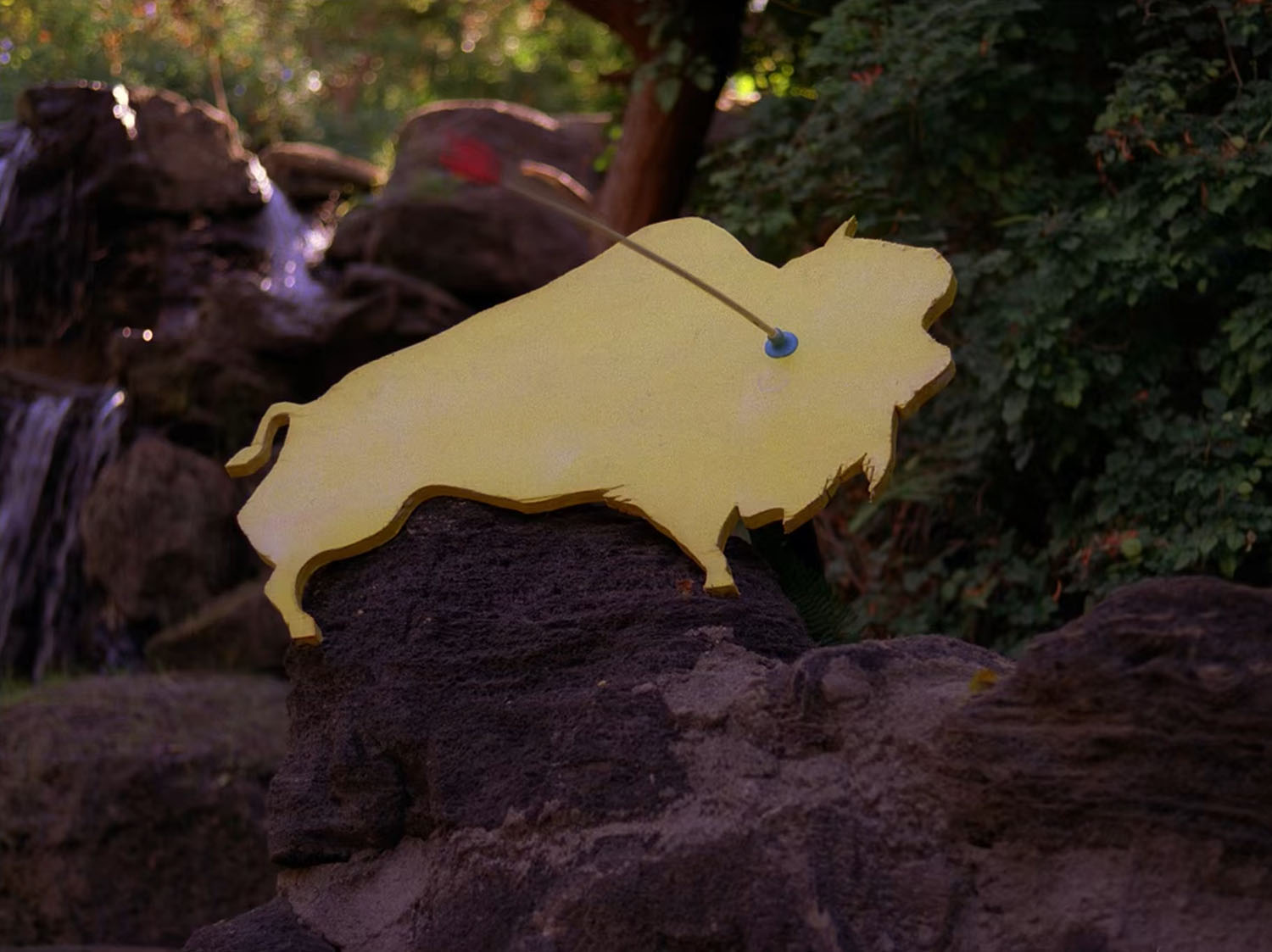
Before cutting to Ben Horne, the scene ends with the toy arrow hitting the second yellow buffalo cutout.
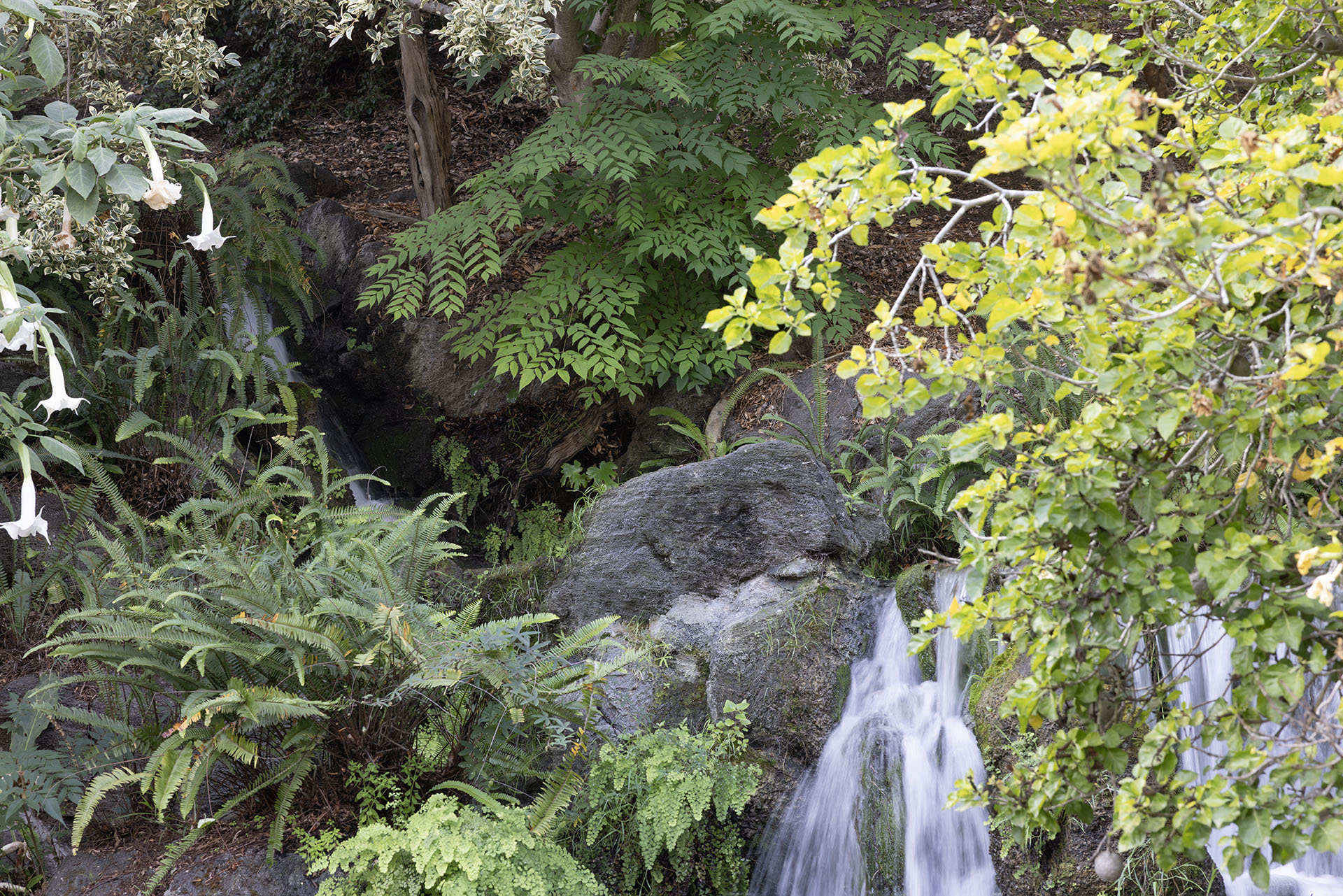
The second buffalo was perched on this rock outcropping. There is a waterfall behind it which you can sort of see on the left side of the location image. Lesson learned – bring a telephoto lens next time!
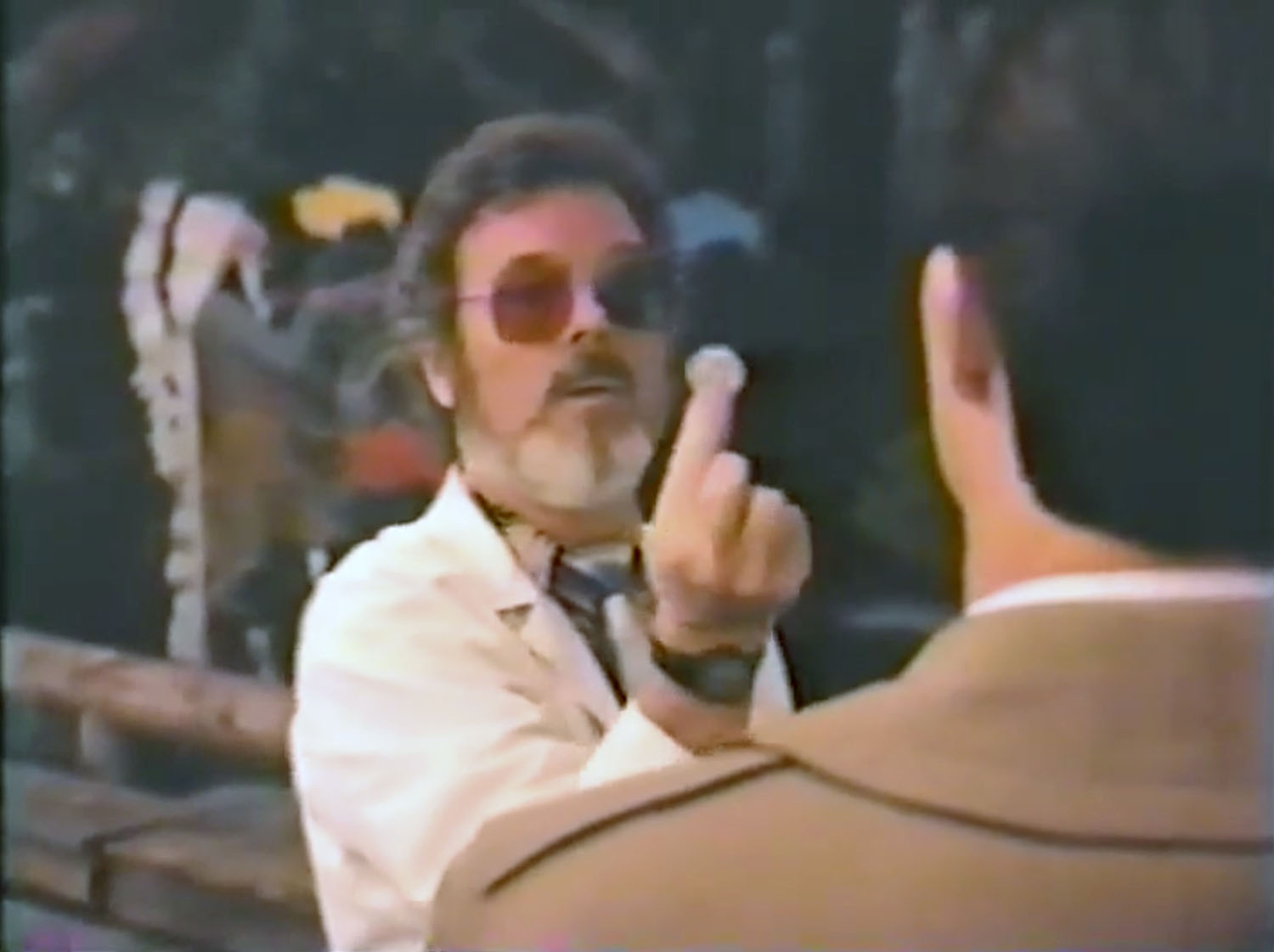
You can read more about the deleted scene from episode 1.001 in this Twin Peaks Blog article.
Author
Discover more from TWIN PEAKS BLOG
Subscribe to get the latest posts sent to your email.