
I’ve professed my love of the first 35 minutes of David Lynch’s Twin Peaks: Fire Walk With Me on numerous occasions. I’m particularly drawn to the original Fat Trout Trailer Park, which were the first scenes shot on Sept. 4-5, 1991 in Snoqualmie, Washington. The former Riverside Mobile Home Park is long gone but, like a magician, I long to see every detail I can find from this mysterious place. This article examines an iconic publicity slide image taken by Lorey Sebastian of Carl Rodd (Harry Dean Stanton) and Special Agent Dale Cooper (Kyle MacLachlan) discussing trailers.
CARL RODD AND SPECIAL AGENT DALE COOPER AT THE FAT TROUT TRAILER PARK
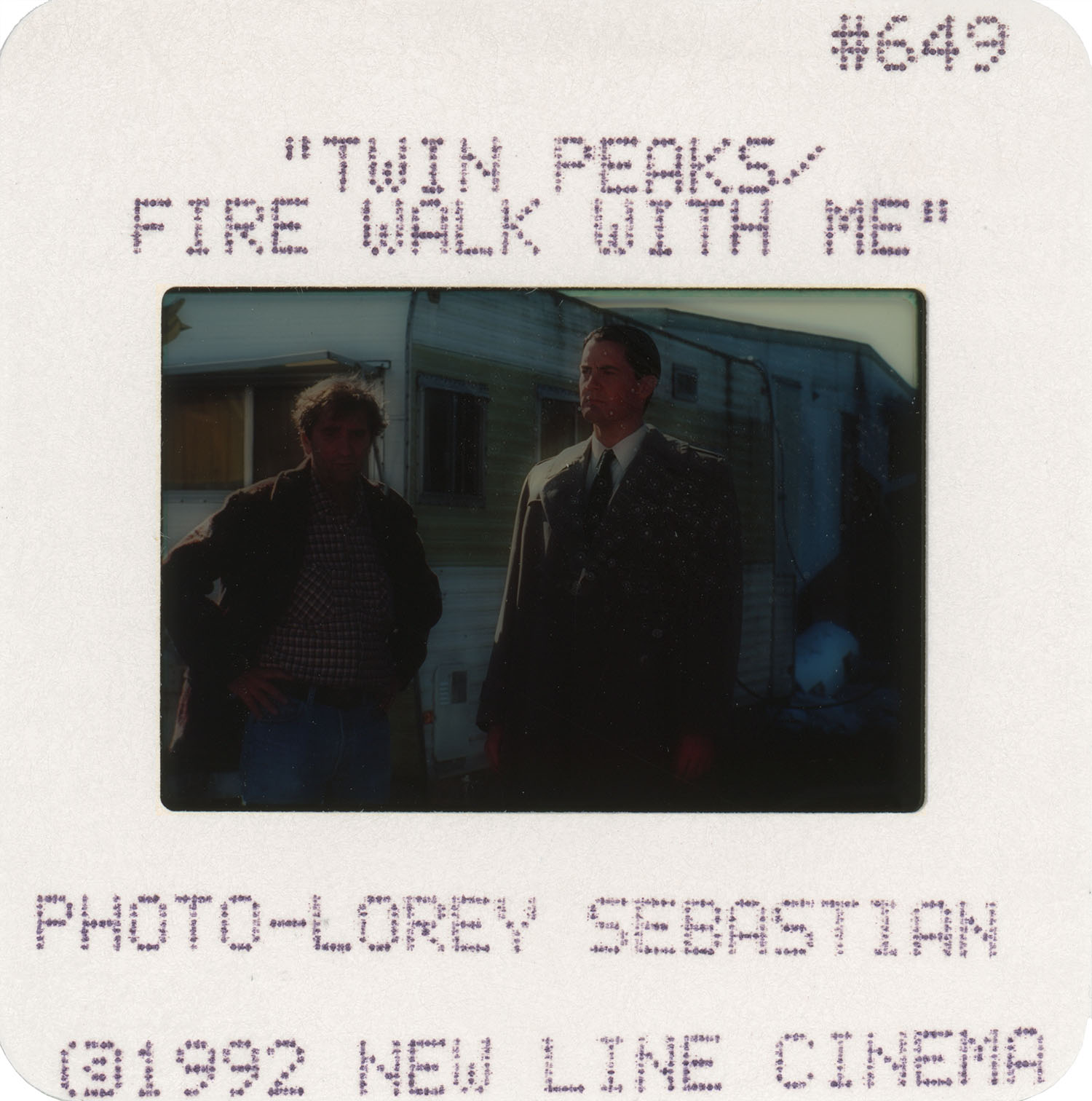
I acquired an assortment of photo slides from an eBay auction which contained slide #649 – a photo of Carl Rodd (Harry Dean Stanton) and Special Agent Dale Cooper (Kyle MacLachlan) discussing trailers at the Fat Trout Trailer Park. The slide has credits to “Twin Peaks / Fire Walk With Me” and “Photo-Lorey Sebastian” and contains the copyright “1992 New Line Cinema.”
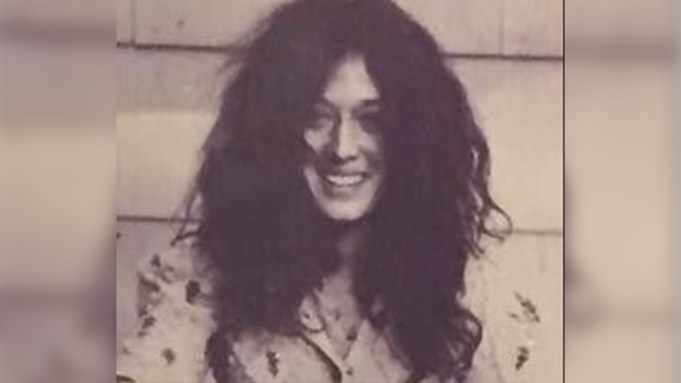
Credited as “Still Photographer” for Twin Peaks: Fire Walk With Me, Lorey Sebastian started her career in 1977 as the still photographer on the set of Joan Micklin Silver’s film Between The Lines. Born in New York City in 1944, Sebastian eventually moved to Los Angeles, California. She had more than 100 film credits to her name including The Player, Crash, St. Elmo’s Fire, True Grit, Twilight, Hell or High Water and Hostiles. Lorey was briefly married to John Sebastian from the band, The Loving Spoonful. She retired around 2018 and moved to Truchas, New Mexico where she lived with her two dogs. Sadly, she passed on May 9, 2022 at the age of 78 following a brief illness.
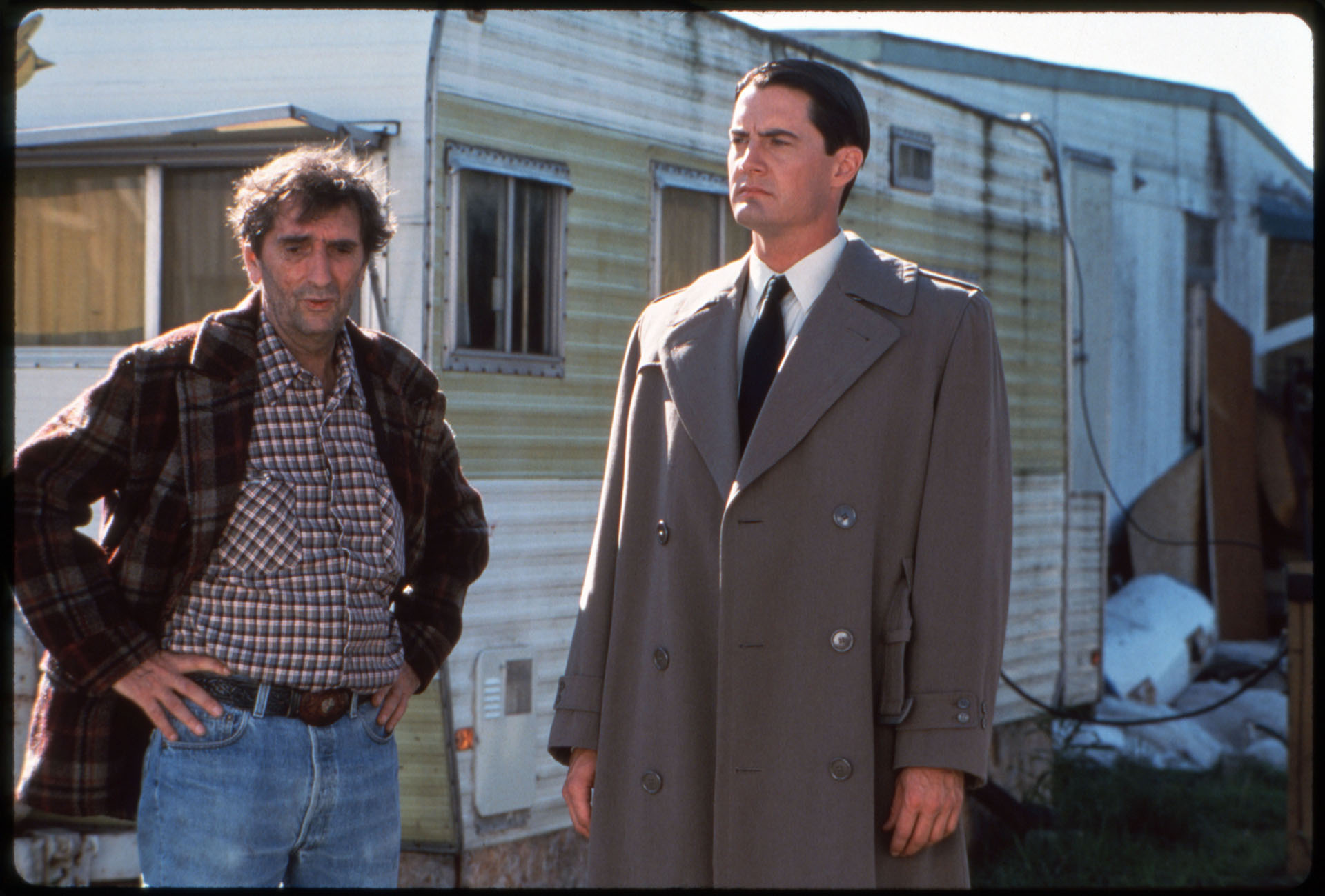
Using my Epson Perfection V600 photo scanner, I scanned the slide at a 4800dpi (making the original 6530 × 4417 pixels). I probably didn’t need to scan the image that large but it helped with dust removal via Photoshop. It’s a gorgeous shot of Stanton and MacLachlan standing by an actual resident’s trailer. The trailers seen in the film were lived in by people at the now demolished Riverside Mobile Home Park.
You can find the original slide and larger image on my Flickr account: Slide / Photo.
This image is also unique as this angle doesn’t appear in the theatrical release.

The Mauve Zone shared a similar black and white image from this scene that was part of the 1992 Cannes Film Festival press kit. I’m assuming the shot was part of a sequence of photos that Lorey took on Sept. 5.

Similar to other publicity shots from Lynch’s 1992 film, the image of Stanton and MacLachlan would accompany newspaper articles and reviews, such as this one by Jeffrey Wells for The Houston Post.
CARL RODD AND AGENT COOPER DISCUSS TRAILER LOCATIONS

The script by David Lynch and Bob Engles from Aug. 8, 1991 contains some additional dialogue. For scene 37, The Fat Trout Trailer Park was named Canyon Trailer Court at the time.
37. EXT. CANYON TRAILER COURT – DAY
Carl Rodd shows Cooper to Teresa’s trailer.
CARL
GOD. I’m beginning to lose faith in the United States Government that includes the telephone system. Don’t you folks talk to one another. That’s her trailer there
and I haven’t touched a god damn thing. Agent Chet Desmond come by a second time and asked to see Deputy Cliff Howard’s trailer
(gestures to the red trailer)
which I showed him. I went back to my trailer…
(gestures back to his)
After that I never saw him again.
COOPER
Thank you, Carl.
Cooper starts walking in the opposite direction from Cliff’s trailer picking up on the same odd vibe that struck Desmond.
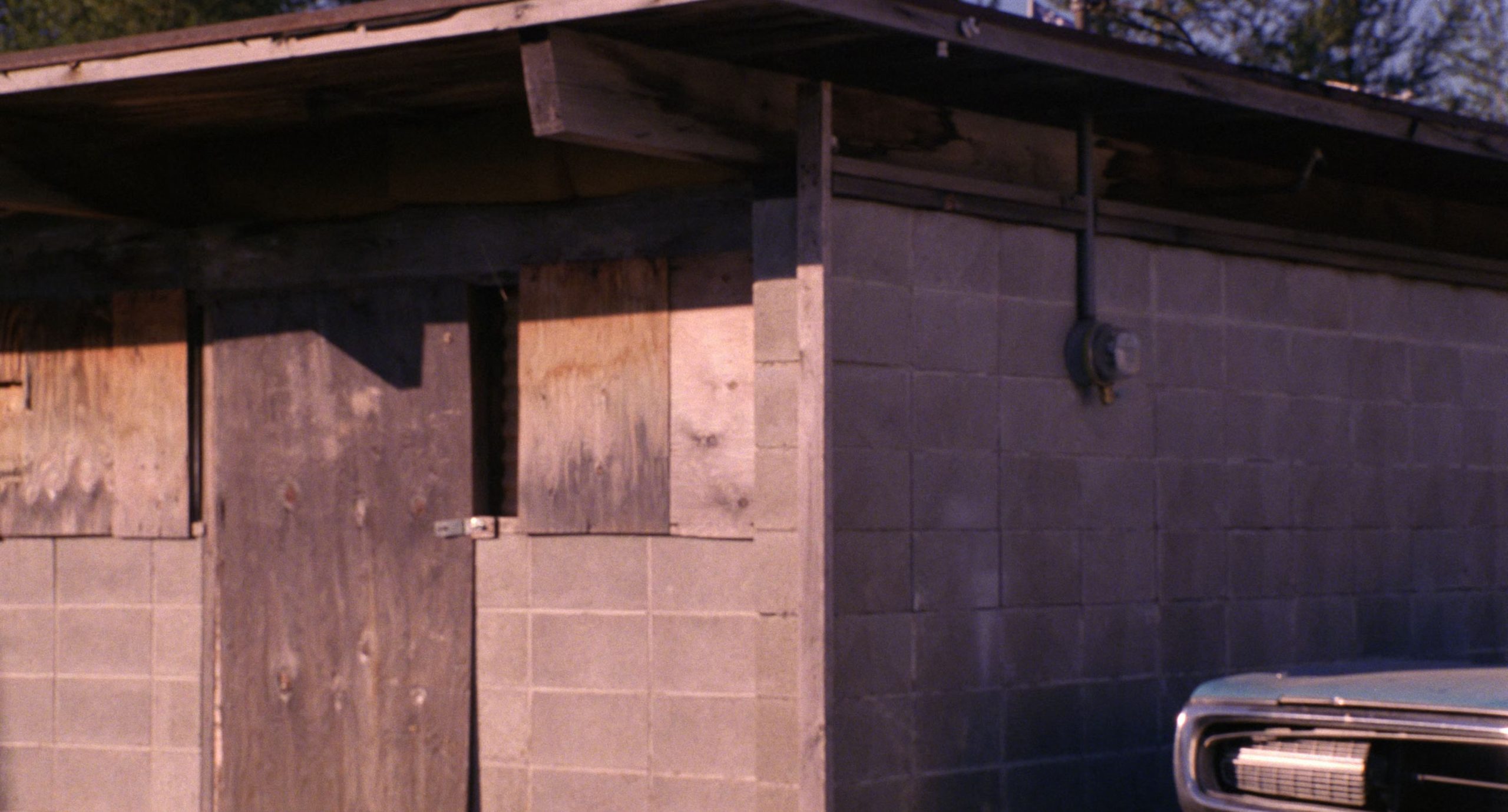
According to a first-hand account by Greg Olson, the scene was shot around 1:30 p.m. on Sept. 5, 1991. Olson discussed what he witnessed in an article for November / December 1991 issue of Film Comment. He arrived on set that afternoon to see David Lynch and Cinematographer Ron Garcia setting up the scene this scene. In the film, Rodd and Cooper as speaking in front of a cinder block building and a blue 1972 Dodge Charger is parked next to them.
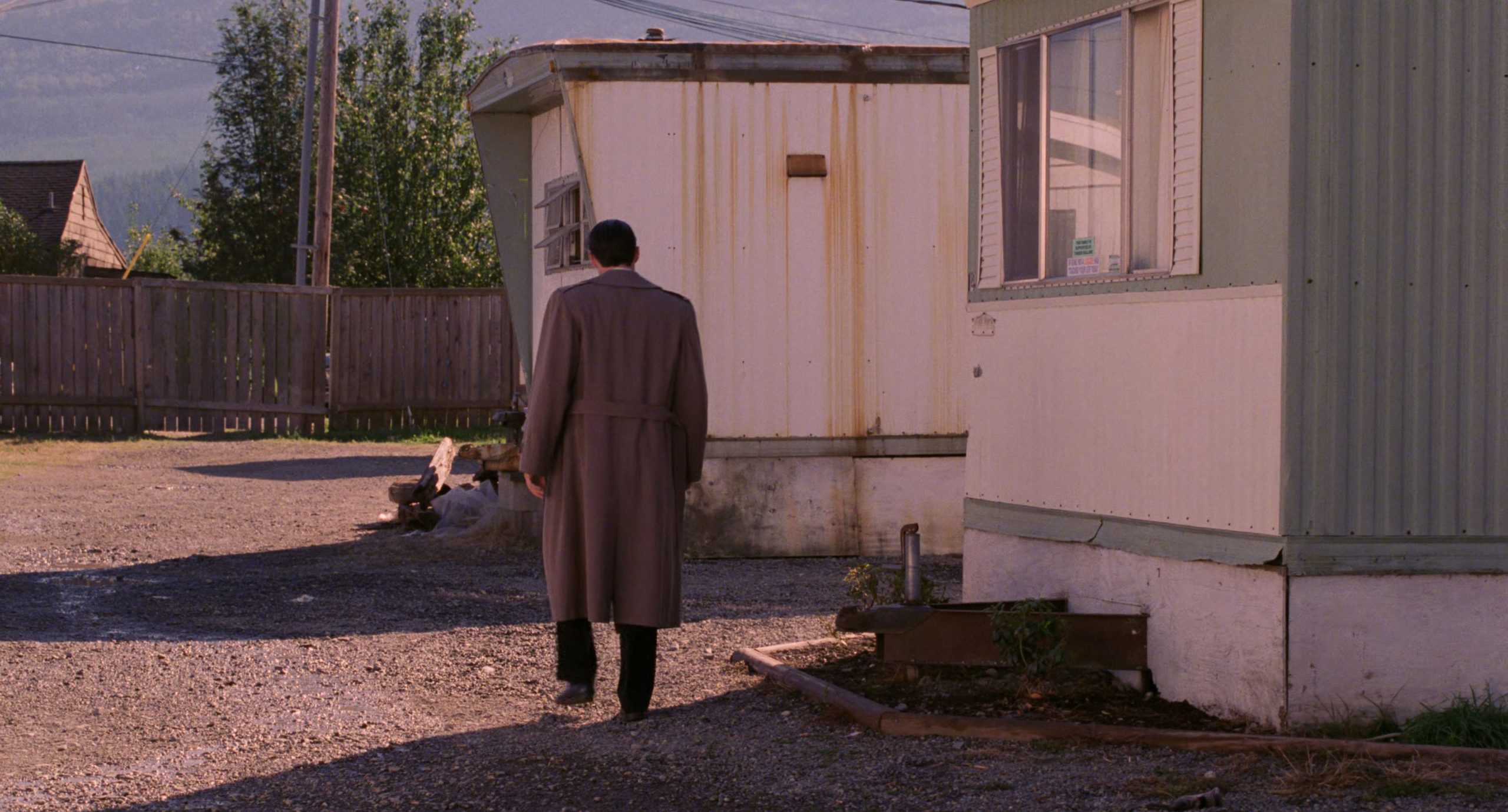
Cooper’s long shadow confirms this scene was shot in the afternoon. The sun rising over the Riverside Mobile Home Park would have cast a shadow to Cooper’s left side. Olson wrote Stanton and MacLachlan rehearsed the scene several times:
“For a number of rehearsals and takes we get to savor Stanton bellowing, ‘Where the hell are you going up that way?’ Lynch speaks quiet words of direction and, on one take, says ‘Okay, Harry Dean, let’s get that anger up there” before calling ‘Action!’ through his megaphone. He calls Stanton ‘Harry Dean’ and MacLachlan ‘Cooper.'”
Once wrapped, Greg said Lynch thanked the actors by saying “doggone good job.”
DETAILS FROM THE FAT TROUT TRAILER PARK

This cinder block building is the same one where the Fat Trout Trailer Park sign was located, except it was around the corner from this scene.
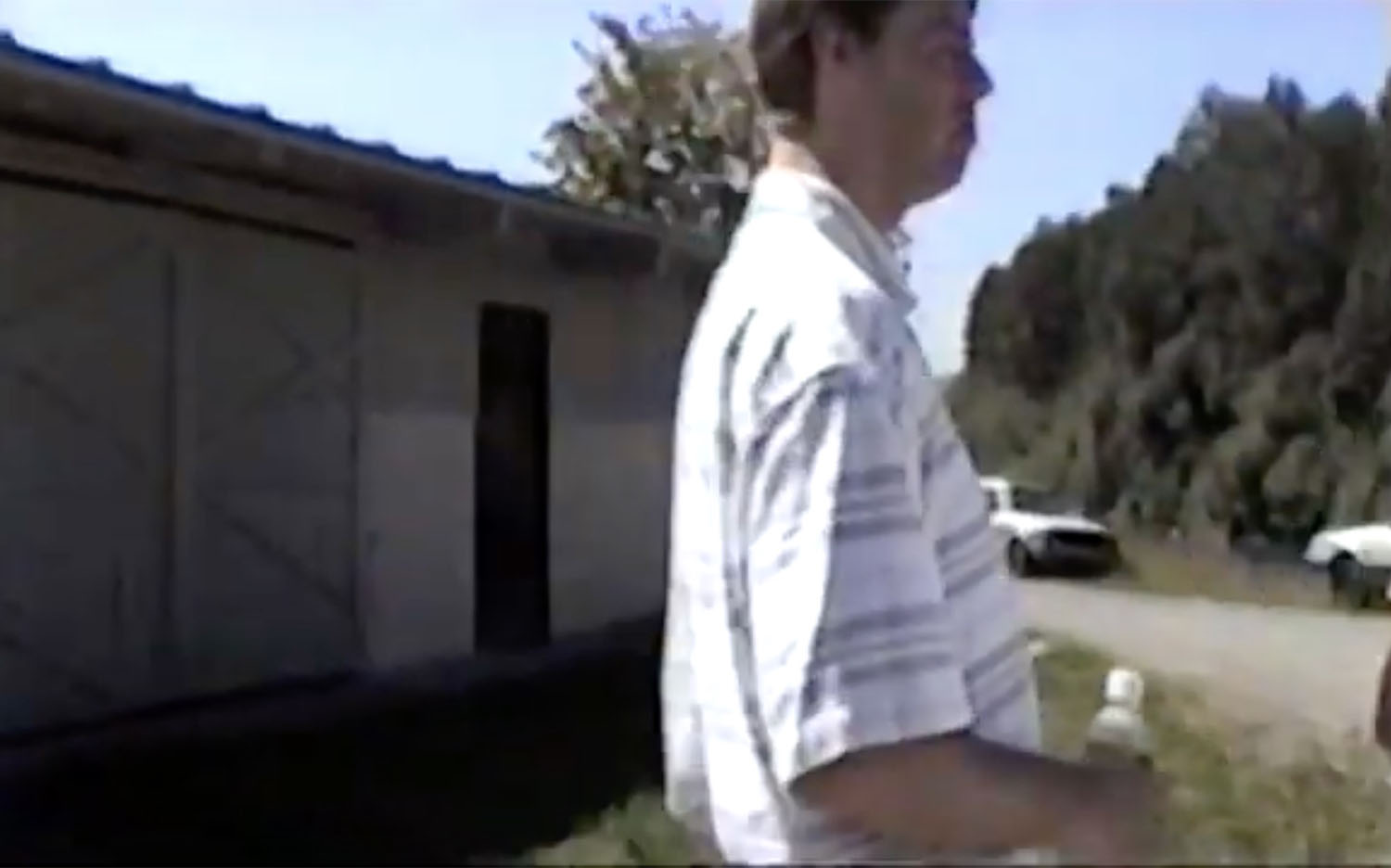
During my first visit to the Real Twin Peaks in August 1996 for the Twin Peaks Fan Fest, our film location bus tour made an unscheduled stop at the former trailer park. In video captured from the tour stop, you can see part of the cinder block building.
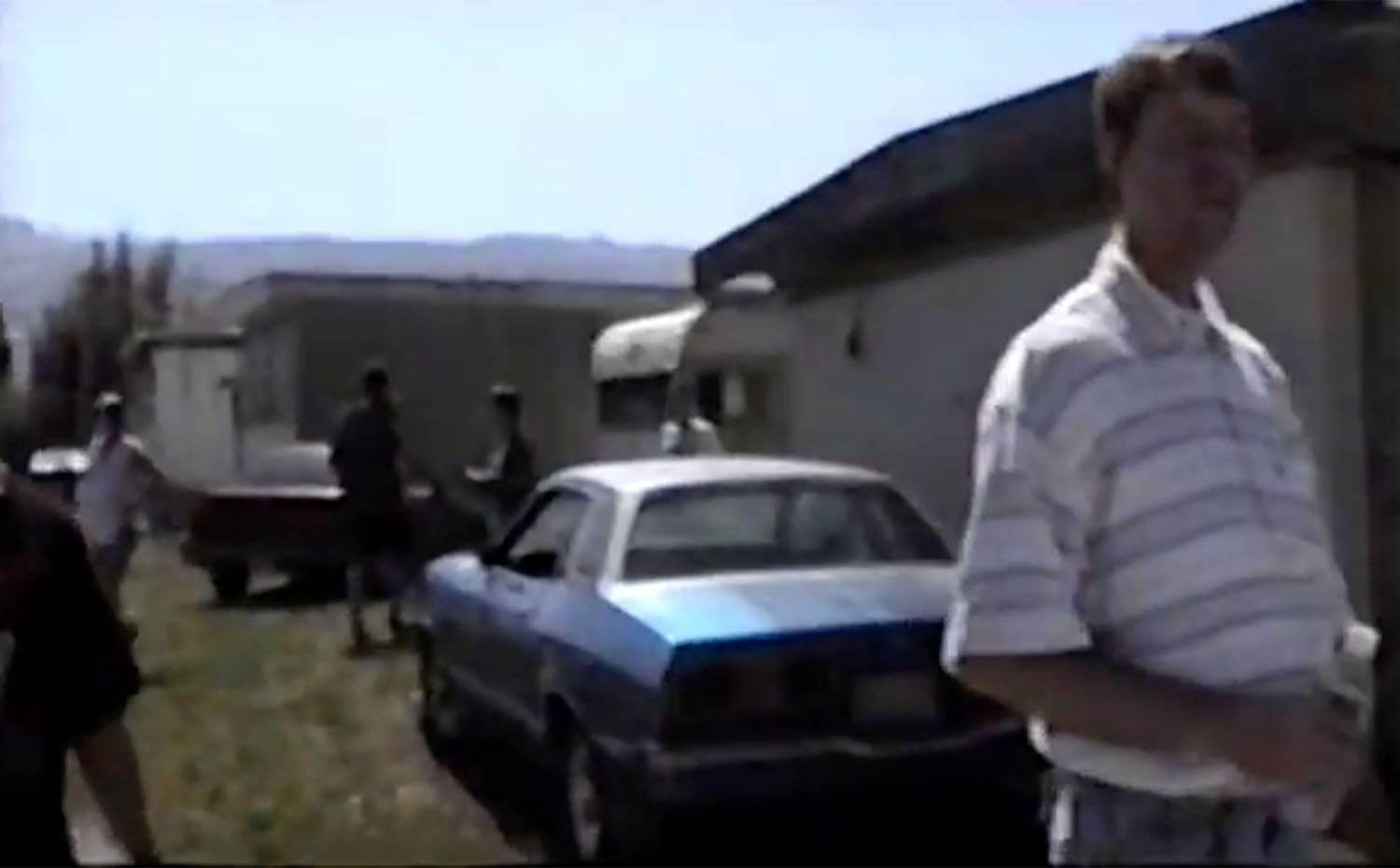
I didn’t realize it at the time but the same blue car was parked outside that building in 1996, making it a resident’s vehicle. I’d like to think it was Teresa Banks’ vehicle considering her trailer was located nearby.
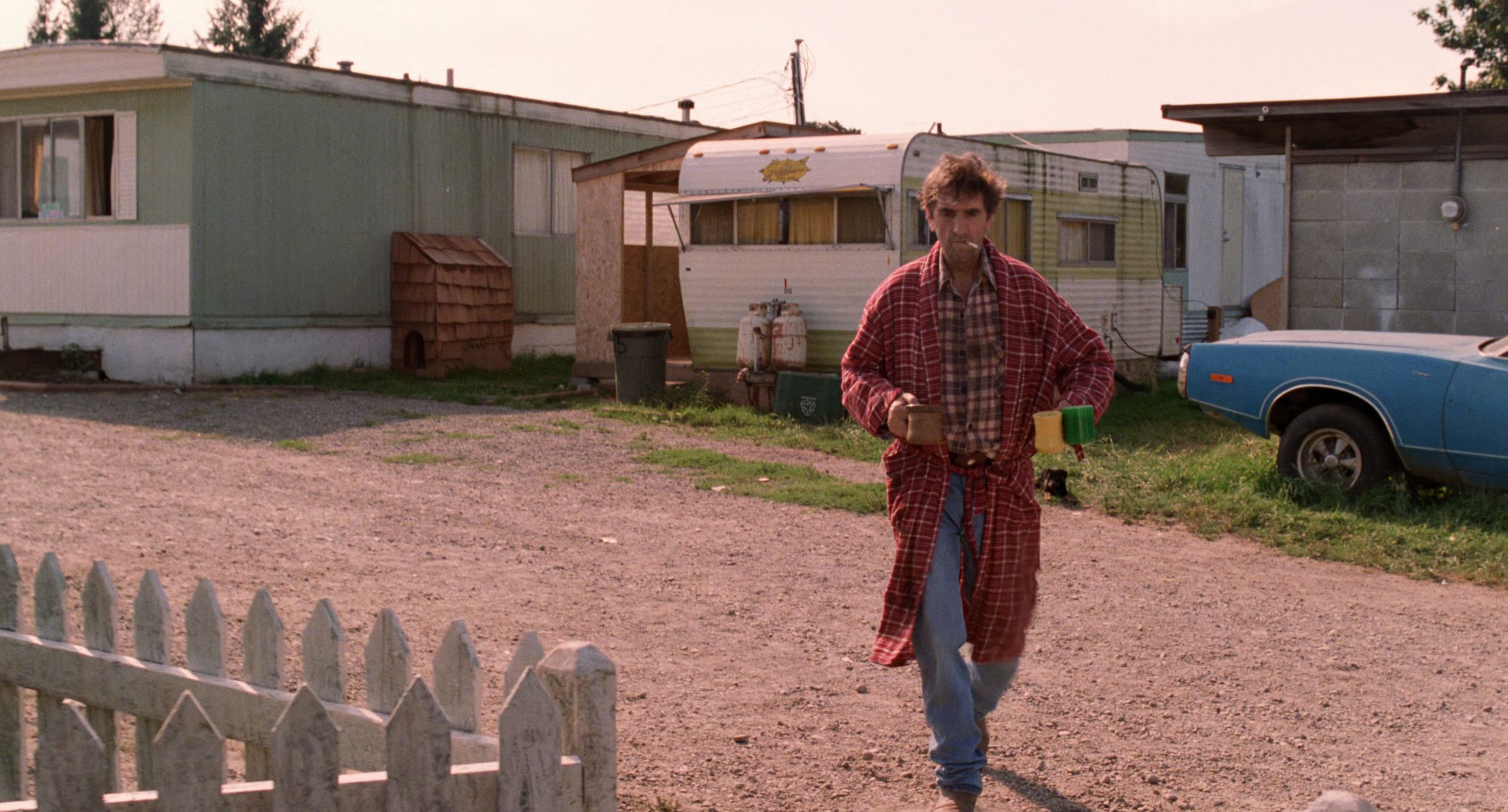
You can see more details of the car, including the wheels, when Carl Rodd returns to Teresa Banks’ trailer with three cups of “Good Morning America.” I never noticed the dog laying in the grass until researching this article.
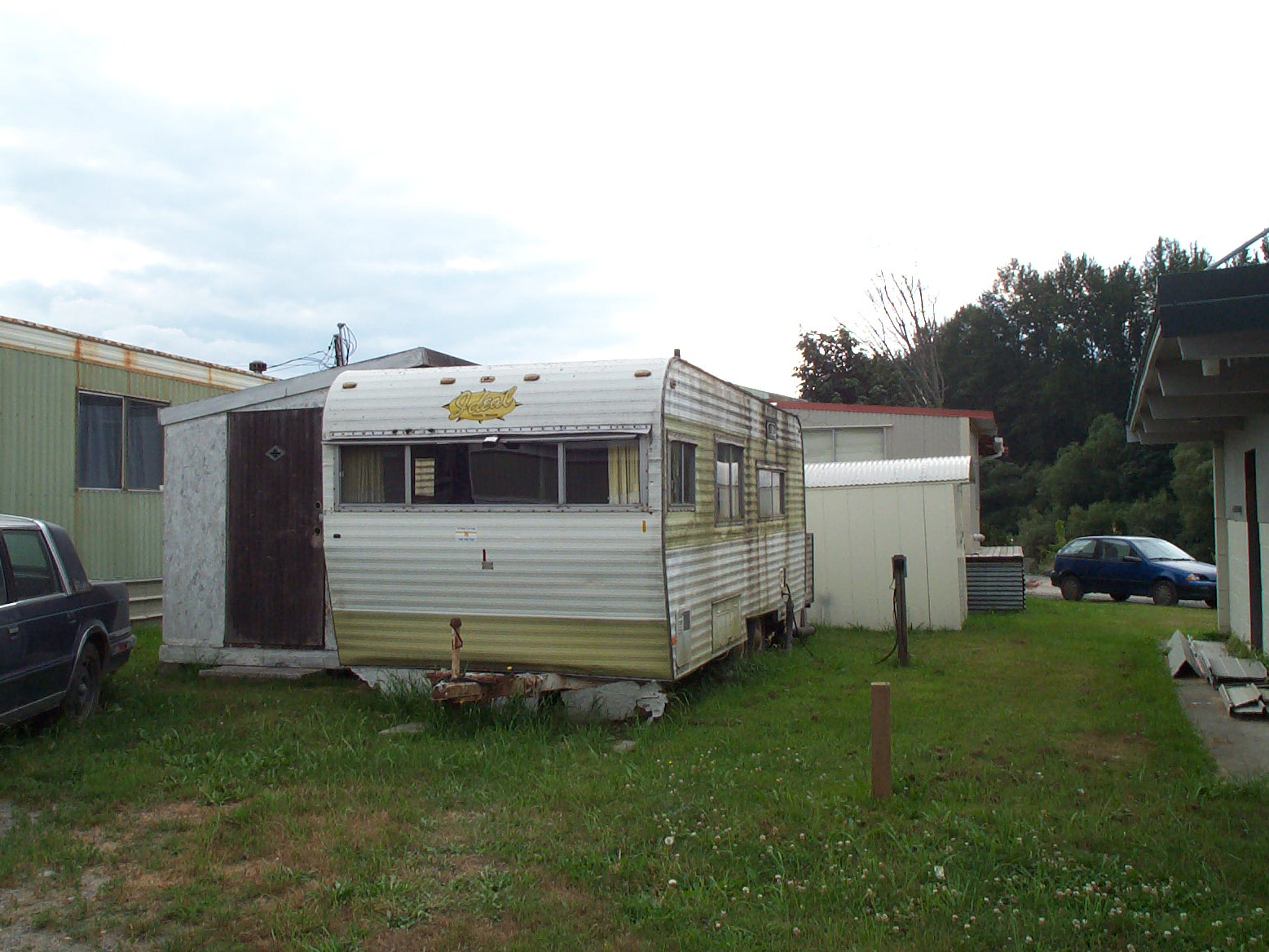
Fellow long-time fan and once Twin Peaks Festival organizer Jared Lyon took this shot of the same trailer on Aug. 19, 2001.

Two years later, he took a shot of Teresa Banks’ trailer as seen from Carl Rodd’s trailer. The now-covered cinder block building is on the left.

Strangely, the David Lynch Foundation shared a photo from the Riverside Mobile Home Park on Mar. 14, 2009. The trailer seen behind Carl and Cooper in the publicity photo is seen at right.
A few months later on Nov. 24, 2009, FEMA gave $1.1M in funding to “permanently eliminate the risk to people from flooding [of the nearby Snoqualmie river] by purchasing repetitively flooded and substantially damaged properties, and relocating the current residents to new housing.” The 20 mobile homes and other structures would be demolished, and the area would be converted to open space. Total cost of the project was $1.4M to which FEMA contributed 75-percent. By early February 2011, the trailer park was demolished.

Today, you’ll find an empty field where the trailer park was once located.
Author
Discover more from TWIN PEAKS BLOG
Subscribe to get the latest posts sent to your email.