Twin Peaks fans are a lucky bunch. Whether printed in magazines, compiled in oral histories, or presented on stage at fan conventions, just about every cast member has shared unique memories of life on the set. But as much as I love to hear from the actors, what I long for are stories from the people who *made* those sets. I want to learn about their craft, and the creative problem-solving that went into building the tactile world of Twin Peaks. When it comes to the show’s enduring legacy, these artists deserve an equal slice of the pie. One name that more Twin Peaks fans should know is Dave Robinson.
WHO IS DAVE ROBINSON?
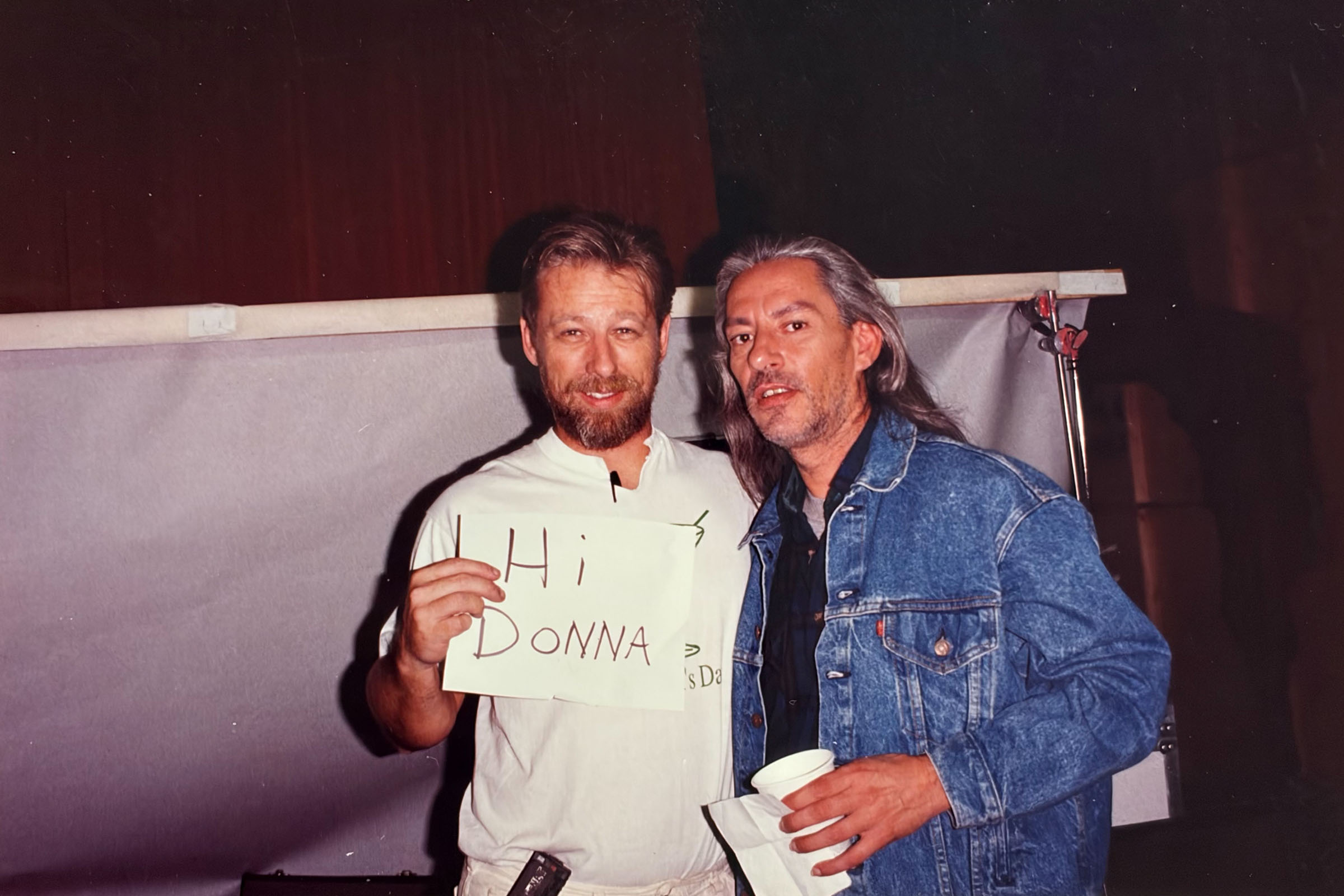
Dave Robinson studied Set Design at CalArts in the early 1980s. When Twin Peaks found itself without a prop master in the middle of the first season, Dave was brought into the fold by Production Designer Richard Hoover, with whom he had worked on theater productions.
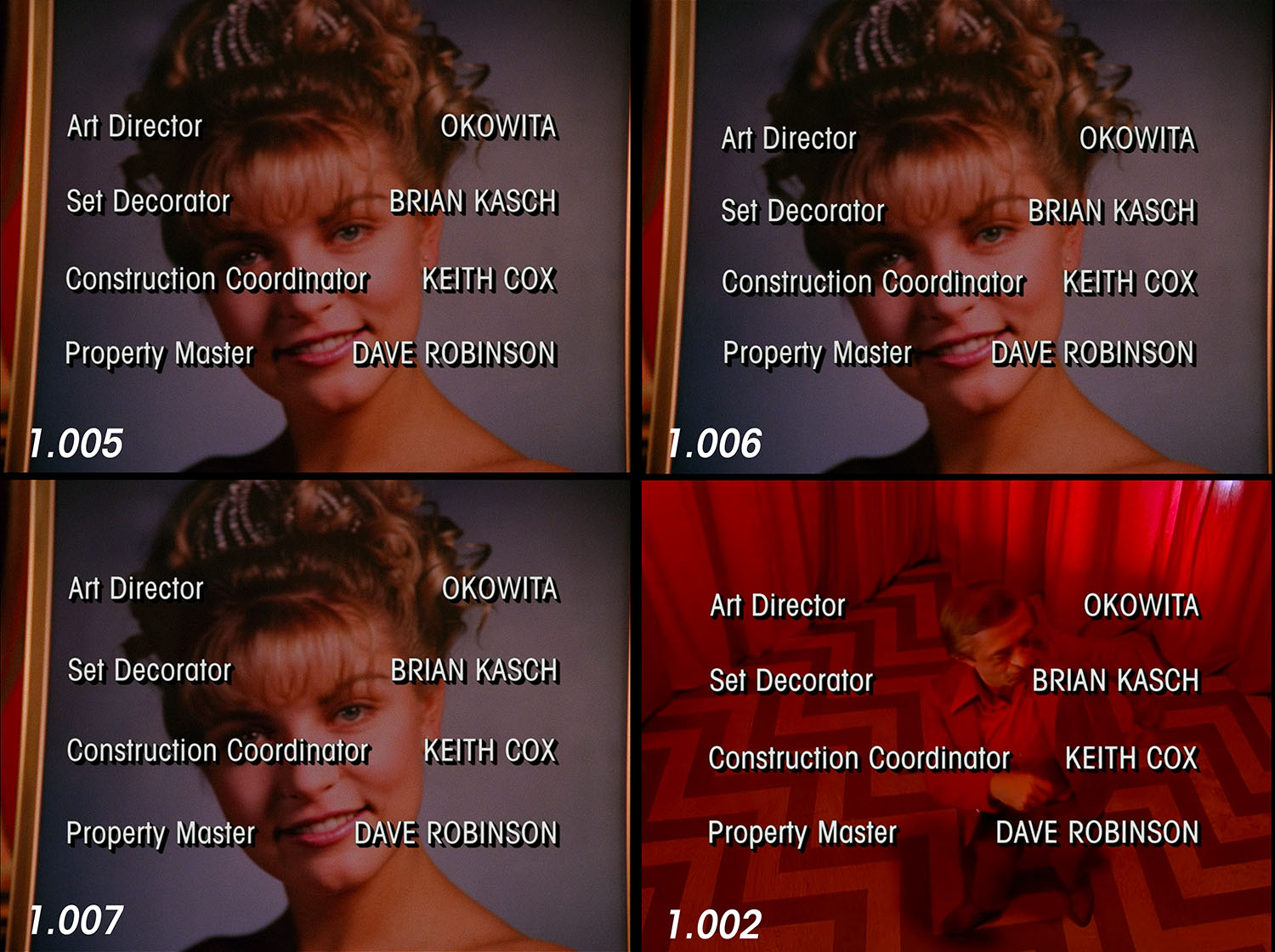
Dave filled the prop master role for episodes 1.005, 1.006, 1.007, and the David Lynch-directed 1.002, which was filmed out of sequence to accommodate Wild at Heart’s production schedule.
In the second season, Dave passed the prop torch to Jeff Moore and took the position of lead painter.
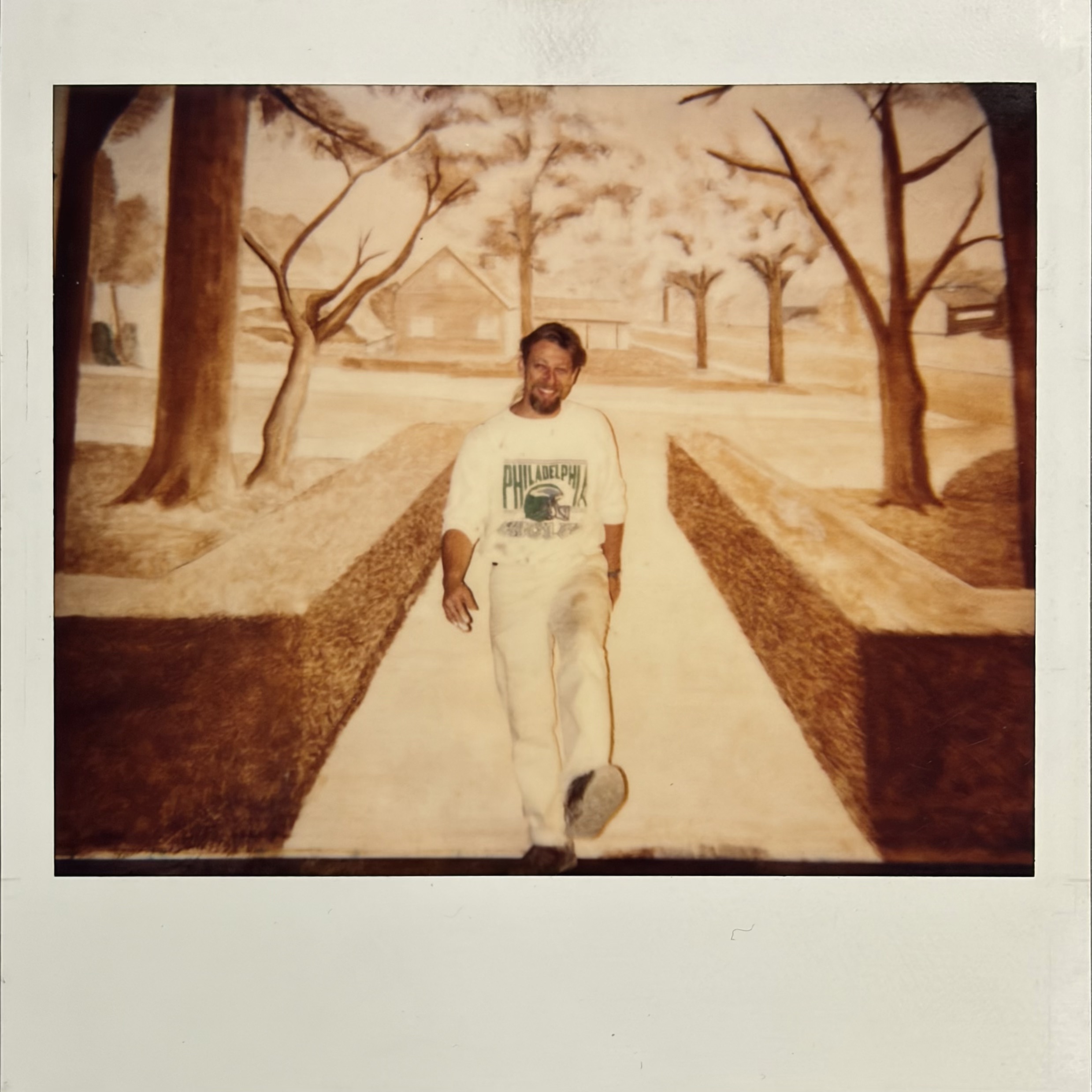
“I volunteered to be the painter,” he recalled. “After I did the props, I didn’t like it, and the painter was going to quit the next year. I said, ‘Can’t I go back to painting?’ And Richard Hoover, the designer, said, ‘You want to paint?’ And I said, ‘Yeah, that’s what I do!’”
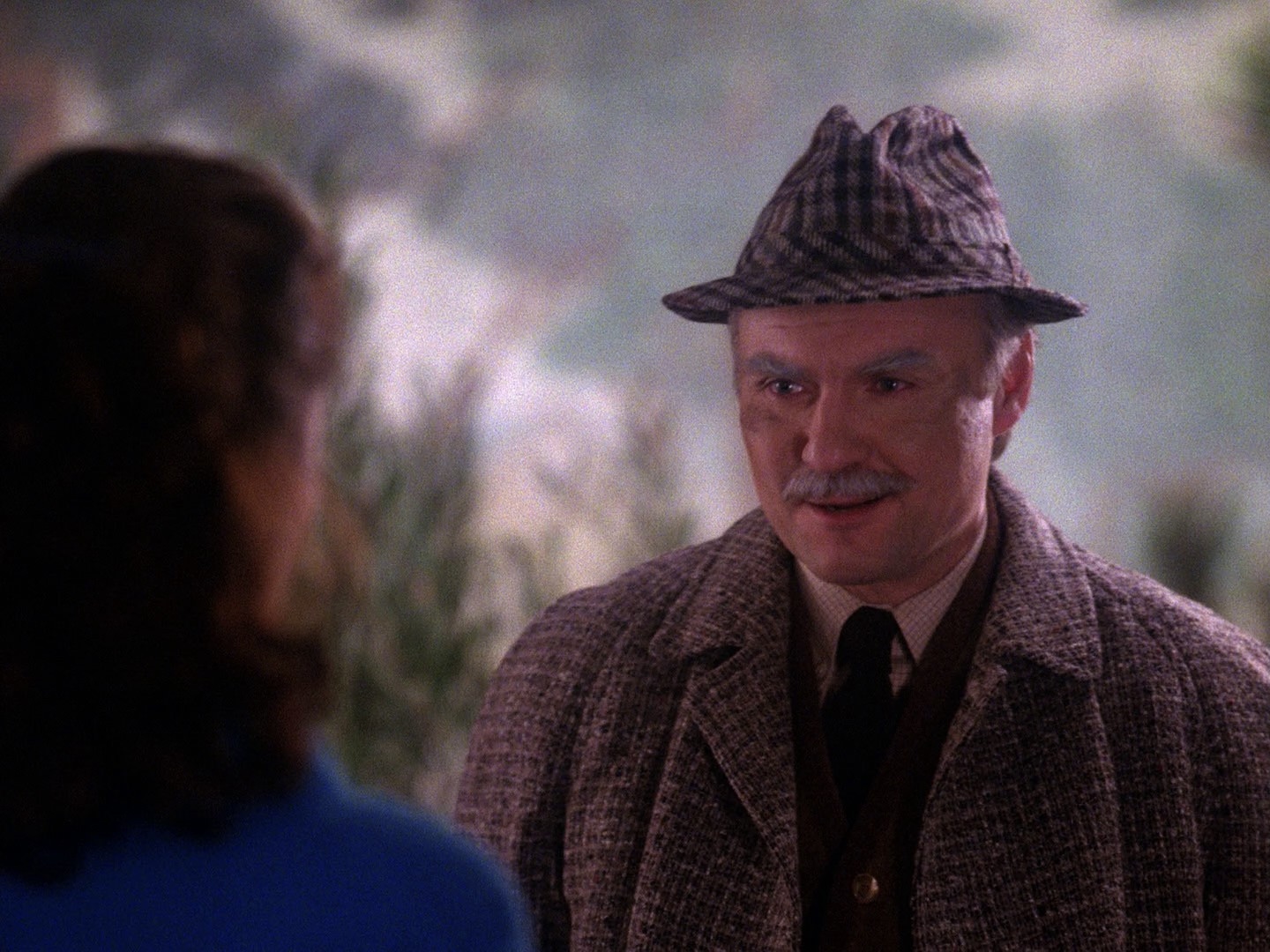
Robinson stayed with Lynch for his next several projects, working on Twin Peaks: Fire Walk With Me (scenic artist), On the Air (lead painter), Hotel Room (lead painter), and Lost Highway (lead scenic).
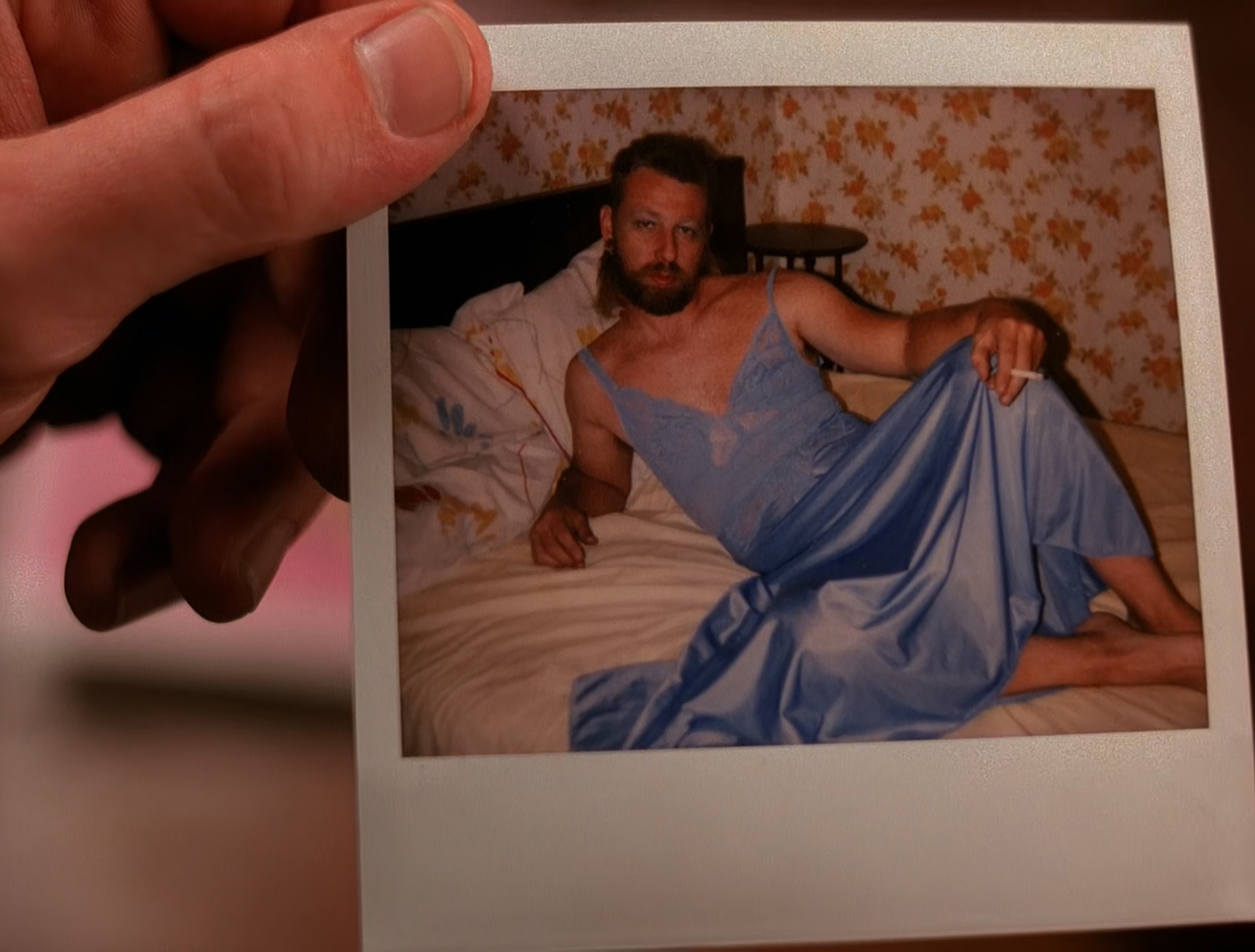
Oh, and he made a brief onscreen cameo in episode 1.005 in the risqué “Georgia Peach” photo tucked into an issue of Flesh World Magazine.
DAVE ROBINSON’S TWIN PEAKS PHOTOS AND MEMORIES
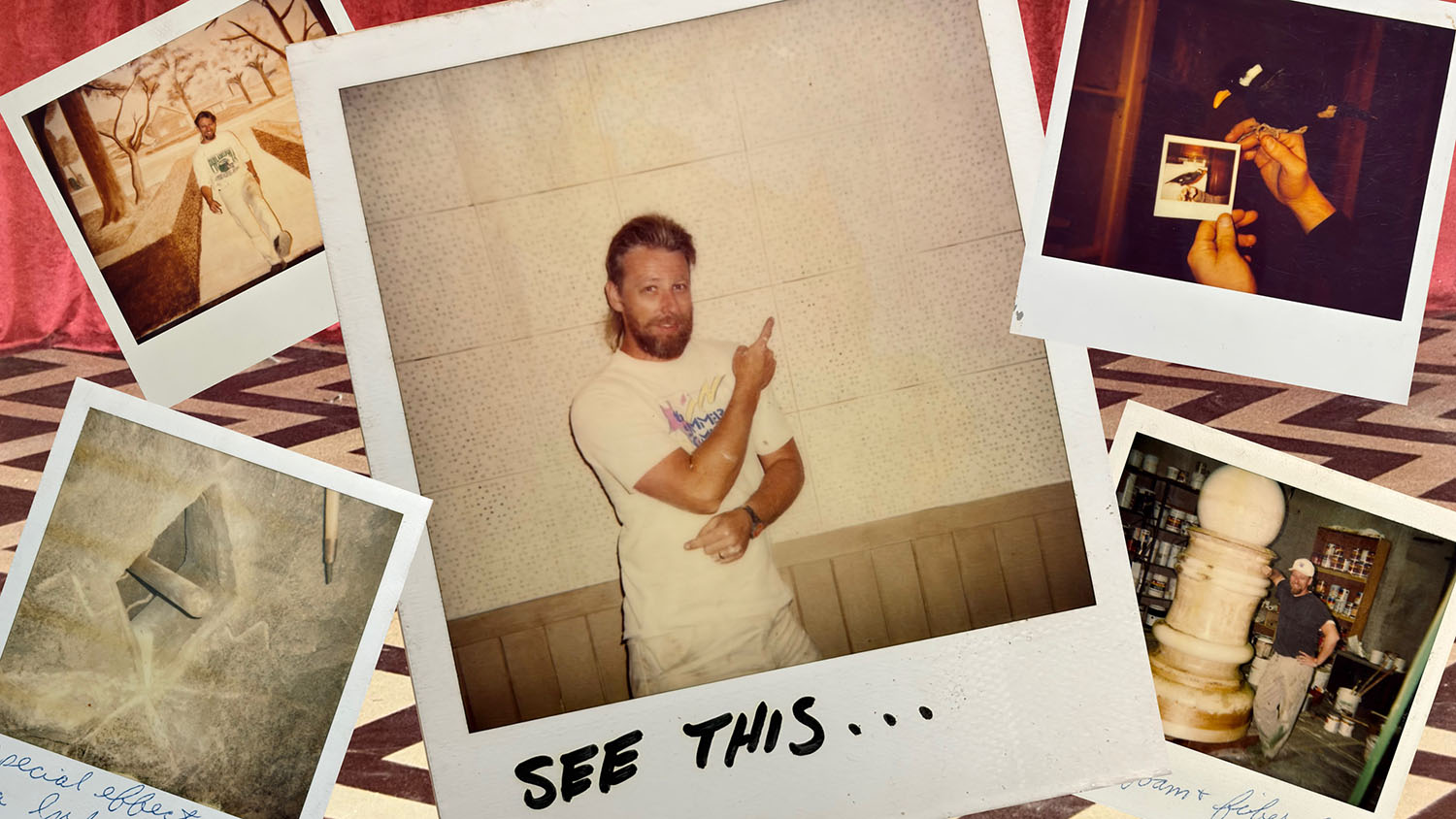
I’ve had the pleasure of getting to know Dave over the last few years, visiting and picking his brain over a few beers whenever I find myself on the East Coast. After humoring all my nerdy questions on one such visit, Dave gave me one of the most priceless gifts I have ever received – a photo album containing never-before-seen Polaroids and detail shots of his work on Twin Peaks, as well as a few incredible behind the scenes photos of the cast. I was speechless. Well, except for all of the new questions I had.
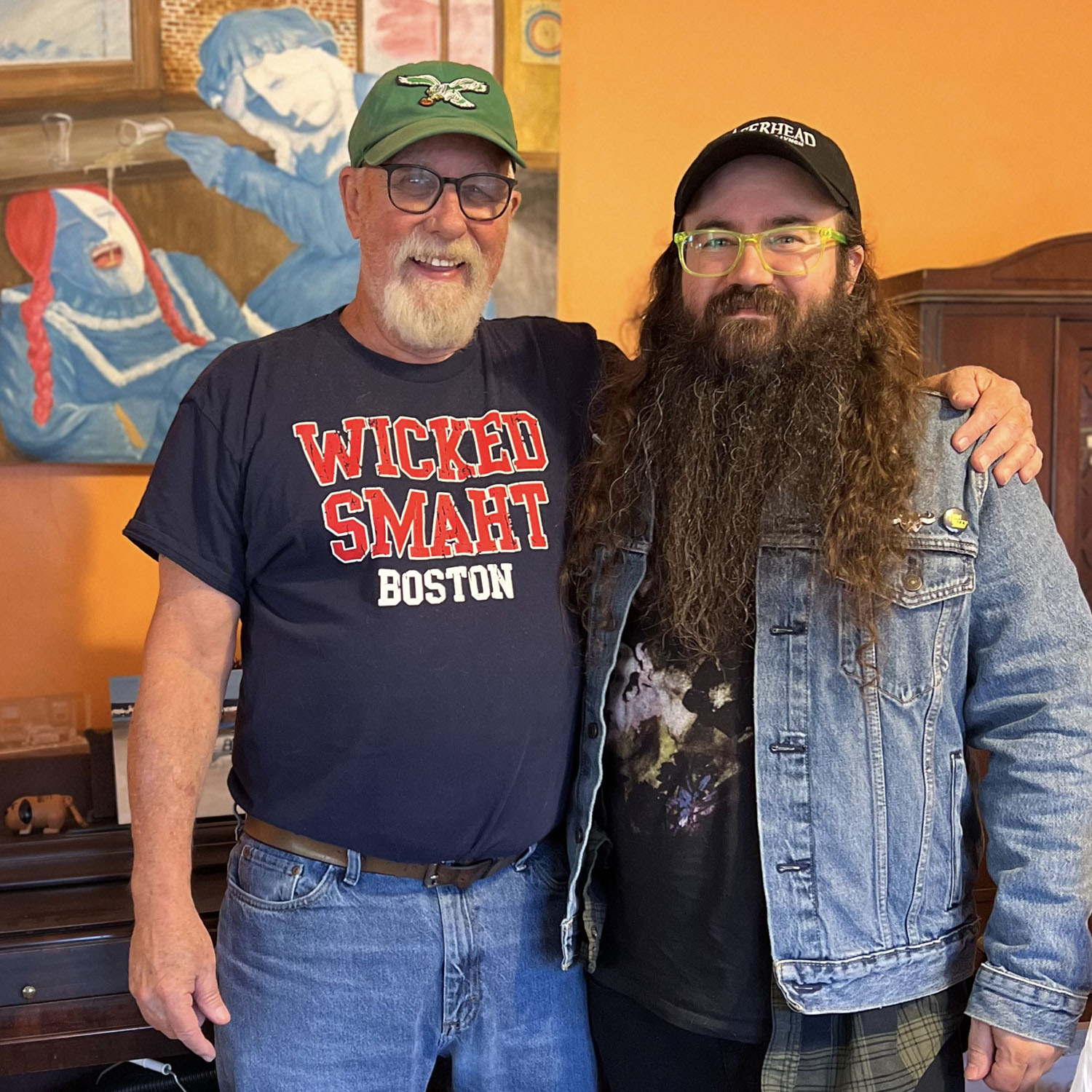
With Dave’s permission, I recorded our conversation as we went through the photos. First-hand accounts of this body of work are finite, and I wanted to make sure these memories were preserved. Below are some of Dave’s fascinating tales.
WHO SHOT WALDO?
Early in the Laura Palmer investigation, a myna bird named Waldo is determined to be a potentially valuable witness. At the Twin Peaks Sheriff Department, Agent Cooper leaves his voice activated tape recorder by Waldo’s cage in case the bird mimics what he heard on the night of Laura’s death.

“There was a real Waldo that they had an animal handler for, and then I made a double,” Dave said.
His convincing double was made from foam, fake fur, feathers, and real bird feet.
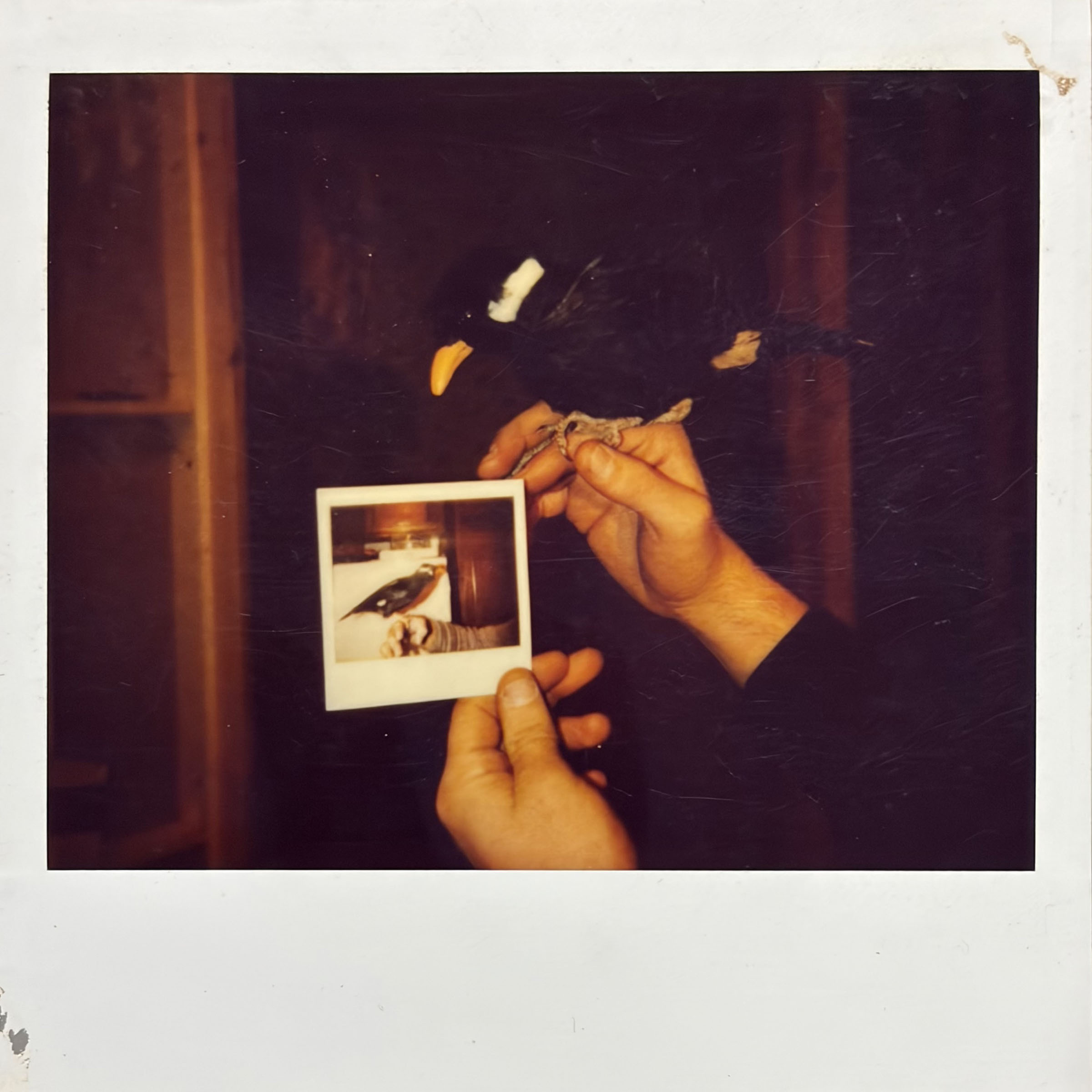
“Then they said, ‘Well, Waldo gets shot, so now we need you to make a shot Waldo,’ continue Dave.
“And that’s all they tell me…I probably did ask them ‘What do you mean he’s shot? Do you see him shot? Do just feathers fly in the air? What exactly are you talking about?’ ‘Well, he’s dead. He got shot.’ Okay. Maybe I drew it first, and then I made it, and I showed it to them. I guess they shot it, but I don’t remember seeing it.”
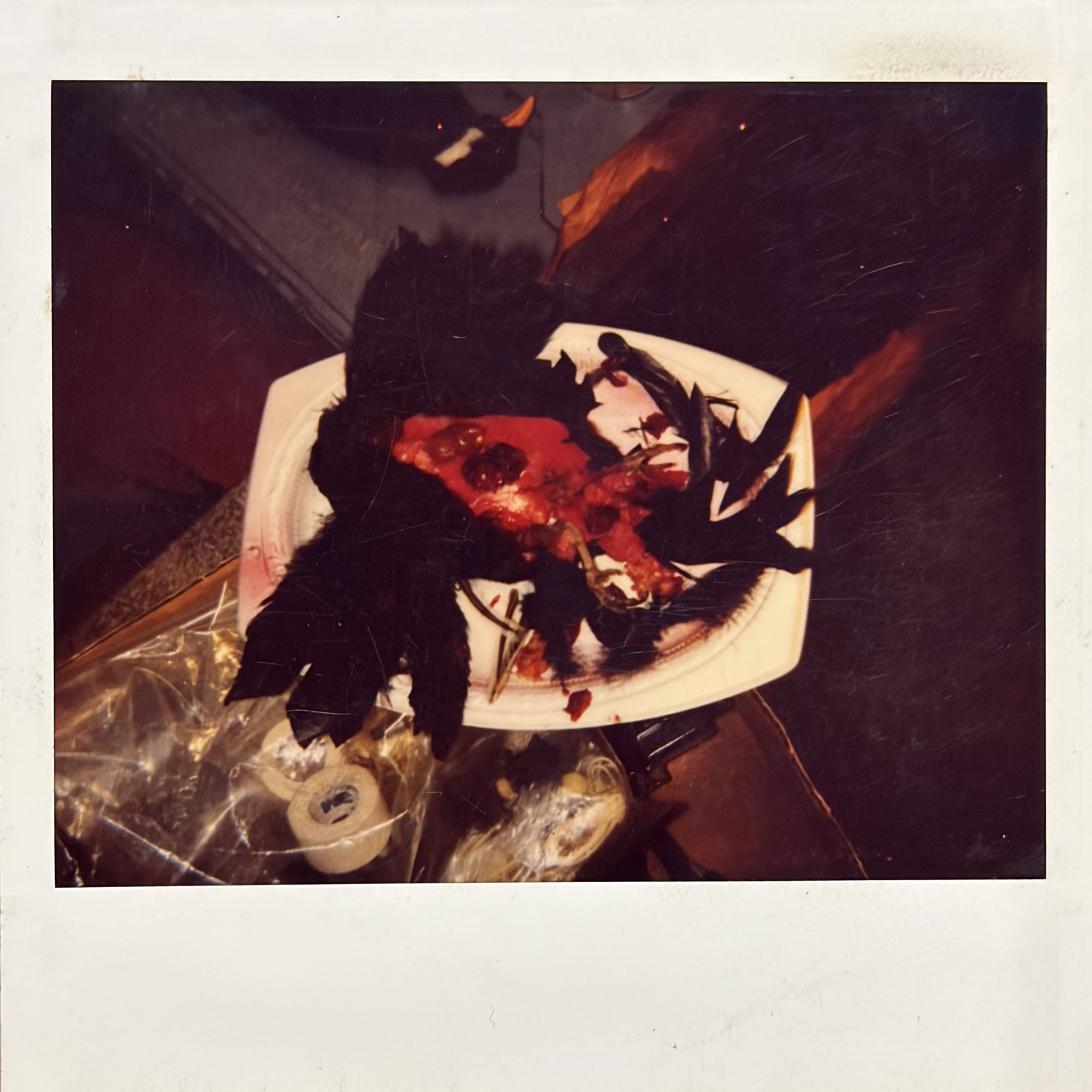
Despite Dave’s excellent work creating a detailed deceased Waldo, this dead bird did not make it into the episode.

Instead, Waldo’s death is implied without being explicitly shown. The birdcage sways in the aftermath of the gunshot and blood drizzles onto the stacked donuts below.
Regardless, Dave remembers this as something his “do it yourself” theater background prepared him for.
“It was another example of having a lot of skills I don’t think any set painter has,” explained Dave. “I was doing props that episode, so even a prop guy would’ve gotten that made at Ellis [Mercantile] or ISS [Independent Studio Services], but I wasn’t that prop guy.”
ACOUSTIC TILE IN THE INTERROGATION ROOM
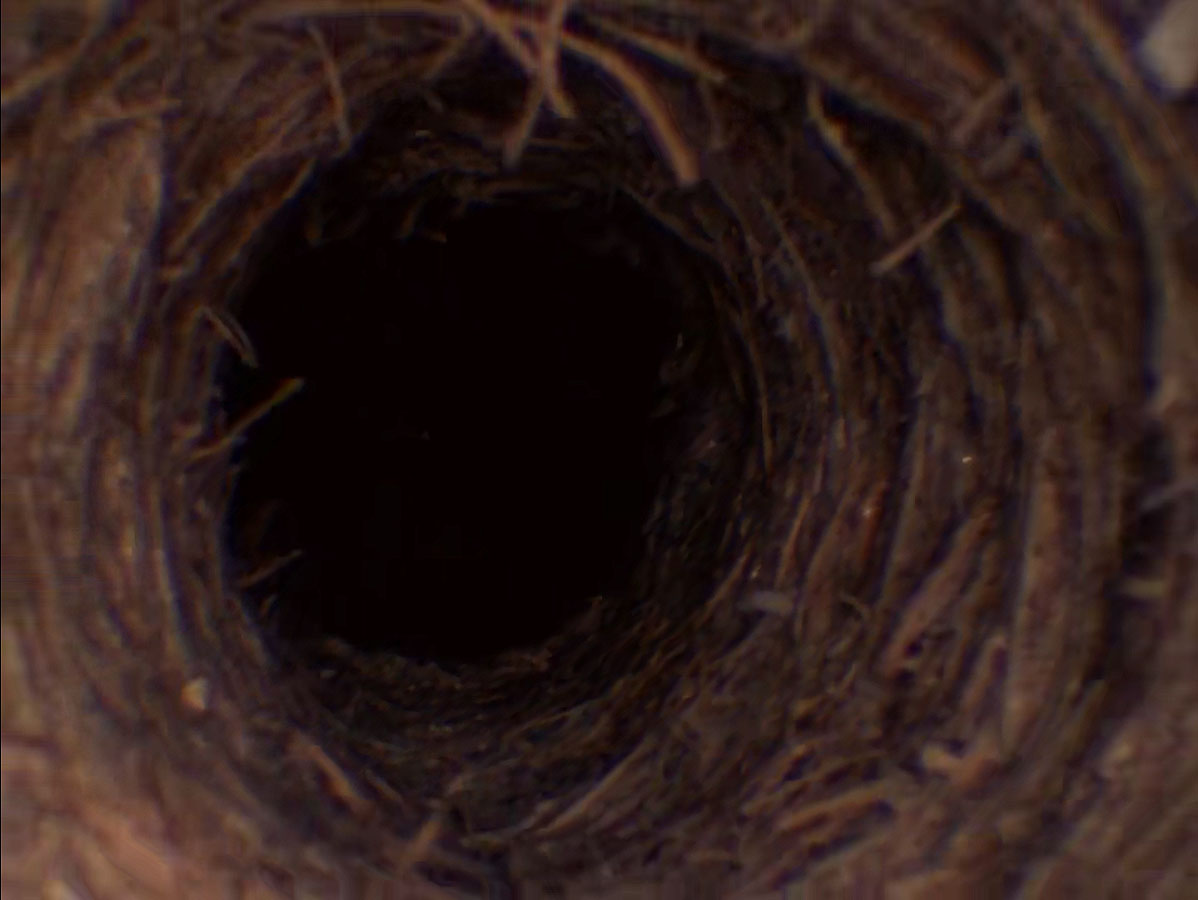
In episode 2.004, director Todd Holland’s ambitious opening features a shot where the camera pulls back through a tunnel to reveal that what we are seeing is the inside of a hole in a piece of acoustic tile. A reeling Leland Palmer is being interrogated about Jacques Renault’s murder at the Twin Peaks Sheriff Department.
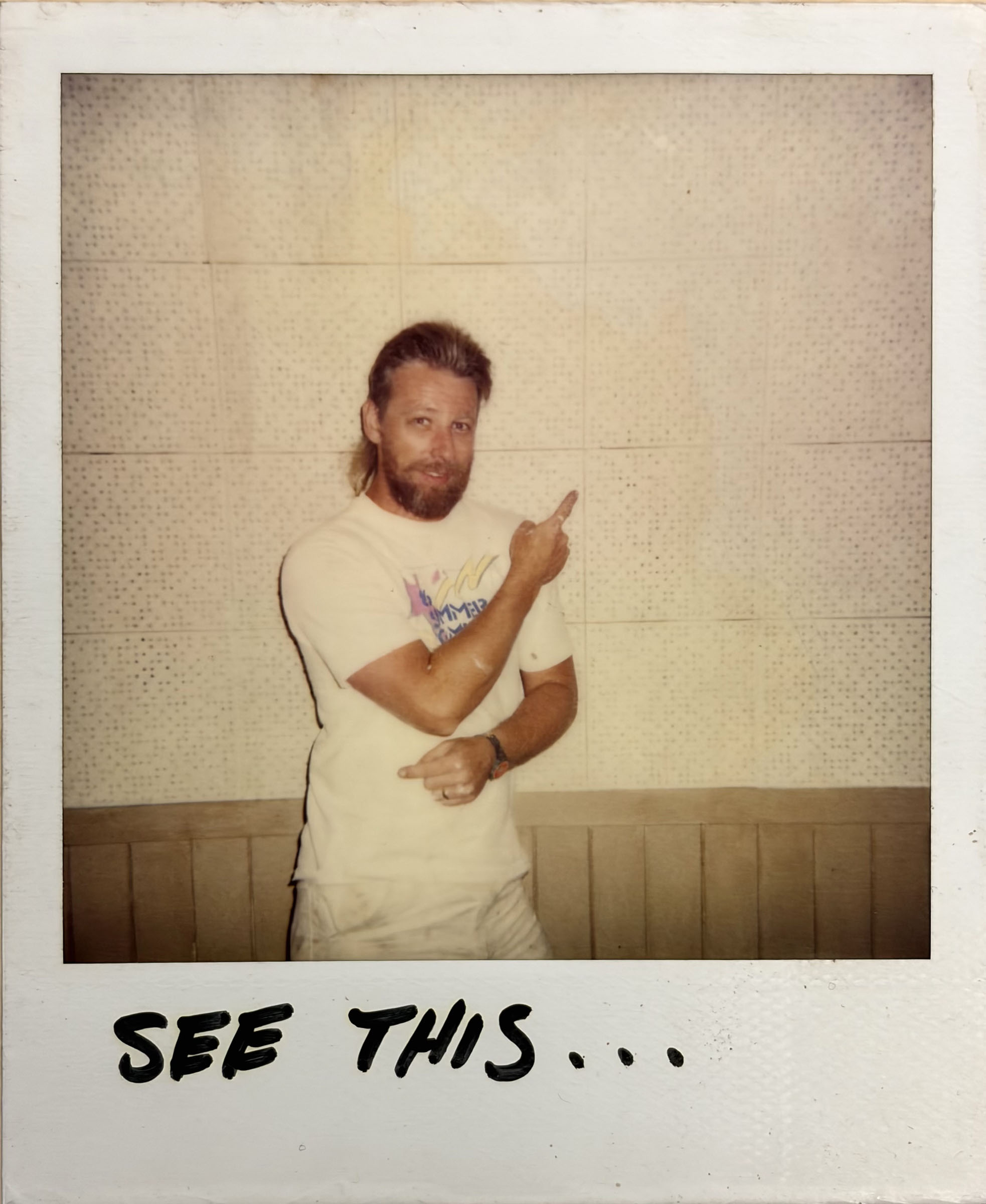
“They were like ‘We need you to make a giant piece of acoustic because we want the camera to go in the hole and shoot it,'” recalled Dave. “Now I didn’t drill all the holes, Morgan Flaherty did. All I did was paint it. But I was involved. I painted that and aged it.”
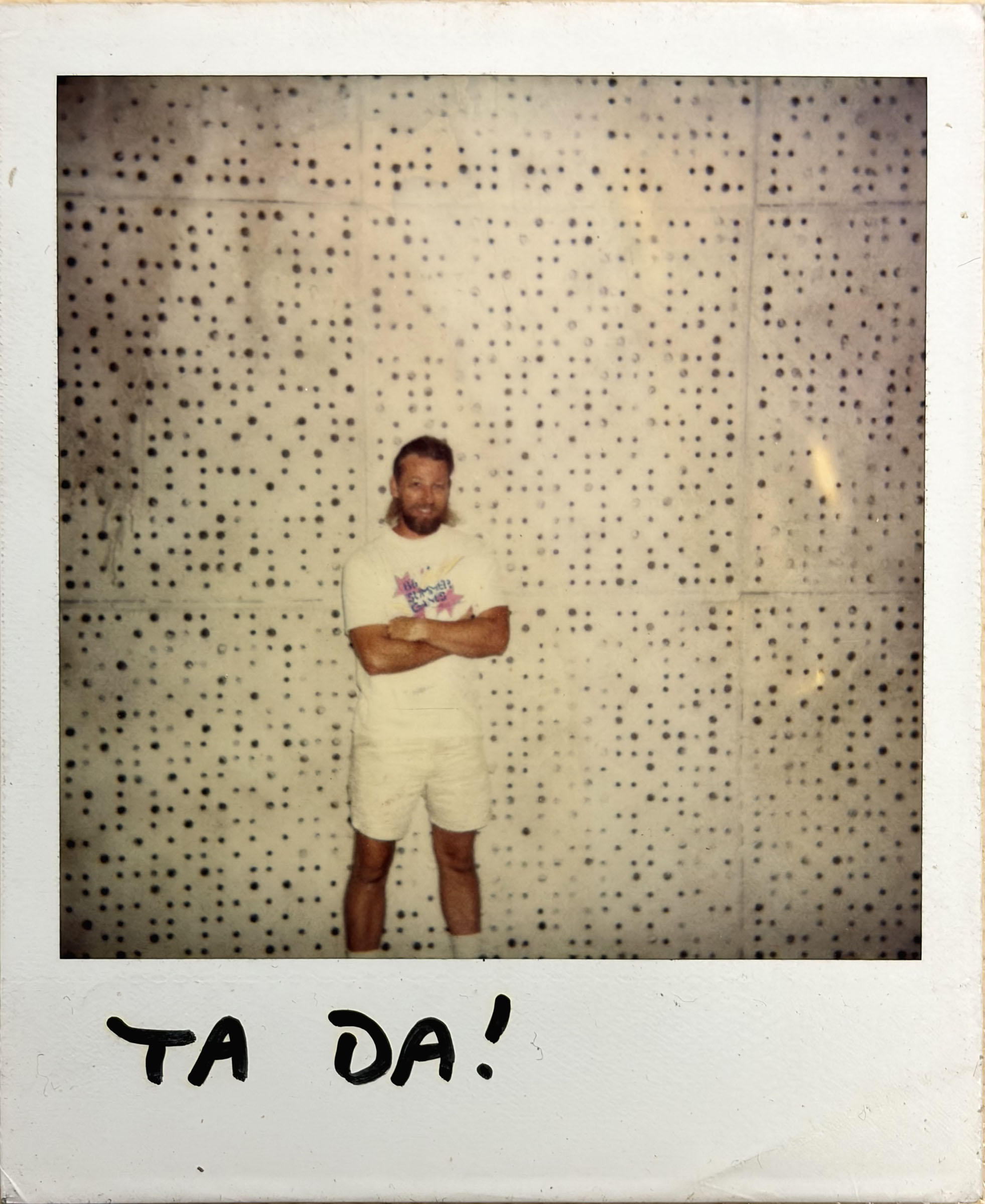
“It was just, you know, foam and holes,” he reminisced.”It wasn’t rocket science … I didn’t go to a lot of trouble, I know that. I think I had to just paint it to match the ceiling. I just sprayed it and aged it a little bit. I myself thought it was a weird shot, I was like, ‘Really? This is cool!’ That was a good shot.”
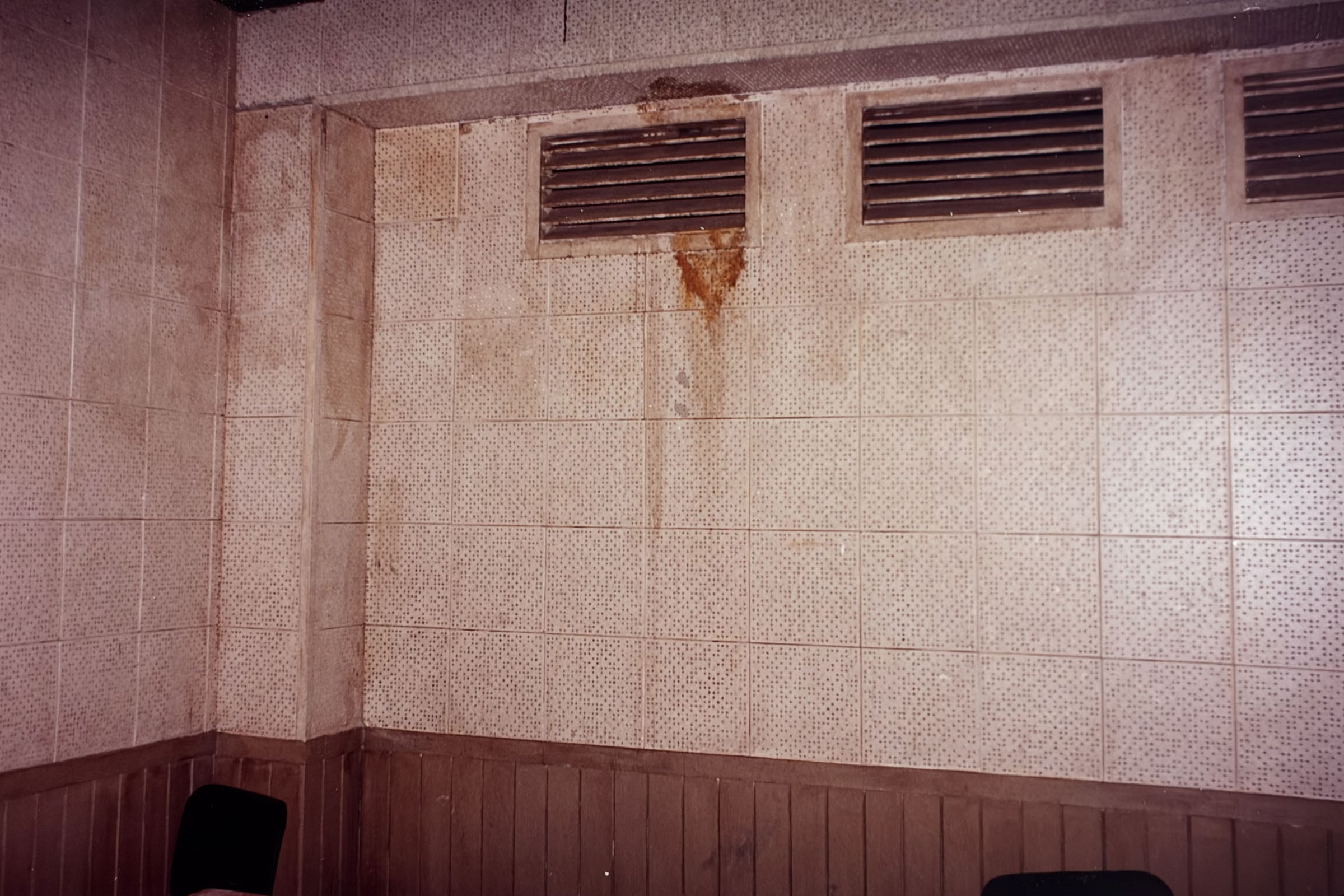
I think Dave undersells his work here. The aging on the walls and the water damage around the vent are so convincing that you’d never guess this wasn’t part of a real office that’s been neglected. Details like this are exactly why I admire the Twin Peaks art department so much. The space feels true to life.
ROCK WALL IN OWL CAVE
When Agent Cooper and his team inadvertently lead Windom Earle to Owl Cave in episode 2.018, we see mysterious etchings on the wall and a stone rod jutting out from a diamond shape. Surprisingly, this false wall was shot on location rather than the studio set, Dave recalls.

“Now that was good. We went up to the cave out in LA, Bronson Caves, where they shot Batman. A lot of people shoot there,” he said.
“The coordinator [Keith Cox] got a big piece of foam, and we stuck it up in the cave and I matched the color to the cave. Then I took a router and I routed that design on there.”
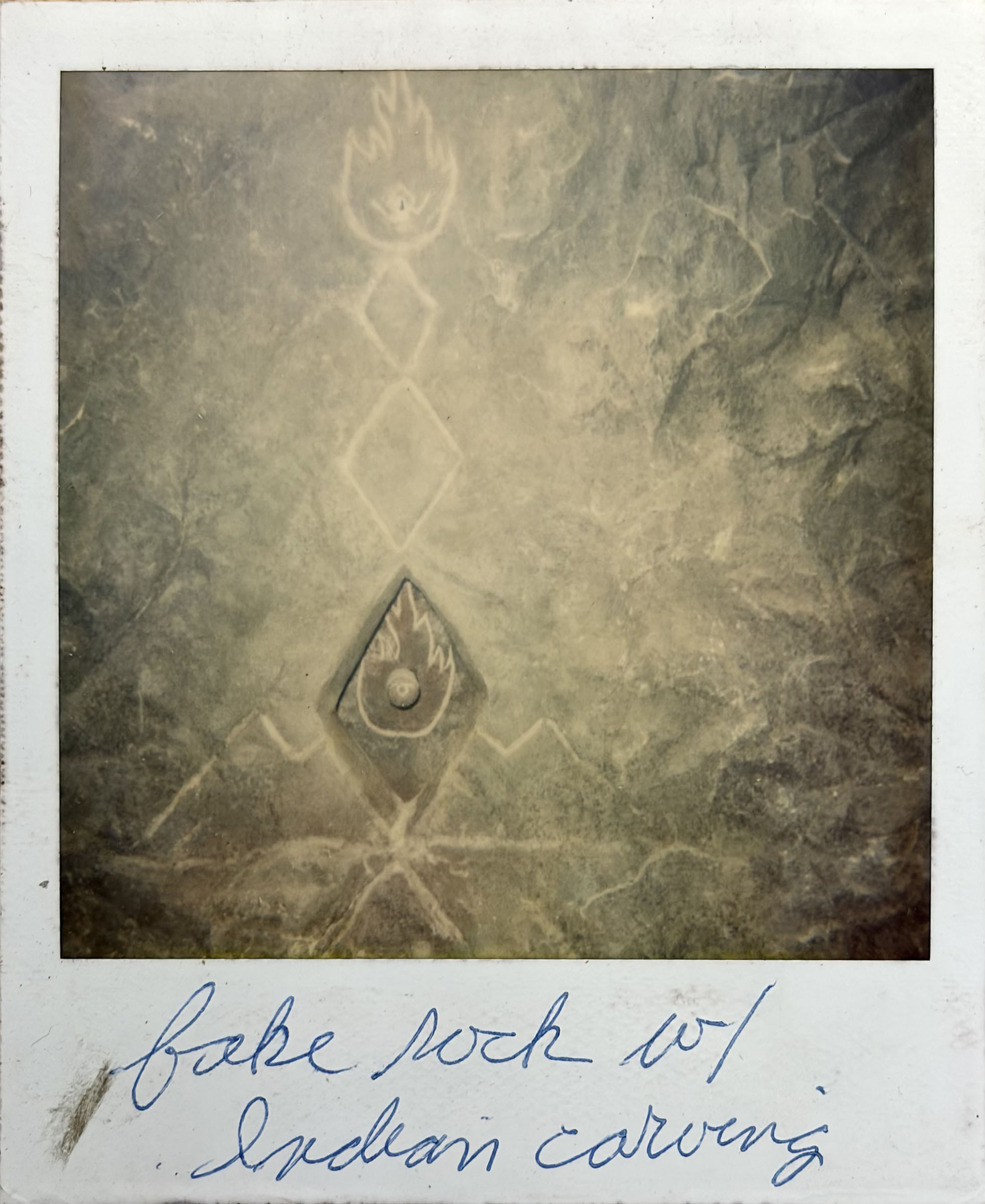
Dave’s official position as a painter took a backseat to his curiosity and creativity when it came to achieving what was needed for the scene.
“The center had to come out. Now, that’s an effect. Special effects should’ve done that. But somehow, non-union, we ended up doing it. I didn’t care.”
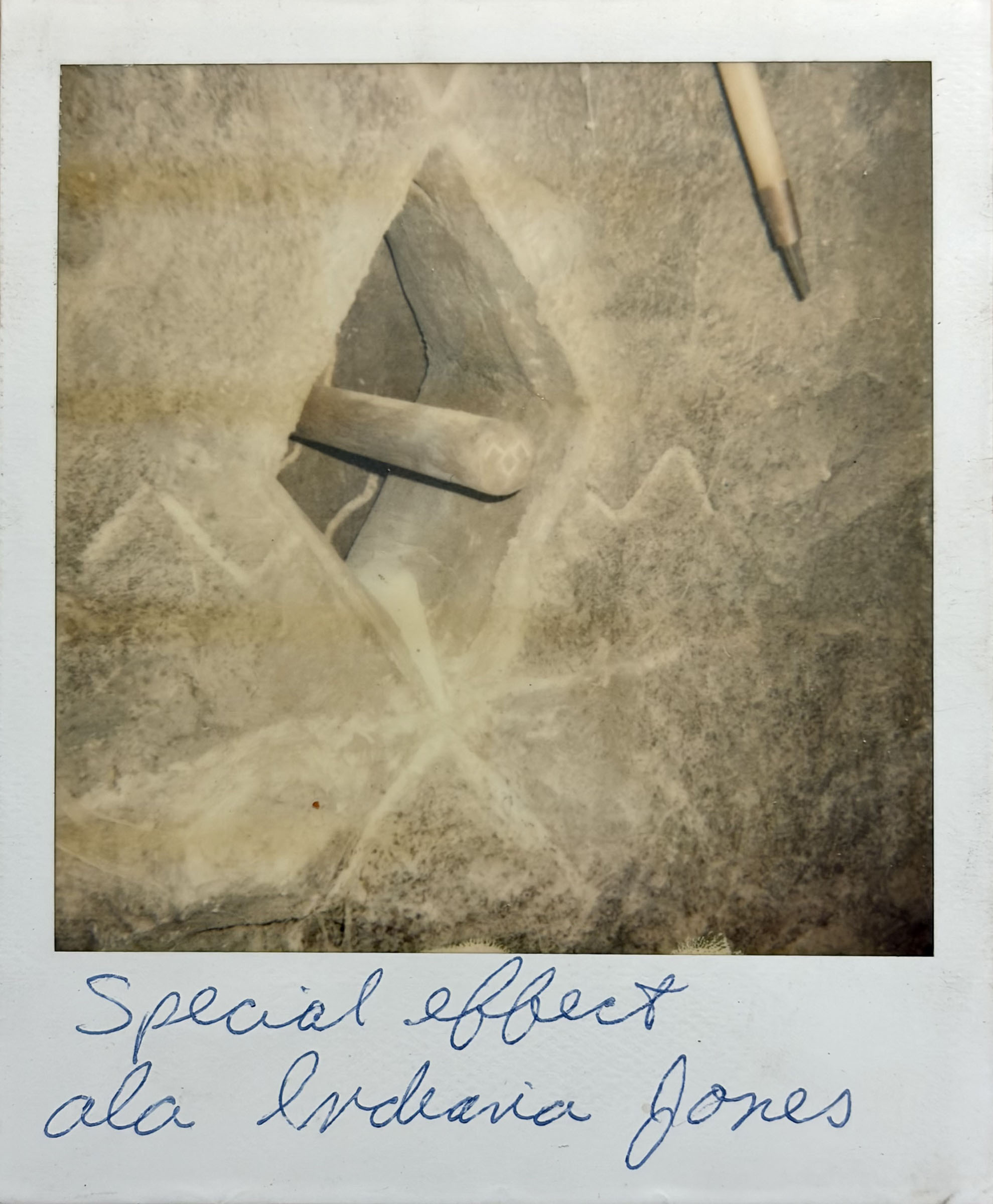
“We only had that one piece of foam and most of the cave was real, and then we made the center to be able to push out for whatever effect was going on there.”
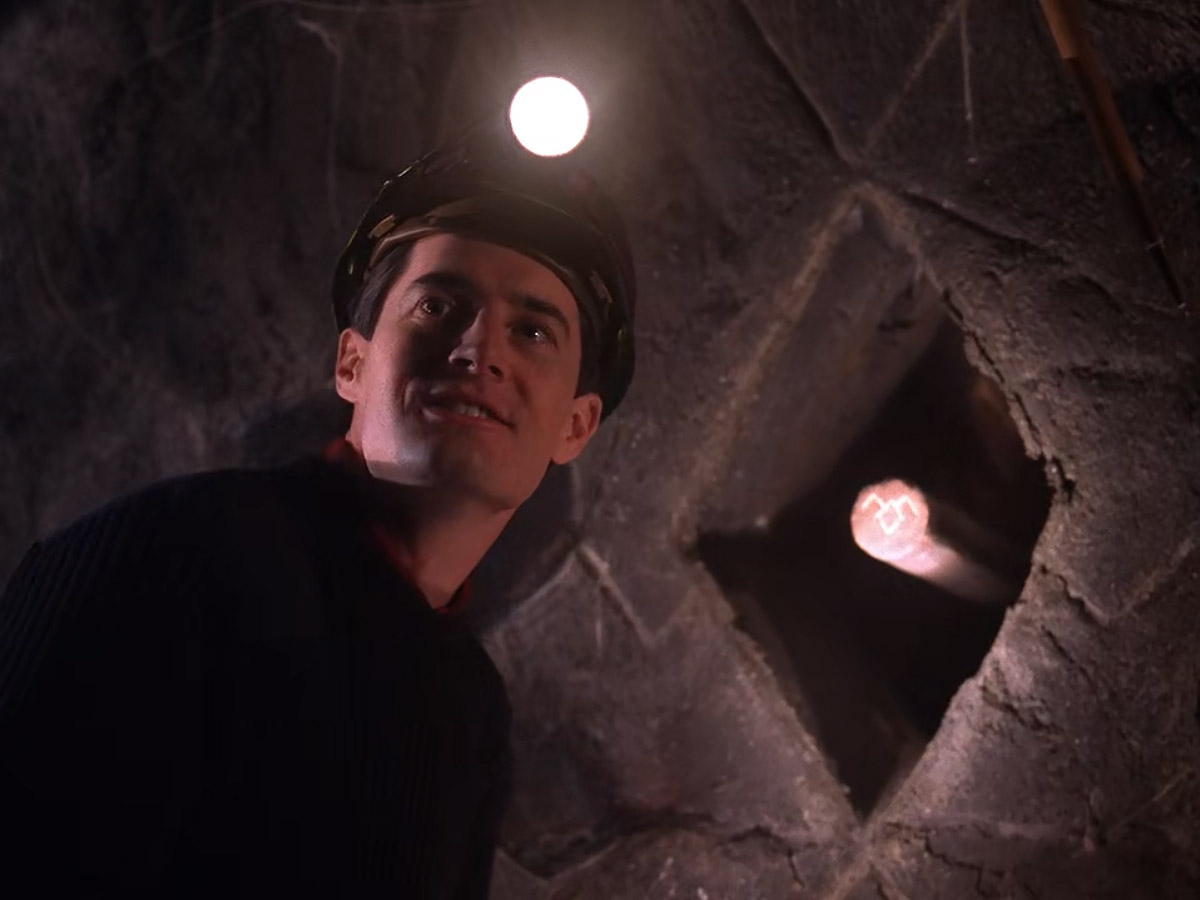
How the Owl Cave petroglyphs and the Great Conjunction factored into the story felt a bit muddy to Dave, but he didn’t mind.
“That was that whole thing about outer space and aliens and shit. I could hardly keep up. I don’t know what was going on,” he said.
“It got complicated but the sets got fun.”
WINDOM EARLE’S GIANT CHESS PIECE

In episode 2.019, Windom Earle lures Rusty Tomasky back to his cabin with the promise of beer. Unfortunately for Rusty, Windom’s real plan is to shoot him with an arrow and leave his body in a giant papier-mâché chess piece with an ominous message for Agent Cooper.
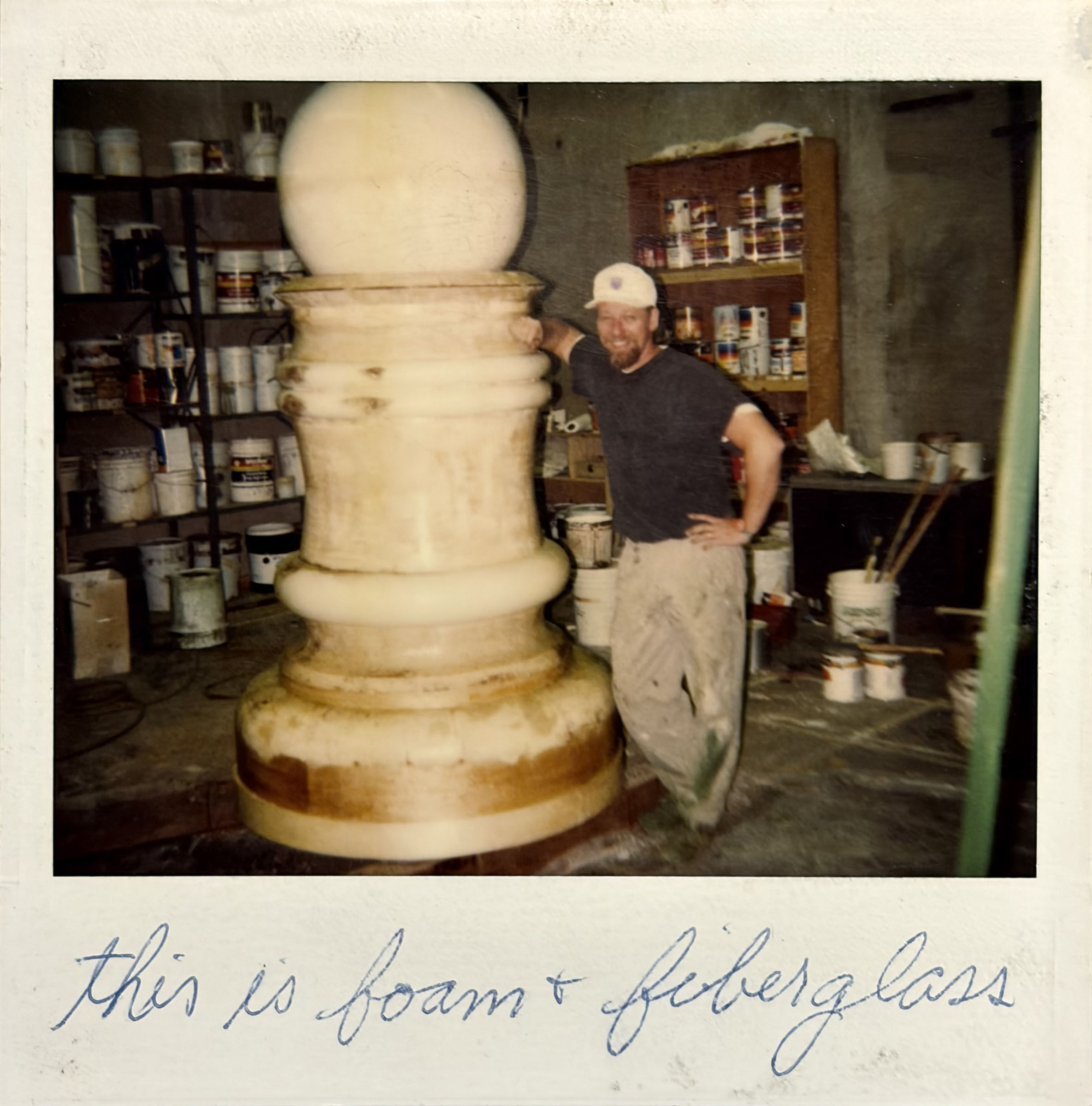
Again, this wouldn’t typically fall under a painter’s jurisdiction, but that didn’t stop Dave from assisting.

“I wasn’t doing props then, I was back in the shop,” explained Dave. “Me and the other guy, Morgan Flaherty, made that out of fiberglass and some wood and whatever else was there, then I painted it.”
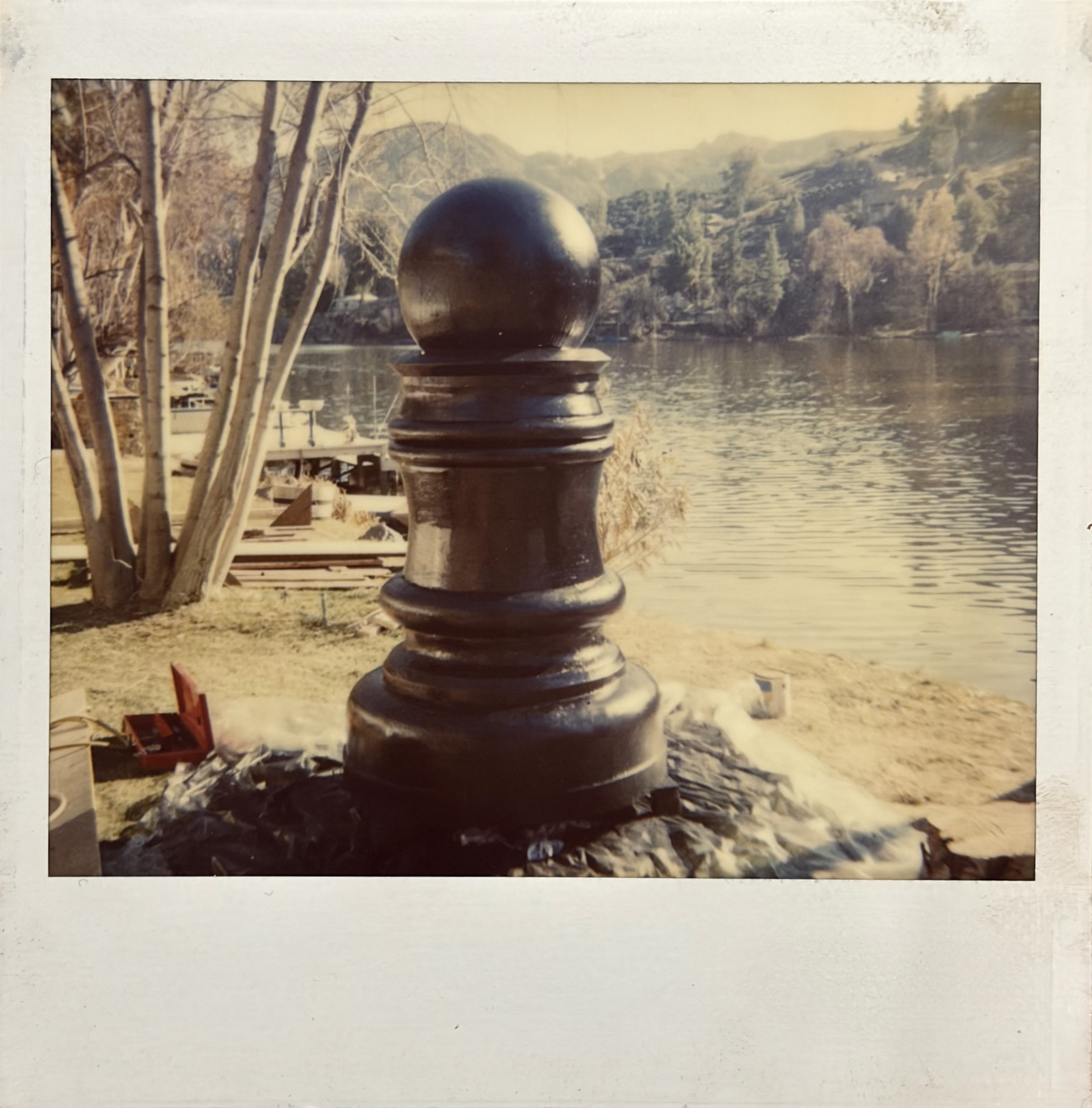
It’s incredible to see this piece in the daylight as the crew set up on Malibu Lake where the Easter Park scenes were filmed. Sadly, the gazebo where the giant pawn was found burned down in the Woolsey Fire of 2018.
BLACK LODGE FLOOR
Though much of a set painter’s work might be taken for granted, there is one piece of Dave Robinson’s work that even the most casual Twin Peaks fan is guaranteed to recognize – the iconic chevron floor in the Black Lodge.

Prior to second season’s finale, the only footage of the Black Lodge was filmed for the alternate closed ending of the Twin Peaks pilot before the series was officially picked up. This was repurposed as Cooper’s dream sequence in episode 1.002, but aside from flashbacks to this dream, we don’t return to the Lodge until episode 2.022.
By the time this episode was filmed, years had passed and the original floor was long gone. Dave was tasked with recreating it.
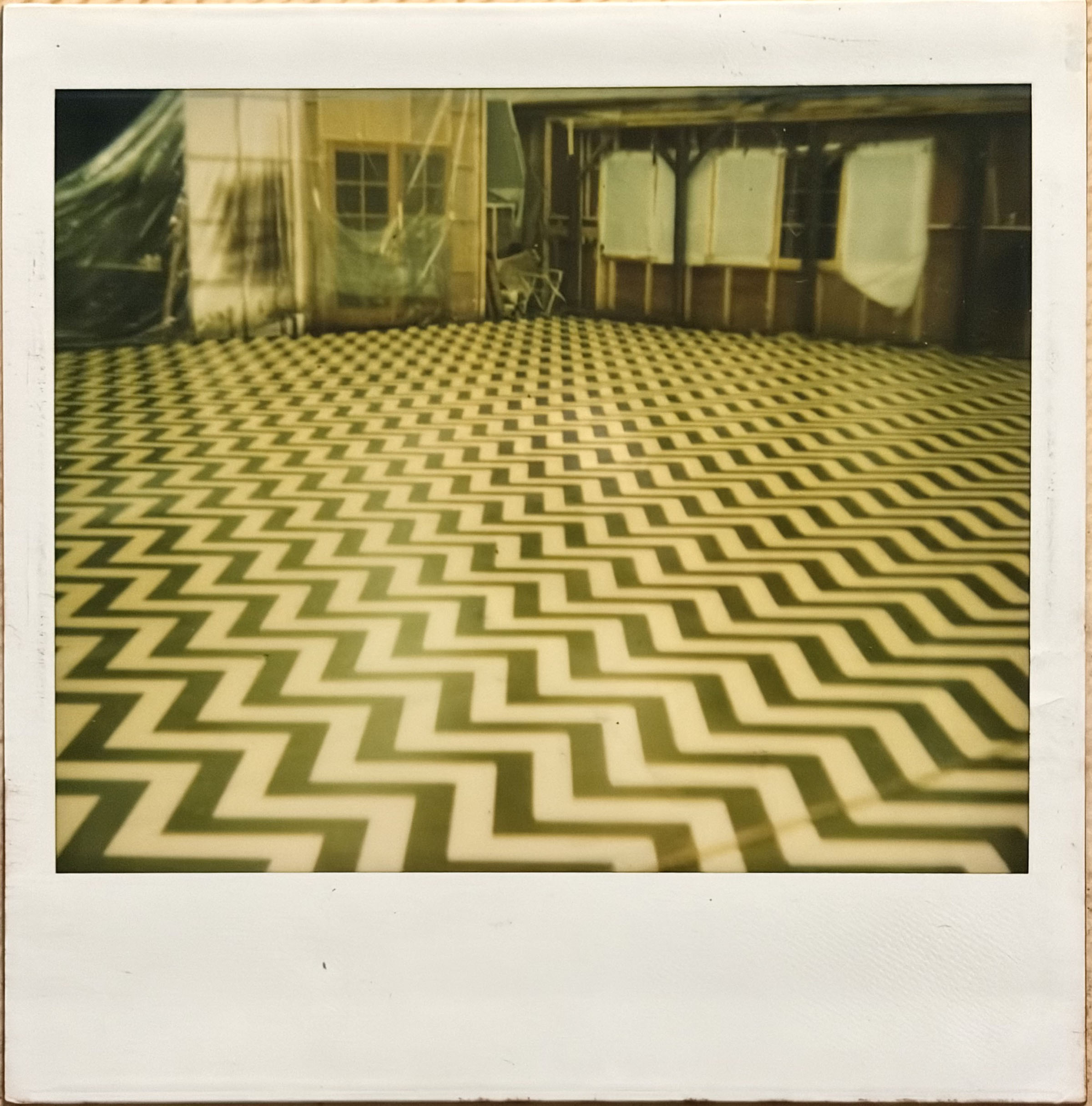
“Well, at the time I didn’t think it was too big of a deal,” he said. “We didn’t have detailed meetings about that. They would sometimes tell the construction coordinator [Keith Cox], who was my friend … they would tell him, ‘Tell Dave this is what we’re doing.’”
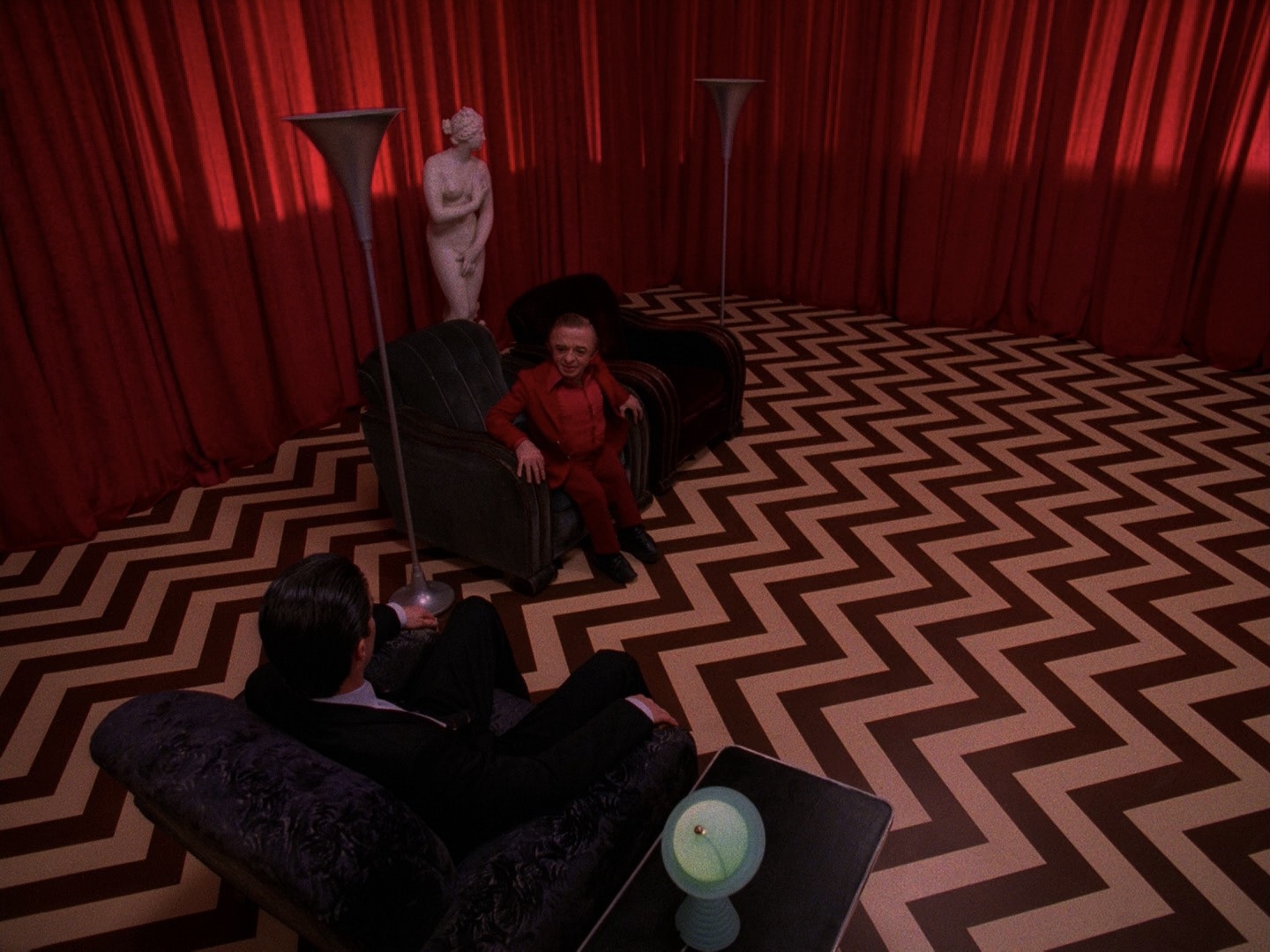
Though the zig-zagging floor has become synonymous with Twin Peaks and the imagery is so ubiquitous, many fans – and even some officially licensed merchandise – have misidentified the colors as black and white. In reality, it has always been brown and cream.
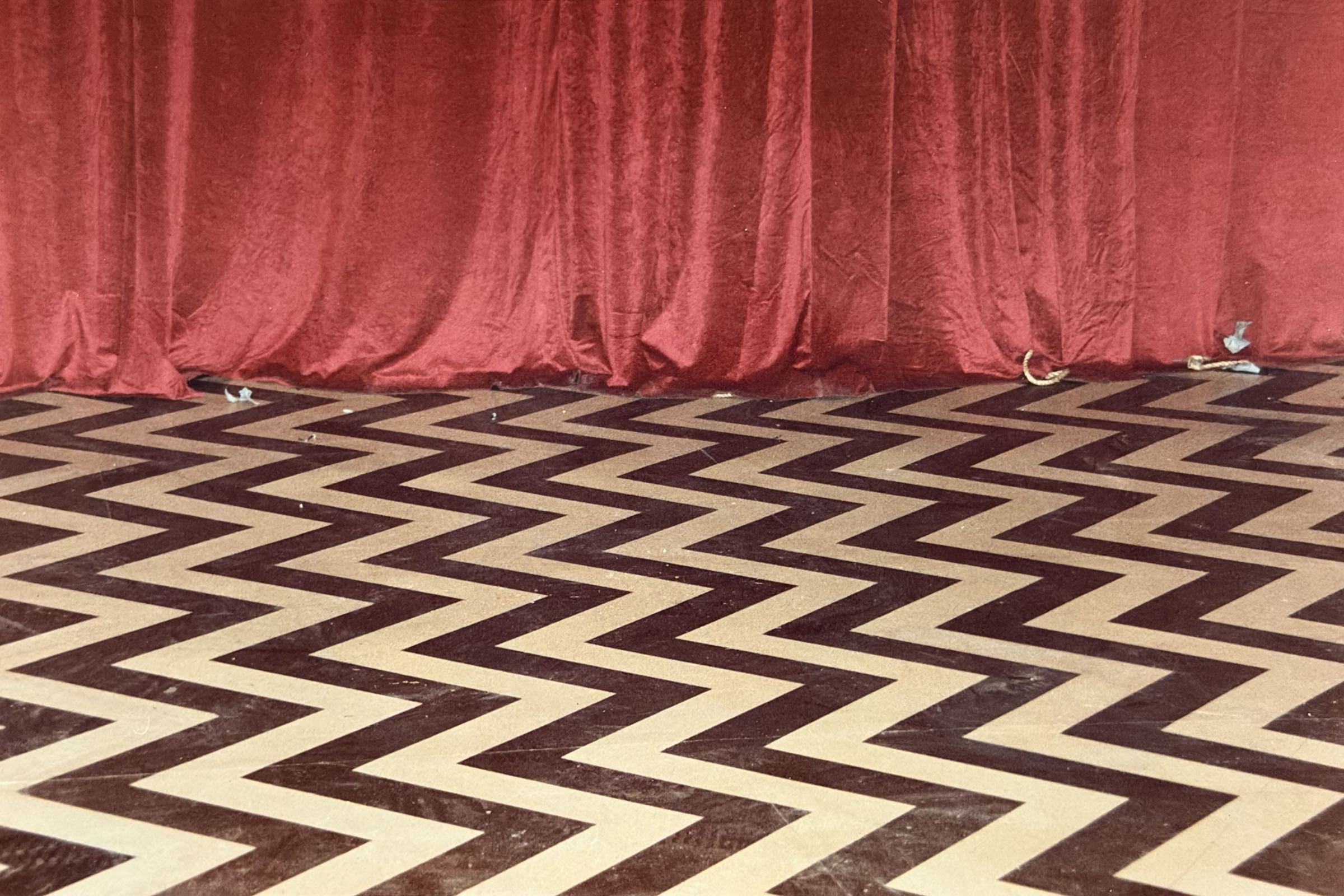
“So I was told to paint a two tone floor. I got floor paint,” Dave said. “That company only made those colors.”
“‘Can you get brown and cream?’ And I go to the floor company, ‘We’ve got five colors, two of them are brown and cream.’ Okay!”
It took Dave and two helpers a week to recreate the Red Room floor out of Masonite, Bondo, and vinyl acrylic paint.
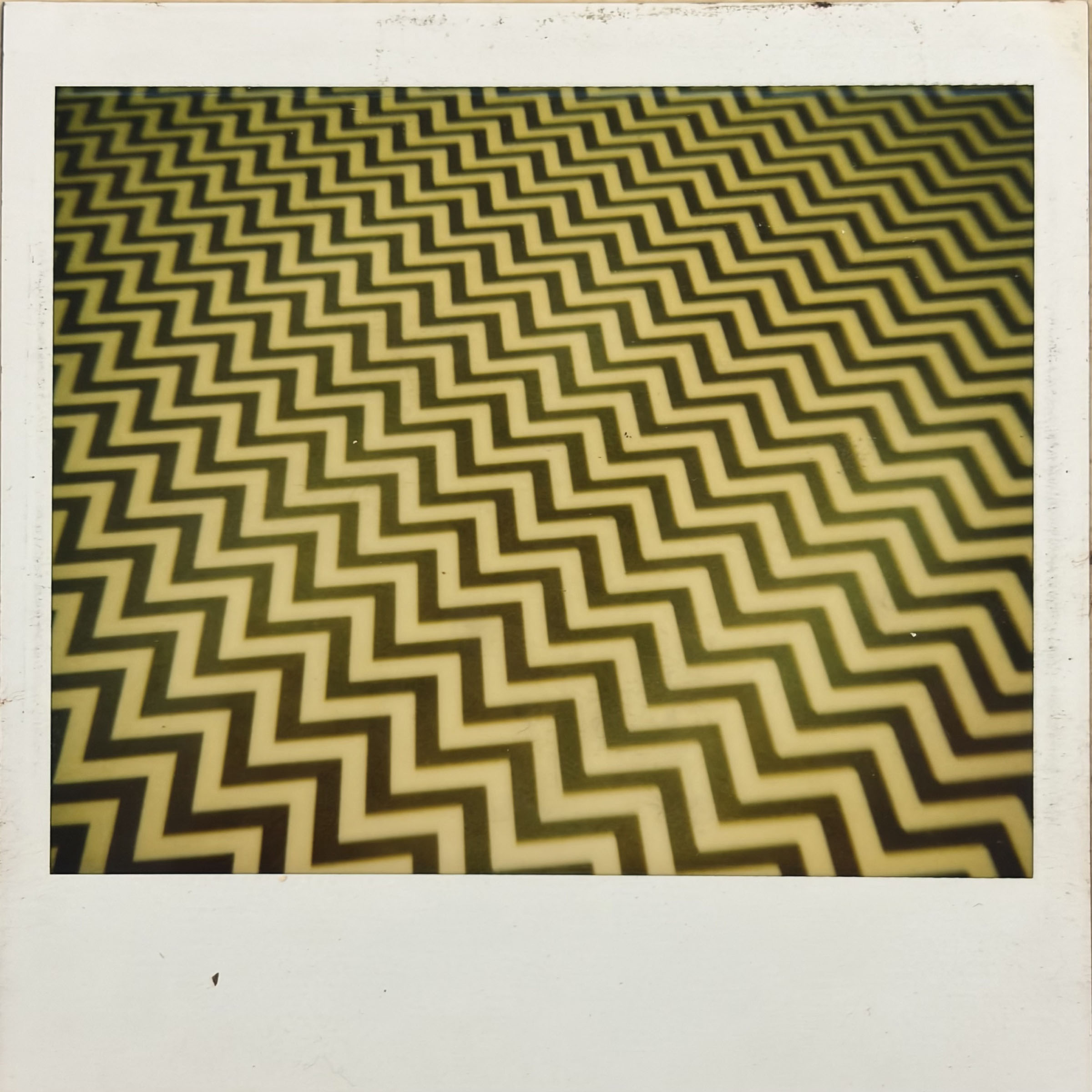
“Let’s just say it was tedious to lay it out. It wasn’t tedious to paint it. Once it was laid out, then I used a sprayer when I painted it. I got done pretty quick.”
Thankfully for Dave, this flooring did not have to be repainted for Twin Peaks: Fire Walk With Me.
This is just a fraction of the work that Dave Robinson did on the Twin Peaks series. One of our primary objectives here at Twin Peaks Blog is to shine a light on artists like Dave his fellow prop master Jeff Moore who had a tremendous impact on this body of work, even if they mostly flew under the radar.
If you’ve enjoyed this look into the process of one of Twin Peaks’ unsung heroes, stay tuned for a follow up article covering Dave’s work on Fire Walk With Me, including even more never-before-seen photos.
Author
Discover more from TWIN PEAKS BLOG
Subscribe to get the latest posts sent to your email.