
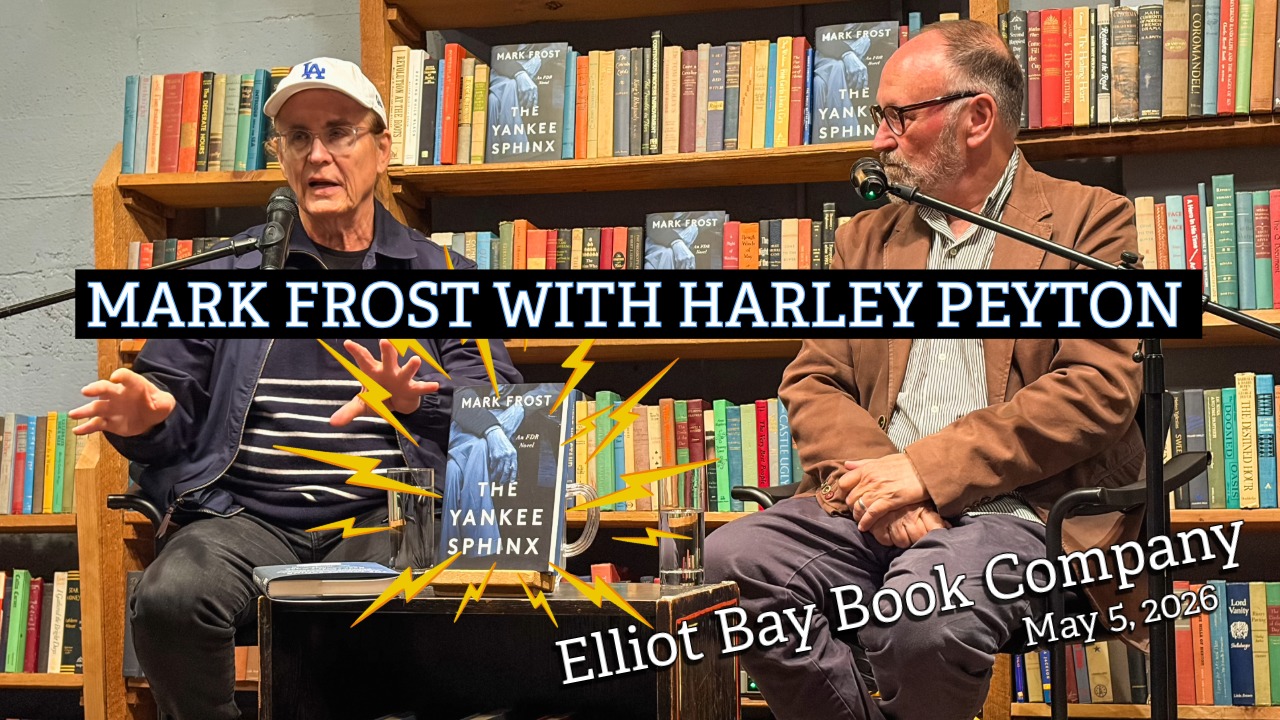
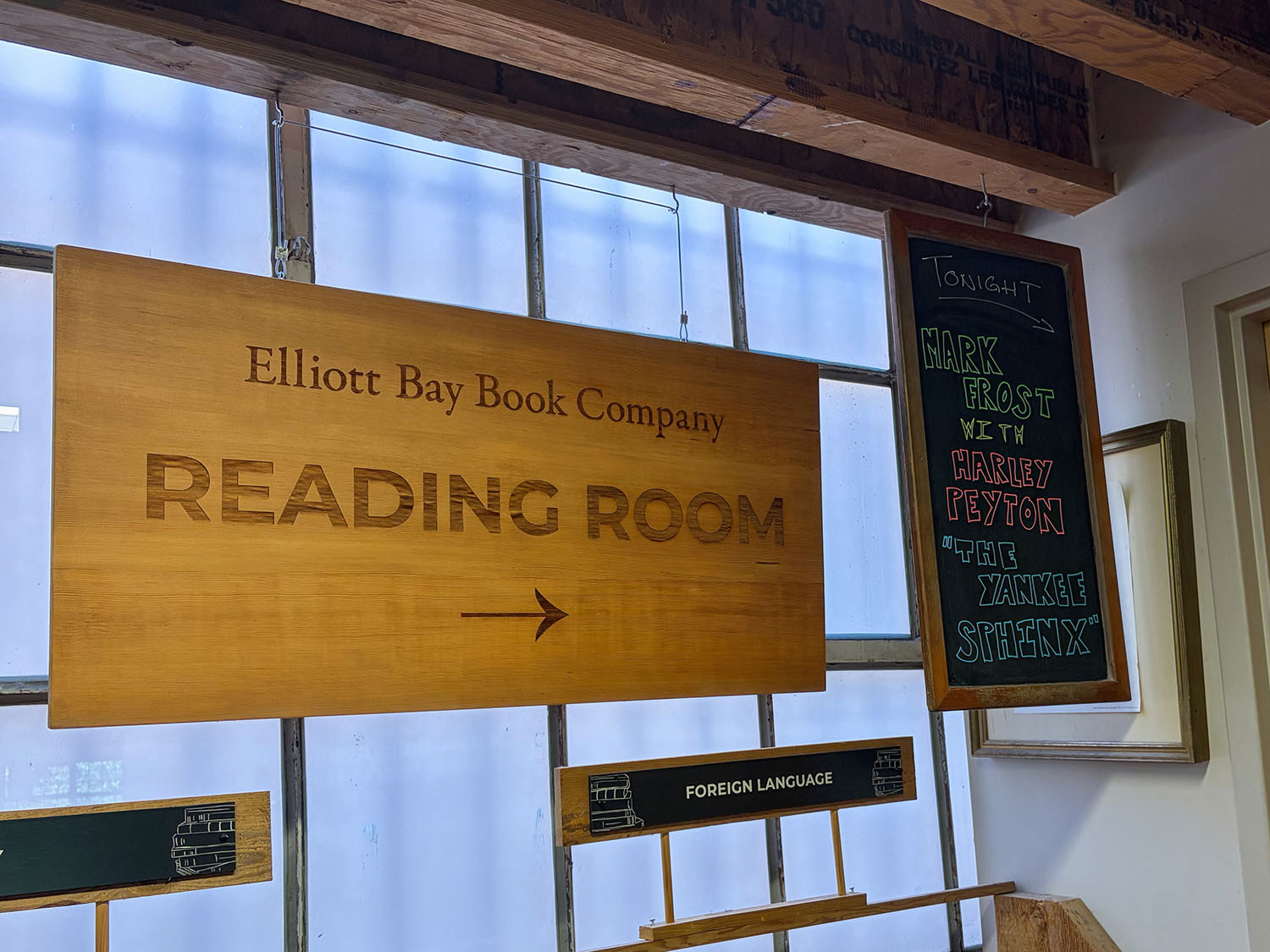
On Tuesday May 5, 2026, Twin Peaks co-creator Mark Frost celebrated the publication of his latest book The Yankee Sphinx: An FDR Novel with an insightful discussion moderated by fellow Peaks writer and longtime friend Harley Peyton. The two appeared at Elliott Bay Book Company in Seattle, WA.
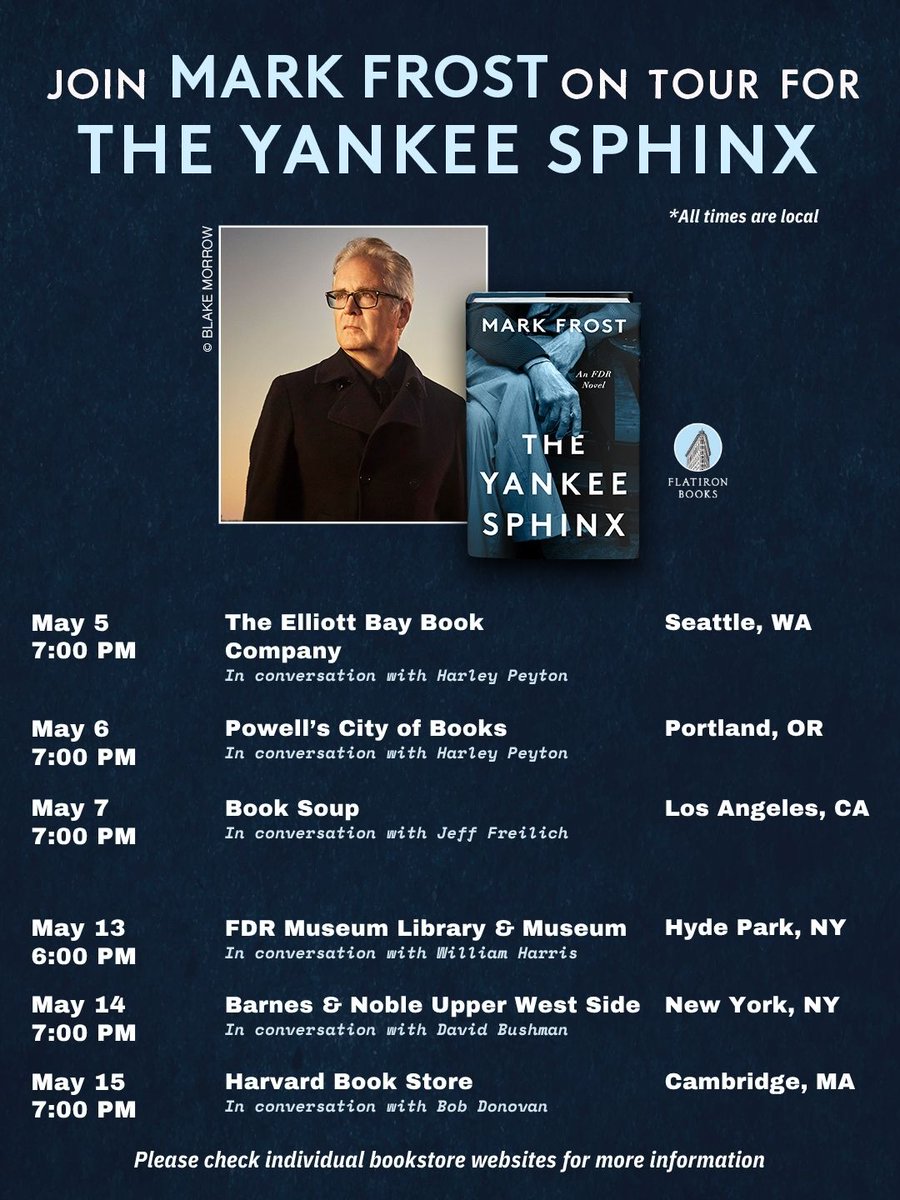
This was the first of six promotional engagements Mark had scheduled in the month of May.
A summary of the event follows, but you can watch the entire conversation on the Twin Peaks Blog YouTube channel.
ABOUT ‘THE YANKEE SPHINX: AN FDR NOVEL’
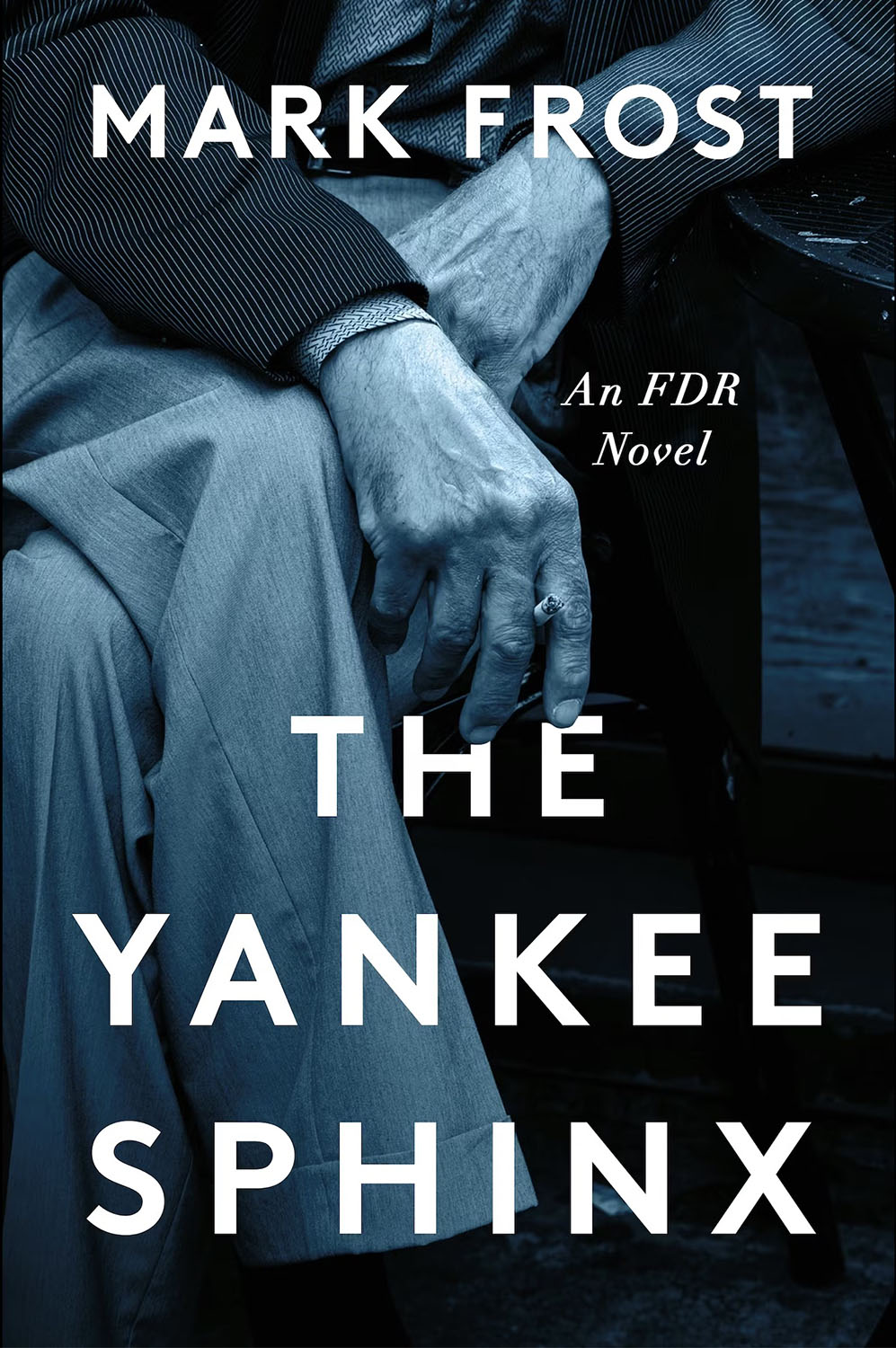
Published by Flatiron Books, The Yankee Sphinx: An FDR Novel is a work of historical fiction that depicts the later years of Franklin Delano Roosevelt’s presidency from the perspective of his secretary William Hassett. Twin Peaks fans know of Mark’s affinity for US history as he blended historical figures into Twin Peaks lore in 2016’s The Secret History of Twin Peaks, but his connection to this particular story is personal as Hassett was his great granduncle.
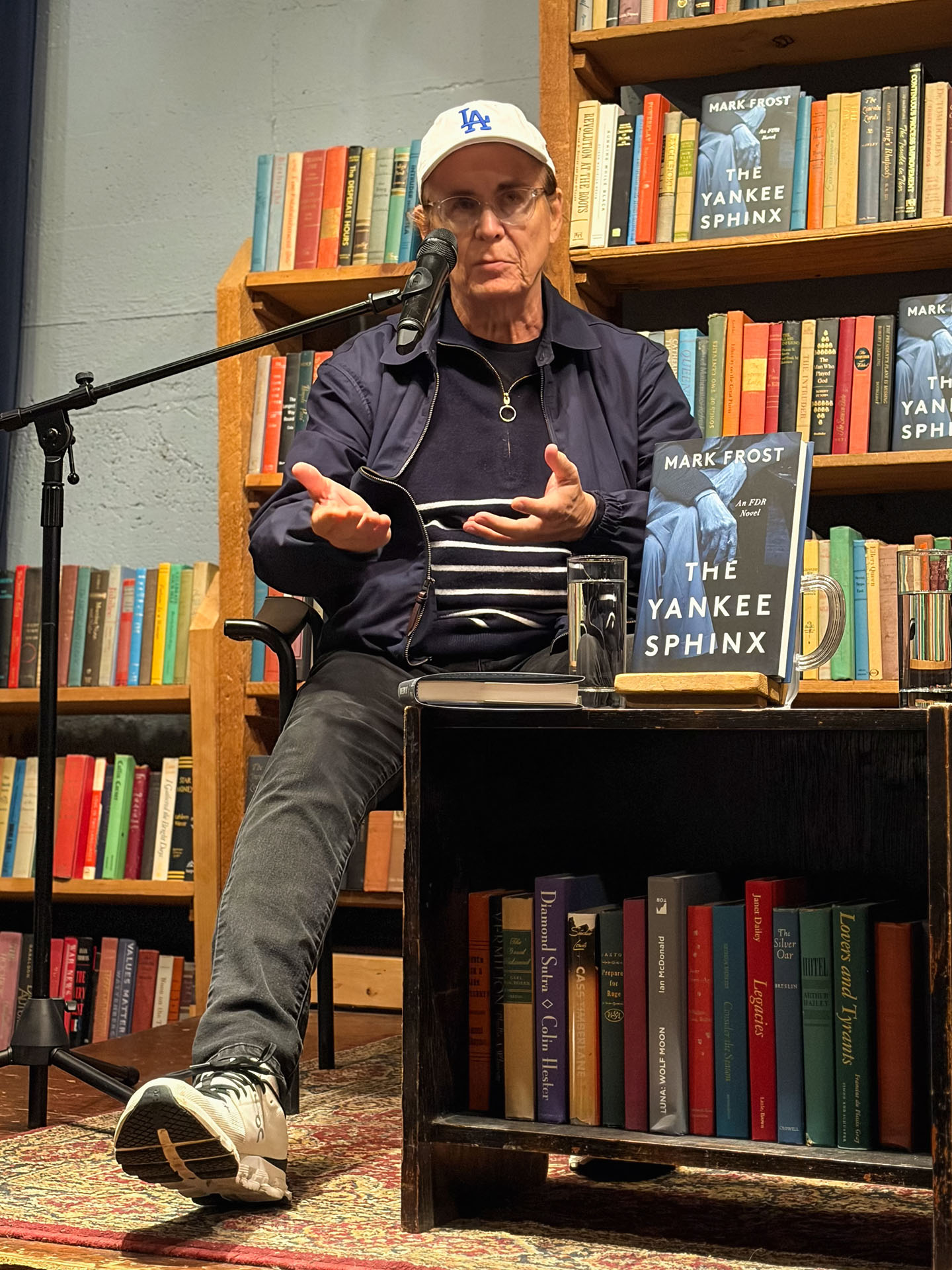
“I knew him as a kid. He lived until 1965, and he was enormously close to my dad, who he was very fond of.”
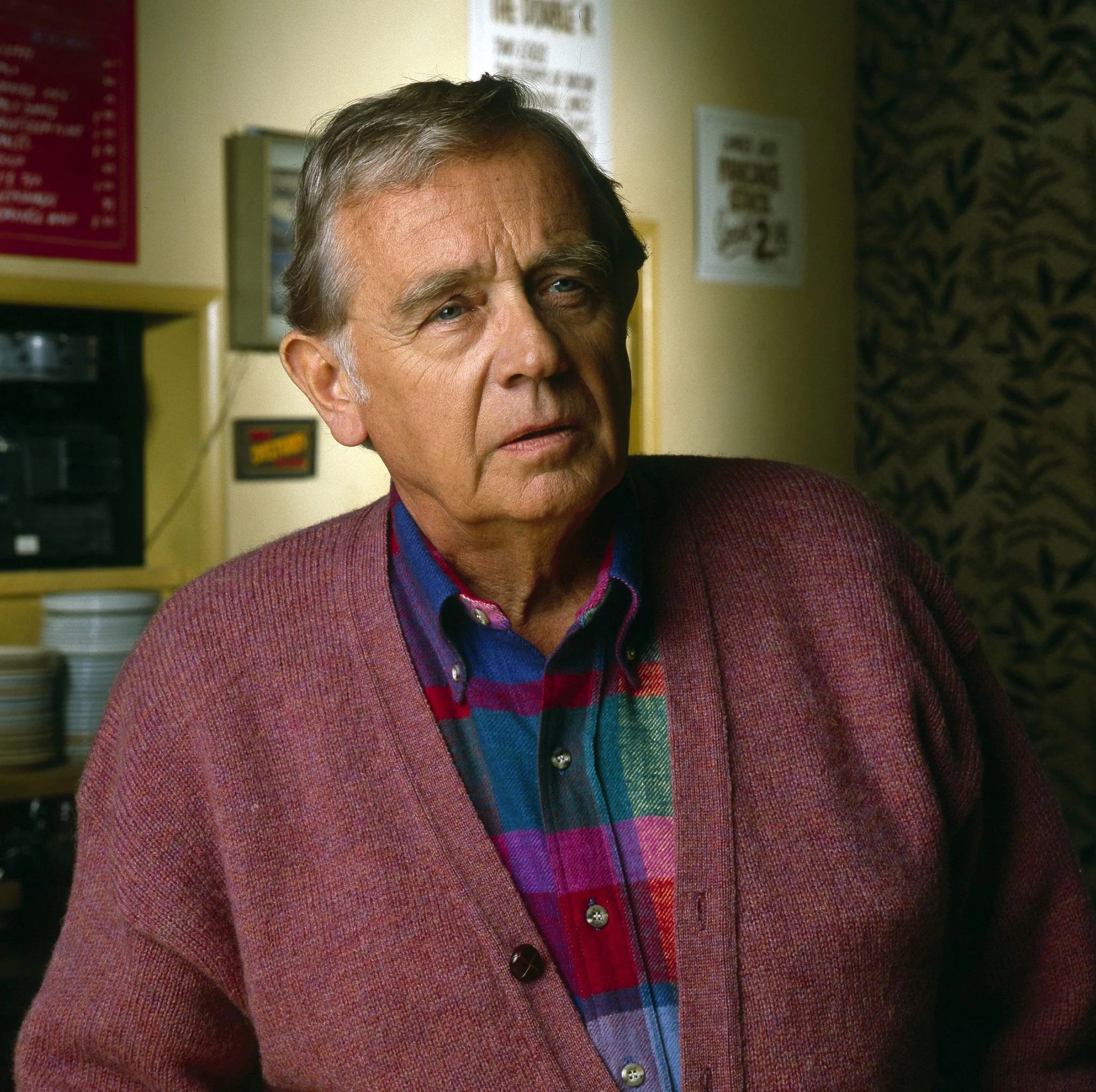
Mark’s father, of course, was the great Warren Frost, who appeared in Twin Peaks as Doc Hayward. “My dad’s in the book.”
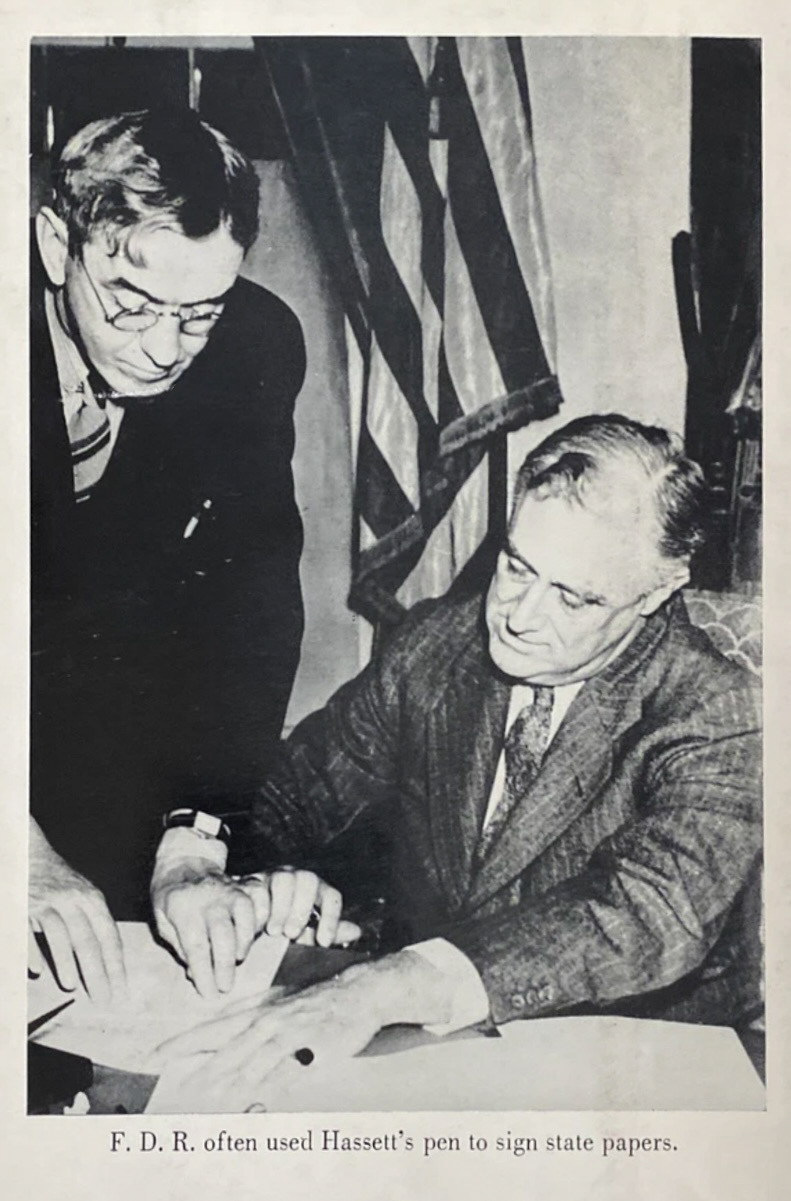
Hassett met Roosevelt as a reporter for the Washington Post while the future president was the undersecretary of the Navy during World War I. Roosevelt trusted Hassett’s journalistic integrity, and a friendship developed.
When Roosevelt was elected president, he hired Hassett, and as Mark said, “He was there for every single day of that administration until the day he died in 1945, and he was with him when he did.” On Roosevelt’s recommendation, Hassett continued to work for his successor Harry S. Truman for eight years after that.
OFF THE RECORD WITH FDR: 1942-1945
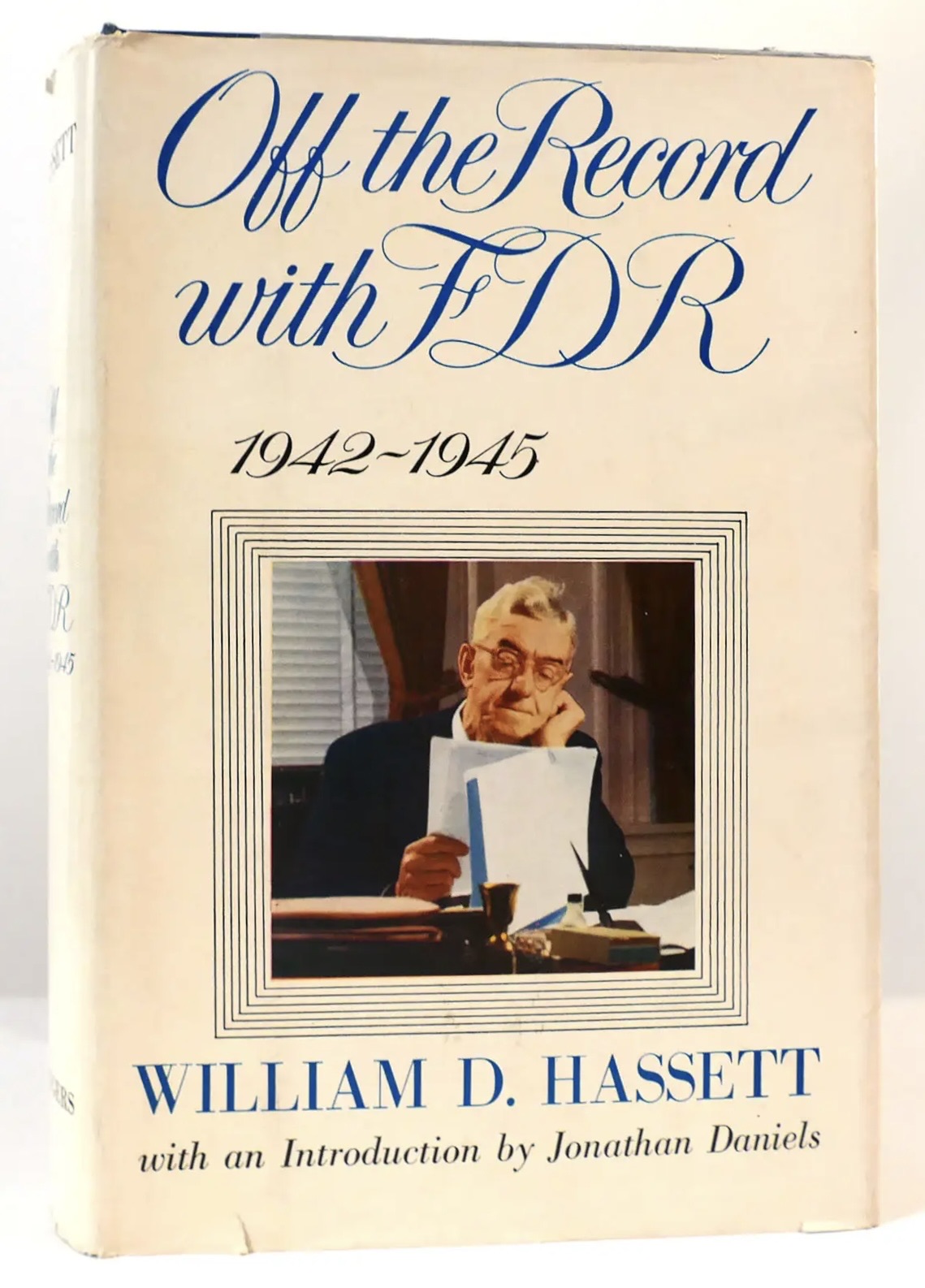
When World War II began, Hassett started keeping a diary out of a sense of obligation to history. That diary was published in 1958 as a book titled Off the Record with FDR: 1942-1945.
“It became a kind of standard text for historians,” Mark said. “It was, I believe, the greatest window into who Franklin Roosevelt actually was as a human being underneath the grand facade of the great man that we mostly remember now.”
Mark received a copy of this book from his great granduncle for his 11th birthday, and it would eventually serve as the basis for The Yankee Sphinx.
ELECTION GRIEF AS INSPIRATION
Mark described the moment he decided to take on this project immediately following the contentious US presidential election in 2016.
“I was in New York on Election Day in 2016 on the book tour for The Secret History of Twin Peaks. It was the end of the tour, and my hotel was on 56th street, right across the street from the Hilton where a certain real estate guy was having his victory party that night,” he said.
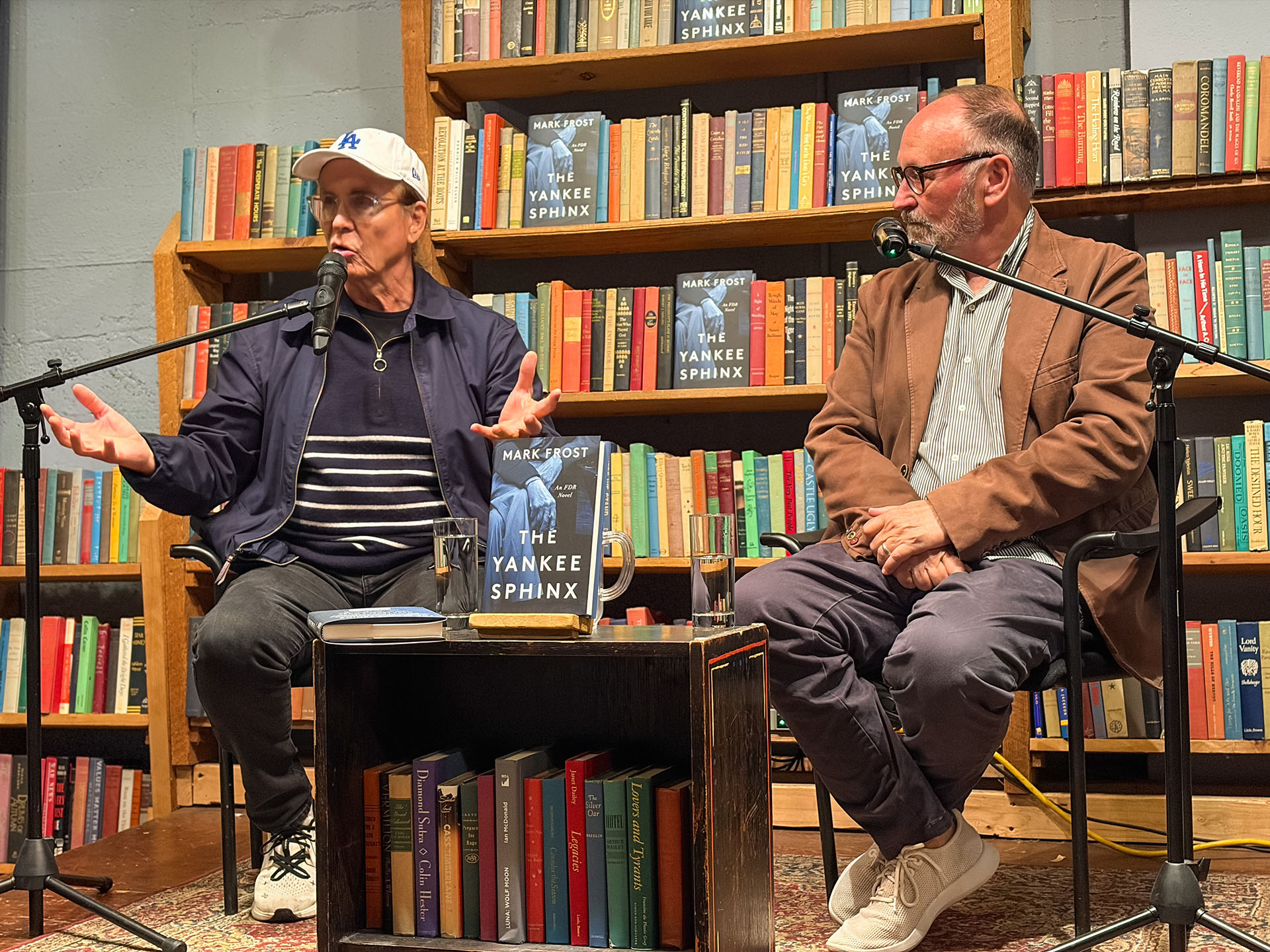
“I could hear the cheers from across the street before I saw the results on television. And I woke up the next day utterly devastated, as many of us were, because I had met [Trump] twice before. So I called the FDR Library out of the blue, and I asked to speak to the librarian. Fortunately, she knew who I was, and they certainly knew who my uncle was. She pointed out to me, ‘Well, he was the original director of this library, and one of the original trustees. We’d love to have you come up and take a look around.’ So I did the next day.”
“I left that day and said ‘that’s the next book I’m going to write.’”
CHALLENGES IN HISTORICAL FICTION
As moderator, Harley Peyton asked great questions about Mark’s writing process.
“When you’re writing about real people, do you ever run up against, ‘Okay, what am I fictionalizing, what am I changing, what do I owe to the truth that I know, or the truth that I imagine?” he asked.
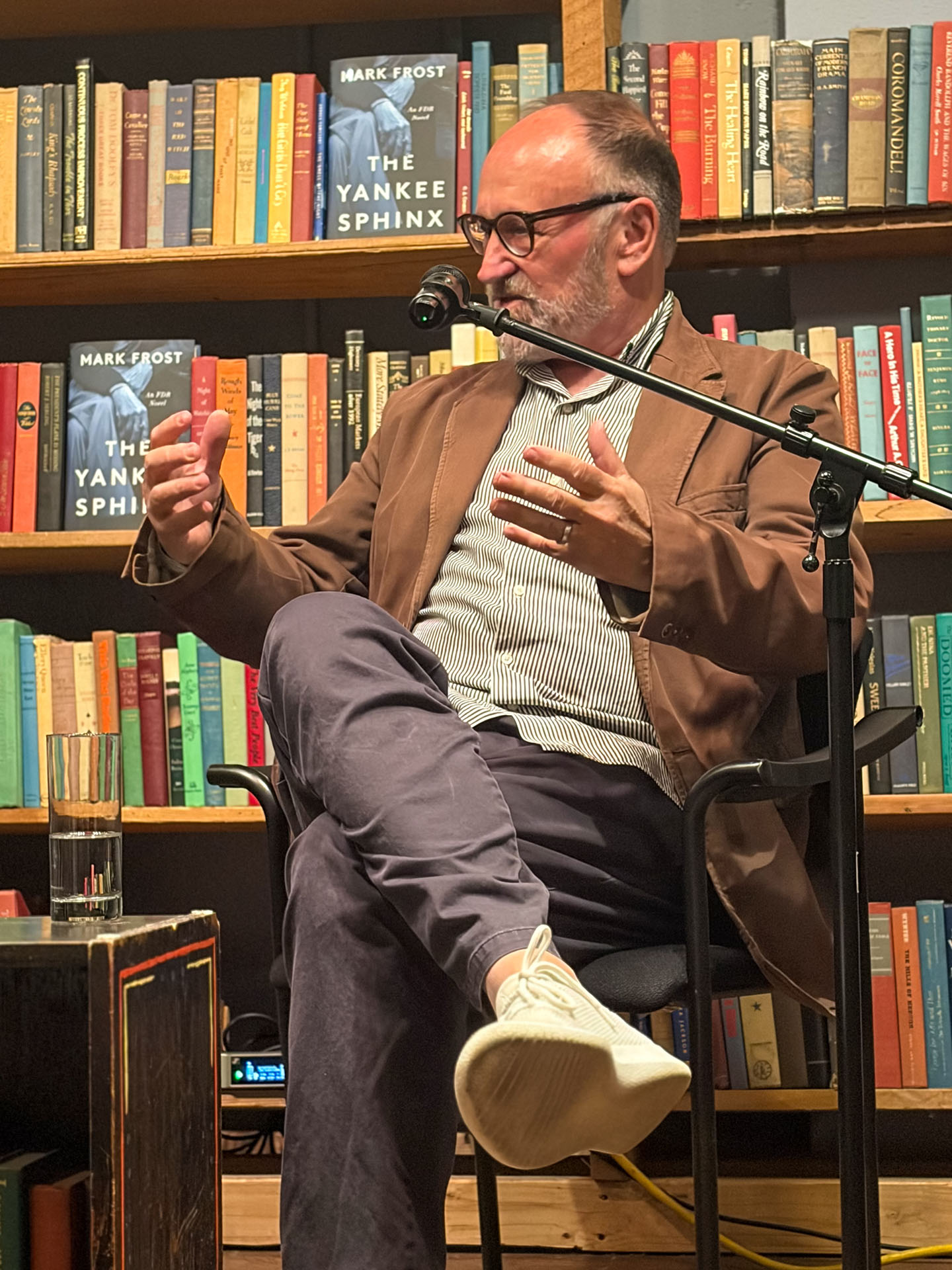
“I approached this trying to be much more careful about where I was making leaps. The historian’s art is ethically very strict, and they have professional standards. And I’ll be the first to raise their hand and say I’m no historian.”
Despite his in depth research, Mark referred to himself as an amateur historian, as he did not study in a formal setting.
“I don’t have those instincts. My instincts are as a storyteller and a dramatist. So there is dialogue here, but a lot of it is sourced. A lot of it is in the diary…I had to read biographies on every other person in this story…It’s pretty well sourced, and it’s not as dry as three day old steak. That’s the storyteller’s prerogative.”
Harley expressed an appreciation for both the way that the story is told, and the reminder that our country’s leaders can, and should, do better.
“The thing about the book is that it’s such a nice vacation from the impossibility of our current circumstance. Because everything now, to me, just seems fucking nuts. And it seems like, there, there are still codes and honor.”
TIES TO TWIN PEAKS
Prior to deciding that the novel format best served this story, Mark had originally intended to adapt it as a play. Harley recalled readings in which several Twin Peaks alumni fleshed out the cast of characters. Dana Ashbrook played Dr. Howard Bruenn, Roosevelt’s cardiologist, while David Patrick Kelly played advisor Harry Hopkins.
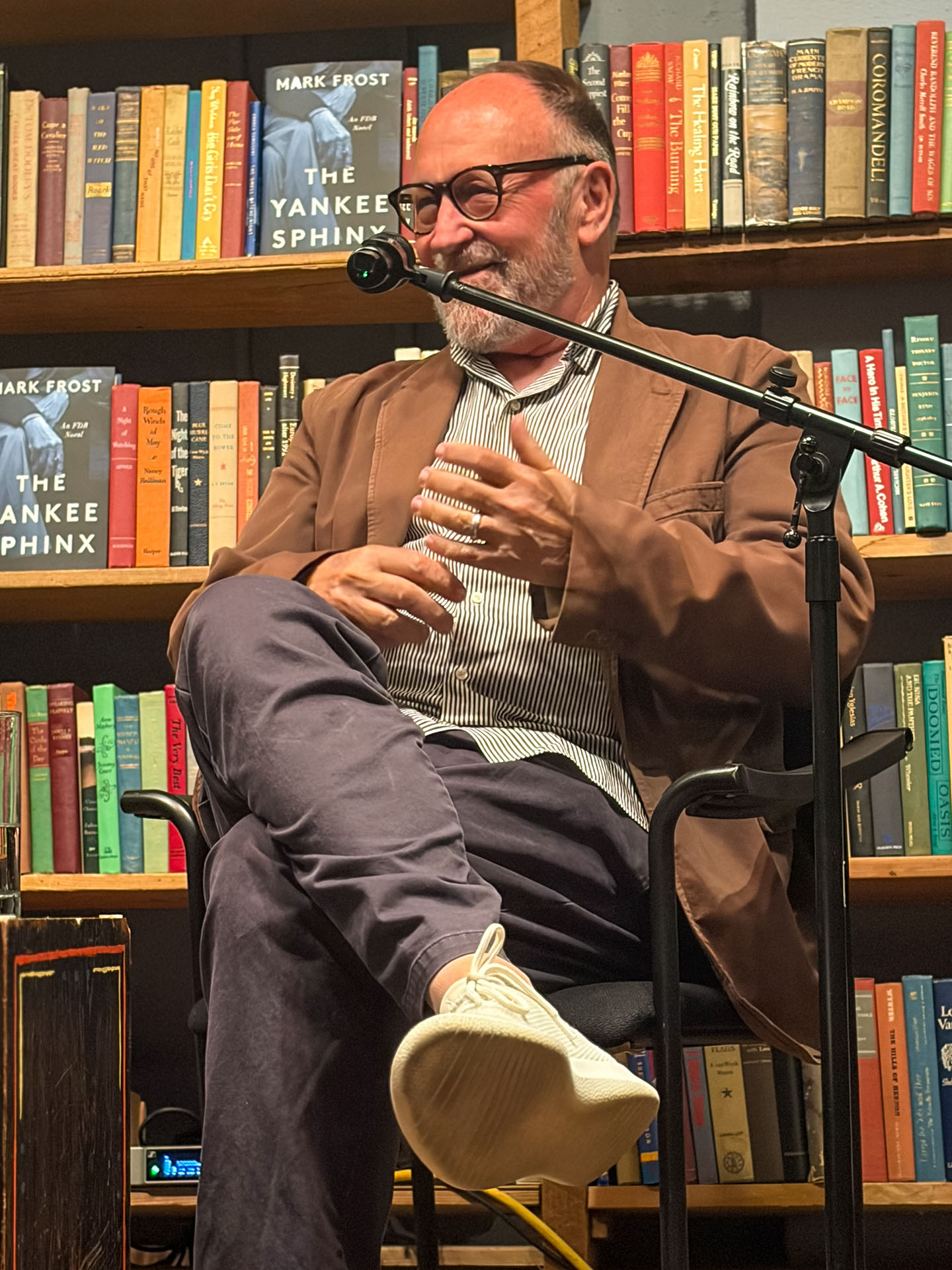
“And then Kyle somebody…MacLachlan?” Harley joked. “Kyle somebody, what was his last name?” Mark riffed back. “Oh that’s it! It’s a Scottish name. He played Franklin for me in one of the readings, and he was wonderful.”
To the delight of the Peaks fans in the room, Mark warmly proclaimed “Twin Peaks is a family. Just because we don’t have dinner every week doesn’t mean we don’t think about each other all the time.”
AUDIENCE QUESTIONS AND BOOK SIGNING
As the two answered questions from the audience, one fan had a sudden Twin Peaks realization.
“There was a fantastic scene in Twin Peaks where Dale was pontificating into his tape recorder and said something to the effect of ‘What really went on between the Kennedys and Marilyn Monroe, and who really pulled the trigger on JFK’ and to me that always sounded profoundly Lynchian, but now I’m starting to wonder if it was one of you two behind it.”
“It’s absolutely fair for you to wonder that,” Harley said, pointing to Mark.
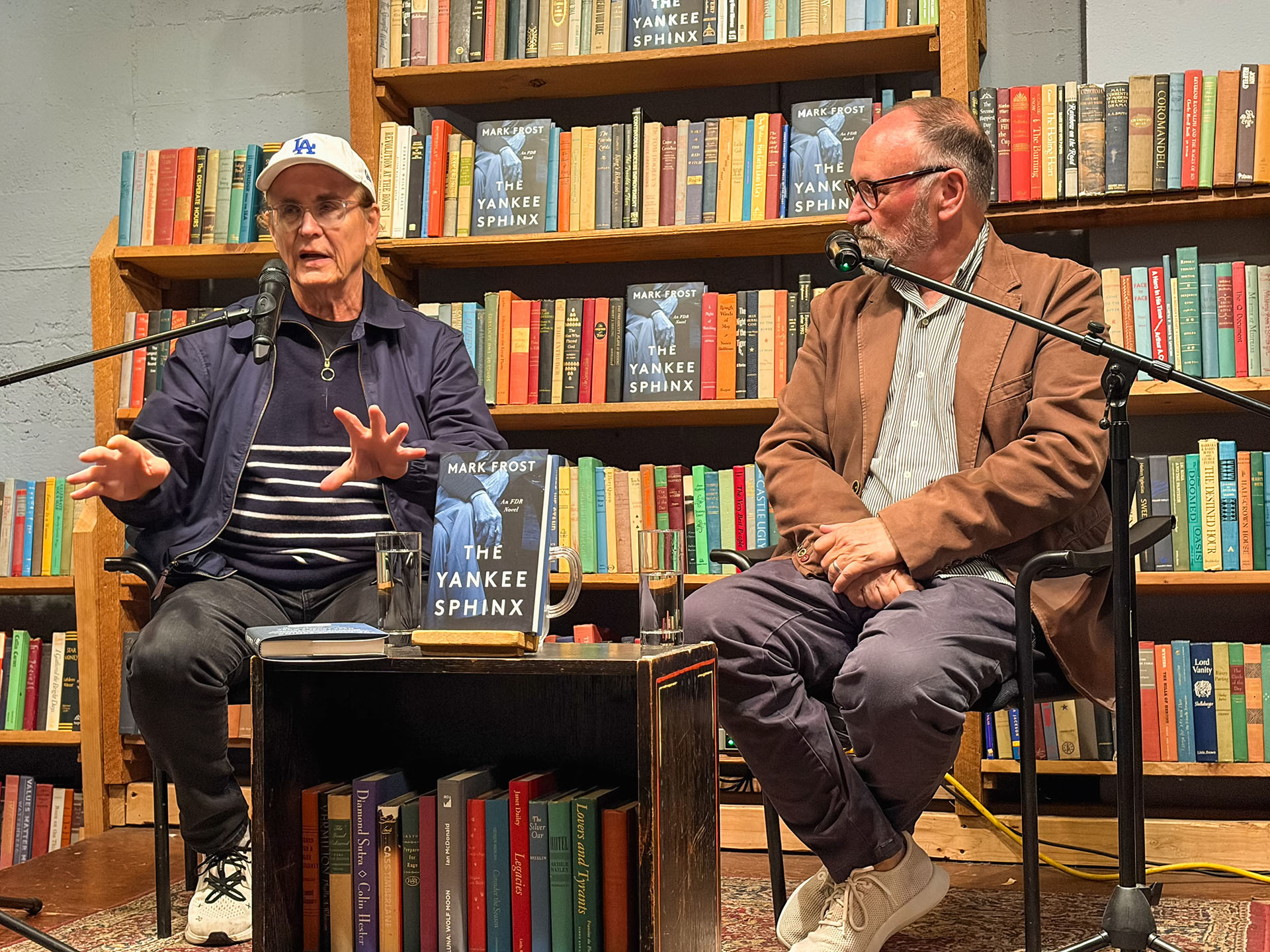
“ I wrote a movie about Marilyn Monroe that never got made, based on a book about her called Goddess, which sort of does get to the truth of what went on with her and the Kennedys,” Mark said of the script that originally brought him and David Lynch together. “Kennedy was shot on November 22, 1963 and he was buried on my 10th birthday, so I remember every moment of that week like it was etched in my brain…Then when I was 11 or 12, I got a copy of the Warren Commission in paperback, and I combed through it looking for flaws. And I’ve been following that case. I’ll let you know if I get to the bottom of it.”
Harley asked a Twin Peaks question of his own.
“Harry Truman…Did you name him?”
“Oh yeah,” Mark responded to laughter.
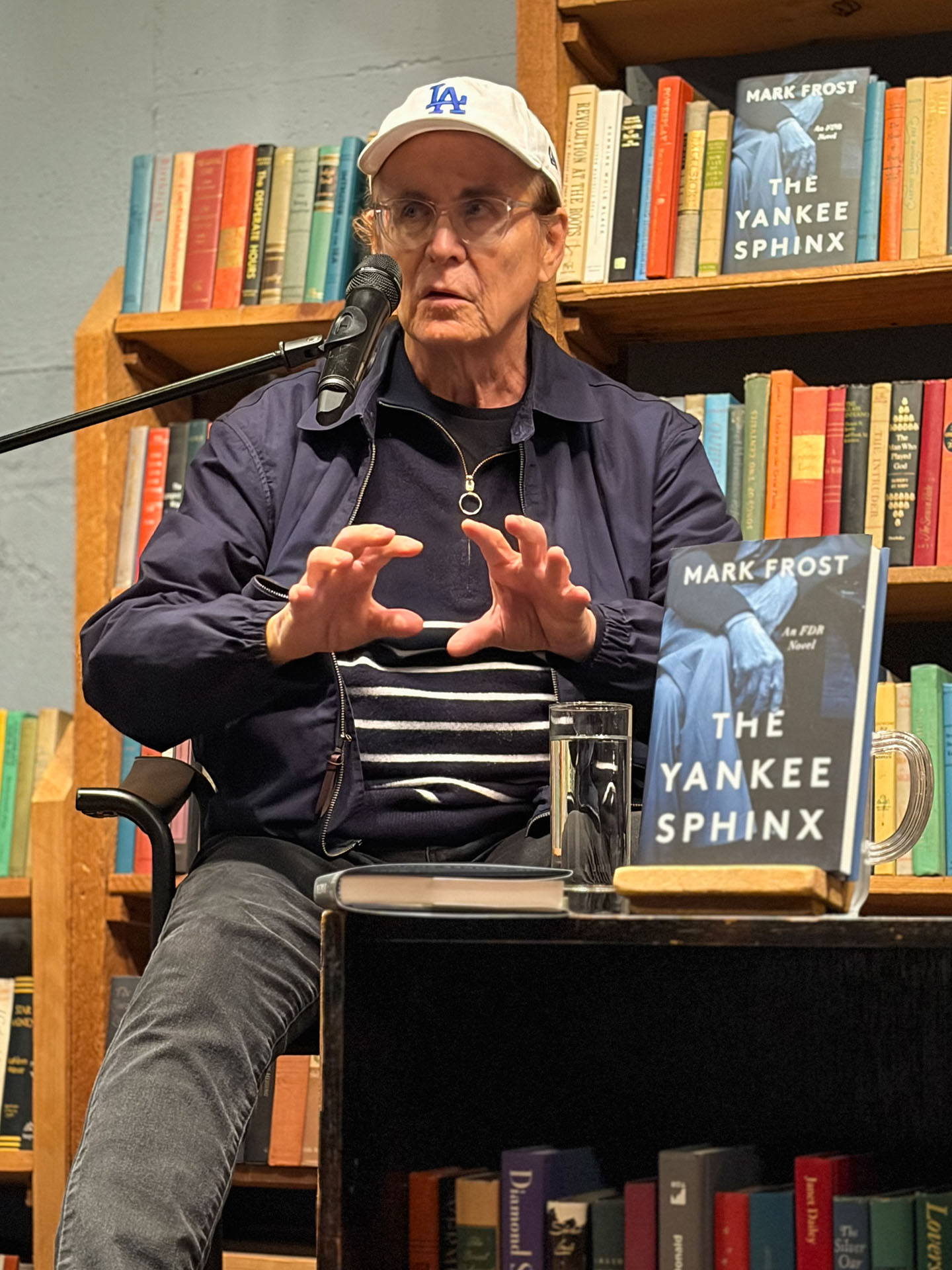
I was happy to have an opportunity to ask Mark about his fascination with the epistolary format, as The Yankee Sphinx was inspired by a diary and both of his Twin Peaks books take the form of found documents (as do the other tie-in novels penned by his brother Scott Frost and Jennifer Lynch).
“I haven’t actually thought of that until you brought it up,” he said “I think it’s a good way to tell a story…Particularly when you’re dealing with things you’re trying to establish as fact, it seems to give you an extra layer of authenticity.”
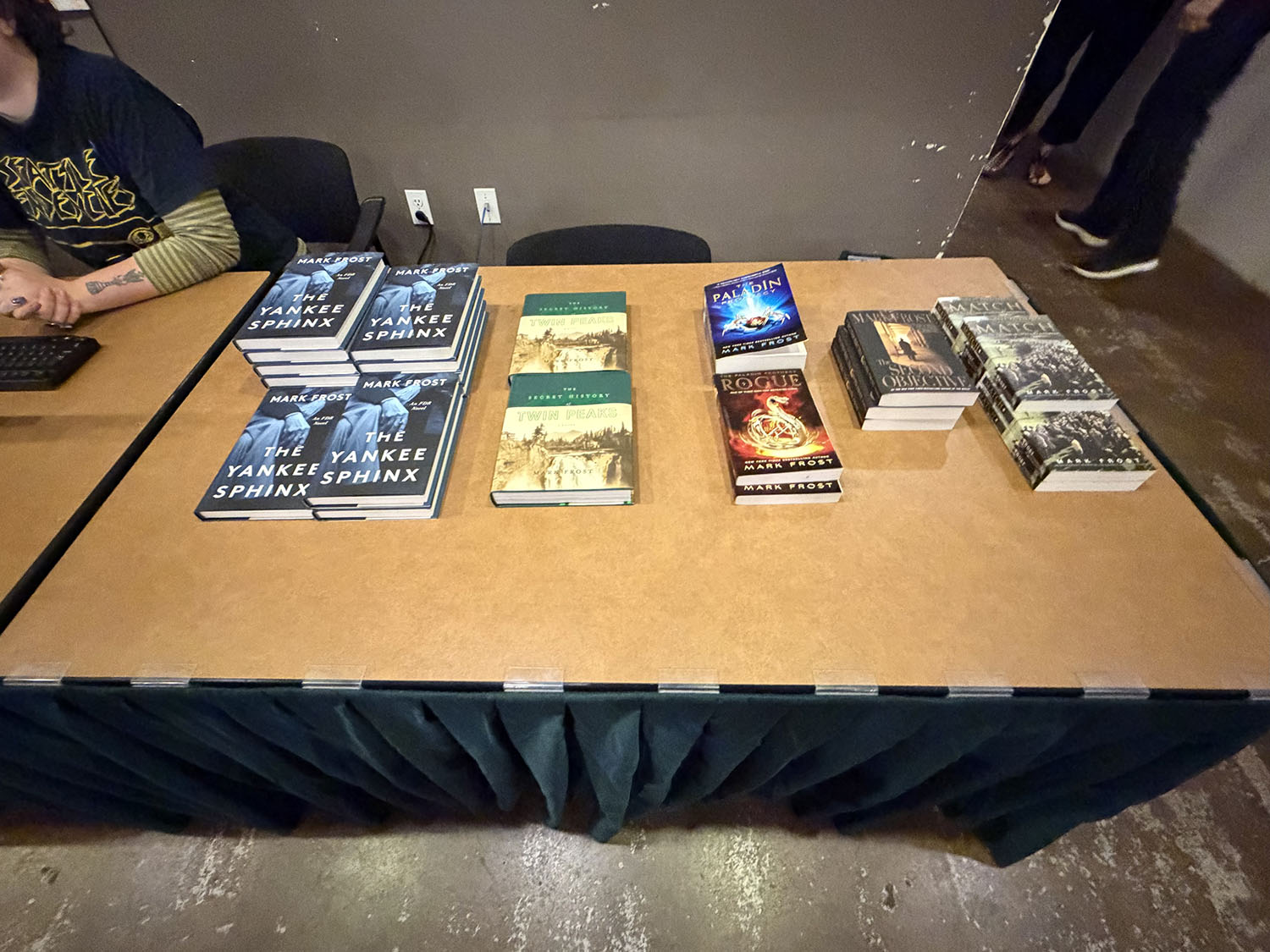
After the hour long discussion, fans lined up at a table in the back of the room where many of Mark’s works were available for purchase. The duo was also happy to sign other Twin Peaks memorabilia.
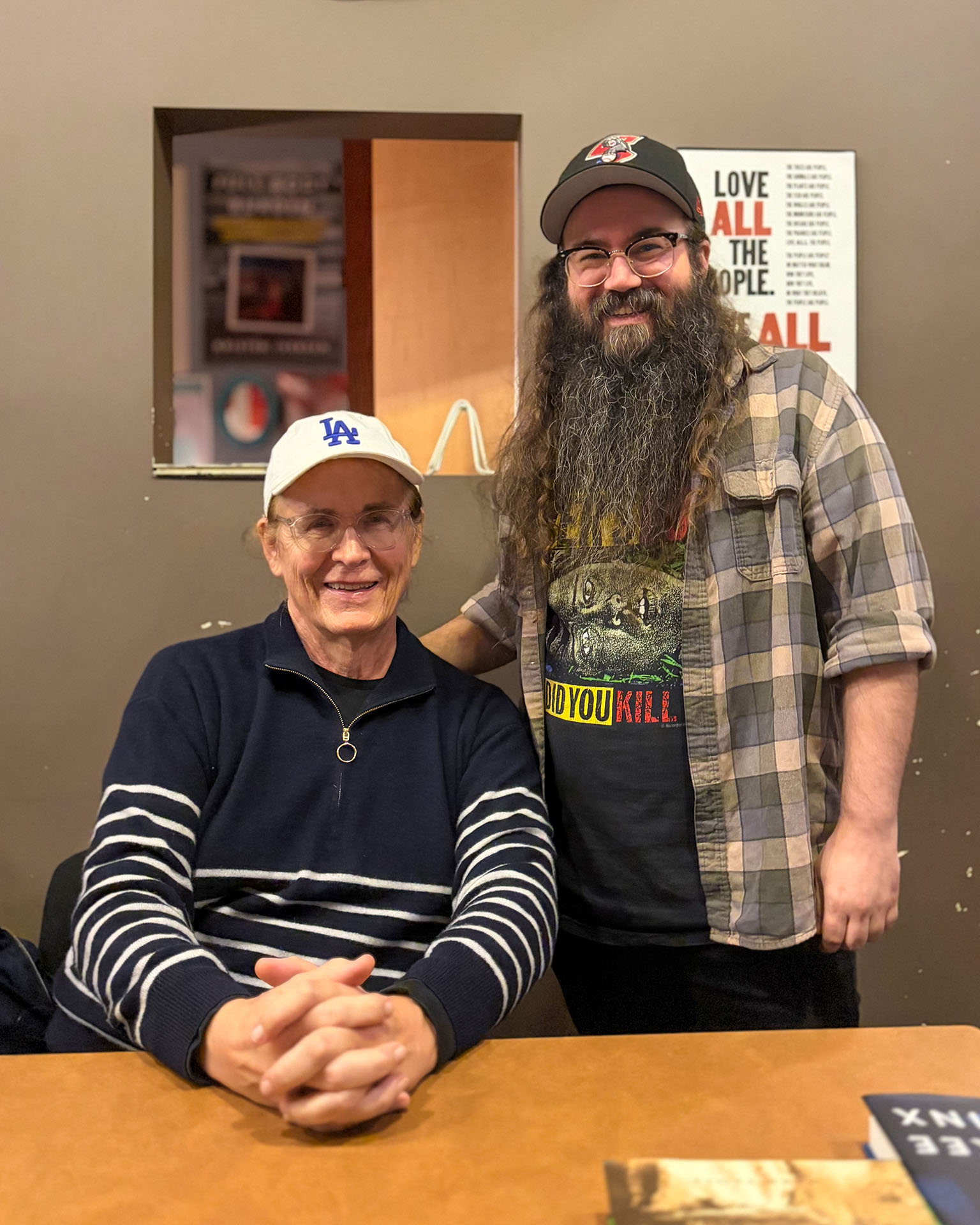
Being a Twin Peaks fan, I am conditioned to accept and even embrace ambiguity, but I am grateful to both Mark Frost and Harley Peyton for sharing their perspectives so candidly. Getting to express my thanks to either of them face to face is a treat, but to see these two on stage together was momentous.
Author
Discover more from TWIN PEAKS BLOG
Subscribe to get the latest posts sent to your email.