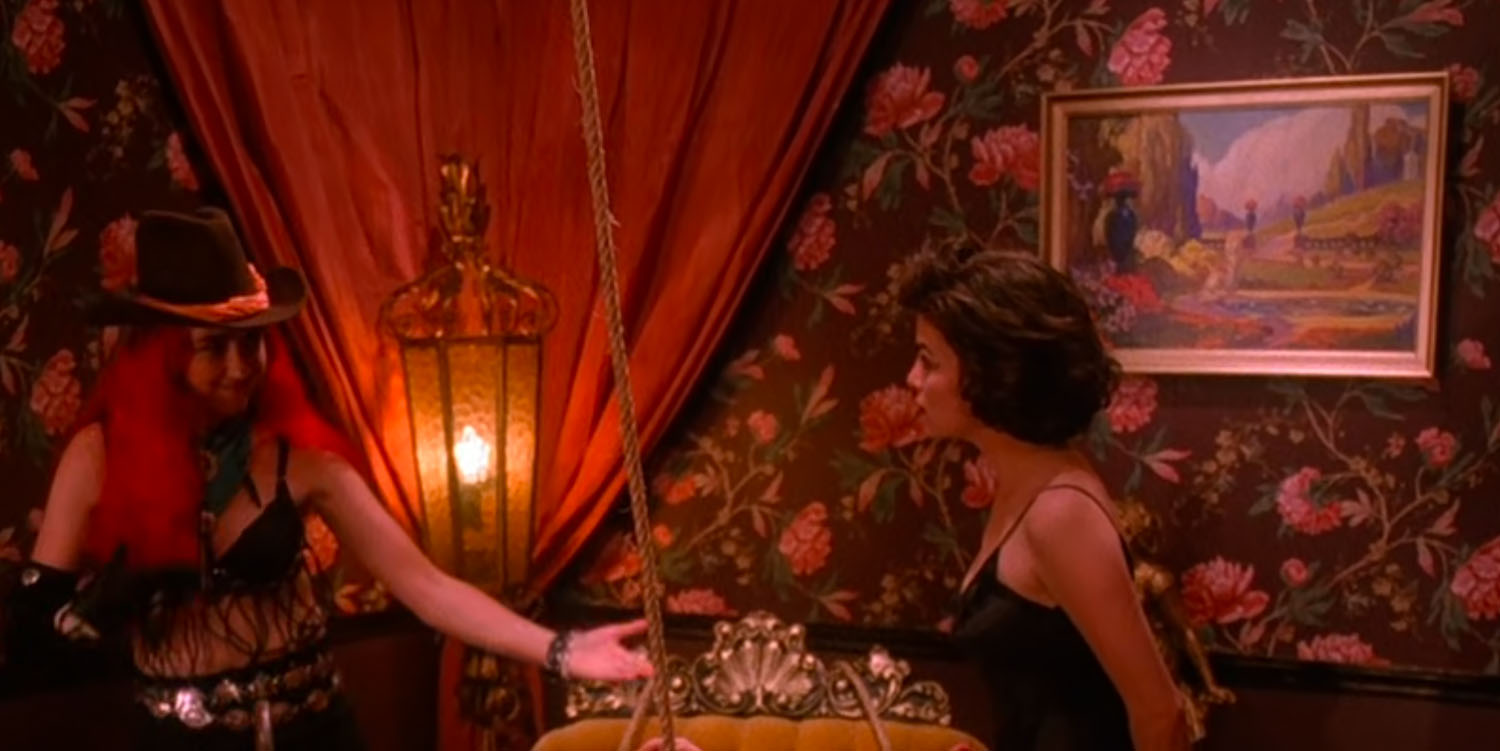
I’m returning to something I love while researching Twin Peaks – identifying artwork used on the various sets created for the show. This time, I’m visiting the room at One-Eyed Jacks in episode #2.002 (#9) where Audrey Horne confronts Emory Battis. In the background, you’ll spot artwork by German-born artist Max Gundlach.
MAX GUNDLACH ARTWORK AT ONE-EYED JACKS
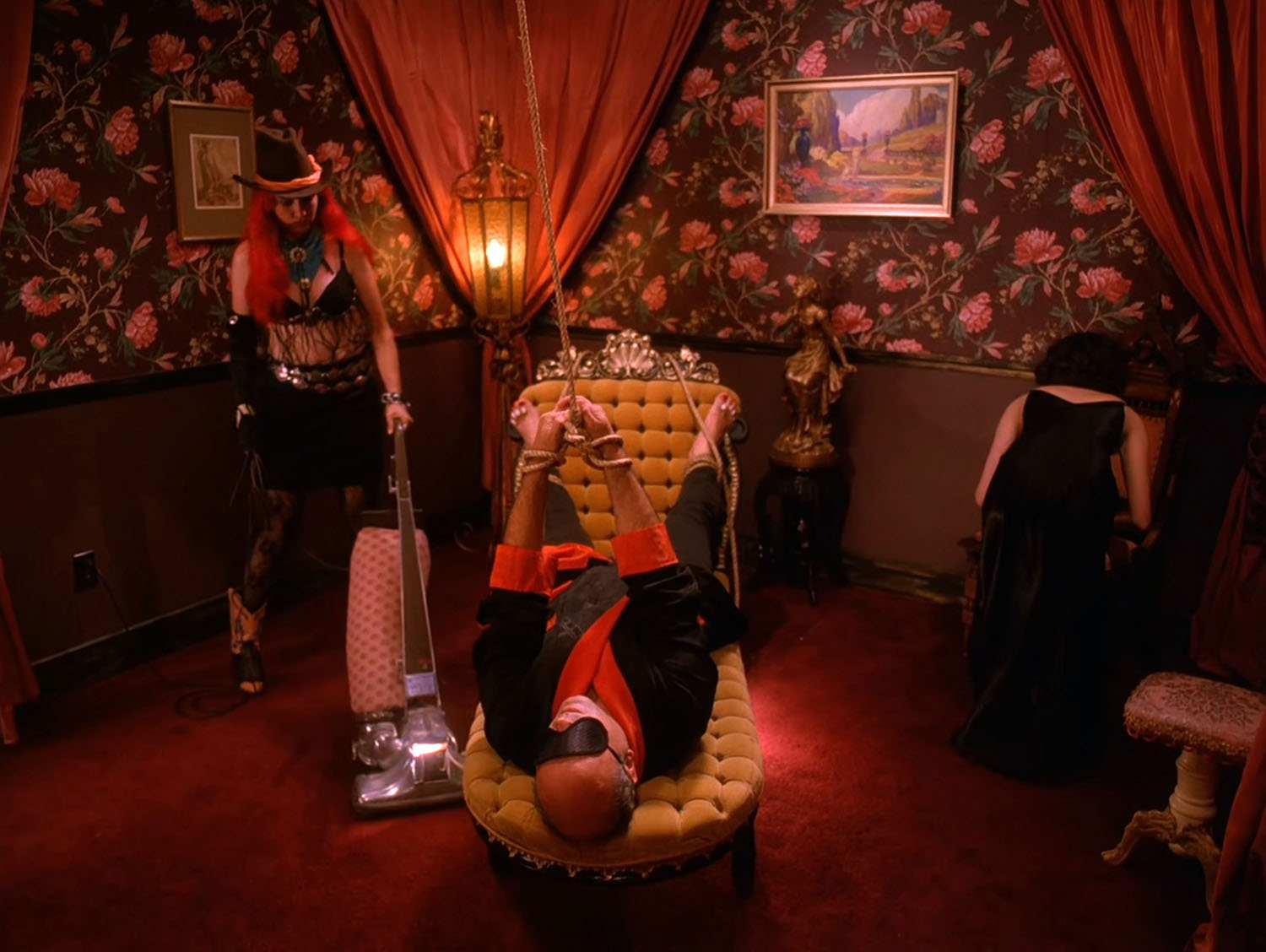
Episode #2.002 (#9) was written by Harley Peyton in July 1990 and directed by David Lynch. The scene between Audrey Horne and a tied-up Emory Battis takes place at night. There is no mention of the “Vacuuming Mistress” played by the uncredited Jula Bell. She was an art department coordinator on the show and would also serve as the uncredited model seen in the Miss Twin Peaks flyer.
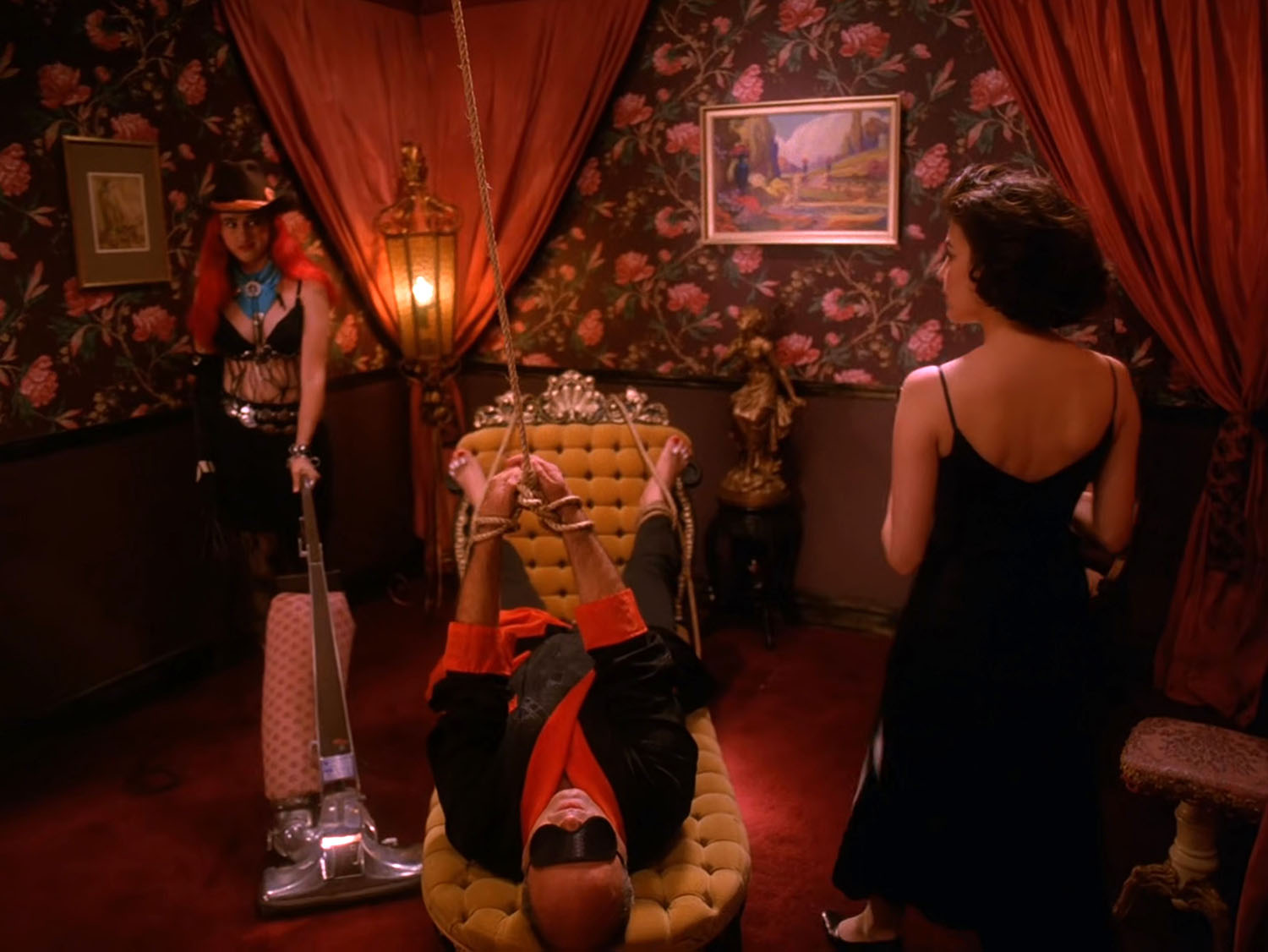
31. INT. ONE-EYED JACKS ROOM – NIGHT
Emory Battis sits in a comfortable armchair, feet up. He wears an Oriental robe, a Santa’s cap, and a silk scarf tied around his eyes. His toenails have been painted bright red, cotton balls between them as they dry.
Interestingly, the Santa hat is missing from Battis in the broadcast version.
As Audrey placed the ice bucket on a side table, we can see the framed artwork hanging on the back wall.
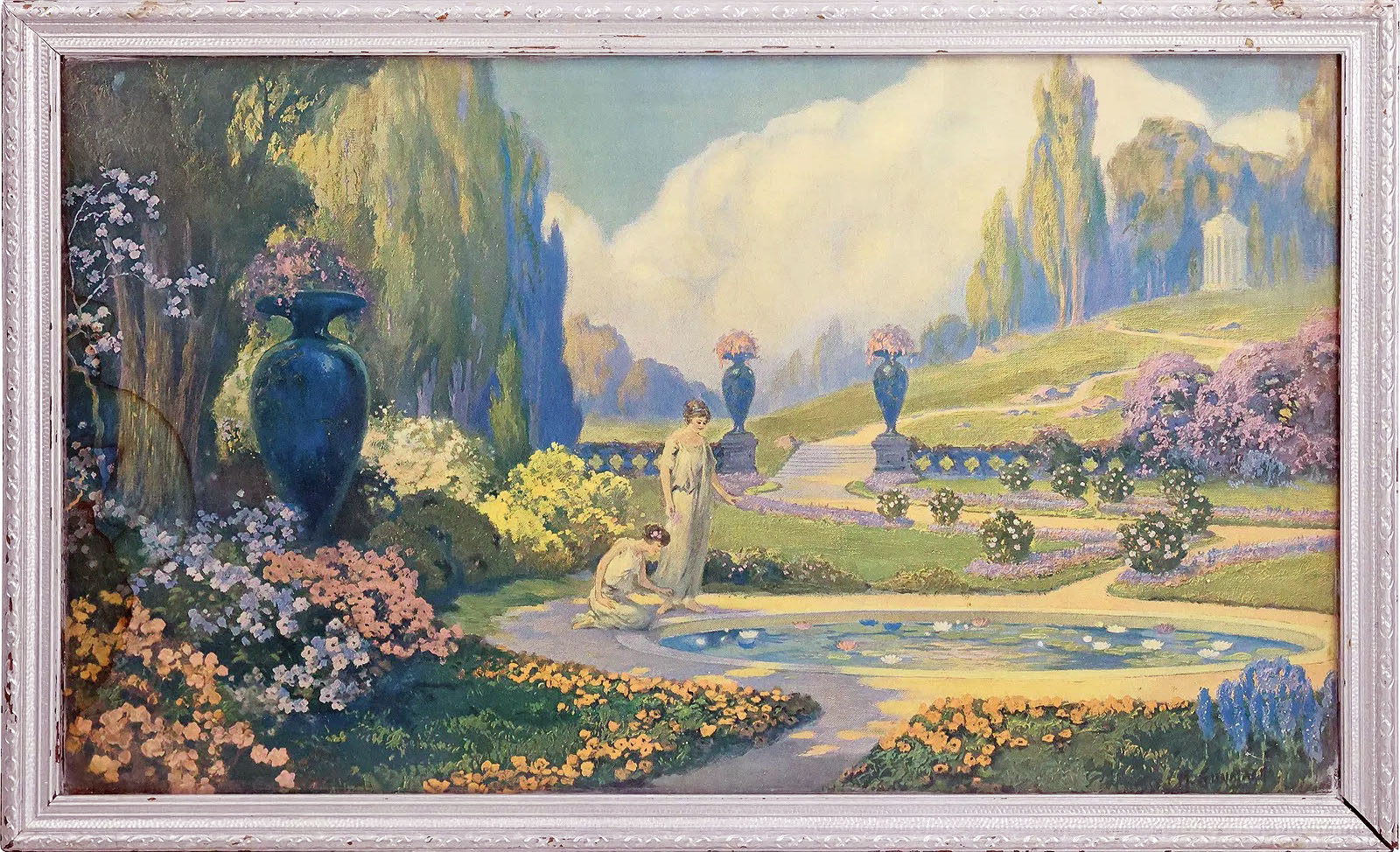
The image contains two ladies in a garden by a reflecting pond. I found this framed work sold at auction for $10.00 in 2024. It’s unclear when exactly it was created or what the work was titled. There isn’t much information about Gundlach’s catalog available online.
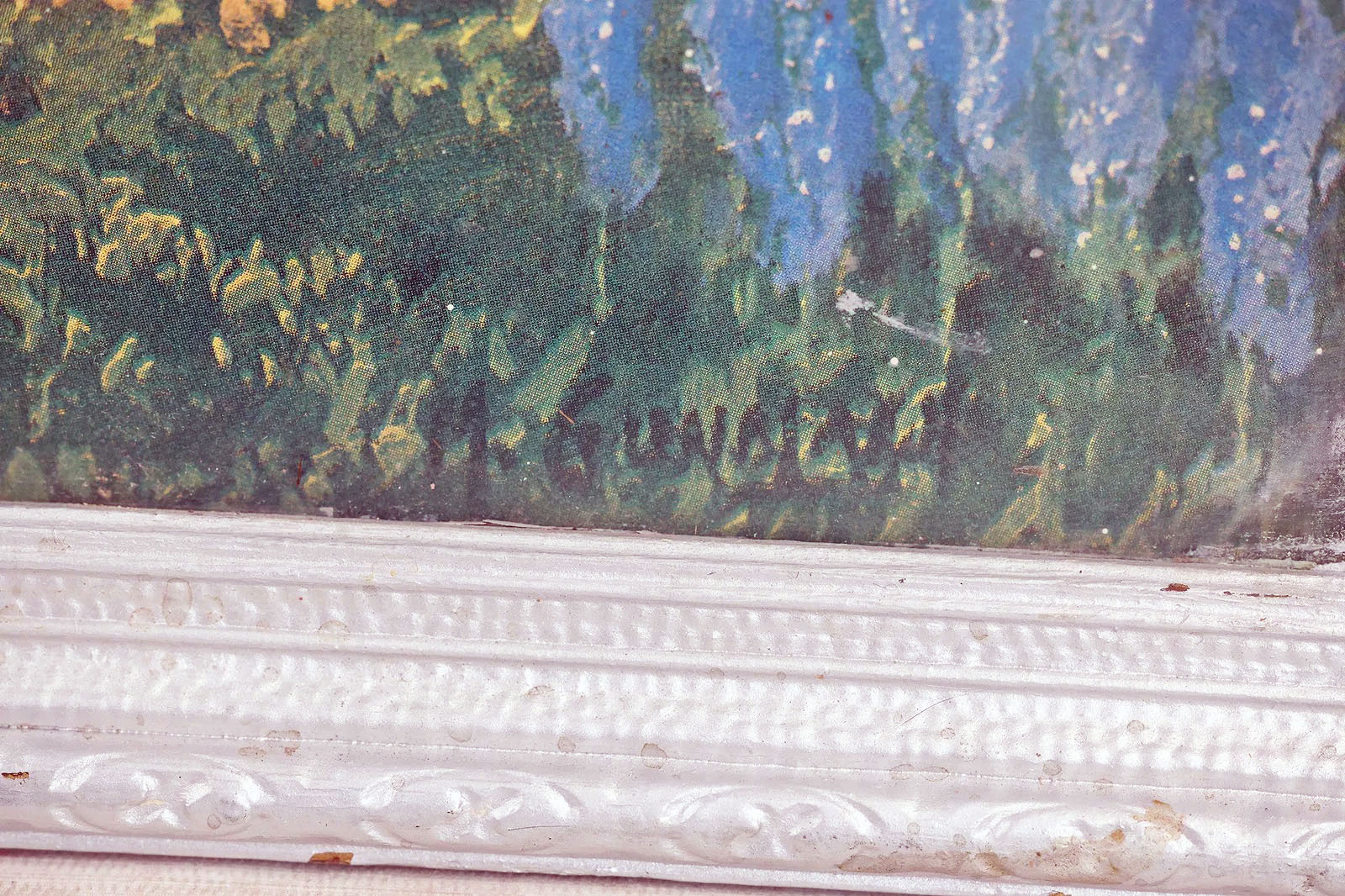
This framed image contained his signature along the bottom of the piece.
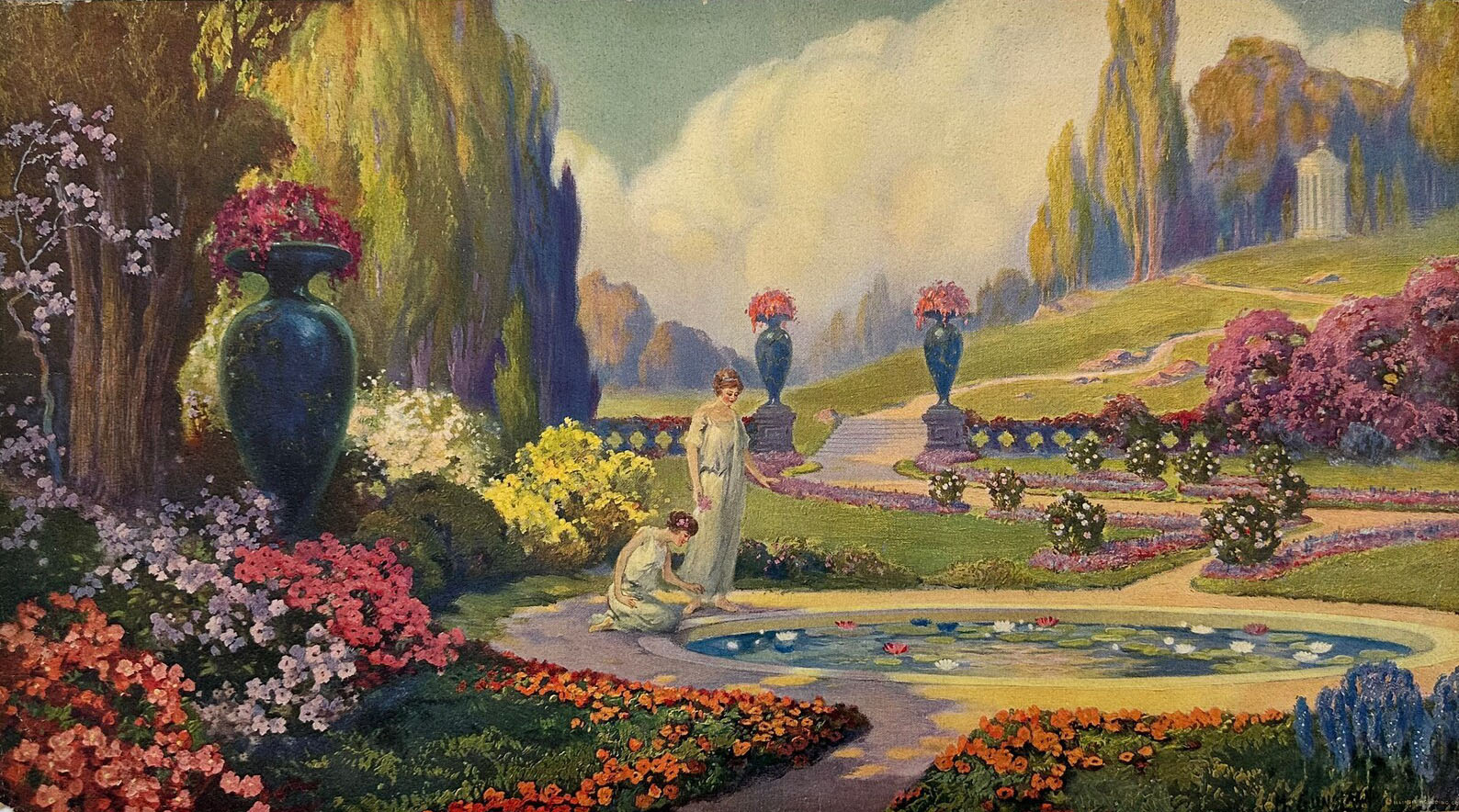
Most likely, the framed set decor at One-Eyed Jacks was a reproduction made by the Illinois Molding Company, a Chicago-based company founded in 1896 by Herman Molner that ceased operations in 1951.

You can see the company’s copyright in the bottom corner of this image.
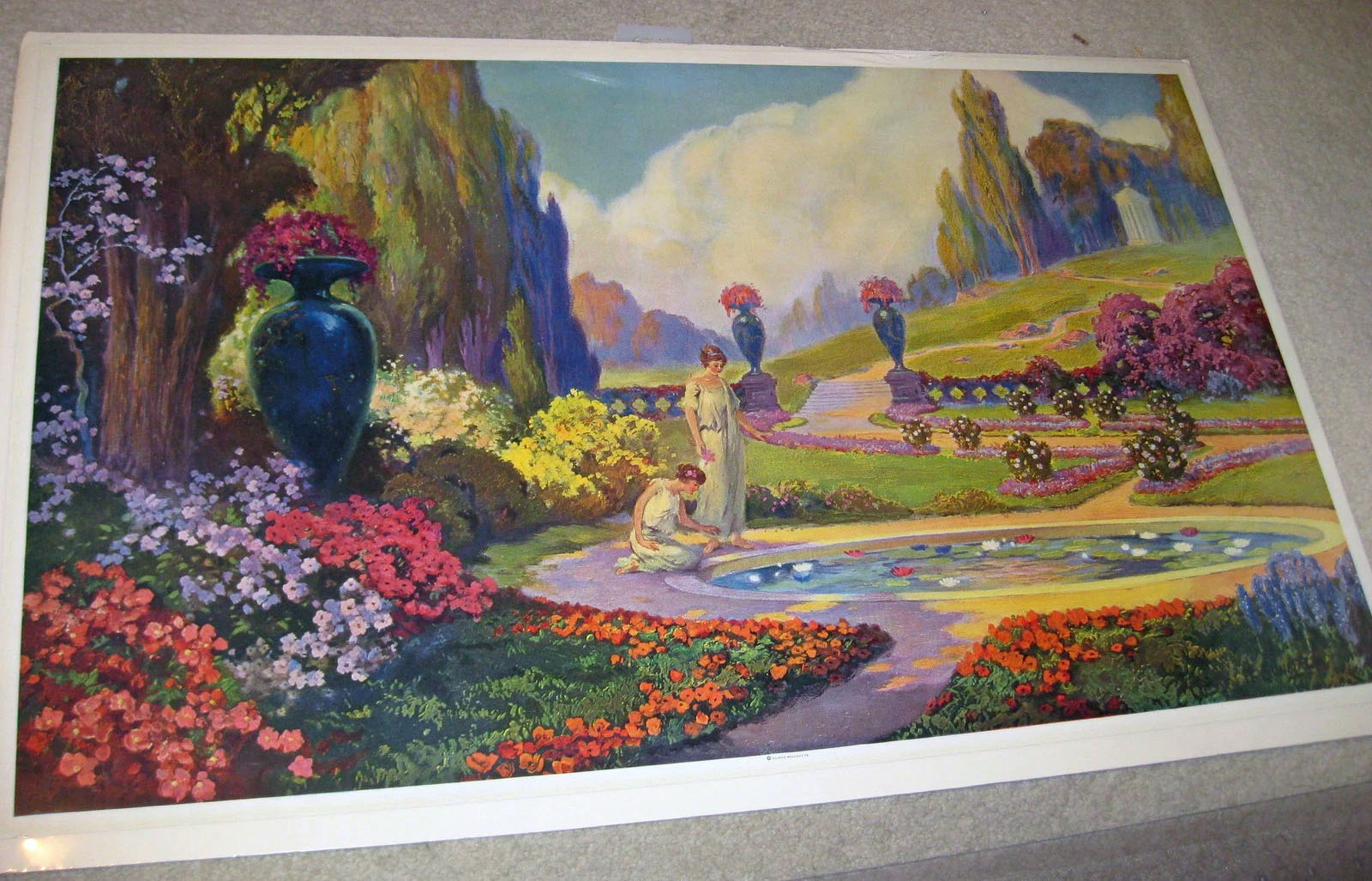
Other similar prints include the company’s copyright in the center. The vibrant colors of this image above from this Ebay auction make me believe this is what was used on set.
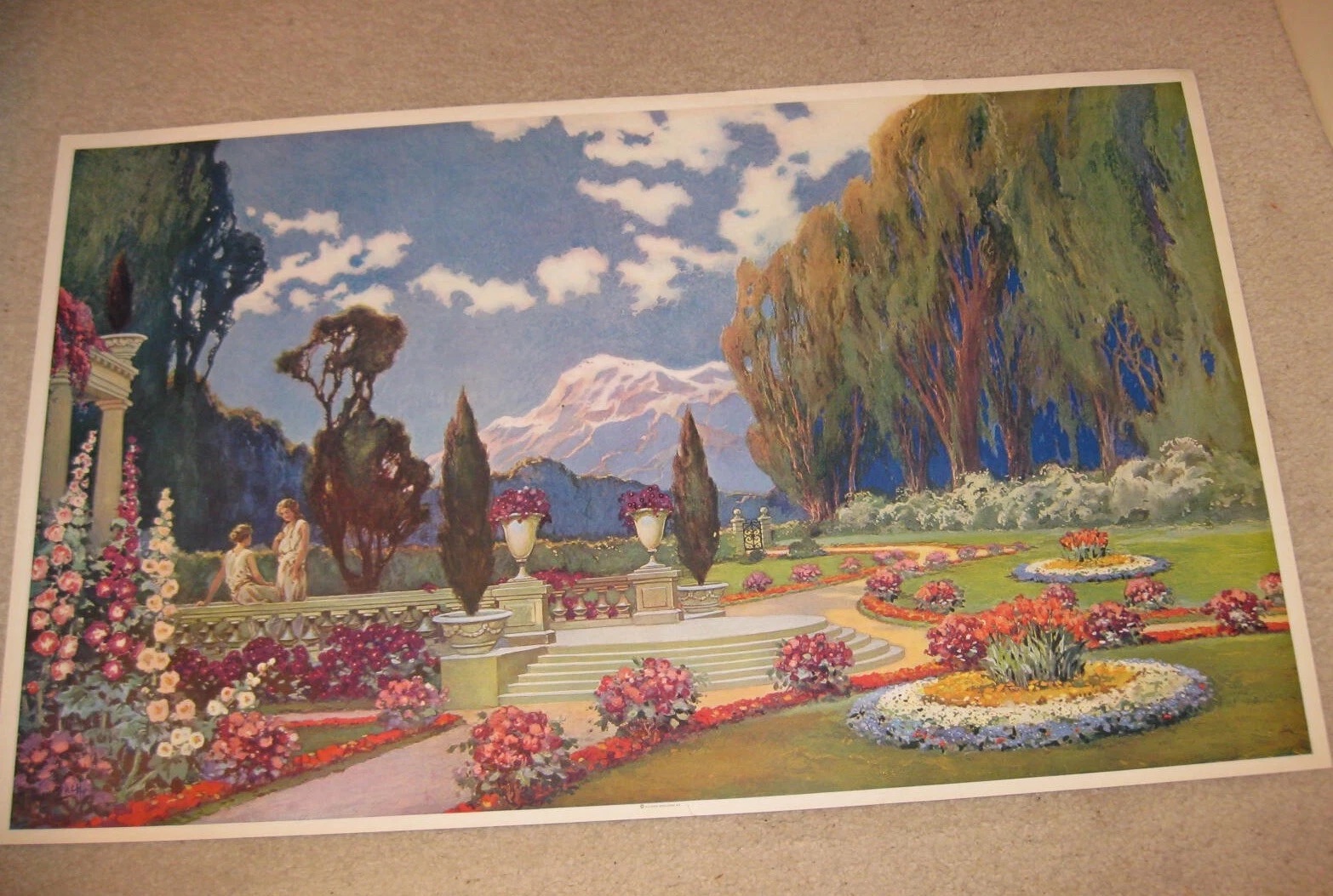
There is a companion piece to Gundlach’s image that features similar ladies in a different part of the garden. But we never seen this image at One-Eyed Jacks.
WHO IS MAX GUNDLACH?
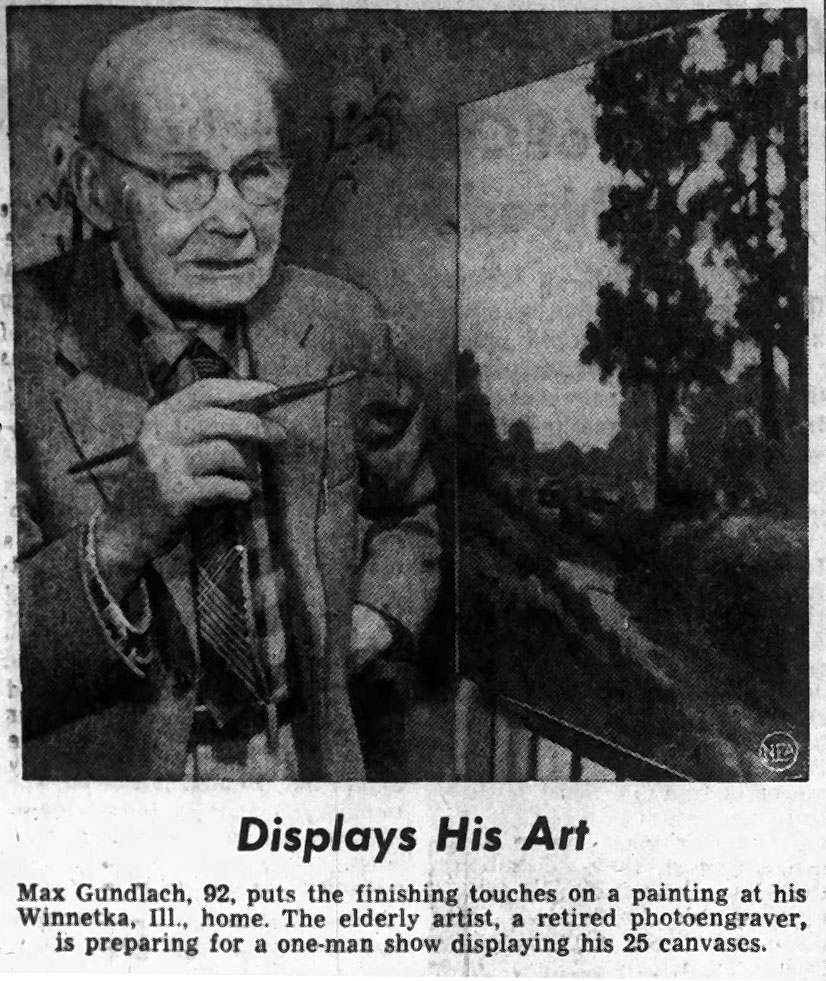
Max Gundlach was born in Breslau, Germany in 1883. He emigrated to America at the age of five and began working in a wood engraving shop at age 14. A short time later, he moved from making the engravings to designing them and attended the Art Institute of Chicago at night.
Between 1900 and 1904, his paintings were shown in the prestigious, juried Annual Exhibitions of Art Institute of Chicago. Later as a commercial artist, he toured the Southwest painting landscape scenes for the Santa Fe and Union Pacific Railroads. Gundlach was an active member of Chicago’s established Palette and Chisel Club. In addition to easel painting, he completed numerous commissioned illustrations, including a summer nocturne used as the cover piece for the 1923 season Ravinia Festival catalogue.
On Jan. 7, 1955, the United Press ran a syndicated story about Gundlach who was still painting at the age of 92.
“I’m getting better in my old age,” he said. “Painting comes easier the older I get.” He lit a fresh, strong cigar. Max Gundlach might be called a “Grandpa Moses,” but he is no “primitive” painter.
Unlike Grandma Moses, he had considerable training in his youth. He has painted most of his, life, but he believes that in his old age he is reaching his peak. “I’ve got a theory about that,” he said. “I believe an artist tends to develop subconsciously. I think we grow more susceptible to impressions as we grow older.”
At the time, he lived with his son Waldo, an advertising executive, and his daughter-in-law, in a comfortable old house on a quiet street.
“I don’t like smocks,” he said, “and I don’t wear a beret. I’m in the best of health, or I wouldn’t be painting,” he said. “But I have no recipe , for longevity.”
Sadly, two years later at the age of 94, Gundlach passed on October 11, 1957 in the Whitehaven Acres rest home in Glenview.
APPEARANCES IN TWIN PEAKS
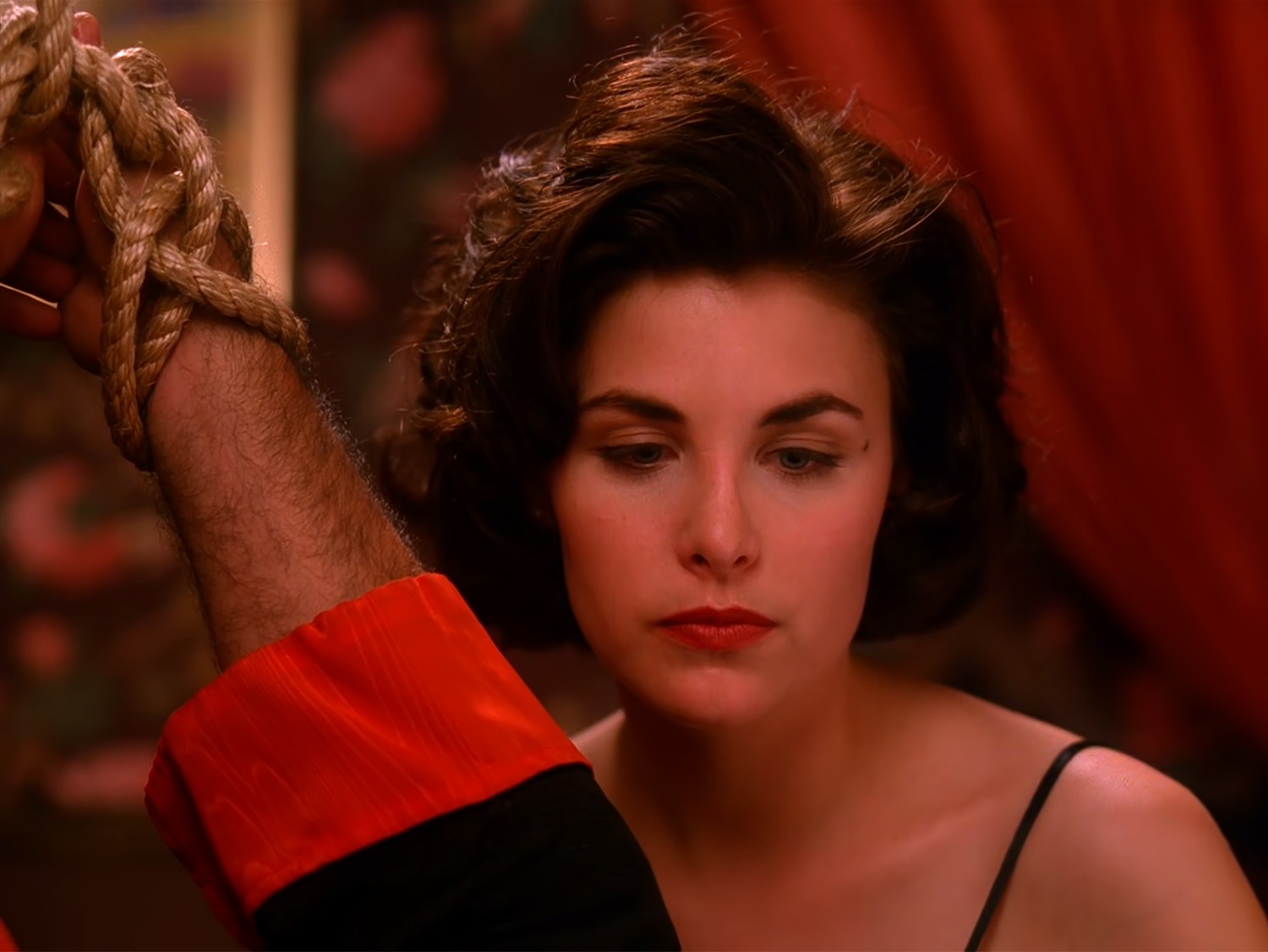
Aside from the wider shot with the Vacuuming Mistress, Audrey Horner and Emory Battis, we only catch a small corner of the artwork during a close up of Audrey looking down. We never see this artwork again in the show after this episode.
Author

Discover more from TWIN PEAKS BLOG
Subscribe to get the latest posts sent to your email.