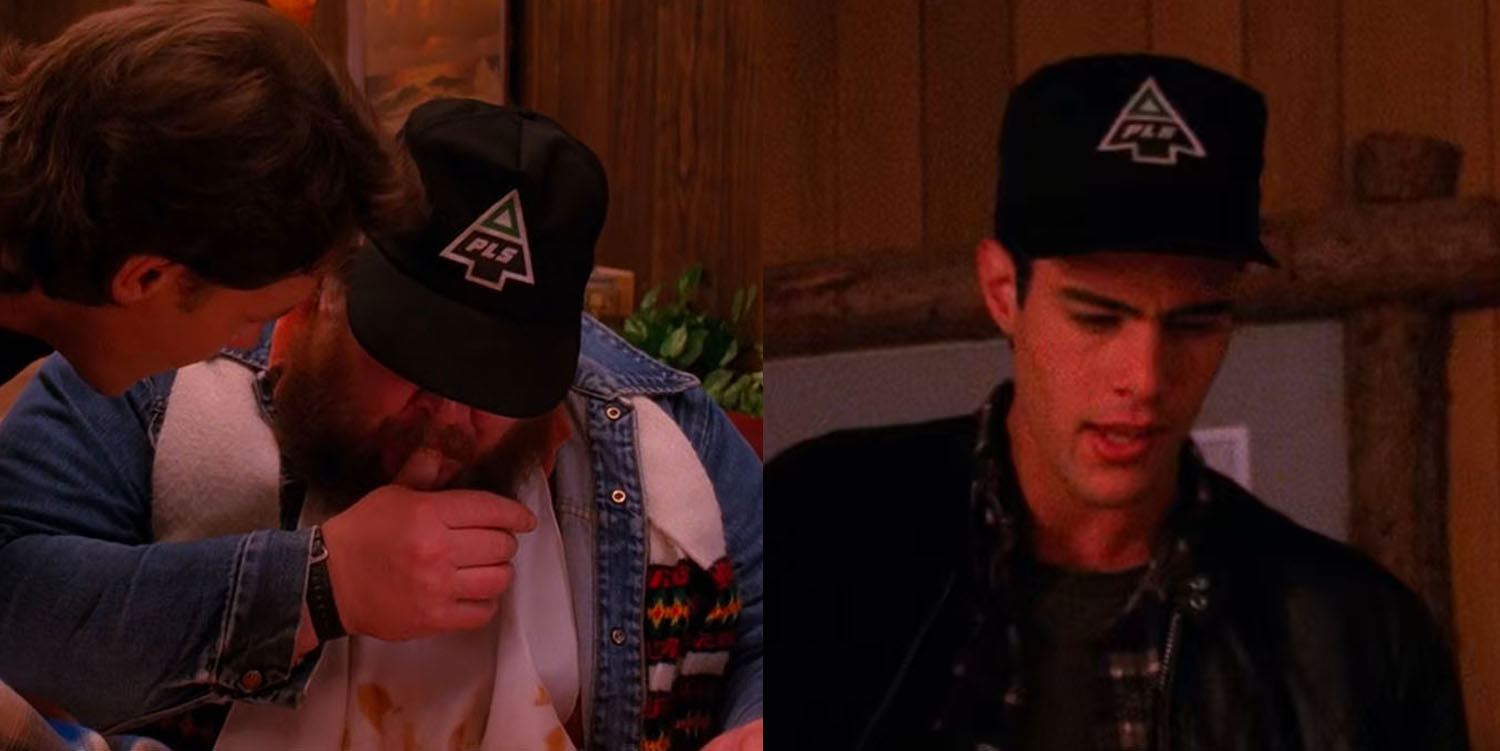
I love finding when items in Twin Peaks magically jump from location to location or character to character. We saw this with the CCX Trucking mug that traveled from Big Ed’s Gas Farm in the pilot to the Twin Peaks Sheriff’s Department or Annie Blackburn wears a sweater that Donna Hayward wore. In season two, a black PLS hat jumps from Toad at the Double R Diner to Bobby Briggs at the Twin Peaks Sheriff’s Department. The hat is a nod to a former Pacific Northwest lumber company once based in Seattle, Washington.
TOAD AND BOBBY BRIGGS’ PLS HAT
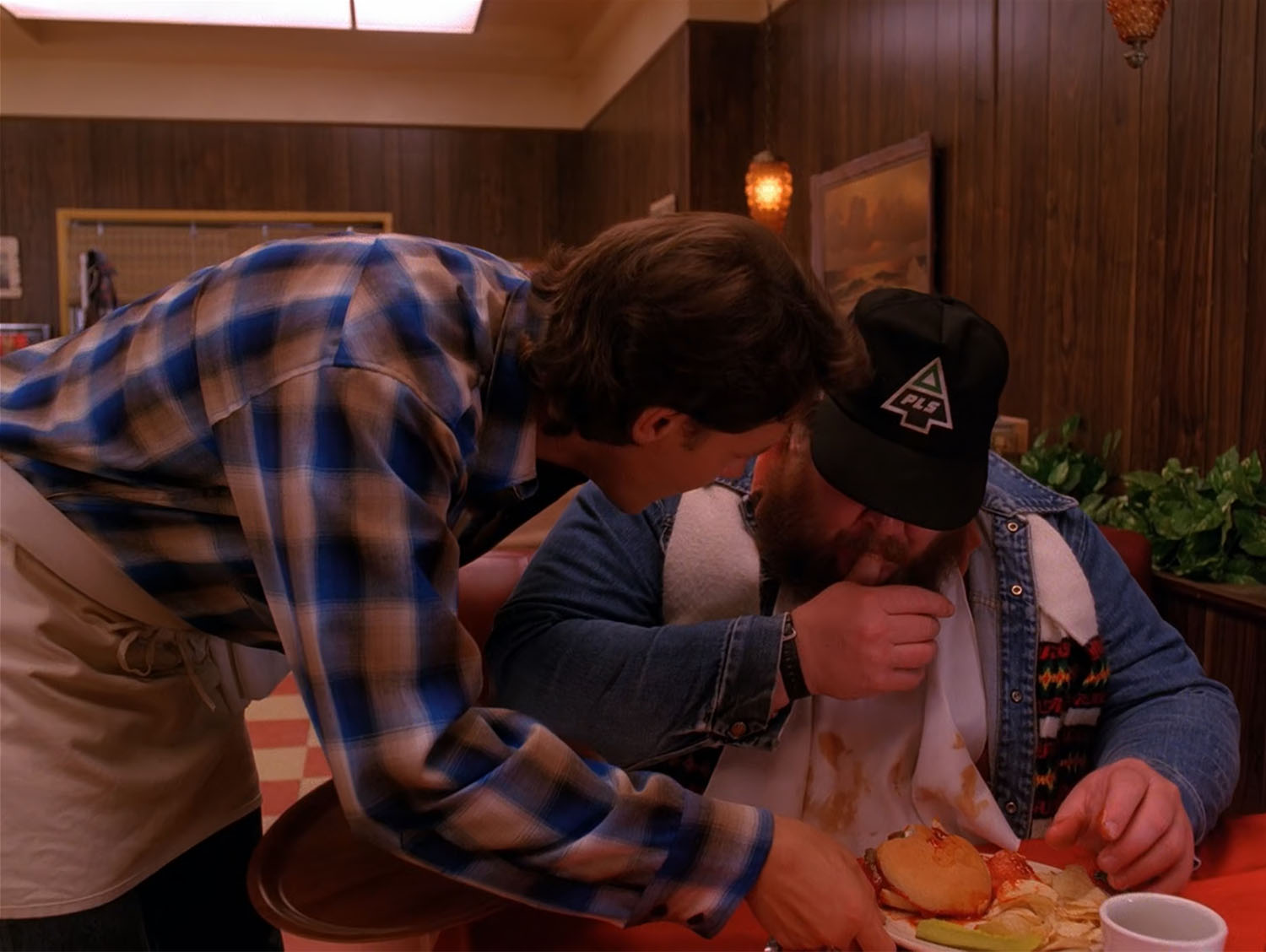
We first see the black PLS hat during Twin Peaks episode 2.004 (#11) when Toad is eating food at the Double R Diner.
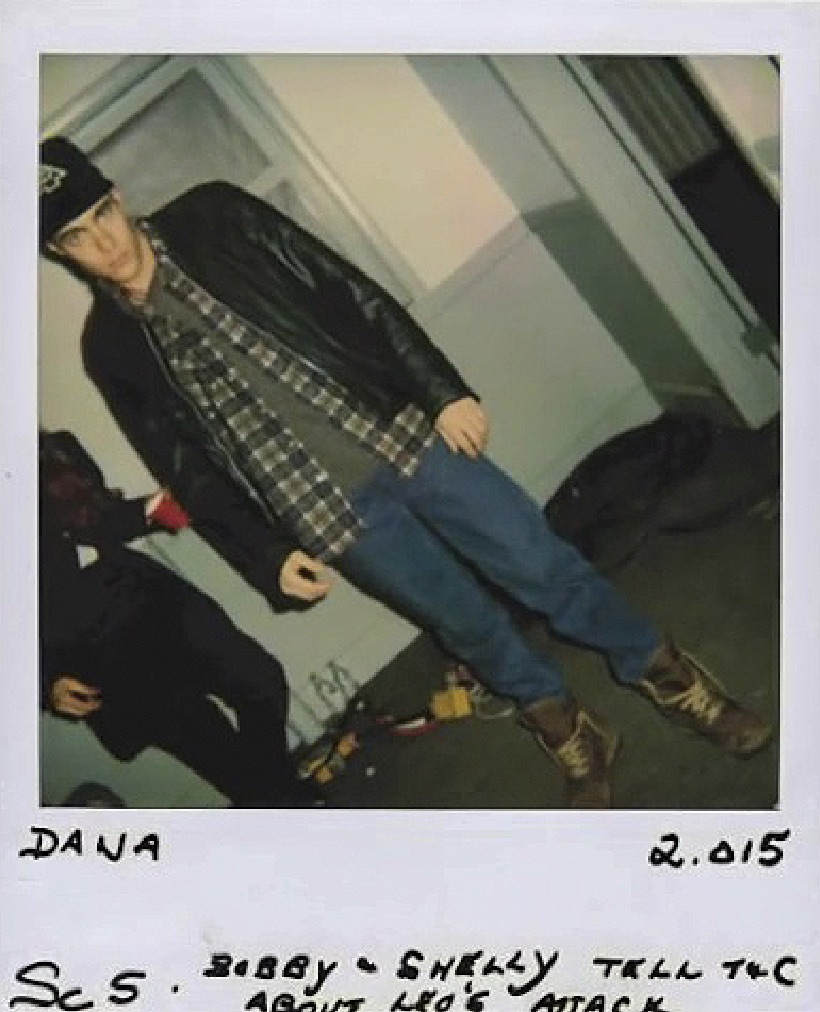
Flash forward to the Diane Keaton-directed episode 2.015 (#22) and Bobby Briggs is seen sporting the black cap while being questioned by Sheriff Harry Truman and Deputy Dale Cooper. This continuity Polaroid from The Mauve Zone shows Dana Ashbrook behind the scenes.

It’s difficult to say why Toad and Bobby wore the same hat. During the show’s second season, Sara Markowitz served as the costume designer while Laurie Hudson was the costume supervisor.
While we may not know why it was selected, the hat has a direct connection to Seattle. We see this happen again in Part 7 from Twin Peaks: The Return as the Farmer (by Edward “Ted” Dowling) wears an Erroll’s Bulldozing hat which was an excavating contractor based in the Emerald City.
PACIFIC LUMBER AND SHIPPING CO. IN SEATTLE, WASHINGTON

PLS was the initials of the Pacific Lumber and Shipping Co., a former family run business formed in 1932-1933 in Seattle, Washington. I found only a handful of articles about PLS via Newspapers.com and there wasn’t much details about who founded the company in the 1930s.
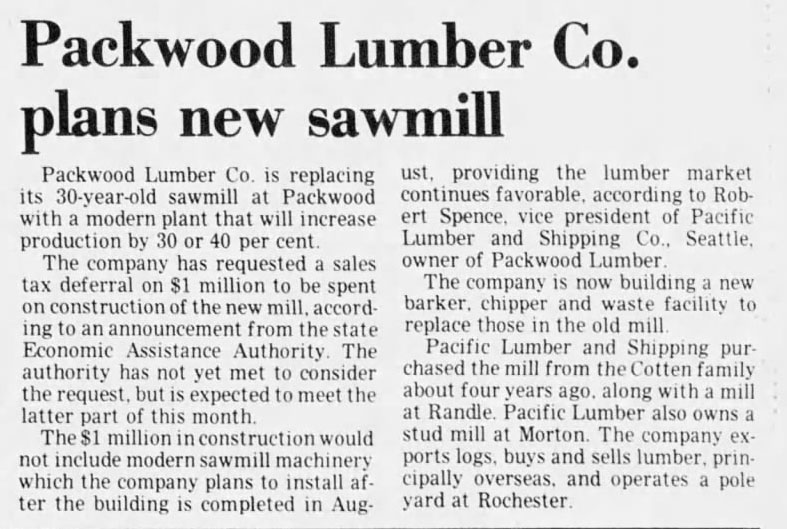
In June 1978, The News Tribune reported that PLS purchased the Packwood Lumber Co. from the Cotten family in 1974 along with a mill at Randle. At the time, they also owned a stud mill at Morton. The company exported logs, bought and sold lumber primarily overseas and operated a pole yard at Rochester.
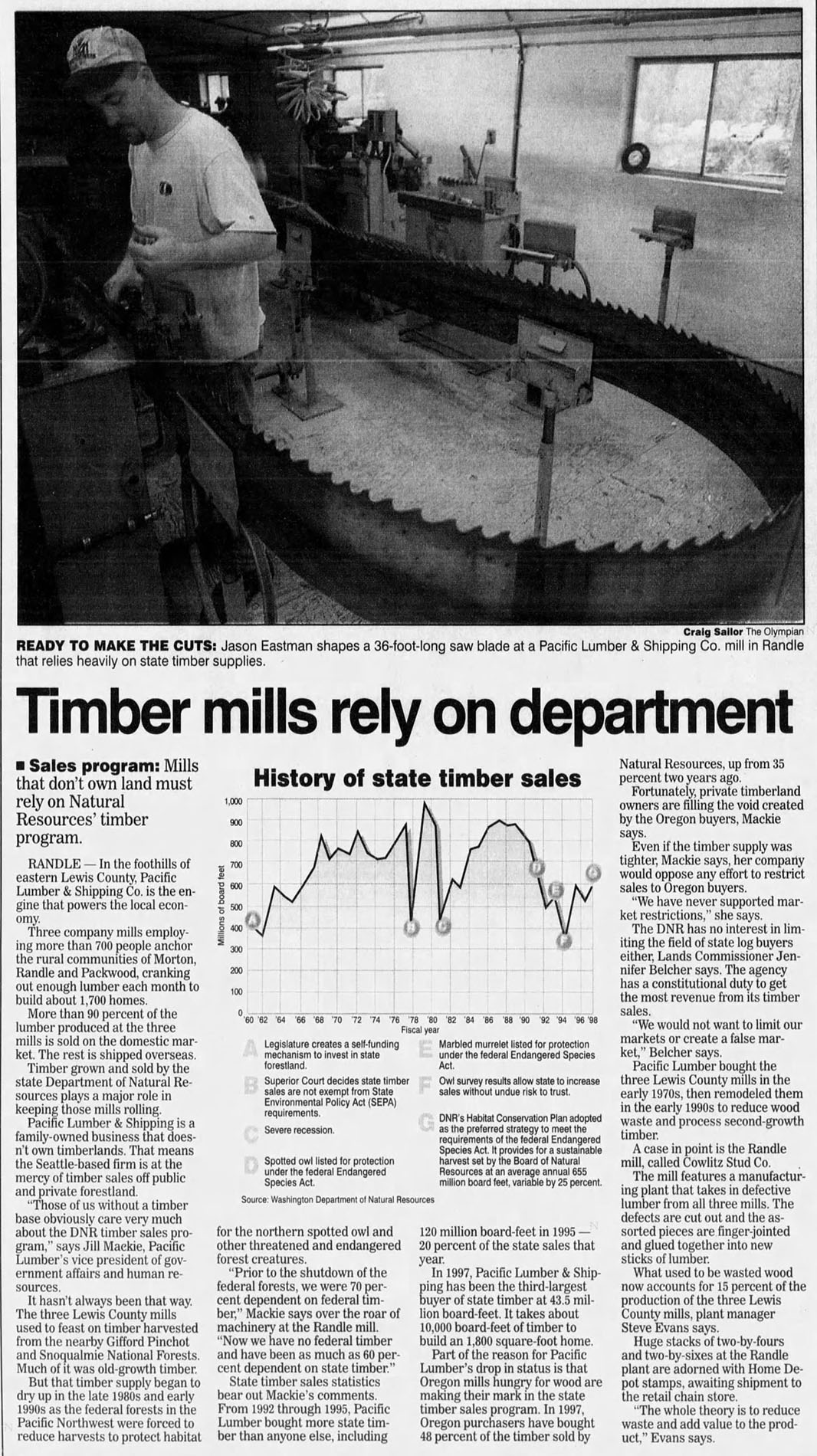
By the late 1990s, PLS was an economic engine powering Lewis County, Washington. The three company mills employed more than 700 people in the rural communities of Morton, Randle and Packwood. The three towns are located south of Mount Rainier and about a two-hour and 45-minute drive from Snoqualmie. Each month, their mills produced enough lumber to build about 1,700 homes. According to an article in The Olympian on Nov. 16, 1997, more than 90 percent of the lumber produced at the three mills was sold on the domestic market with the rest being shipped overseas.
Unlike the former Snoqualmie Lumber Company, PLS didn’t own any timberlands. This meant that the family business depended on “timber sales from public and private forestland.” The company once used old-growth timber from the nearby Gifford Pinchot and Snoqualmie National Forests.
But in the 1980s and early 1990s, availability of wood dried up as the federal government reduced “harvests to protect habitat for the northern spotted owl and other threatened and endangered forest creatures.”
“Prior to the shutdown of the federal forests, we were 70 percent dependent on federal timber” said Jill Mackie, Pacific Lumber’s then vice president of government affairs and human resources. “Now we have no federal timber and have been as much as 60 percent dependent on state timber.”
From 1992 through 1995, Pacific Lumber bought more state timber than anyone else, including “120 million board feet in 1995 —20 percent of the state sales that year.” According to their website from April 13, 1997 I found on the Wayback Machine, PLS supplied wood products to “more than 40 countries on four continents.”
In the late 1990s, PLS was the third-largest buyer of Washington state timber at 43.5 million board-feet. At the time, The Olympian reported it took about “10,000 board-feet of timber to build an 1,800 square-foot home.”
The company remodeled the three mills it purchased in the 1970s to “reduce wood waste and process second-growth timber.” The Cowlitz Stud Co. at Randel featured a manufacturing plant that used defective lumber from all three mills. The defects were cut out and the assorted pieces were “finger-jointed and glued together into new sticks of lumber.” Plant manager Steve Evans said what used to be wasted wood now accounts for 15 percent of the production of the three Lewis County mills.
On April 27, 2005, The Olympian reported Port Blakely Tree Farms, which included a Tumwater forestry office, acquired Pacific Lumber and Shipping. The deal added “brokerage capabilities and new business contacts to the Seattle-based company.
Port Blakely still exists today with a focus on “advancing sustainable land management, supporting thriving communities, and operating our business with integrity.” Spanning six generations of family ownership, they have operations in Pacific Northwest and New Zealand. PLS, which later became PLS International, wound down operations in 2020 “due to shifts in the log export market and global economy.”
PLS HAT APPEARANCES IN TWIN PEAKS
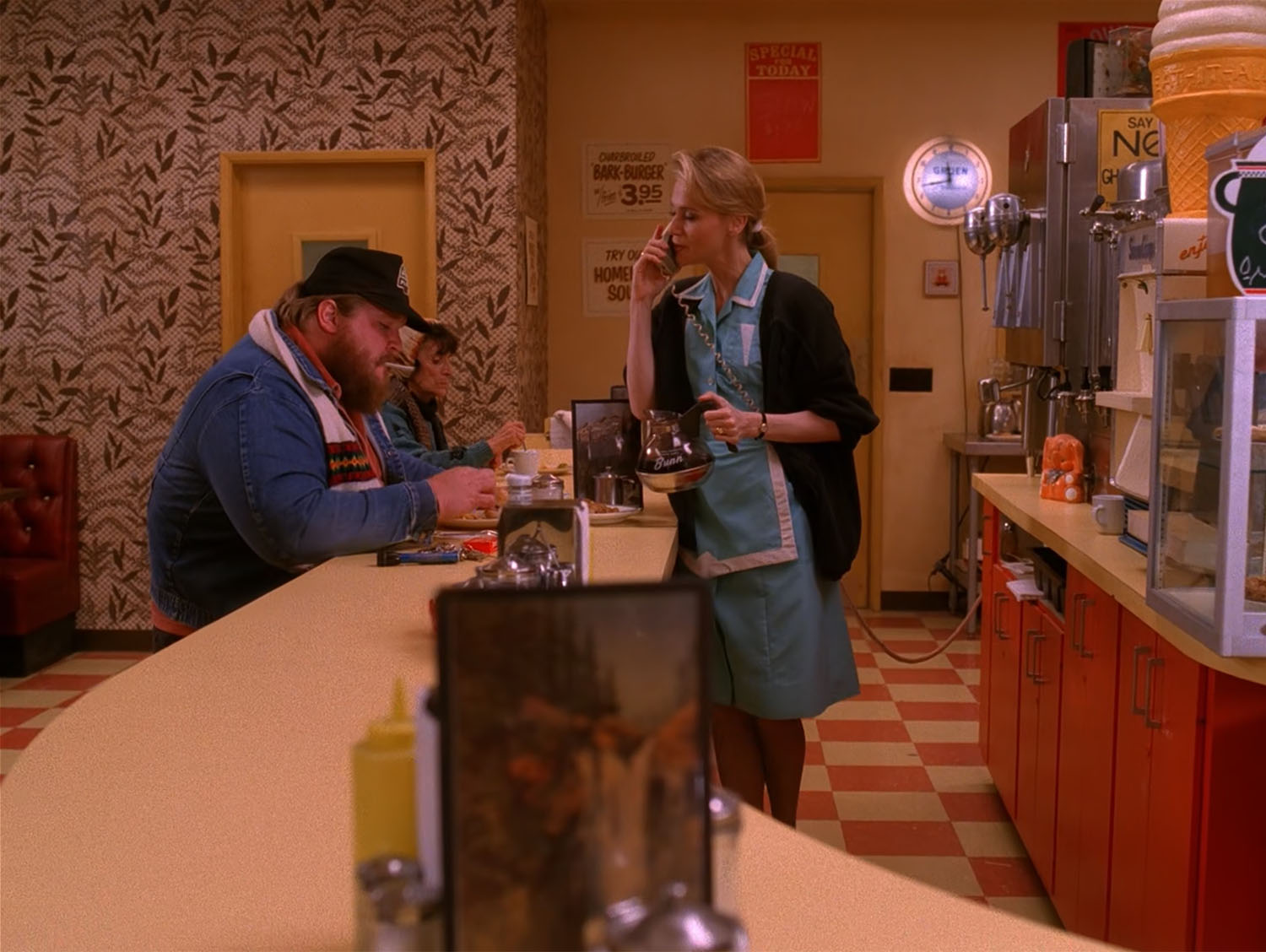
The first time we see the PLS hat is on the head of Toad as he sits at the Double R Diner counter while Norma Jennings speaks on the telephone in episode 2.004 (#11).
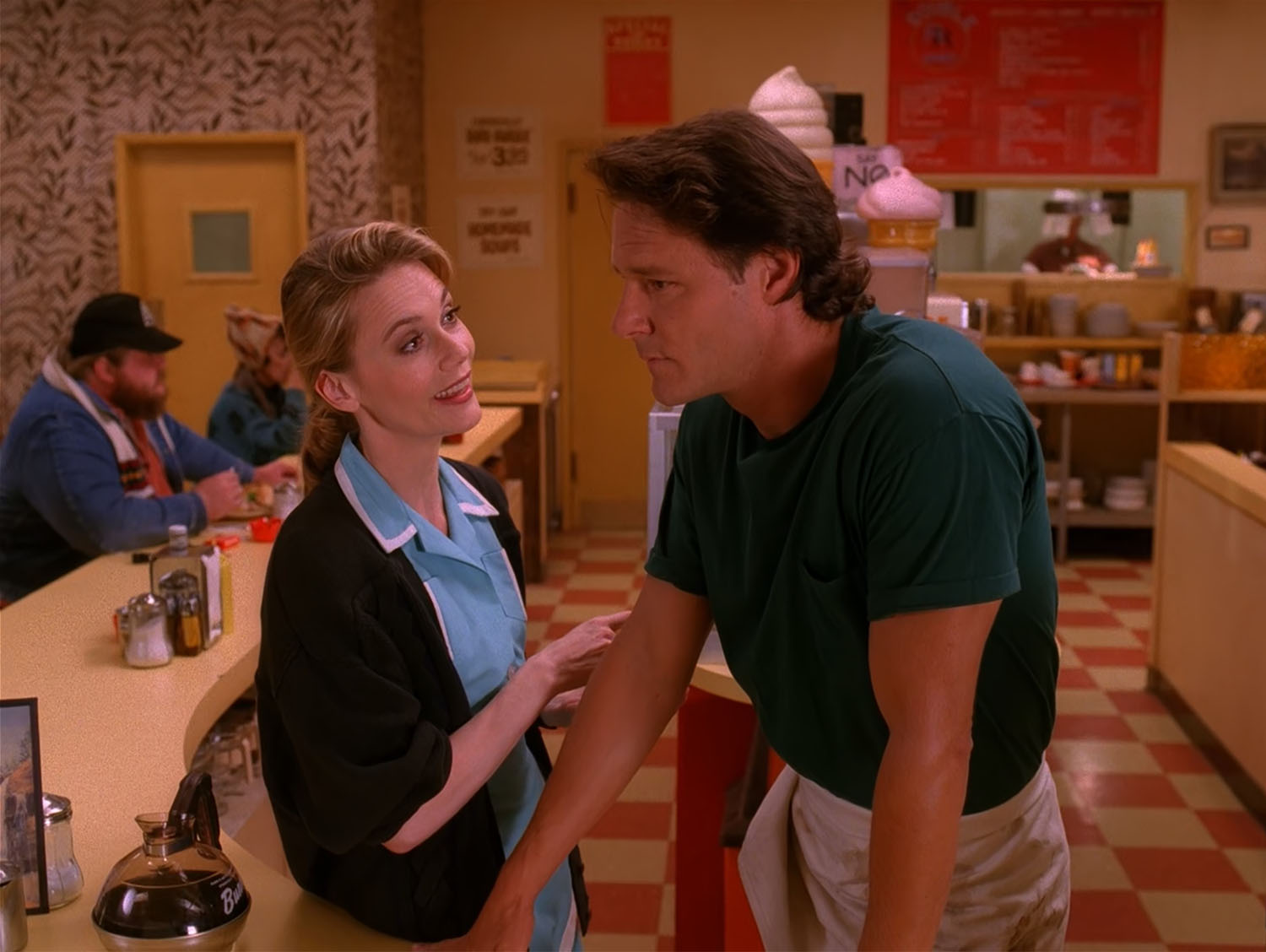
While Hank and Norma plan what to do about the mysterious food critic, Toad is still seated in the background wearing his hat.
Hank promptly removes Toad from the dining area when a man whom he thinks is M.T. Wentz enters the Double R.
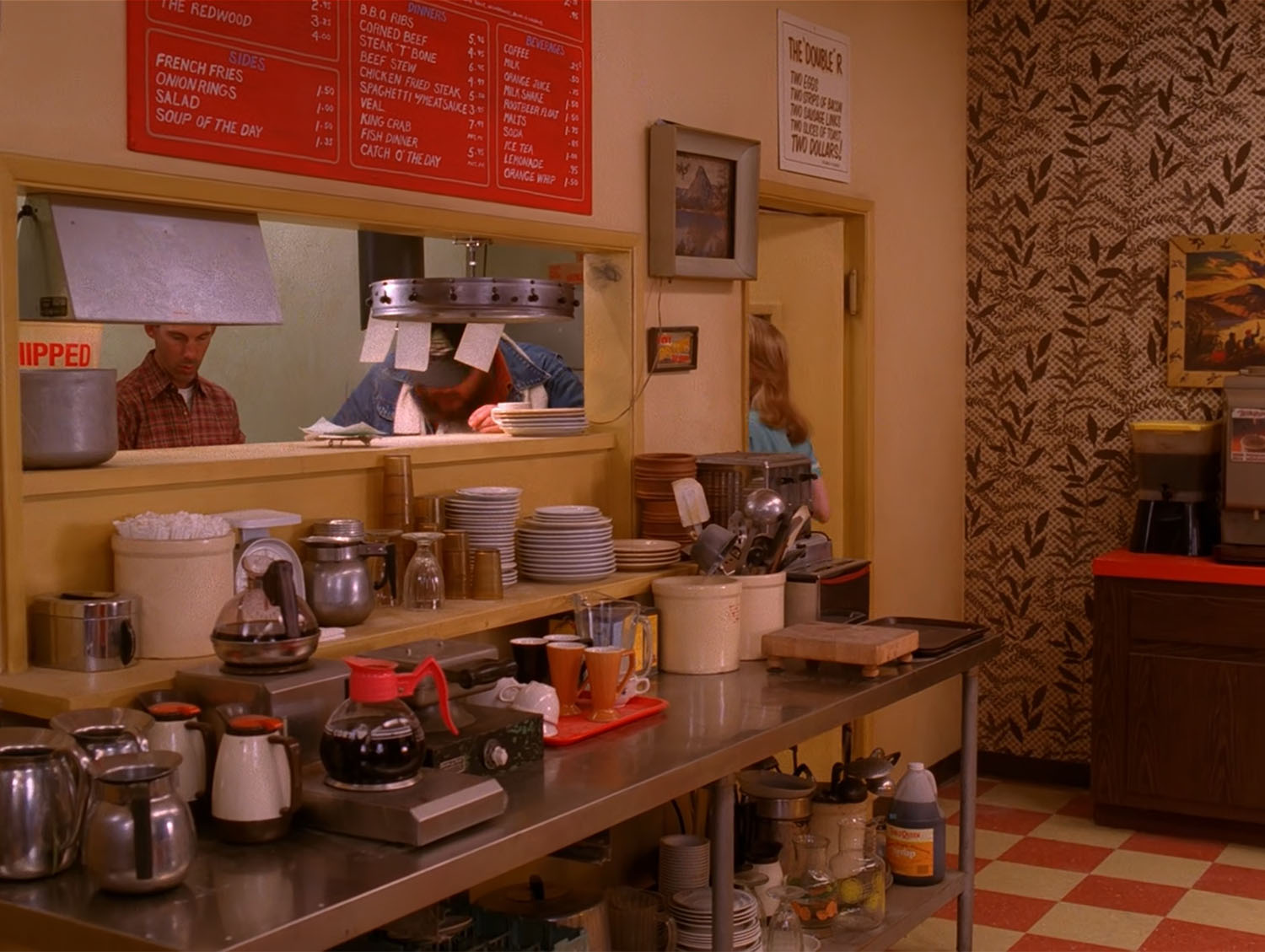
After being removed from the dining area, he is seen sampling food in the Double R kitchen.
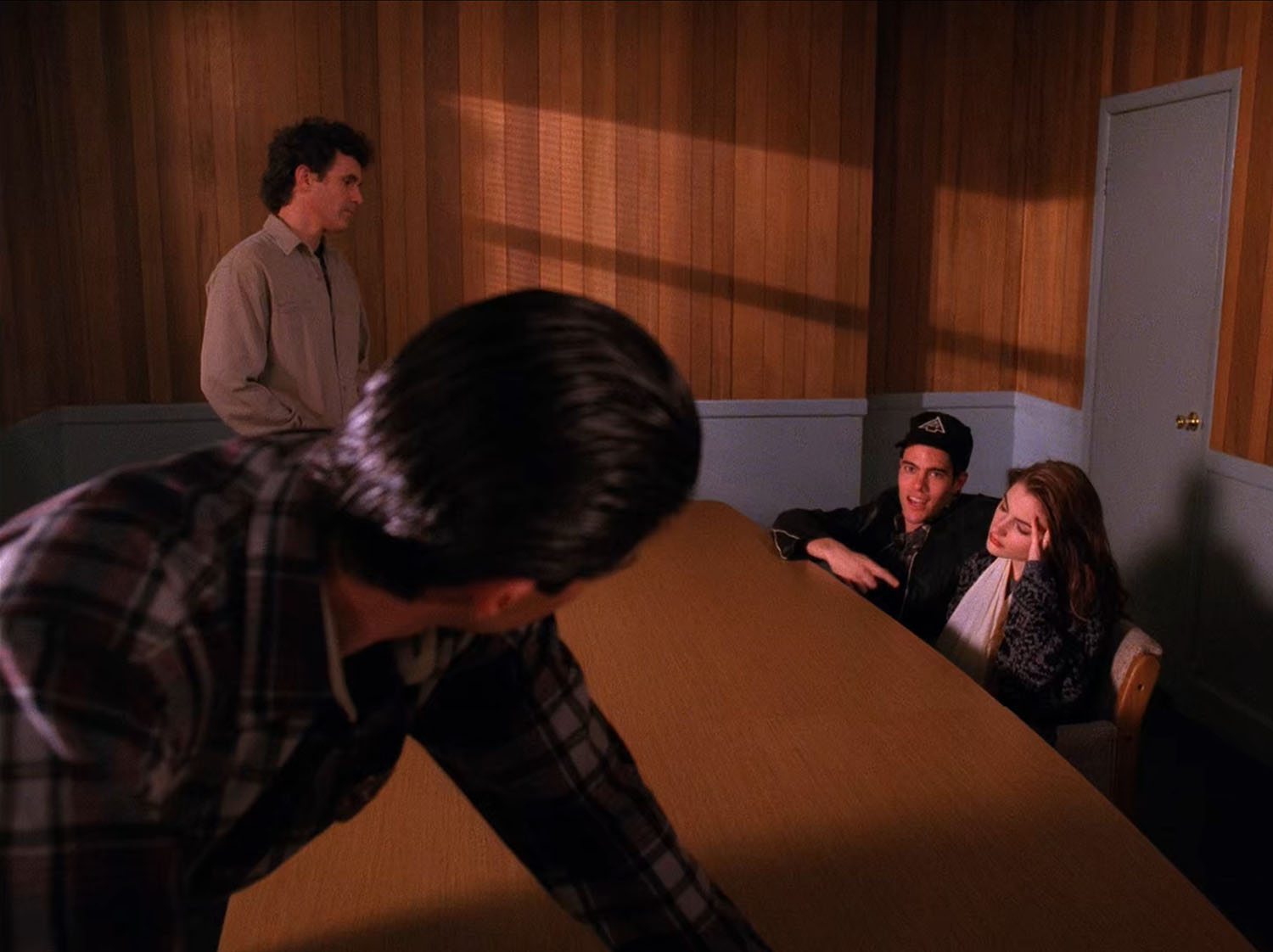
The hat reappears in episode 2.015 (#22) as Deputy Dale Cooper and Sheriff Harry S. Truman questions Shelly Johnson and Bobby Briggs at the Twin Peaks Sheriff’s Department.
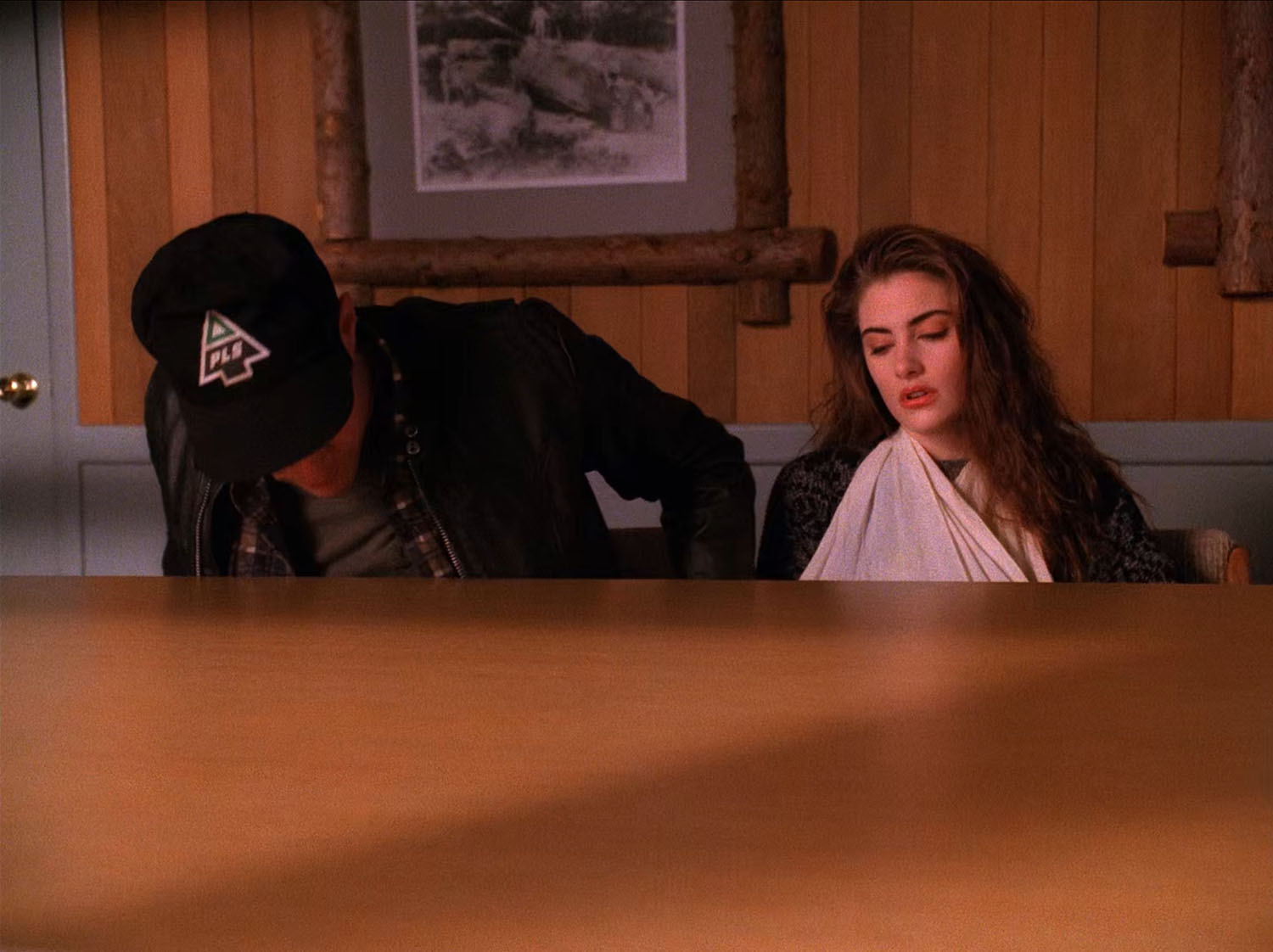
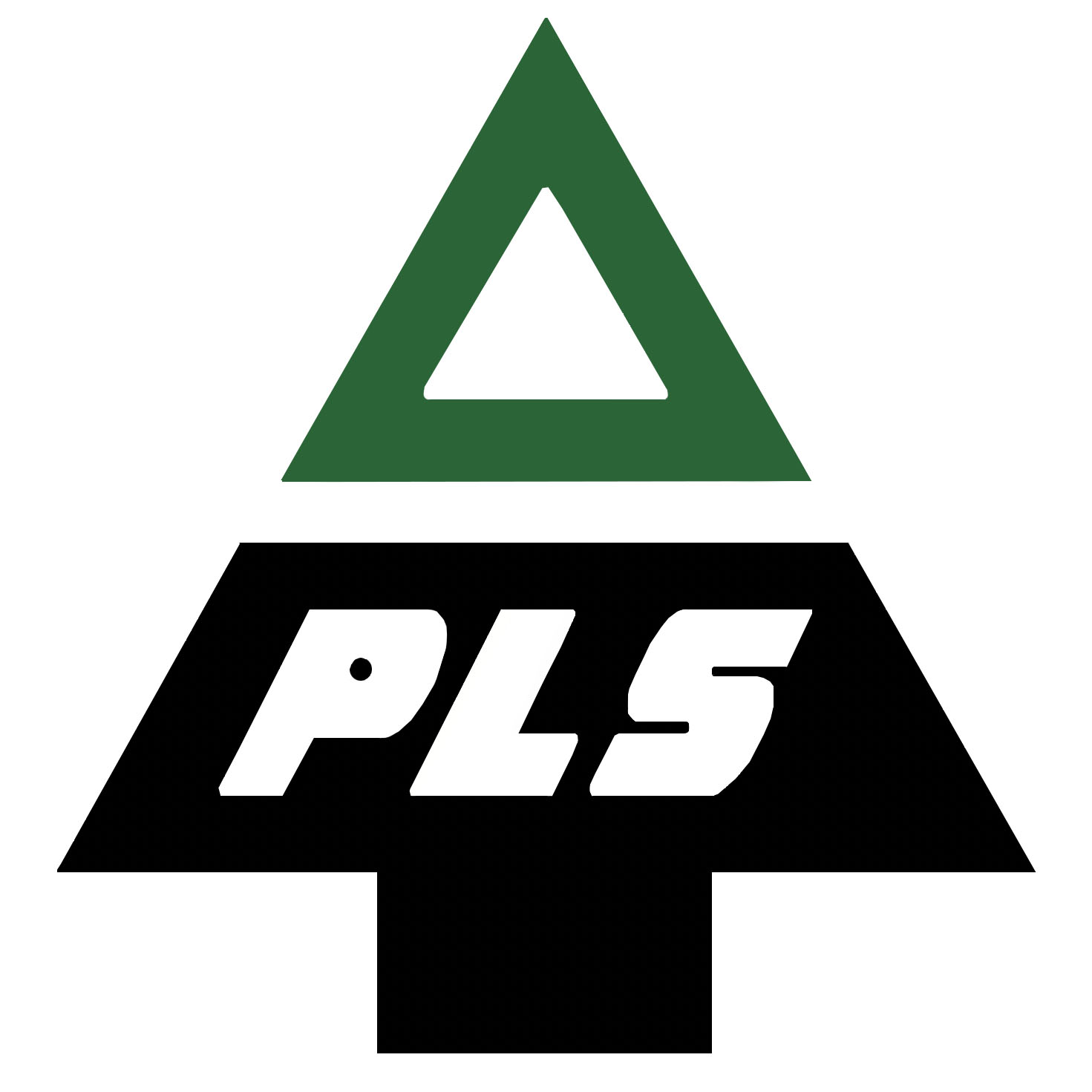
As Bobby stands up from the conference room table, we get a great look at the PLS logo.
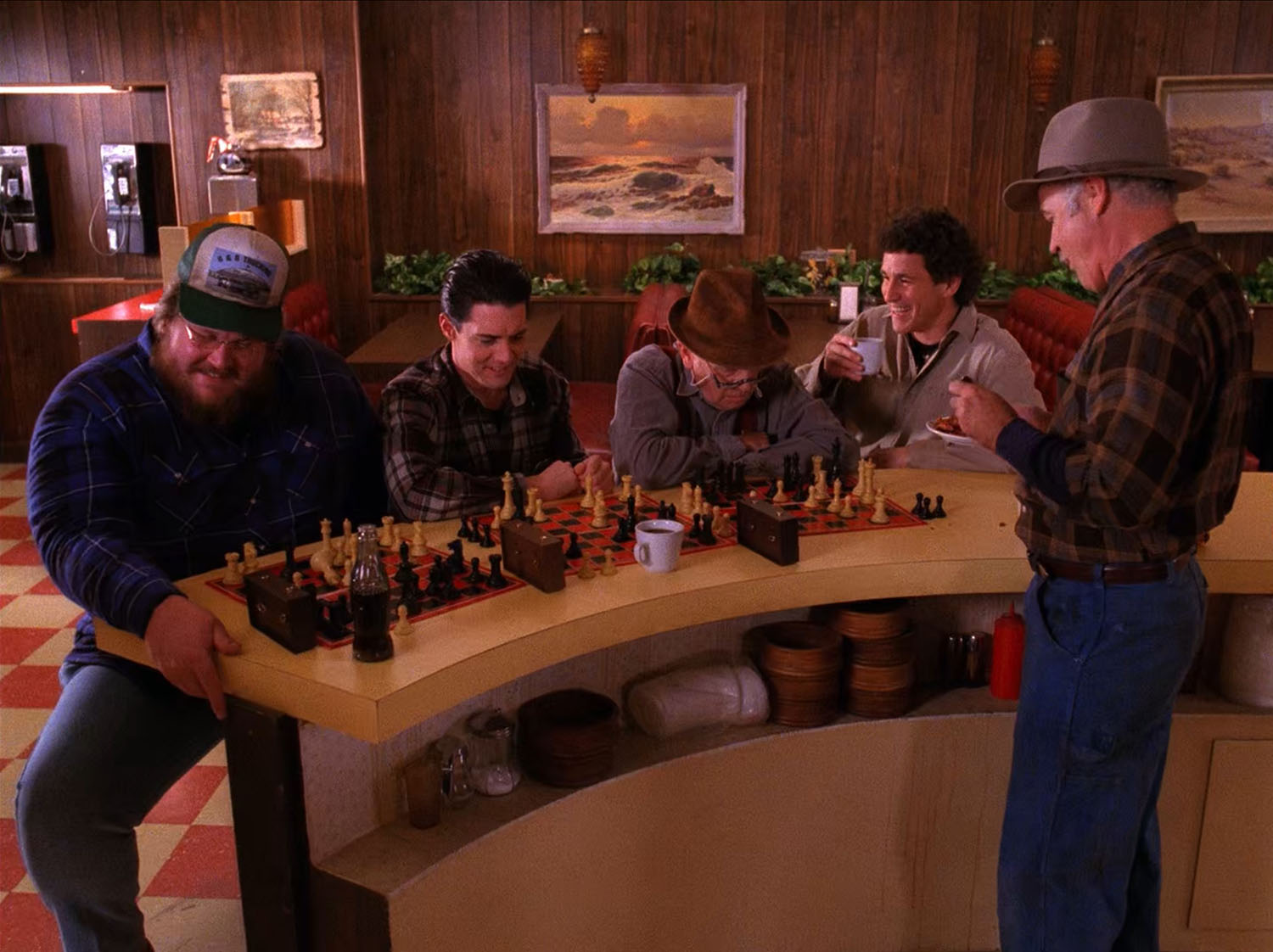
Later in that episode, Pete Martell plays chess against Sheriff Truman, Doc Hayward, Dale Cooper and Toad, the latter whom is wearing a different hat (probably because Bobby took his PLS cap).
I’ve had no luck finding PLS replica hat via online auction sites. Since it was most likely a promotional item, it wasn’t sold in shops. Perhaps a former employee will make one available one day. Until then, it’s great knowing another connection to the Pacific Northwest was featured in my favorite television show.
Author
Discover more from TWIN PEAKS BLOG
Subscribe to get the latest posts sent to your email.